
Anton Paar DMA 6002 Sound Velocity Integrated Density and Sound Velocity Analyzer
| Brand | Anton Paar |
|---|---|
| Origin | Austria |
| Manufacturer Type | Original Equipment Manufacturer (OEM) |
| Origin Category | Imported Instrument |
| Model | DMA 6002 Sound Velocity |
| Instrument Type | Oscillating U-tube Densimeter & Sound Velocity Analyzer |
| Form Factor | Benchtop Laboratory Instrument |
| Sample Type | Liquids |
| Density Range | 0 g/cm³ to 3 g/cm³ |
| Sound Velocity Range | 1000 m/s to 2000 m/s |
| Temperature Range | 0 °C to 100 °C (32 °F to 212 °F) |
| Pressure Range | 0 bar to 8 bar (0 psi to 116 psi) |
| Density Accuracy | ±0.000005 g/cm³ |
| Density Repeatability (Std. Dev.) | ±0.000001 g/cm³ |
| Sound Velocity Repeatability (Std. Dev.) | ±0.1 m/s |
| Density Reproducibility (Std. Dev.) | ±0.000005 g/cm³ |
| Sound Velocity Reproducibility (Std. Dev.) | ±0.5 m/s |
| Density Resolution | 0.000001 g/cm³ |
| Sound Velocity Resolution | 0.01 m/s |
| Minimum Sample Volume | 3.5 mL |
| Measurement Throughput | Up to 30 samples/hour |
| Compliance | ISO 5725, ASTM D4052, ASTM D1250, ISO 12185, ISO 17025 (when operated with certified calibration standards) |
Overview
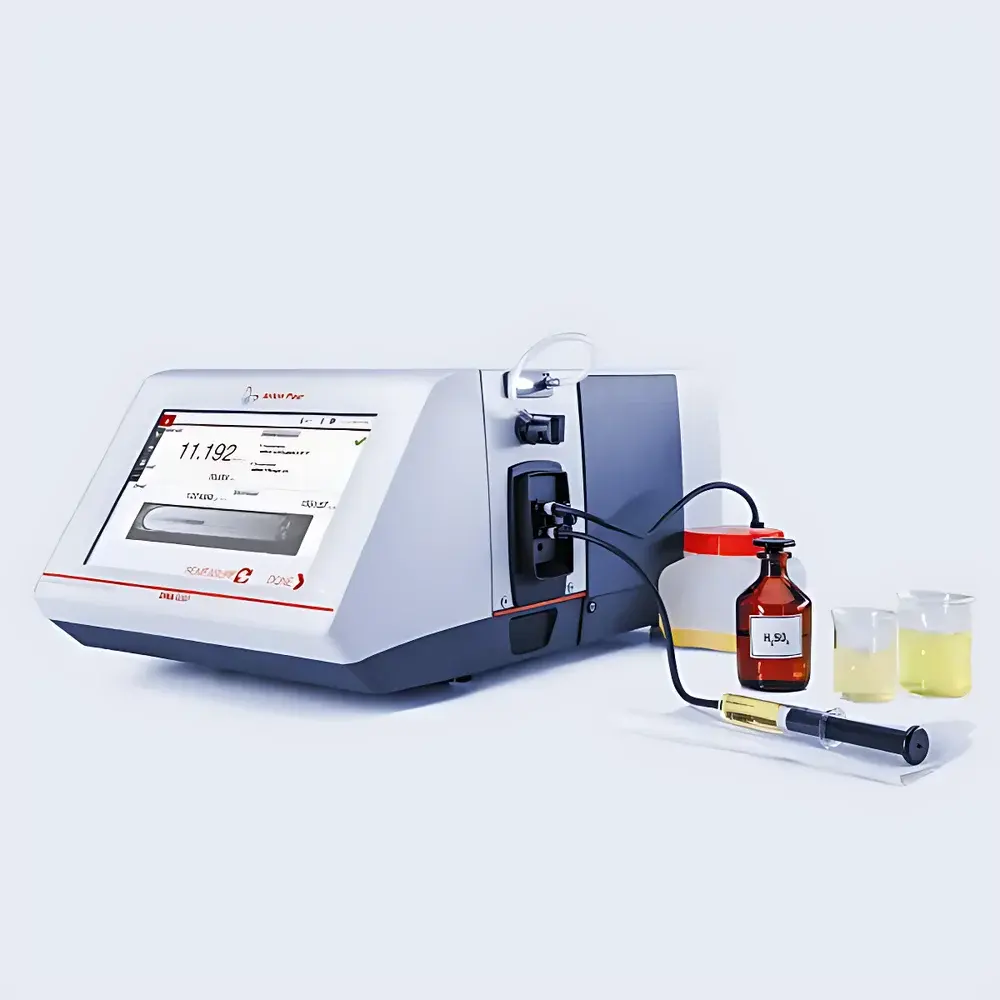
The Anton Paar DMA 6002 Sound Velocity is a benchtop oscillating U-tube analyzer engineered for simultaneous, high-precision measurement of liquid density and sound velocity in a single instrument platform. Based on the fundamental physical principles of resonant frequency shift—where density is derived from the natural oscillation period of a U-shaped glass tube filled with sample, and sound velocity is calculated from the time-of-flight of an acoustic pulse across the same tube—the DMA 6002 delivers traceable, thermodynamically consistent data under rigorously controlled temperature and pressure conditions. Its dual-parameter architecture eliminates inter-instrument variability and enables rigorous compositional analysis of binary and ternary mixtures—including aqueous electrolyte solutions, alcoholic beverages, organic solvents, and pharmaceutical formulations—without requiring separate instruments or sequential measurements. Designed for routine QC and R&D environments, it meets the metrological demands of GLP-compliant laboratories and supports audit-ready documentation per FDA 21 CFR Part 11 when paired with AP Connect software.
Key Features
- Integrated dual-parameter measurement: Simultaneous density and sound velocity determination in one automated cycle, ensuring identical thermal history and sample condition for both outputs.
- U-tube metrology with ThermoBalance compensation: Real-time correction for thermal gradients across the sensor, delivering stable readings across the full 0–100 °C operating range.
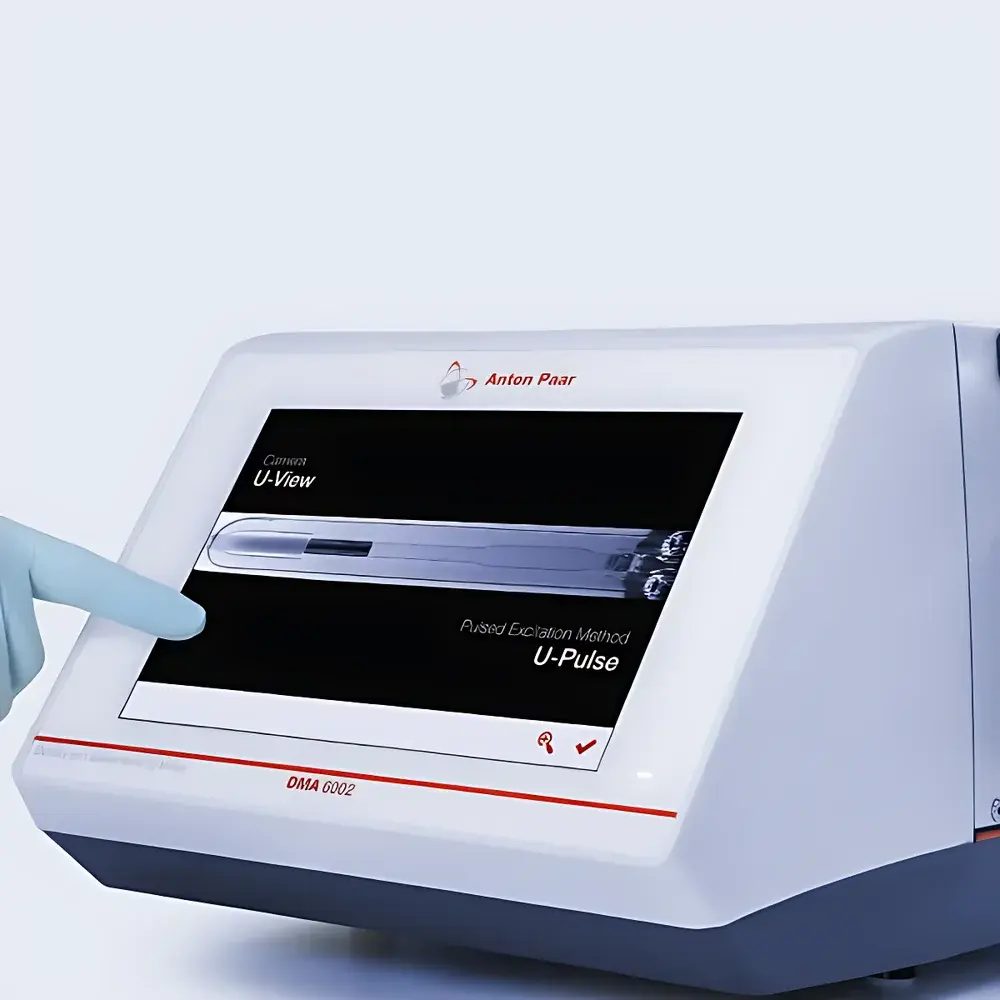
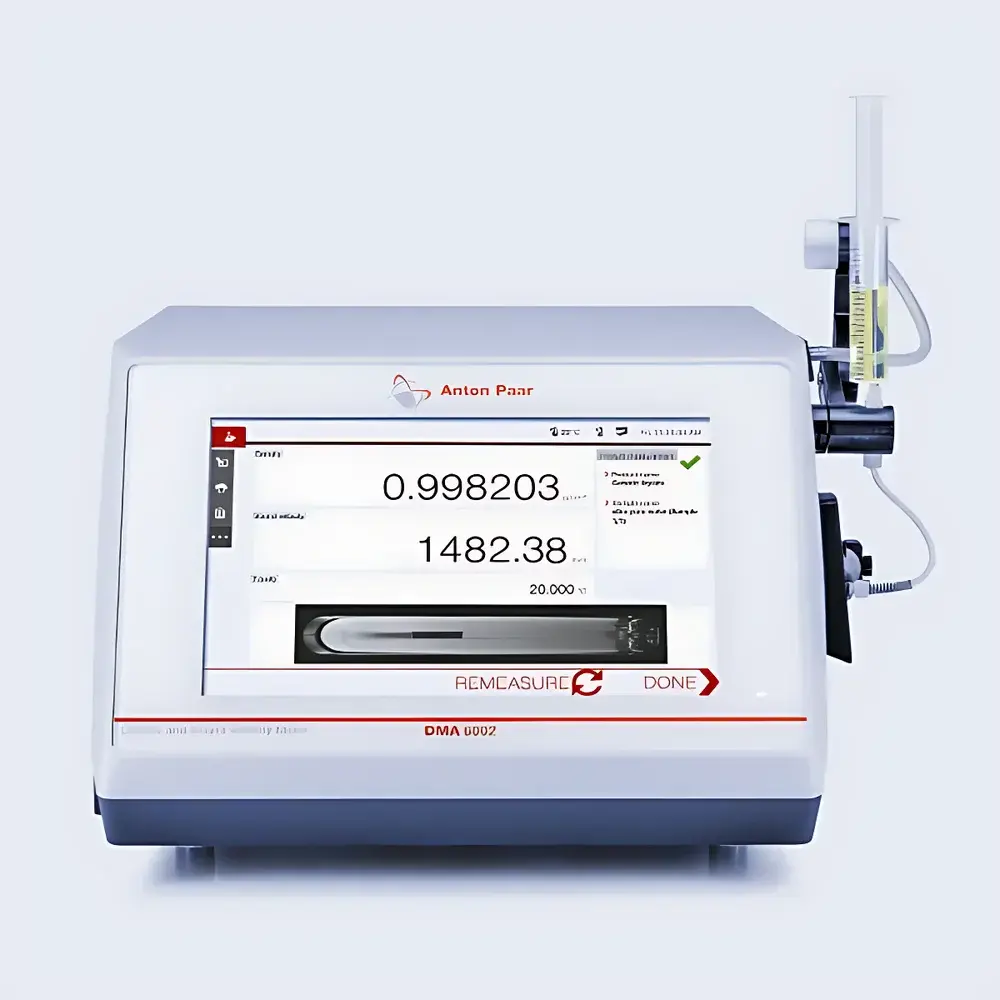
- Advanced filling diagnostics: FillingCheck detects air bubbles or incomplete filling; U-View provides live camera imaging of the U-tube during injection; U-Pulse monitors oscillation waveform integrity.
- Viscosity-independent measurement: Full-range viscosity correction algorithm compensates for damping effects across kinematic viscosities up to 25 mm²/s, eliminating manual viscosity input or pre-dilution.
- Modular expandability: Native compatibility with Xsample 410/420 autosamplers, PFD piercing modules, and optional add-on sensors for CO₂, O₂, pH, turbidity, refractive index, and alcohol content.
- User-centric interface: 10.1-inch capacitive touchscreen with intuitive workflow guidance, status LEDs, syringe illumination, and context-sensitive help—designed for minimal operator training.
Sample Compatibility & Compliance
The DMA 6002 accommodates a broad spectrum of liquid samples—from low-viscosity aqueous solutions to moderately viscous organic media—provided they are chemically compatible with borosilicate glass, PTFE, ETFE, and corrosion-resistant stainless steel DIN 1.4539 used in wetted components. It complies with international standard methods including ASTM D4052 (density of petroleum liquids), ASTM D1250 (petroleum measurement tables), ISO 12185 (crude oil and liquid petroleum products), and ISO 17025 for testing and calibration laboratories. When operated with NIST-traceable reference materials and documented calibration protocols, the system supports ISO/IEC 17025 accreditation. Built-in environmental monitoring (ambient temperature, pressure, humidity) ensures ambient-condition awareness for uncertainty budgeting. All measurement data—including raw oscillation waveforms, temperature logs, and U-View images—are timestamped and stored with full metadata for traceability.
Software & Data Management
AP Connect laboratory execution software provides secure, role-based access control, electronic signatures, and full 21 CFR Part 11 compliance—including audit trails, user activity logging, and immutable record archiving. The system supports automated report generation in PDF or CSV formats, customizable templates for industry-specific calculations (e.g., Brix, Plato, alcohol by volume, acid concentration, API gravity), and direct integration with LIMS via OPC UA or RESTful APIs. Internal storage retains up to 10,000 complete measurement records—including embedded U-View snapshots—while optional cloud synchronization enables remote monitoring and centralized fleet management. Calibration management tools support scheduled recalibration reminders, certificate import/export, and deviation tracking against master reference standards.
Applications
- Quality control of soft drinks, fruit juices, and fermented beverages: Simultaneous density and sound velocity enable precise sugar content (°Brix), alcohol concentration, and CO₂ saturation quantification without titration or distillation.
- Chemical manufacturing: Real-time verification of batch composition for binary solvent blends (e.g., ethanol/water, methanol/water) and ternary systems (e.g., HCl/H₂O/NaCl), supporting process validation and release testing.
- Pharmaceutical excipient characterization: Density and adiabatic compressibility (derived from sound velocity) provide insight into molecular interactions in formulation development.
- Fuel and lubricant analysis: Determination of biodiesel blend ratios (FAME/diesel), additive concentration, and thermal stability indicators.
- Academic and industrial research: Thermophysical property databases, equation-of-state modeling, and validation of predictive models for mixture behavior.
FAQ
What physical principles underpin the DMA 6002’s dual-parameter measurement?
It employs oscillating U-tube densimetry (per ISO 12185) for density and time-of-flight ultrasonic transduction for sound velocity—both measured concurrently within the same temperature-controlled quartz U-tube.
Can the instrument measure volatile or hazardous samples safely?
Yes—when equipped with the optional pressure module (0–8 bar), it enables closed-system handling of volatile organics, pressurized gases in solution, or reactive chemicals while maintaining operator safety and analytical integrity.
How does the system ensure long-term stability and reduce drift?
ThermoBalance actively compensates for axial thermal gradients; U-tube aging is tracked and corrected via periodic zero-point verification; all electronics feature temperature-stabilized oscillators and low-drift analog front-ends.
Is method validation support available for regulated industries?
Anton Paar provides IQ/OQ documentation packages, GMP-compliant installation protocols, and on-site qualification support aligned with ASTM E2500 and ICH Q2(R2) guidelines.
What maintenance is required to sustain metrological performance?
Annual calibration verification using certified reference fluids is recommended; U-tube cleaning is performed automatically via integrated rinse cycles; no consumables beyond standard cleaning solvents are required.



