
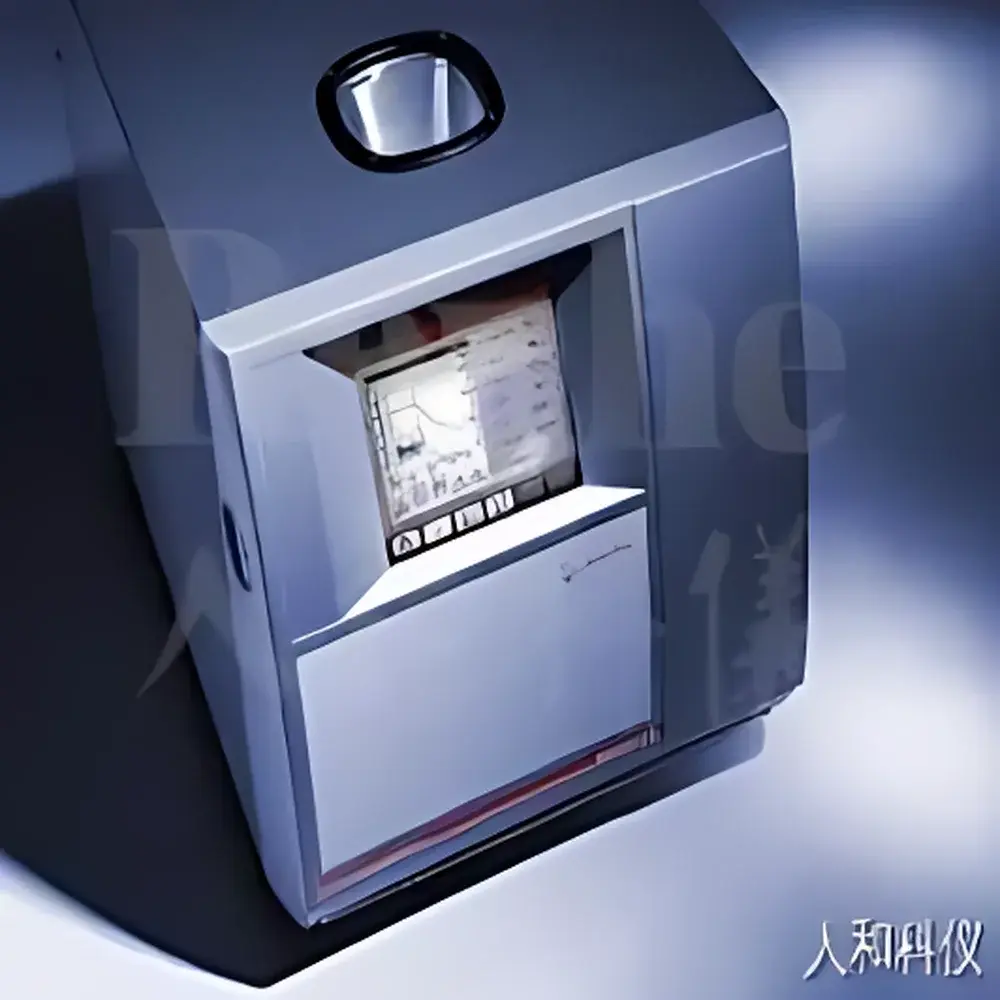
Anton Paar Masterwave BTR Benchtop Microwave Synthesizer
| Brand | Anton Paar |
|---|---|
| Origin | Austria |
| Model | Masterwave BTR |
| Temperature Range | Ambient to 250 °C |
| Pressure Range | 0–30 bar |
| Installed Microwave Power | 1700 W |
| Maximum Microwave Output Power | 2000 W |
| Magnetron Frequency | 2450 MHz |
| Stirring Method | Integrated Mechanical Stirring |
| Reaction Vessel Capacity | 1 L |
| Temperature Sensor | PT100 (high-accuracy, direct-contact) |
| Cooling | Continuous recirculating microwave coolant loop |
| Optional Remote Access | VNC-based open-source interface |
| Compliance | Designed for GLP/GMP-aligned workflows, supports audit-ready data logging |
Overview
The Anton Paar Masterwave BTR is a high-performance benchtop microwave synthesizer engineered for scalable, reproducible chemical synthesis in the kilogram-scale laboratory environment. Unlike conventional microwave reactors limited to milligram-to-gram throughput, the Masterwave BTR bridges the gap between discovery-phase optimization and process development by enabling controlled, instrumented reactions up to 1 L volume under precisely regulated thermal and pressure conditions. Its operation is based on single-mode microwave cavity technology operating at 2450 MHz, delivering homogeneous energy coupling into reaction mixtures via optimized field distribution. The system employs closed-vessel synthesis methodology, where temperature and pressure are independently monitored and actively controlled—ensuring thermodynamic fidelity across scale-up transitions. This architecture supports both exploratory route scouting and robust parameter-space mapping required for regulatory submissions (e.g., ICH Q5, Q8) and early-stage process validation.
Key Features
- 1700 W installed microwave power with dynamic 2000 W peak output capability, enabling rapid heating rates and precise power modulation during exothermic or multi-step protocols.
- 1 L reaction vessel secured via positive-action bayonet locking mechanism, constructed from chemically resistant, microwave-transparent materials (e.g., modified PEEK or quartz-lined stainless steel) rated for sustained operation at ≤250 °C and ≤30 bar.
- Direct-insertion PT100 resistance thermometer integrated into the vessel head, providing traceable, NIST-calibratable temperature measurement with ±0.5 °C accuracy and real-time feedback to the control algorithm.
- Motor-driven mechanical stirring system with variable speed (0–600 rpm), programmable torque profiles, and software-guided agitation strategies—including ramped, pulsed, or event-triggered modes synchronized with temperature/pressure thresholds.
- Continuous recirculating coolant circuit for magnetron and cavity thermal management, maintaining stable RF performance over extended run times (>8 h) without duty-cycle limitations.
- Modular I/O architecture supporting analog/digital signal integration (e.g., external pH, IR, or Raman probes) and optional VNC-based remote operation compliant with institutional IT security policies.
Sample Compatibility & Compliance
The Masterwave BTR accommodates heterogeneous, viscous, and suspension-based reaction systems—including catalytic hydrogenations, solid-supported syntheses, and biphasic aqueous/organic transformations—without compromising field uniformity or sensor reliability. All wetted components meet USP Class VI and FDA 21 CFR Part 11 readiness requirements when paired with Anton Paar’s Synthos software (v4.2+). System validation documentation includes IQ/OQ templates aligned with ISO/IEC 17025 and ASTM E2882-13 (Standard Guide for Microwave-Assisted Reaction Optimization). Pressure and temperature safety interlocks conform to PED 2014/68/EU and EN 13445-3 standards.
Software & Data Management
Synthos software provides full lifecycle experiment control—from method creation and parameter scheduling to real-time monitoring and post-run analysis. Each synthesis record captures timestamped, tamper-evident metadata including microwave power profile, vessel temperature/pressure curves, stirrer torque history, and coolant flow rate. Audit trails comply with ALCOA+ principles; electronic signatures and role-based access control support 21 CFR Part 11 compliance in regulated environments. Export formats include CSV, PDF report packages, and native .synthos files for cross-platform reprocessing.
Applications
- Kilogram-scale API intermediate synthesis under GMP-relevant conditions (e.g., Suzuki couplings, amide bond formations, heterocycle cyclizations).
- Rapid screening of solvent effects, catalyst loadings, and stoichiometric ratios in DOE (Design of Experiments) frameworks.
- Thermally sensitive transformations requiring narrow ΔT control (e.g., enantioselective epoxidations, photoredox-initiated cascades).
- Reaction calorimetry integration for heat-flow quantification and thermal hazard assessment (compatible with RC1e or EasyMax interfaces).
- Process intensification studies targeting reduced cycle time, improved selectivity, and lower E-factor metrics in green chemistry initiatives.
FAQ
What is the maximum allowable reaction volume for continuous operation?
The 1 L vessel is rated for uninterrupted synthesis at full power up to 250 °C and 30 bar, provided cooling capacity and stirrer torque remain within specification limits.
Does the system support inert atmosphere control?
Yes—integrated gas dosing ports (optional) enable controlled purging with N₂ or Ar, and vacuum-assisted degassing prior to pressurization.
Can temperature be measured inside the reaction mixture—not just at the vessel wall?
Yes—the PT100 sensor is immersed directly in the reaction medium via a sealed, chemically inert probe sheath, eliminating wall-effect bias.
Is method transfer from small-scale microwave platforms (e.g., Monowave) supported?
Synthos software includes automatic scaling algorithms that adjust irradiation time, power ramp rates, and cooling profiles based on thermal mass and heat-transfer coefficients.
What maintenance intervals are recommended for the magnetron and cooling system?
Magnetron lifetime exceeds 5000 h under nominal load; coolant fluid exchange is scheduled every 12 months or 2000 operating hours, whichever occurs first.



