
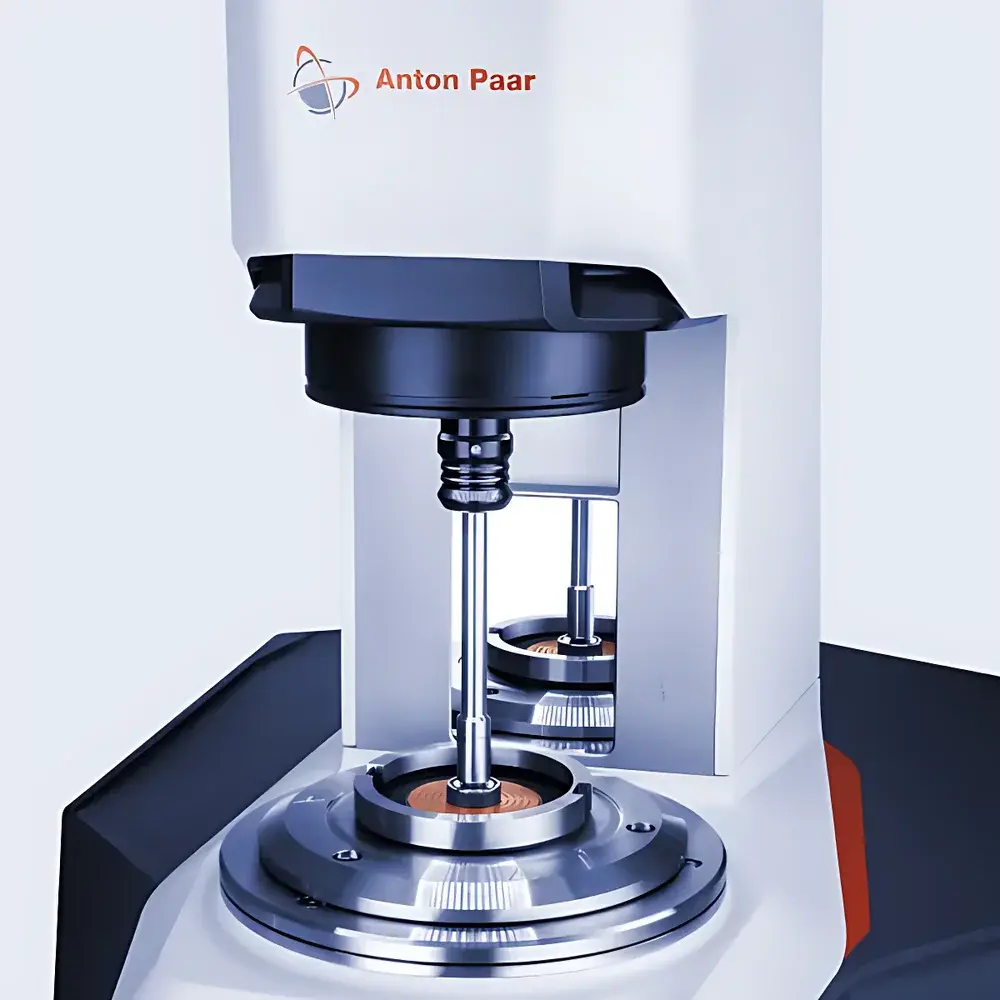
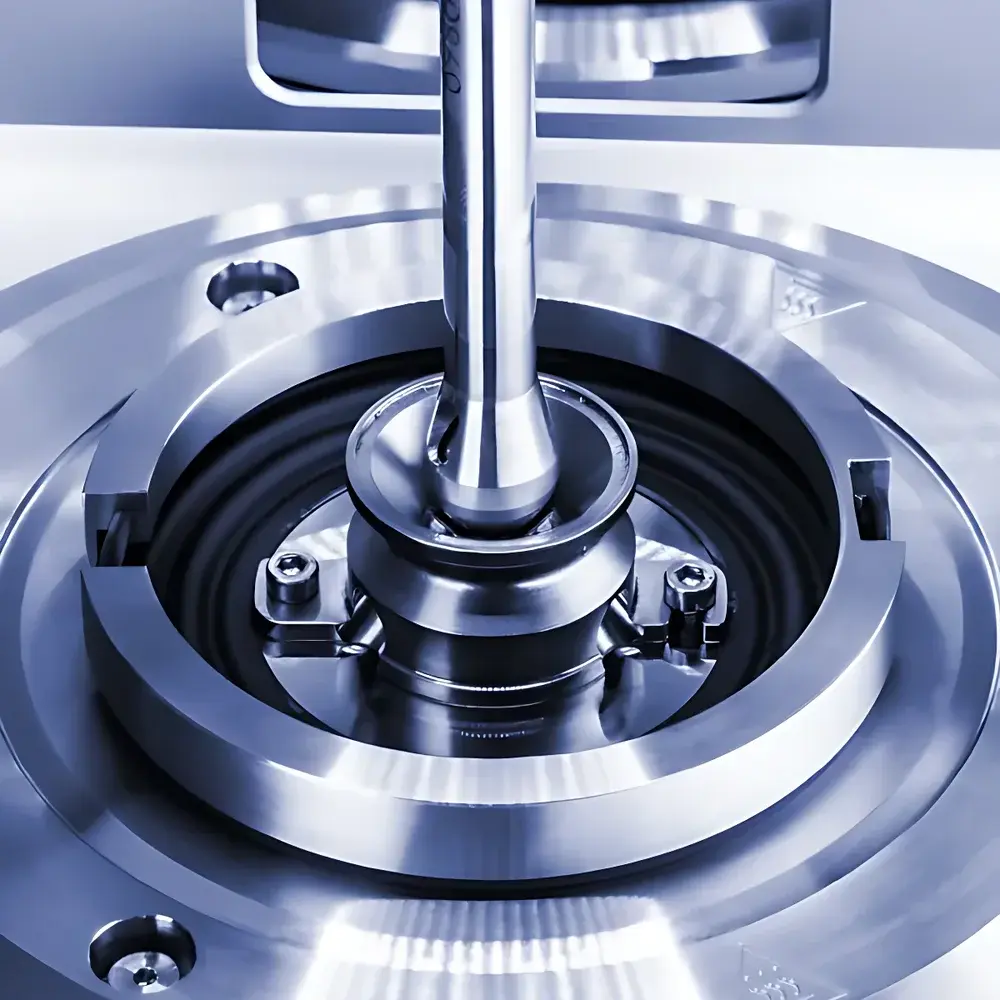
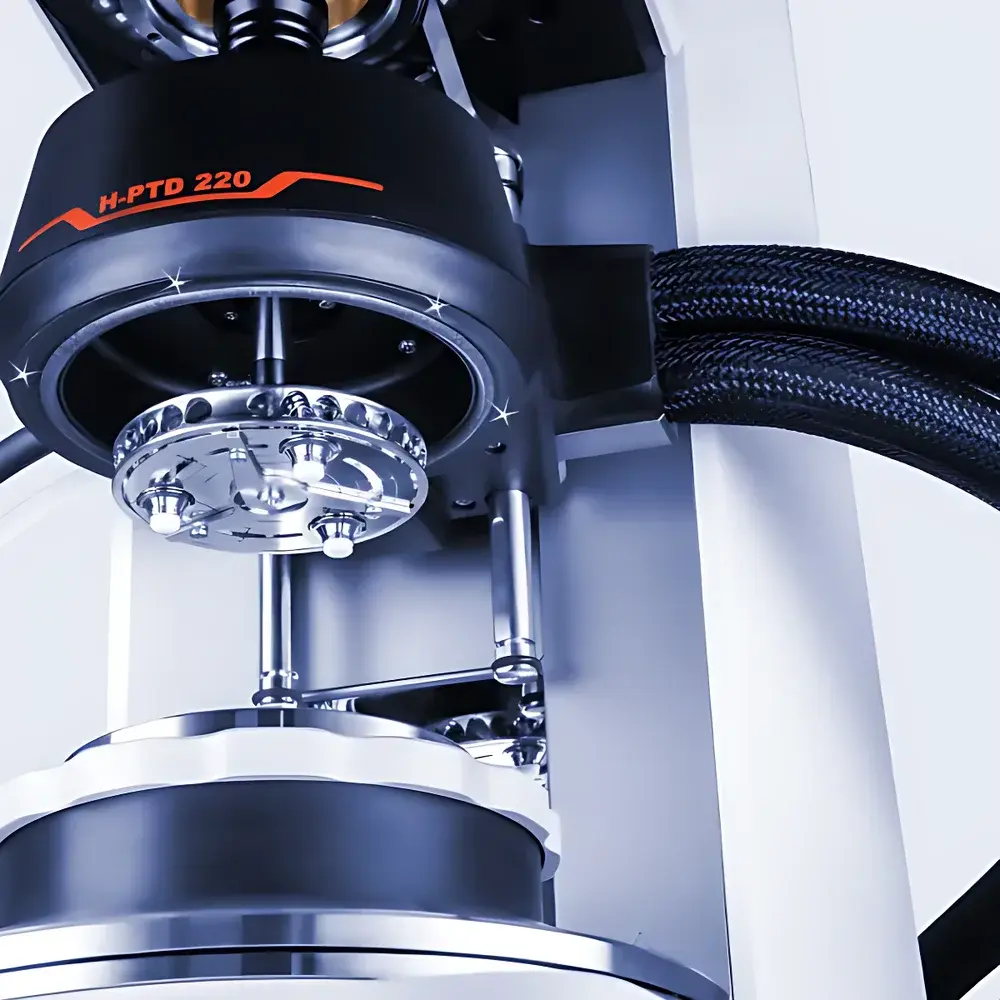
Anton Paar MCR Tribological Tester
| Brand | Anton Paar |
|---|---|
| Origin | Austria |
| Manufacturer Type | Original Equipment Manufacturer (OEM) |
| Origin Category | Imported |
| Model | MCR Tribological Tester |
| Instrument Type | Coefficient of Friction Analyzer |
| Maximum Friction Force | 70 N |
| Friction Force Resolution | 0.005 N |
| Maximum Temperature | 600 °C |
| Normal Force Range | 0.1–70 N |
| Normal Force Resolution | 0.005 N |
| Rotational Speed Range | 10⁻⁶–3000 rpm |
| Sliding Velocity Range | 10⁻⁸–3.3 m/s |
| Torque Range | 1 nNm–300 mNm |
| Torque Resolution | 0.1 nNm |
| Oscillation Frequency Range | 10⁻⁷–100 Hz |
| Angular Amplitude Range | 1 µrad to ∞ |
| Angular Resolution | 10 nrad |
| Minimum In-situ Wear Depth Detection | 0.65 µm |
| Electrotribology Capability | Yes (0–4 kV, up to 1 mA) |
| Temperature Control Range (T-BTP module) | −160 °C to +600 °C |
| Humidity Range | 5–95% RH |
Overview
The Anton Paar MCR Tribological Tester is a modular, high-precision rotational rheometer platform reconfigured for advanced tribological characterization. Leveraging the same core electromechanical architecture as Anton Paar’s MCR series rheometers—including air-bearing-supported motor and high-resolution optical encoder—it delivers nanoradian angular resolution and sub-micron force control essential for quantitative friction, wear, and interfacial energy analysis. Unlike conventional pin-on-disk or block-on-ring testers, the MCR platform implements true Couette-based tribometry: precise torque and normal force transduction is achieved via integrated high-stiffness load cells and real-time position feedback, enabling simultaneous measurement of friction coefficient (µ), wear volume, contact resistance, and triboelectric current under programmable thermal, mechanical, and electrical boundary conditions. Its design conforms to ASTM D1894 (static/dynamic COF), ISO 15142 (wear testing of medical implants), and ISO 20623 (lubricant film thickness estimation via Stribeck curve derivation).
Key Features
- Modular tribology add-ons including pin-on-disk, ball-on-plate, line-contact roller, and custom bearing geometry fixtures—each mechanically registered to the MCR base for zero alignment drift.
- Integrated Peltier- and resistive-heated temperature control modules (T-PTD 200, T-BTP) supporting stable operation from −160 °C to +600 °C with ±0.1 °C stability over 24 h.
- Electrotribology module enabling synchronized acquisition of friction force, contact voltage (0–4 kV DC/AC), and leakage current (up to 1 mA) during sliding—critical for evaluating insulating lubricants, tribocharging in polymers, or bioelectrical interfaces.
- Ultra-low-speed capability down to 10⁻⁶ rpm (0.000001 rpm) and sub-nN normal force resolution (0.005 N) for capturing static friction onset, stick-slip transitions, and cold-welding phenomena.
- Patented in-situ wear depth monitoring via high-precision capacitive displacement sensor (US Patent 9,702,809), achieving 0.65 µm axial resolution without interrupting test continuity.
- Real-time Stribeck curve generation across full lubrication regimes—boundary, mixed, and hydrodynamic—with automatic transition point detection based on dµ/d(log v) inflection.
Sample Compatibility & Compliance
The MCR Tribological Tester accommodates solid specimens up to Ø 50 mm × 25 mm thick (disk format) or custom-mounted components (e.g., miniature bearings, orthopedic joint simulators). It supports standard reference materials per ASTM F732 (polyethylene wear), ISO 14242-1 (hip/knee simulator validation), and USP particulate analysis post-tribotesting. All thermal modules comply with IEC 61000-4-2 (ESD immunity) and CE machinery directive 2006/42/EC. Data acquisition meets FDA 21 CFR Part 11 requirements when used with Anton Paar’s TRIBO software configured for audit trail, electronic signatures, and role-based access control—fully traceable for GLP/GMP-regulated lubricant qualification or implant biocompatibility studies.
Software & Data Management
TRIBO software (v3.x) provides ISO/IEC 17025-aligned test method templates—including ASTM D3702 (pin-on-disk), ISO 20623 (Stribeck mapping), and custom multi-step sequences with conditional logic (e.g., “hold at 200 °C until µ stabilizes < 0.08”). Raw data streams (torque, normal force, temperature, voltage, current, displacement) are acquired at 1 kHz and stored in HDF5 format with embedded metadata (user, timestamp, calibration ID, environmental log). Batch analysis tools compute wear rate (mm³/N·m), friction energy dissipation, and film breakdown time; all outputs export to CSV, MATLAB .mat, or PDF reports compliant with internal QA documentation standards.
Applications
- Lubricant Development: Quantifying anti-wear additive efficacy, shear stability of greases, and low-temperature pumpability via cold-start friction hysteresis loops.
- Bio-Tribology: Evaluating ultra-high-molecular-weight polyethylene (UHMWPE) wear against CoCrMo femoral heads under simulated synovial fluid conditions at 37 °C.
- Food & Packaging: Measuring coefficient of friction between polymer films (e.g., PET/PE laminates) and stainless steel rollers across humidity gradients (5–95% RH).
- Energy Materials: Characterizing solid lubricant behavior in battery electrode coatings under compression-shear cycling, correlating friction hysteresis with capacity fade.
- Micro-Electro-Mechanical Systems (MEMS): Assessing stiction and wear of silicon-based microgears using sub-10 µN normal loading and electrostatic actuation coupling.
FAQ
Can the MCR Tribological Tester perform tests under vacuum or controlled atmosphere?
Yes—optional glovebox integration (N₂, Ar, or forming gas) and vacuum chamber adapters (down to 10⁻³ mbar) are available for oxidation-sensitive samples such as lithium metal anodes or reactive metal alloys.
Is third-party software integration supported?
The instrument provides TCP/IP and LabVIEW-compatible drivers; raw data streams can be ingested directly into Python (via PyMCR API) or MATLAB for custom machine learning–based wear classification.
How is wear volume quantified without interrupting the test?
Using the patented capacitive wear sensor (US 9,702,809), axial displacement of the counterface is tracked continuously at 1 kHz sampling, enabling real-time volumetric wear calculation based on known contact geometry and material density.
Does the system support ASTM D3702-compliant pin-on-disk testing?
Yes—the standard pin holder, disk chuck, and calibration protocols are pre-validated; full compliance documentation (including uncertainty budget per GUM) is supplied with each instrument shipment.
What maintenance intervals are recommended for long-term accuracy?
Annual recalibration of force/torque sensors and thermal modules is advised; Anton Paar’s certified service engineers perform traceable calibration against NIST-traceable standards (NIST SRM 2241 for friction, NIST SRM 2192 for temperature).



