
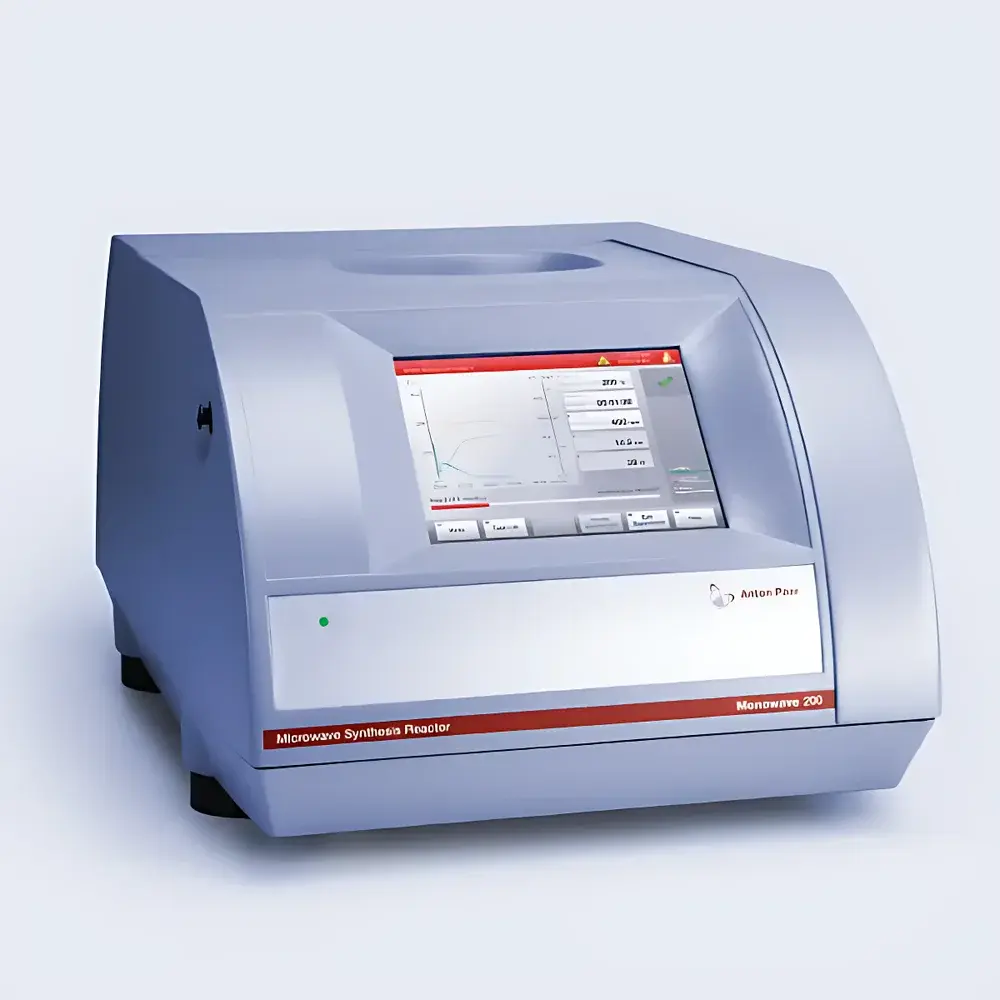
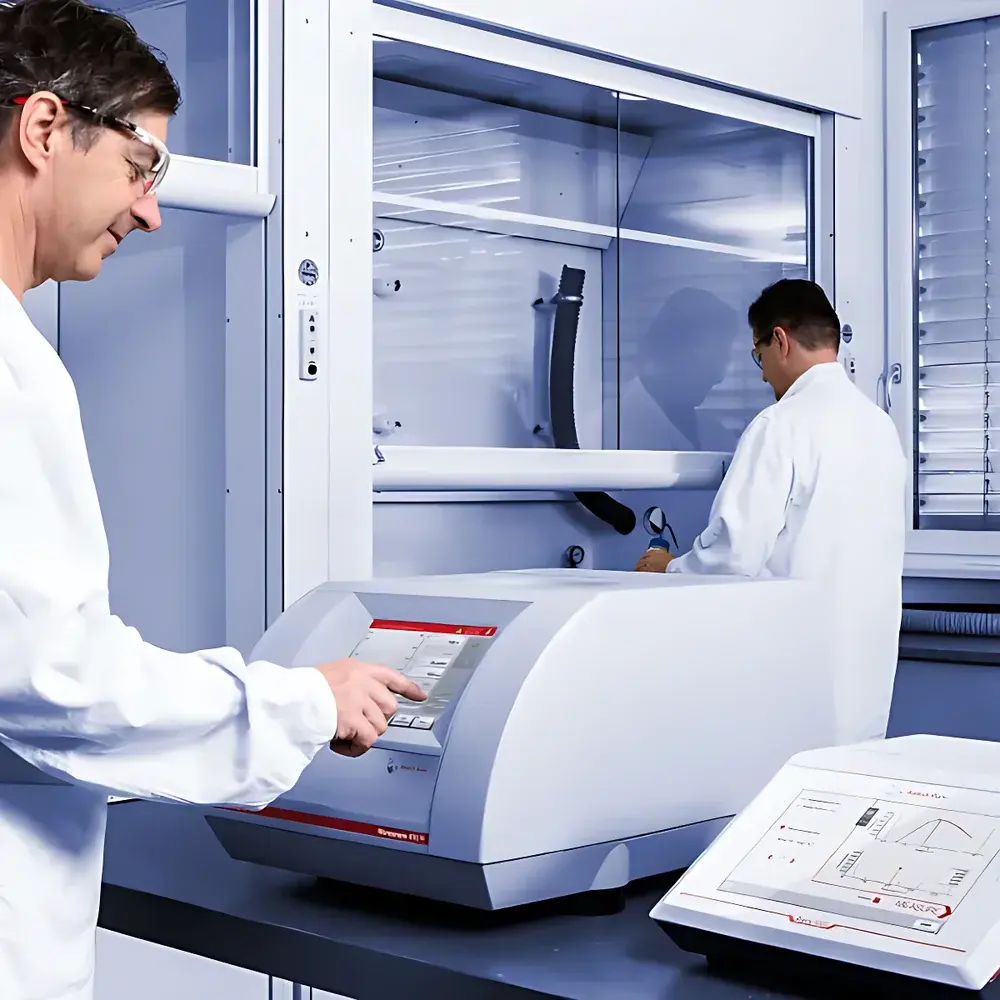
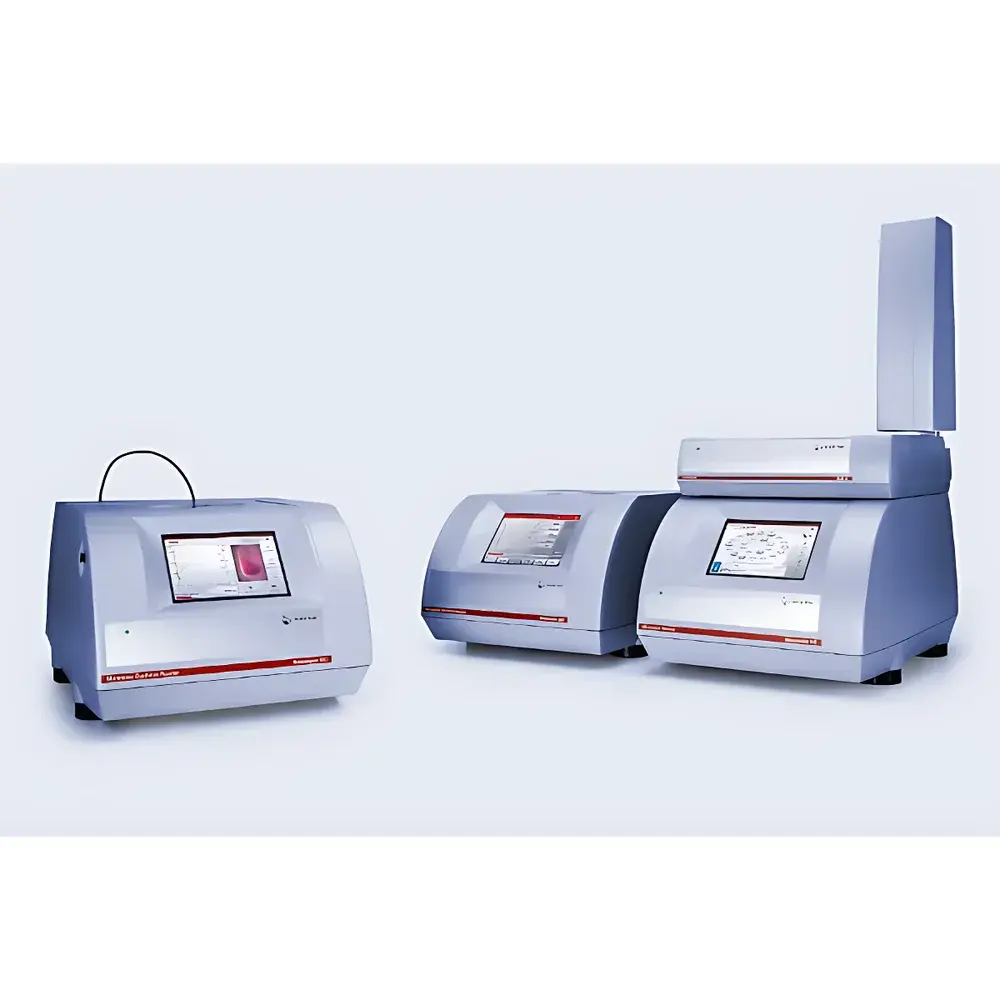
Anton Paar Monowave 200 Single-Mode Microwave Synthesizer
| Brand | Anton Paar |
|---|---|
| Origin | Austria |
| Manufacturer Type | Original Equipment Manufacturer (OEM) |
| Product Category | Imported Instrument |
| Model | Monowave 200 |
| Instrument Type | Single-Mode Microwave Synthesizer |
| Temperature Range | Up to 260 °C (upgradeable to 300 °C) |
| Pressure Range | 0–20 bar (290 psi |
| Microwave Power | 850 W continuous non-pulsed output |
| Magnetron Frequency | 2450 MHz |
| Stirring Mechanism | Magnetic stirring |
| Reaction Volume | 0.5–20 mL |
Overview
The Anton Paar Monowave 200 is a high-precision, single-mode microwave synthesizer engineered for reproducible and controllable organic synthesis, materials chemistry, and methodology development under elevated temperature and pressure conditions. Unlike multimode systems, its focused, standing-wave cavity delivers uniform and highly concentrated microwave energy directly into the reaction mixture—enabling rapid, volumetric, and solvent-independent heating via dielectric loss mechanisms. This architecture eliminates reliance on auxiliary heating elements or external thermal conduction, ensuring true kinetic control over reaction initiation and progression. The system operates at a magnetron frequency of 2450 MHz and delivers up to 850 W of continuous, non-pulsed microwave power, supporting heating rates of 3–9 °C/s across the full 0.5–20 mL reaction volume range. Real-time process monitoring is enabled by a calibrated ruby fluorescence optical fiber sensor—providing sub-degree temperature accuracy and closed-loop feedback regulation without physical contact or calibration drift.
Key Features
- Single-mode cavity with dynamically tuned microwave field distribution for consistent energy coupling across variable sample volumes and solvent polarities
- Integrated high-resolution digital video imaging system with real-time observation of color transitions, precipitation onset, dissolution kinetics, and mixing homogeneity
- Touchscreen HMI with intuitive workflow navigation, preloaded method templates, and customizable parameter sequencing (ramp/hold/cool profiles)
- Magnetic stirring at up to 1200 rpm with automatic speed adaptation based on viscosity and vessel geometry
- Tool-free, snap-fit reaction vessels in borosilicate glass or quartz (0.5–20 mL), rated for operation up to 20 bar and 260 °C (upgradeable to 30 bar / 300 °C with optional hardware and firmware)
- Firmware-upgradable platform supporting future expansion of safety protocols, analytical integrations, and accessory compatibility (e.g., gas dosing modules, inline IR probes)
Sample Compatibility & Compliance
The Monowave 200 accommodates a broad spectrum of chemically aggressive reagents—including strong acids (e.g., HNO₃, H₂SO₄), halogenated solvents (e.g., DMF, DMSO, NMP), and air/moisture-sensitive substrates—within its chemically resistant vessel sealing system and inert cavity lining. All pressure-rated components comply with PED 2014/68/EU and ASME BPVC Section VIII Division 1 requirements. Temperature and pressure sensors are traceably calibrated per ISO/IEC 17025-accredited procedures. Data integrity and audit readiness are supported through optional GLP/GMP-compliant software packages that provide electronic signatures, 21 CFR Part 11–compliant audit trails, and secure user access levels.
Software & Data Management
The Monowave 200 runs on Anton Paar’s proprietary SynthOS operating system, featuring method-based execution, live parameter visualization (T, P, power, stir speed), and synchronized video logging. All experimental metadata—including timestamps, setpoints, actual readings, and video frames—are stored in an encrypted SQLite database with export capability to CSV, PDF, or XML formats. Remote monitoring and method synchronization across multiple instruments are supported via optional Ethernet/Wi-Fi connectivity and centralized server deployment. Software updates are delivered digitally and validated for backward compatibility with legacy method libraries.
Applications
- Rapid optimization of cross-coupling reactions (Suzuki, Heck, Buchwald–Hartwig) under controlled thermal profiles
- High-temperature C–H activation and late-stage functionalization of pharmaceutical intermediates
- Synthesis of metal–organic frameworks (MOFs) and nanomaterials requiring precise nucleation control
- Accelerated hydrothermal and solvothermal crystallization studies
- Development of green chemistry protocols using low-boiling or high-dielectric solvents under sealed conditions
- Thermal stability assessment of catalysts and reactive intermediates via programmed ramp-and-hold experiments
FAQ
What distinguishes single-mode from multimode microwave synthesis?
Single-mode systems generate a defined electromagnetic standing wave pattern within a precisely dimensioned cavity, delivering focused energy to a single reaction vessel. This enables superior control over heating rate, reproducibility, and scalability compared to multimode ovens, where field distribution is heterogeneous and volume-dependent.
Can the Monowave 200 be integrated into automated synthesis workflows?
Yes—the instrument supports RS232 and Ethernet communication protocols, enabling bidirectional command exchange with third-party robotic liquid handlers and scheduling software (e.g., ChemSpeed, Unchained Labs). Custom API integration is available upon request.
Is validation documentation provided for regulated environments?
Anton Paar supplies IQ/OQ documentation packages, including factory calibration certificates, sensor verification reports, and performance qualification test scripts aligned with ASTM E2882–22 and USP <1058> guidelines.
How is temperature measured without interfering with microwave fields?
A sapphire-jacketed ruby fluorescence optical fiber probe measures temperature via wavelength shift of R-line emission—immune to electromagnetic interference and requiring no electrical contact with the reaction zone.
What safety mechanisms prevent overpressure or thermal runaway?
Dual redundant pressure transducers, rupture disc protection (set at 35 bar), active cavity cooling interlock, and real-time microwave power modulation based on temperature deviation ensure compliance with IEC 61000-4-3 and EN 61010-1 safety standards.



