
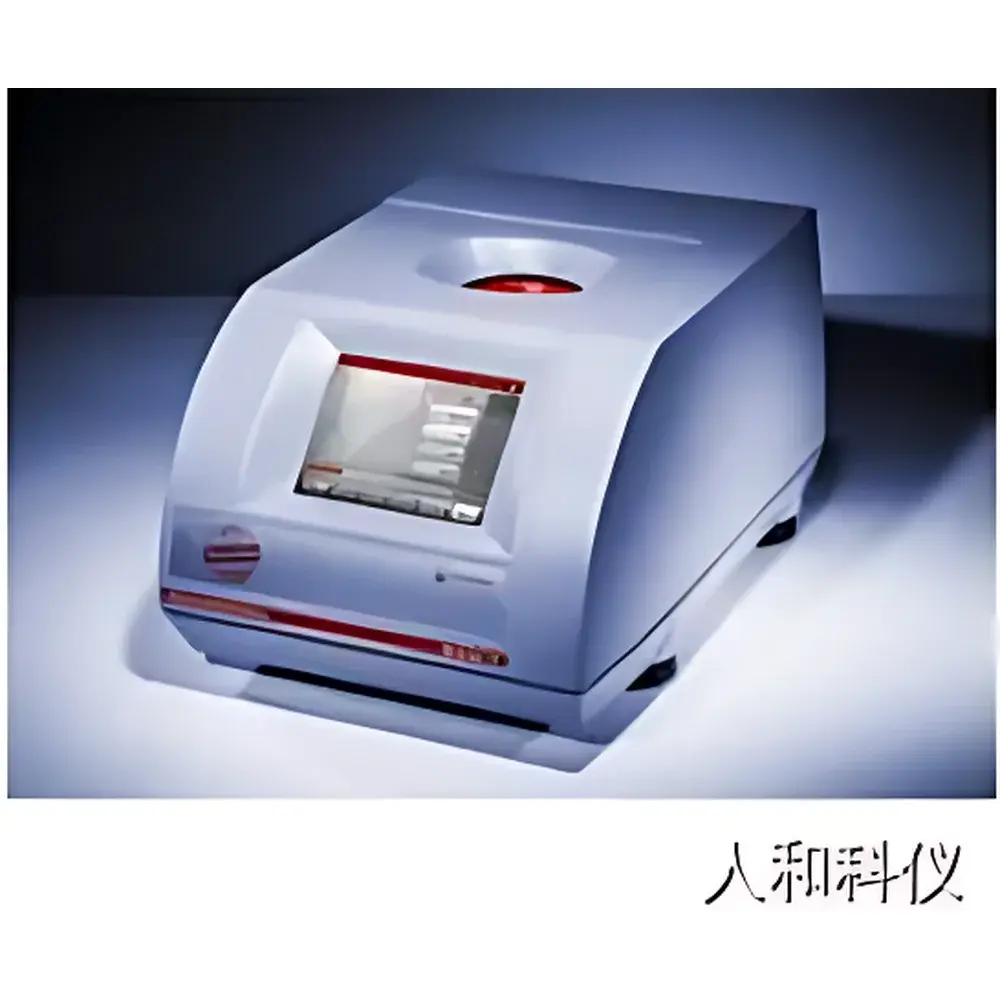
Anton Paar Monowave 400/200 Single-Mode Microwave Synthesis System
| Brand | Anton Paar |
|---|---|
| Origin | Austria |
| Model | Monowave 400 / Monowave 200 |
| Temperature Range | 0–300 °C |
| Pressure Range | 0–30 bar (Monowave 400), 0–20 bar (Monowave 200 |
| Microwave Power | 850 W |
| Magnetron Frequency | 2450 MHz |
| Stirring Method | Magnetic stirring |
| Maximum Reaction Volume | 30 mL |
| Vial Material | Borosilicate glass or silicon carbide |
| Cap & Seal Material | PEEK with Teflon-coated silicone |
| Temperature Sensing | Dual IR pyrometer + fiber-optic probe |
| Integrated Camera | Yes (Monowave 400) |
| Autosampler Compatibility | MAS 24 (optional, requires mounting bracket G4) |
Overview
The Anton Paar Monowave 400 and Monowave 200 are single-mode microwave synthesis platforms engineered for precision, reproducibility, and safety in academic and industrial R&D laboratories. Unlike multimode cavity systems, single-mode technology delivers focused microwave energy into a precisely defined resonant cavity—enabling uniform field distribution, rapid heating kinetics, and exceptional control over reaction thermodynamics and kinetics. Each system operates at the standard industrial, scientific, and medical (ISM) frequency of 2450 MHz and employs non-pulsed 850 W magnetron power to ensure stable, continuous irradiation. The Monowave 400 supports maximum operating conditions of 300 °C and 30 bar, while the Monowave 200 offers 260 °C and 20 bar as standard—with field-upgradable firmware enabling expansion to Monowave 400 specifications. Both models integrate real-time dual-temperature monitoring: an infrared pyrometer for non-contact surface measurement and a fiber-optic probe for direct, immersion-based core temperature validation—critical for method transfer and regulatory compliance.
Key Features
- Single-mode cavity architecture delivering high electric field density and spatially homogeneous microwave coupling
- Dual independent temperature sensing (IR + fiber-optic) with automatic cross-validation and dynamic compensation algorithms
- Intelligent pressure monitoring via piezoresistive transducer with active venting control and overpressure safety interlock
- Programmable magnetic stirring synchronized with microwave output to prevent hot-spot formation and ensure mass transfer efficiency
- Integrated HD camera (standard on Monowave 400; optional upgrade for Monowave 200) for real-time visual reaction monitoring and documentation
- Modular design supporting seamless integration of MAS 24 robotic autosampler with G4 reaction vial holder for unattended sequential experimentation
- Borosilicate glass and silicon carbide vial options—chemically inert, microwave-transparent, and thermally robust across full operational range
Sample Compatibility & Compliance
The Monowave platform accommodates standard sealed vials (4 mL, 10 mL, and 30 mL formats) with PEEK caps and Teflon-coated silicone seals, ensuring compatibility with aggressive reagents including strong acids, halogenated solvents, and organometallic precursors. Silicon carbide vessels enable rapid heating of low-loss or microwave-transparent reaction mixtures (e.g., neat substrates, ionic liquids). All hardware and software comply with IEC 61000-6-3 (EMC), IEC 61000-6-4 (emissions), and IEC 61010-1 (safety for laboratory equipment). The system supports audit-trail-enabled operation per FDA 21 CFR Part 11 when used with Anton Paar’s Synthos software v3.00 or later—providing electronic signatures, user access levels, and immutable experiment logs required for GLP/GMP environments.
Software & Data Management
Synthos software (v3.00+) provides intuitive method development workflows, including guided loading strategies, kinetic profiling tools, and automated parameter optimization routines. Experimental data—including time-resolved temperature, pressure, power absorption, and video snapshots—is timestamped, structured in XML-based .syn files, and exportable to CSV or LIMS-compatible formats. The software supports method locking, version control, and remote monitoring via Ethernet or Wi-Fi. When paired with MAS 24, Synthos enables batch scheduling, failure recovery protocols, and automatic report generation—including summary statistics for replicate runs—facilitating DOE (Design of Experiments) implementation and analytical method validation per ICH Q2(R2).
Applications
- Method development and optimization for transition-metal-catalyzed cross-coupling (Suzuki, Heck, Buchwald–Hartwig)
- Solid-phase peptide synthesis under controlled thermal ramping and pressure stabilization
- Zeolite and MOF crystallization with precise nucleation control
- Preparation of metal oxide and chalcogenide nanoparticles with narrow size distribution
- Derivatization reactions requiring rapid, selective activation (e.g., acylation, sulfonation, nitration)
- Polymerization initiation (RAFT, ATRP) with minimized thermal degradation
- Heterocycle synthesis (triazoles, indoles, quinolines) via cycloaddition or condensation pathways
- Green chemistry applications using solvent-free or low-solvent conditions with enhanced energy efficiency
FAQ
What is the difference between Monowave 400 and Monowave 200?
The Monowave 400 supports higher maximum pressure (30 bar vs. 20 bar) and temperature (300 °C vs. 260 °C), includes an integrated camera, and ships with full firmware capability. The Monowave 200 can be upgraded in the field to match Monowave 400 specifications via software license and optional hardware modules.
Can the system operate under open-vessel conditions?
Yes—Synthos software supports open-vessel mode with reflux condenser accessories and real-time vapor temperature monitoring, suitable for solvent removal or low-boiling-point reactions.
Is fiber-optic temperature measurement mandatory for GLP compliance?
For regulated environments, dual-sensor validation (IR + fiber-optic) is strongly recommended to satisfy traceability requirements in USP <1058> and ASTM E2873–19, particularly when reporting temperature-dependent kinetic data.
What vial sizes are supported, and what is the maximum fill volume for each?
Standard configurations include 4 mL (max fill 2 mL), 10 mL (max fill 6 mL), and 30 mL (max fill 20 mL) vials—optimized to maintain safe pressure headspace and efficient microwave coupling.
Does the MAS 24 autosampler require dedicated lab space or additional utilities?
No—the MAS 24 mounts directly onto the Monowave base unit using the G4 bracket and draws power and communication exclusively through the host instrument’s interface; no external air supply, cooling, or network infrastructure is needed.



