
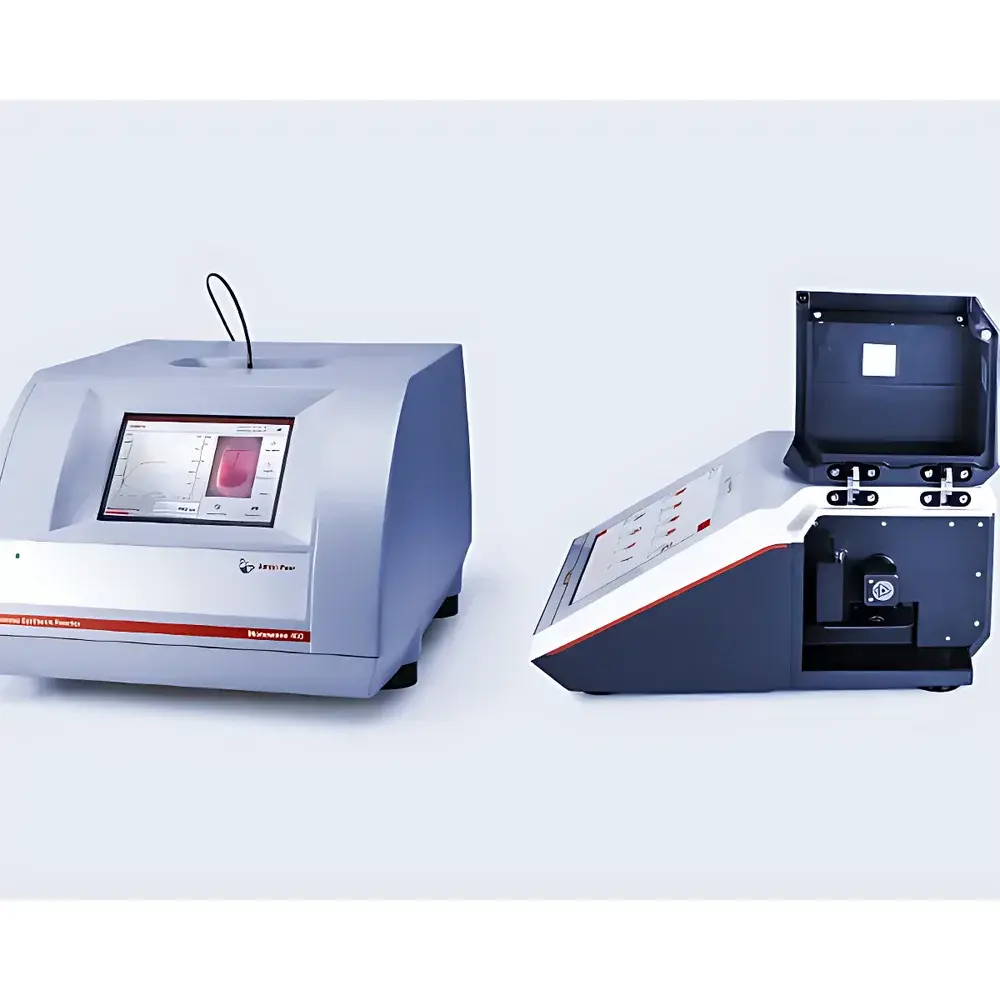
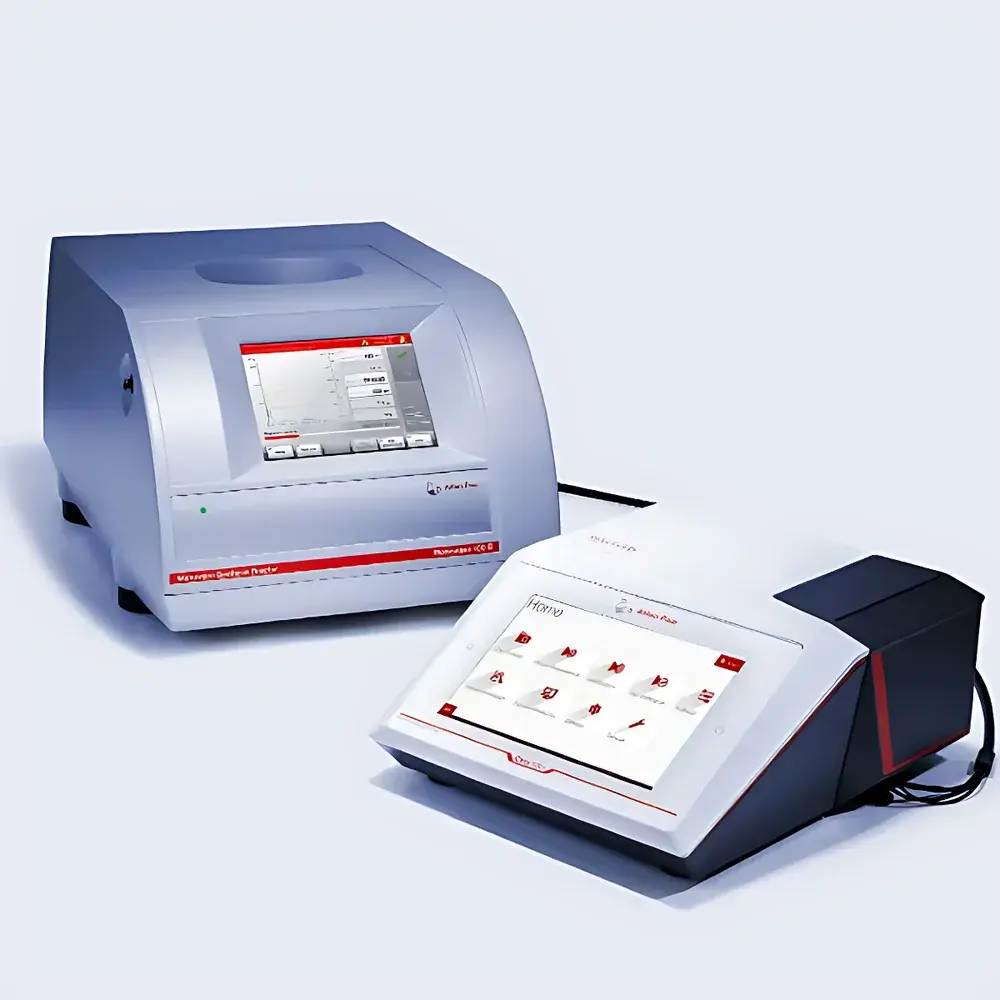
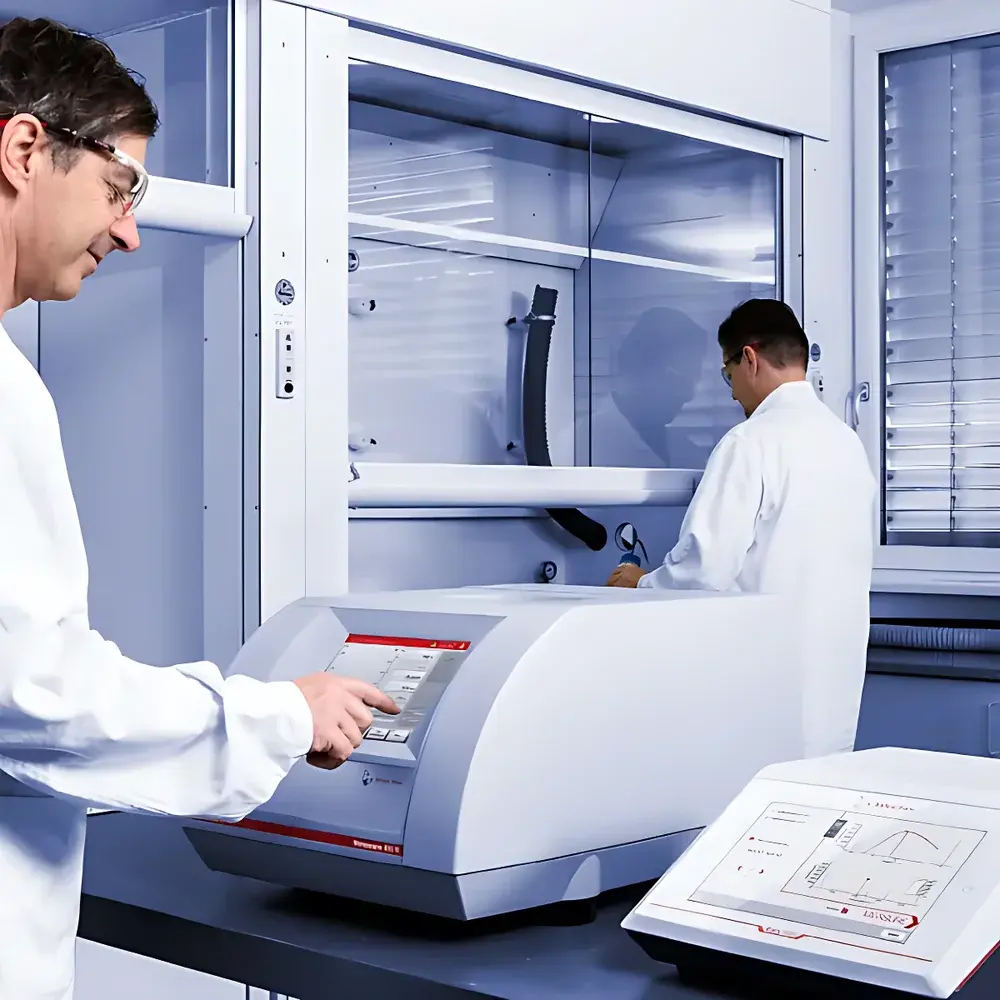
Anton Paar Monowave 400R & Cora 5001 Integrated Microwave Synthesis and In Situ Raman Spectroscopy System
| Brand | Anton Paar |
|---|---|
| Origin | Austria |
| Manufacturer | Anton Paar GmbH |
| Instrument Type | Single-Mode Microwave Synthesizer |
| Temperature Range | 0–300 °C |
| Pressure Range | 0–30 bar |
| Microwave Power | 850 W |
| Magnetron Frequency | 2.45 GHz |
| Stirring Mechanism | Magnetic Stirring |
| Reaction Volume | 30 mL |
| Coupling Interface | Fiber-Optic Raman Probe (Borosilicate-Glass Compatible) |
| Real-Time Monitoring | Time-Resolved In Situ Raman Acquisition |
Overview
The Anton Paar Monowave 400R & Cora 5001 Integrated Microwave Synthesis and In Situ Raman Spectroscopy System is an engineered platform for mechanistic reaction analysis under controlled, high-energy conditions. It combines single-mode microwave irradiation—capable of delivering rapid, volumetric, and selective heating—with real-time molecular fingerprinting via fiber-coupled Raman spectroscopy. Unlike conventional “black-box” synthesis systems, this integrated architecture enables simultaneous control of thermodynamic parameters (temperature, pressure, power) and direct chemical interrogation of the reaction mixture without sampling or quenching. The system operates on the principle of resonant microwave energy absorption by polar molecules and ionic species, enabling precise thermal ramping up to 300 °C and 30 bar within sealed borosilicate vials. Concurrently, the Cora 5001 spectrometer acquires Raman spectra through the vial wall using a Class 1 laser source, leveraging vibrational mode signatures to identify functional groups, quantify species concentrations, and detect transient intermediates. This dual-modality design supports kinetic modeling, pathway elucidation, and endpoint determination with high temporal resolution—critical for modern process chemistry, catalysis development, and pharmaceutical route scouting.
Key Features
- Single-mode microwave cavity with 850 W maximum output and 2.45 GHz magnetron frequency, ensuring reproducible energy coupling and minimal hot-spot formation
- Integrated temperature and pressure monitoring with active feedback control; PID-regulated heating profiles prevent overshoot and support isothermal holds
- Fiber-optic Raman probe optimized for transmission through standard borosilicate reaction vials (2–20 mL scale), eliminating cross-contamination and enabling true non-invasive measurement
- Adjustable acquisition parameters: user-defined time intervals (down to 1 s), integration times (10 ms–60 s), and spectral resolution (≤8 cm⁻¹)
- Interlocked safety architecture: microwave and laser subsystems activate only when the Monowave 400R rotating lid is fully closed and sealed, complying with IEC 61000-4-3 and IEC 60825-1 (Class 1 laser product)
- Modular hardware interface supporting synchronization of microwave events (e.g., power ramp, hold, cool-down) with spectral acquisition triggers
Sample Compatibility & Compliance
The system accommodates standard 10 mL and 30 mL Monowave reaction vials made from high-purity borosilicate glass (Duran®), compatible with a broad range of organic solvents, aqueous media, and heterogeneous catalyst suspensions. No internal probe insertion is required—Raman measurements are performed through the vial wall, preserving sample integrity and enabling studies under inert, reducing, or oxidizing atmospheres. The platform meets essential regulatory expectations for analytical method development in GMP environments: raw spectral and process data are timestamped, version-controlled, and stored with full audit trail capability. While not pre-certified for 21 CFR Part 11, the software architecture supports electronic signature implementation and ALCOA+ data integrity principles when deployed with validated IT infrastructure.
Software & Data Management
The unified Control Software (Monowave Manager + Cora Suite) provides synchronized instrument orchestration, including automated method sequencing, real-time overlay of temperature/pressure traces with spectral evolution, and multivariate analysis tools (PCA, PLS regression). Spectral libraries can be built in-house or imported from commercial databases (e.g., RRUFF, NIST). All raw data—including interferograms, calibrated spectra, metadata (power, torque, pressure), and video logs of cavity status—are saved in vendor-neutral HDF5 format. Export options include CSV, JCAMP-DX, and mzML-compatible spectral tables for integration with third-party cheminformatics platforms (e.g., KNIME, MATLAB, Python-based SciPy workflows).
Applications
- Identification and kinetic profiling of reactive intermediates (e.g., carbocations, metal–ligand adducts, enolates) inaccessible via offline sampling
- Mechanistic validation of cross-coupling reactions (Suzuki, Heck, Buchwald–Hartwig) under accelerated conditions
- Real-time tracking of crystallization onset, polymorph transition, or gelation events during heated synthesis
- Quantitative monitoring of reagent consumption, byproduct accumulation (e.g., HCl, CO₂), and catalyst deactivation pathways
- Development of solvent-free or low-solvent protocols where conventional sampling introduces error or decomposition
- Supporting Quality-by-Design (QbD) initiatives in API process development per ICH Q5, Q8, and Q9 guidelines
FAQ
Can the system operate with non-borosilicate vessels?
No—the Raman probe is calibrated for optical transmission through standardized Duran® glass. Quartz or sapphire vessels require optical recalibration and are not supported out-of-the-box.
Is external cooling required for extended runs?
The Monowave 400R incorporates an integrated air-cooling circuit; no external chiller is needed for standard operation up to 300 °C/30 bar.
What spectral range does the Cora 5001 cover?
785 nm excitation with a typical Raman shift range of 200–3200 cm⁻¹, optimized for organic functional group detection and low-fluorescence performance.
How is data synchronization achieved between microwave and Raman modules?
Hardware-level TTL triggering ensures sub-millisecond alignment of spectral acquisition start pulses with microwave event timestamps (e.g., power-on, hold initiation).
Does the system support automated reaction screening?
Yes—method templates allow batch execution across multiple vials with variable temperature ramps, hold times, and spectral acquisition schedules, though sequential (not parallel) processing applies per run.



