
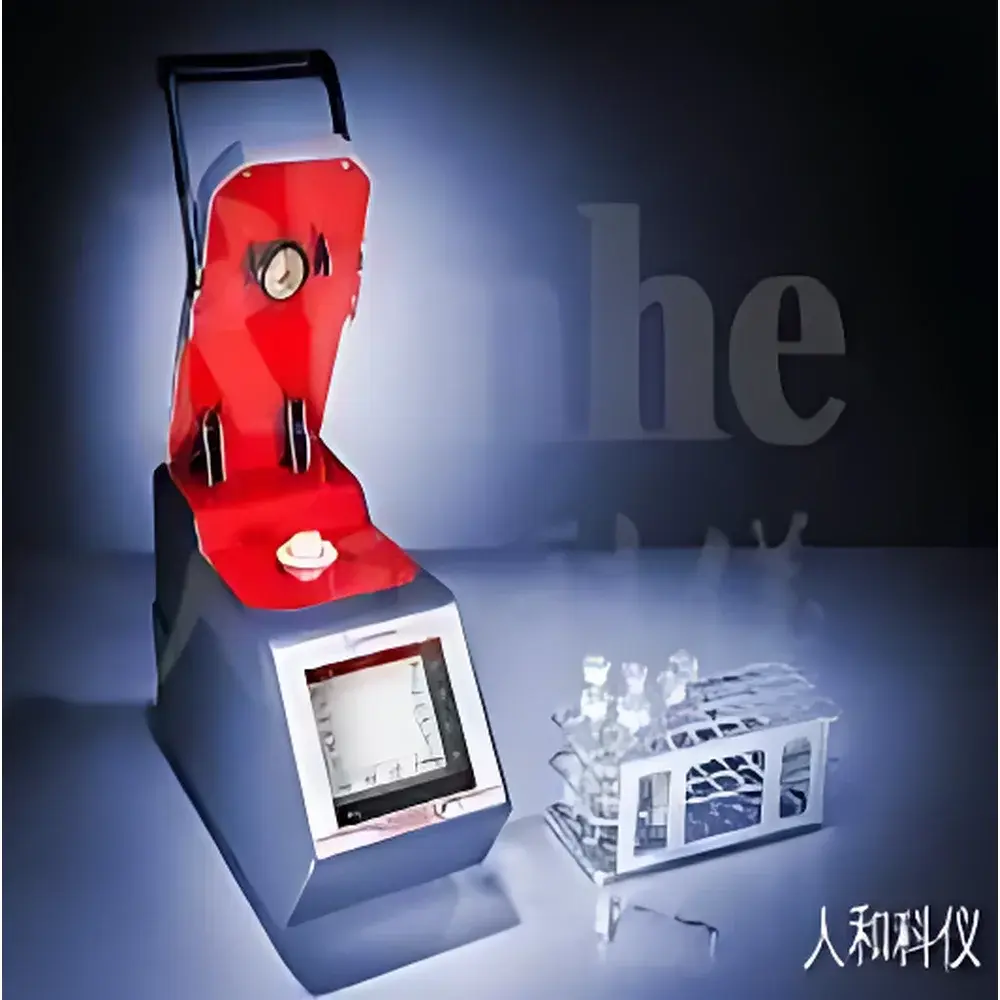
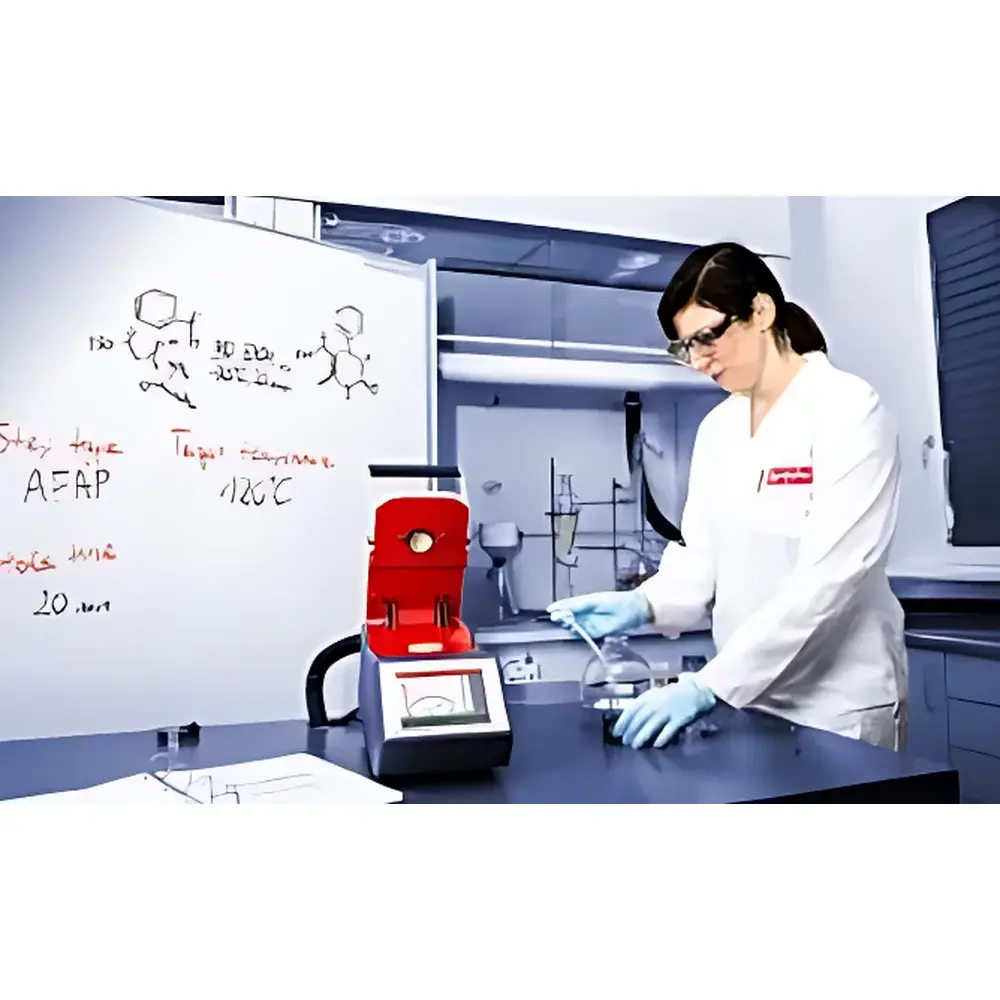
Anton Paar Monowave 50 Microwave Synthesis Reactor
| Brand | Anton Paar |
|---|---|
| Origin | Austria |
| Model | Monowave 50 |
| Temperature Range | Ambient to 250 °C |
| Temperature Control Accuracy | ±0.1 °C |
| Maximum Operating Pressure | 20 bar (290 psi) |
| Reaction Volume | 6 mL |
| Heating Power | 315 W |
| Reactor Chamber Material | Borosilicate Glass |
| Seal Material | PTFE |
| Cap Material | Silicone |
| Dimensions | 25 cm × 40 cm × 20 cm |
| Weight | 8.5 kg |
Overview
The Anton Paar Monowave 50 is a single-mode, benchtop microwave synthesis reactor engineered for precision-controlled, rapid organic synthesis under sealed-vessel conditions. Utilizing focused microwave irradiation at 2.45 GHz, it delivers homogeneous and reproducible energy coupling directly into the reaction mixture—enabling accelerated reaction kinetics without thermal lag or hot-spot formation. Unlike multimode cavity systems, the Monowave 50’s waveguide-coupled single-mode design ensures consistent field distribution and precise power delivery across the entire 6 mL reaction volume. This architecture supports method development, optimization, and small-scale preparative synthesis in academic teaching labs, pharmaceutical R&D, and materials chemistry workflows where safety, repeatability, and minimal solvent consumption are critical. Its compact footprint and integrated thermal management eliminate external cooling water requirements—aligning with green chemistry principles per ACS Guidelines and ISO 14001 laboratory sustainability frameworks.
Key Features
- Single-mode microwave cavity with 315 W magnetron output, enabling controlled, non-thermal energy transfer for enhanced reaction selectivity
- Real-time, dual-parameter monitoring of temperature (via fiber-optic probe) and pressure (via piezoresistive sensor), both logged at 1 Hz resolution
- Integrated capacitive touchscreen interface with preloaded method templates, user-defined ramp/hold profiles, and automatic end-point detection
- Borosilicate glass reaction vessels (6 mL capacity) with PTFE-sealed silicone caps—chemically inert, autoclavable, and compatible with >95% of common organic solvents and reagents
- Passive air-cooling system with thermally regulated heat sink; no external chiller or tap-water connection required
- Compliance with IEC 61000-6-3 (EMC) and IEC 61000-6-4 (emission) standards; CE-marked for safe operation in EU laboratories
Sample Compatibility & Compliance
The Monowave 50 accommodates standard 6 mL borosilicate glass vials equipped with PTFE-faced silicone septa, supporting reactions involving acids (e.g., HCl, HNO₃), bases (e.g., NaOH, KOtBu), organometallics (e.g., Grignard reagents), and air-sensitive substrates under inert atmosphere (N₂ or Ar purging via optional needle valve). Vessel geometry and microwave coupling efficiency have been validated per ASTM E2877-22 for microwave-assisted reaction reproducibility. The system meets GLP documentation requirements through timestamped, tamper-evident method logs and audit-trail-enabled parameter recording—fully traceable for regulatory submissions under FDA 21 CFR Part 11 when paired with Anton Paar’s optional LabX software module.
Software & Data Management
Instrument control and data acquisition are managed via the embedded Monowave OS, which stores all experimental metadata—including power profiles, temperature/pressure curves, and user annotations—in encrypted .csv and .pdf report formats. Raw sensor data is exportable for third-party kinetic modeling (e.g., MATLAB, OriginLab). Optional integration with LabX Lite enables centralized instrument fleet management, electronic signature support, and role-based access control—facilitating compliance with ISO/IEC 17025 and GMP Annex 11 requirements. All firmware updates are delivered via secure HTTPS and include version-locked calibration certificates traceable to NIST standards.
Applications
- Accelerated heterocycle synthesis (e.g., Suzuki, Heck, Buchwald–Hartwig couplings) with 5–10× reduction in reaction time versus oil-bath heating
- Peptide coupling and solid-phase synthesis using low-volume, high-concentration protocols
- Nanoparticle nucleation and crystallization studies under precisely defined T/P trajectories
- Teaching laboratory implementation: standardized undergraduate experiments in green chemistry, kinetics, and catalysis—validated by ECTS-aligned curricula across European universities
- Method scouting for API intermediate synthesis where thermal degradation must be avoided
FAQ
What safety mechanisms prevent over-pressurization during microwave heating?
The Monowave 50 employs redundant hardware safeguards: a rupture disc rated at 20 bar, real-time pressure feedback loop that reduces microwave power if setpoints are exceeded, and automatic shutdown if vessel deformation is detected via capacitive proximity sensing.
Can the system be used for open-vessel reflux reactions?
No—it is designed exclusively for sealed-vessel operation. Open-vessel applications require alternative platforms such as Anton Paar’s EcoChemi series.
Is method transfer possible between Monowave 50 and larger Anton Paar reactors (e.g., Multiwave PRO)?
Yes—scaling is supported via dimensionless power density normalization and identical vessel geometry; Anton Paar provides method translation guidelines compliant with ICH Q5C principles.
Does the instrument support remote monitoring or network connectivity?
Standard Ethernet port enables local network access for file export and status polling; full remote control requires LabX Enterprise licensing and IT-approved VLAN segmentation.
What maintenance intervals are recommended for long-term reliability?
No scheduled maintenance is required beyond annual verification of temperature/pressure sensor calibration using NIST-traceable reference standards—documented in the included Certificate of Conformance.



