
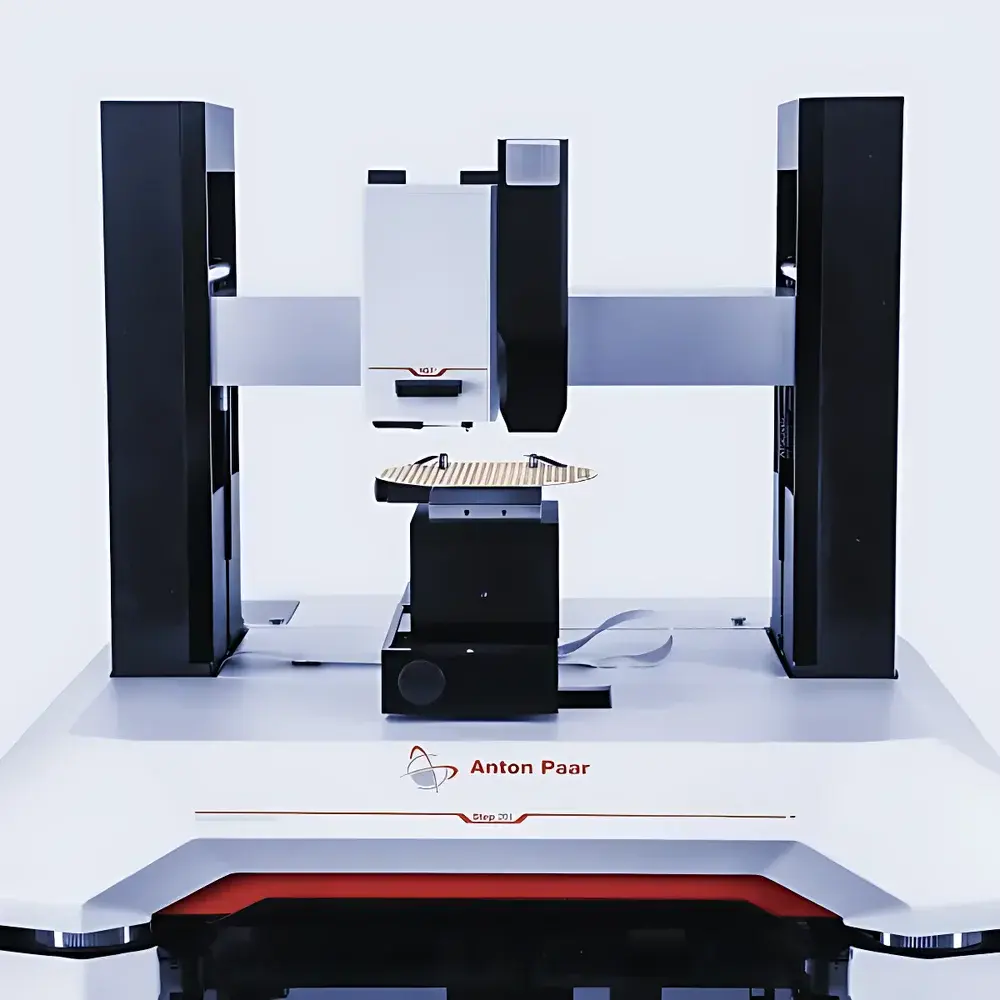
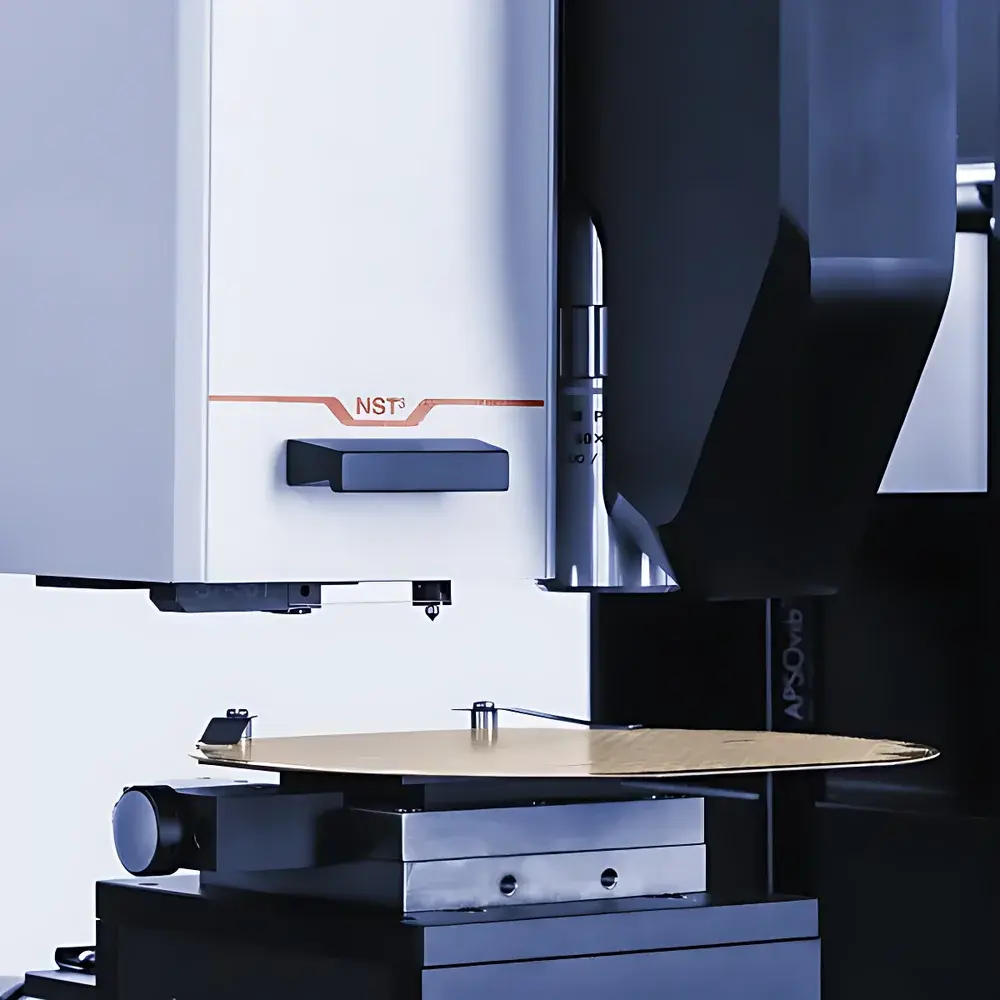
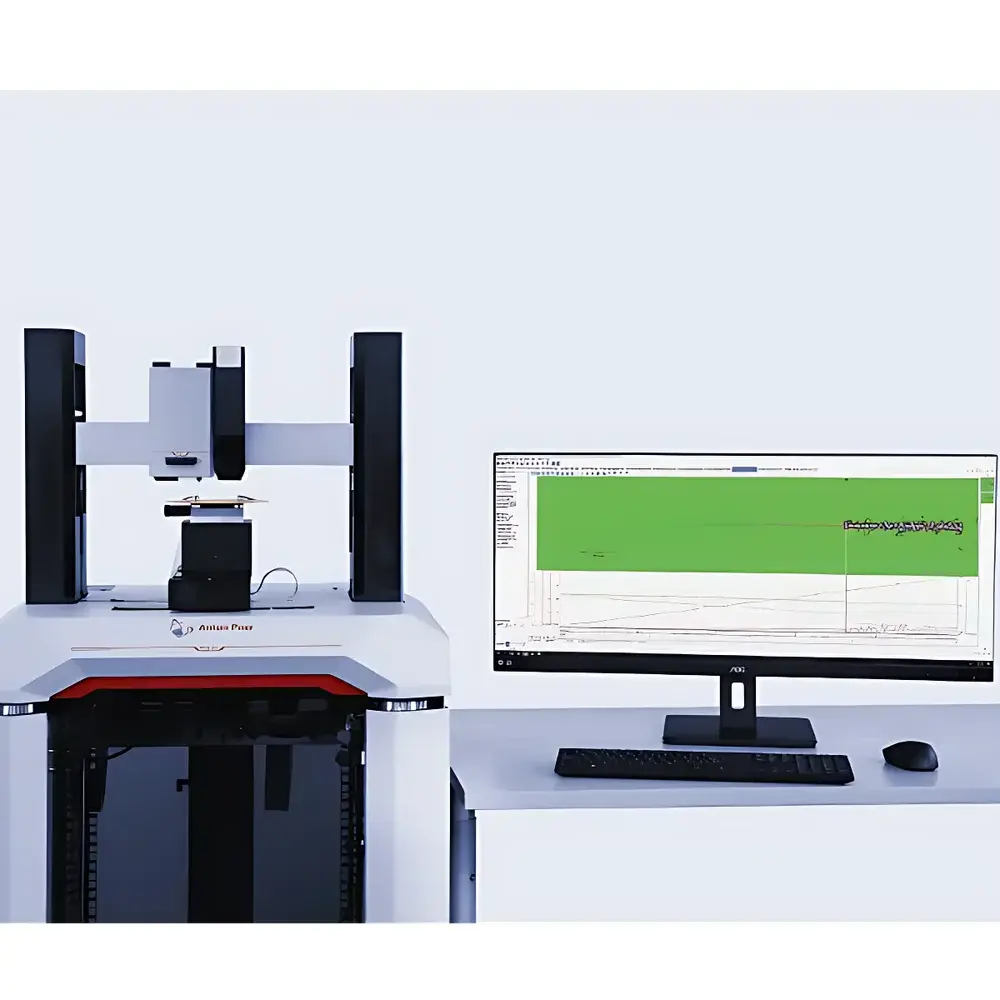
Anton Paar NST³ Nano Scratch Tester
| Brand | Anton Paar |
|---|---|
| Origin | Austria |
| Manufacturer | Anton Paar GmbH |
| Type | Imported Instrument |
| Model | NST³ |
| Instrument Category | Nanoindentation and Scratch Tester |
| Maximum Indentation Depth | 1 µm |
| Load Resolution | 0.01 µN |
| Displacement Range | 600 µm |
| Maximum Friction Force | 1 N |
Overview
The Anton Paar NST³ Nano Scratch Tester is a high-precision, research-grade instrument engineered for quantitative mechanical characterization of ultra-thin films and coatings—typically ≤1000 nm in thickness—under controlled normal load and lateral motion. It operates on the fundamental principle of quasi-static and dynamic scratch testing, combining calibrated normal force actuation with real-time, synchronized measurement of penetration depth, frictional response, acoustic emission, and surface topography. Designed specifically for tribological and adhesion assessment, the NST³ enables critical load (Lc) determination, coating delamination onset analysis, interfacial fracture mapping, and viscoelastic recovery quantification. Its architecture integrates piezoelectric actuation, dual-sensor feedback (load and displacement), and closed-loop force control to ensure metrological traceability and sub-micron spatial fidelity across diverse substrate geometries—including non-planar, rough, or curved surfaces.
Key Features
- Synchronized Panoramic Imaging & Data Acquisition: Patented panoramic imaging (U.S. Patent No. 8,261,600; EP 2065695) captures the full scratch length in focus while simultaneously time-aligning optical frames with all sensor signals (normal load, friction, depth, AE), enabling pixel-accurate correlation between morphological features and mechanical events.
- Ultra-High Load Resolution & Low Noise Floor: Achieves 0.01 µN load resolution with RMS noise of 0.1 µN, enabled by a dedicated force transducer integrated directly into the loading train—ensuring true load feedback independent of actuator hysteresis or thermal drift.
- True Penetration Depth Measurement via Pre-/Post-Scan Compensation: Employs a reference surface scan prior to scratching to characterize topography (roughness, waviness, curvature); subsequent depth data are corrected in real time using this baseline, yielding physically meaningful penetration and residual depth values—even on non-ideal substrates.
- Multi-Stage Elastic Recovery Analysis: Supports unlimited post-scratch delay scans at user-defined time intervals, allowing time-resolved quantification of elastic rebound, creep relaxation, and viscoelastic recovery kinetics after unloading.
- Modular STEP Platform Integration: Fully compatible with Anton Paar’s STEP platform, enabling seamless co-mounting with nanoindention modules, AFM heads, and environmental chambers—supporting correlative nanomechanical + topographical + chemical analysis within a single, vibration-isolated framework.
Sample Compatibility & Compliance
The NST³ accommodates rigid and compliant substrates ranging from silicon wafers and optical glasses to polymer films, metallic foils, and biomedical coatings. Its closed-loop force control and adaptive Z-stage compensate for surface tilt up to ±5° and vertical deviations exceeding 100 µm, ensuring consistent contact conditions across heterogeneous or topographically complex samples. The system complies with ISO 20502 (nanoscale indentation and scratch testing), ASTM E2546 (standard guide for nanomechanical testing), and supports audit-ready documentation aligned with GLP and GMP requirements. All raw data—including timestamps, sensor calibration metadata, and environmental logs—are stored in vendor-neutral HDF5 format, facilitating long-term archival and third-party analysis.
Software & Data Management
The proprietary Nova software provides full instrument control, automated test sequencing, and integrated data visualization. It supports scripting via Python API for custom protocols and batch processing. Critical load analysis employs multiple validated algorithms—including acoustic emission onset, friction coefficient inflection, and depth deviation thresholds—with overlayable confidence bands. All measurements include embedded calibration certificates traceable to national metrology institutes (e.g., PTB, NIST). Audit trails record operator ID, parameter changes, and file modifications in accordance with FDA 21 CFR Part 11 requirements when configured with electronic signature modules.
Applications
- Quantitative adhesion evaluation of PVD/CVD coatings (TiN, DLC, Al2O3) on cutting tools and biomedical implants
- Mechanical stability screening of anti-reflective, hydrophobic, and barrier coatings on flexible electronics substrates
- Time-dependent recovery behavior of soft lithographic resins and stimuli-responsive polymer films
- Interfacial failure mode identification in multilayer stacks (e.g., OLED encapsulation, battery solid electrolytes)
- Correlation of scratch morphology with in situ AE signatures for predictive coating lifetime modeling
FAQ
What is the minimum measurable critical load (Lc) with the NST³?
The theoretical lower limit is defined by the load resolution (0.01 µN) and signal-to-noise ratio; practical detection depends on coating stiffness, substrate compliance, and acoustic coupling—but routinely achieves Lc quantification down to ~100 µN for hard coatings on stiff substrates.
Can the NST³ perform tests under controlled humidity or temperature?
Yes—when integrated with Anton Paar’s environmental modules (e.g., Humidity Chamber HUMI or Temperature Stage TS), it supports scratch testing from −30 °C to +200 °C and RH 5–95% with continuous environmental monitoring.
Is AFM integration hardware-compatible or software-only?
AFM head mounting is fully mechanical and electrical via the STEP platform’s standardized interface; Nova software natively controls both scratch and AFM modules, enabling synchronized acquisition without external synchronization hardware.
How does the NST³ handle surface roughness during depth calibration?
Pre-scan topography is acquired at ≥10× higher lateral resolution than scratch width; depth correction uses local surface slope and curvature interpolation—not simple averaging—ensuring accurate penetration depth even over RMS roughness >50 nm.
Are calibration standards provided with the instrument?
Yes—certified reference samples (e.g., fused silica for depth, calibrated cantilevers for load) are supplied with initial commissioning, and periodic recalibration services are available through Anton Paar’s accredited metrology labs in Graz and Boston.



