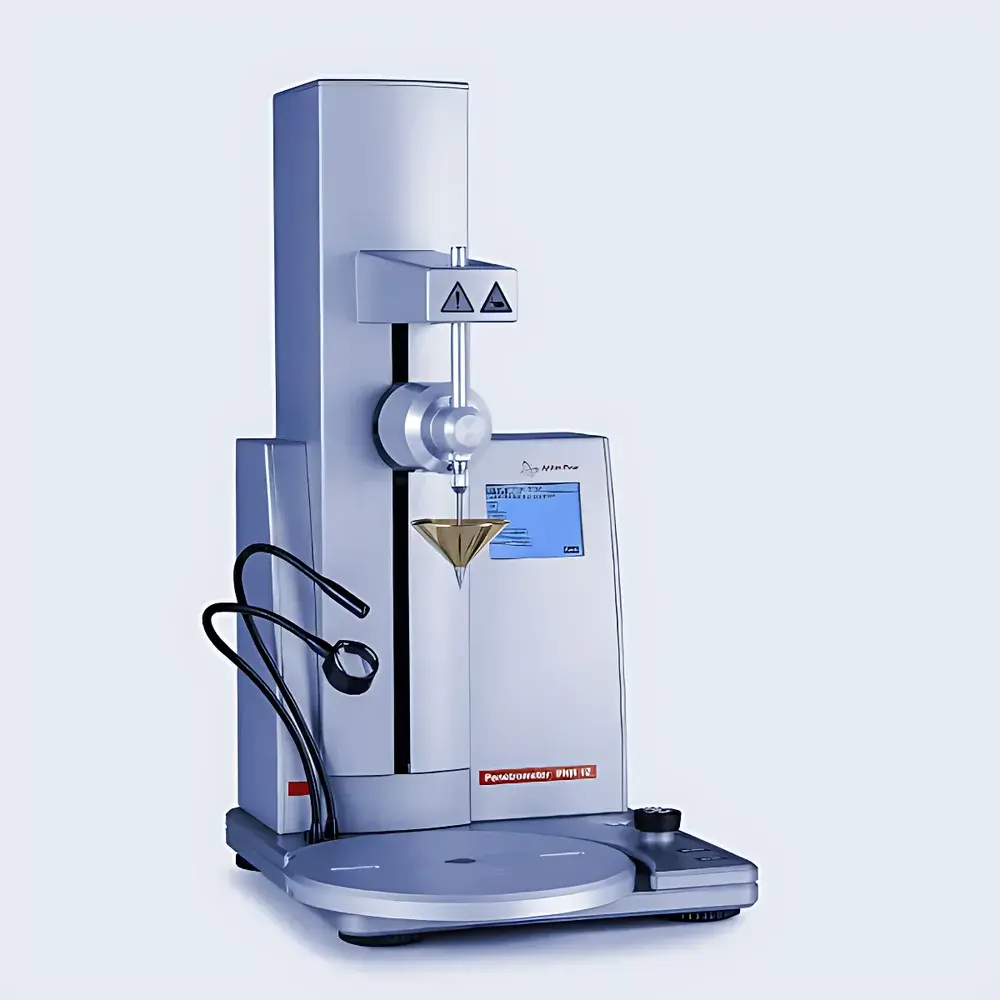
Anton Paar PNR 12 Automatic Penetrometer
| Brand | Anton Paar |
|---|---|
| Origin | Germany |
| Manufacturer | Anton Paar GmbH |
| Product Type | Imported Instrument |
| Model | PNR 12 |
| Pricing | Upon Request |
Overview
The Anton Paar PNR 12 Automatic Penetrometer is a precision-engineered instrument designed for standardized determination of penetration depth in semi-solid and viscous materials under controlled load, time, and temperature conditions. Based on the fundamental principle of mechanical indentation—where a standardized needle or cone is allowed to descend into a sample under defined gravitational or applied force—the PNR 12 delivers traceable, reproducible measurements compliant with internationally recognized test methodologies. Its operation adheres to core physical principles of static deformation resistance, where penetration depth (in mm) serves as an inverse indicator of material consistency or hardness. The system integrates high-resolution linear displacement sensing, calibrated force transmission via precision-machined lever arms, and programmable thermal stabilization interfaces—enabling rigorous conformance to ASTM, EN, ISO, USP, and Ph. Eur. standards across petroleum, lubricant, pharmaceutical, food, and construction material testing domains.
Key Features
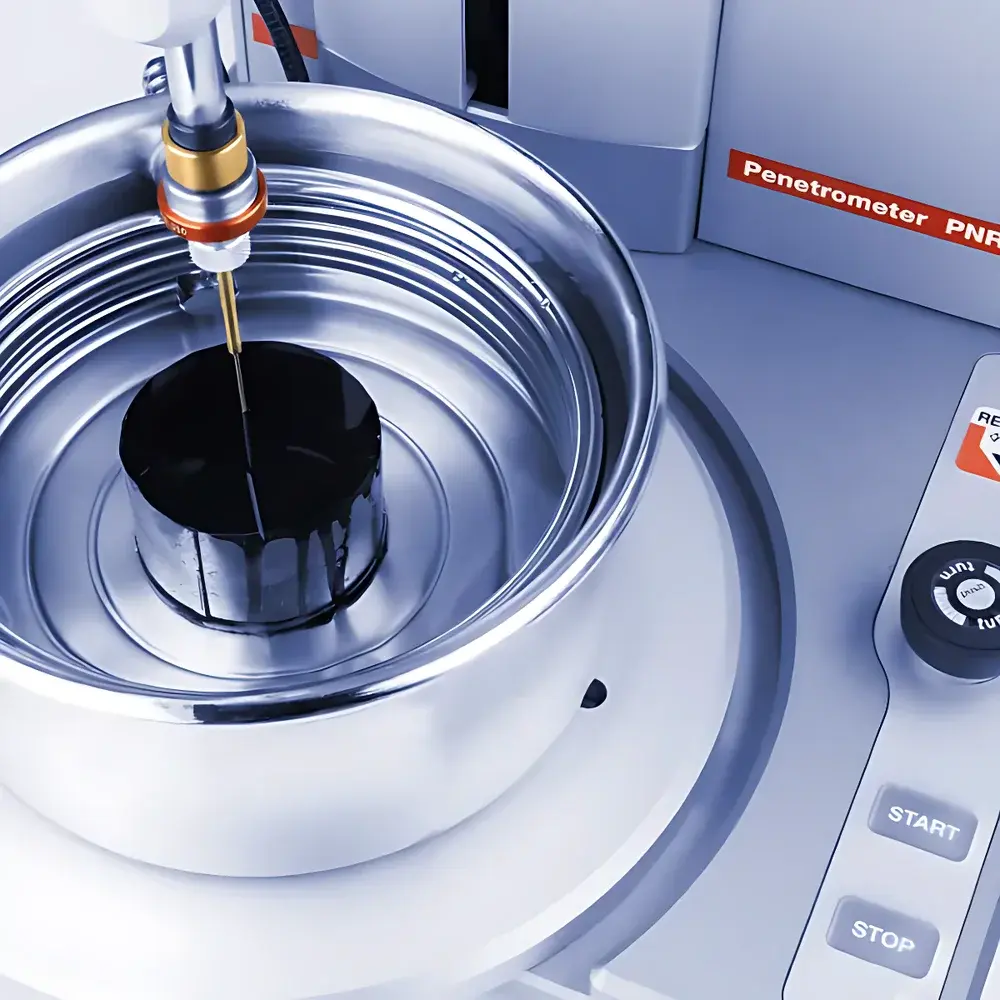
- Automated surface detection using dual-mode sensing: capacitive detection for conductive (e.g., aqueous) samples and high-precision force-sensing for non-conductive, high-viscosity matrices—including bitumen, greases, waxes, and pharmaceutical ointments.
- Motorized vertical axis with backlash-free lead screw drive ensures repeatable positioning accuracy of ±0.01 mm over a 0–80 mm measurement range.
- Programmable test parameters: penetration time (0.1 s to 999,999 s), pre-test delay (up to 9999 s), and dwell time—all configurable per method.
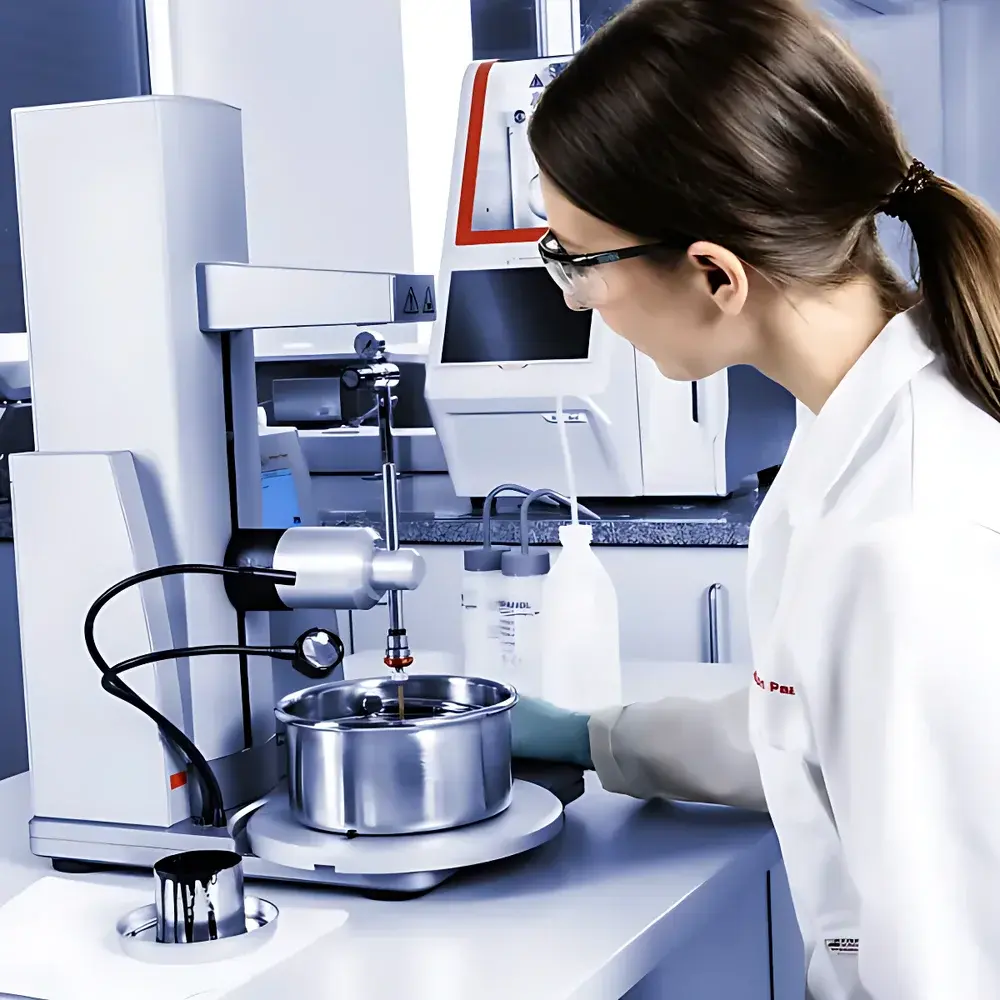
- Ergonomic design with glove-compatible tactile buttons, integrated LED sample illumination, and optical magnifier for manual surface preparation.
- Modular accessory compatibility: supports ASTM D5/D217/D1403-compliant asphalt needles, grease cones, pharmacopeial cones (Ph. Eur. 2.9.9, USP <915>), and AOCS Cc 16-60 dairy cones.
- Onboard calibration verification suite for time, depth, and temperature—traceable to national metrology institutes via optional certified calibration kits.
Sample Compatibility & Compliance
The PNR 12 accommodates a broad spectrum of temperature-stabilized samples—including asphalt binders (EN 1426, ASTM D5), NLGI-grade greases (ASTM D217, ISO 2137), pharmaceutical semisolids (USP <915>, Ph. Eur. 2.9.9), edible fats (AOCS Cc 16-60), and cosmetic waxes. All standard-compliant probes are mechanically interlocked and auto-recognized by firmware. The instrument supports GLP/GMP-aligned workflows through audit-trail-enabled software (PQP-S documentation package), full 21 CFR Part 11 compliance options, and integration with external temperature control systems (e.g., recirculating baths). Regulatory alignment includes ASTM, ISO, EN, USP, Ph. Eur., and AOCS test method requirements—with hardware-level validation of probe geometry, mass, and drop height per standard specifications.
Software & Data Management
The PNR 12 operates with Anton Paar’s dedicated Penetrator Control Software, supporting up to 20 stored test methods—16 user-definable and 4 factory-preset. Real-time conversion algorithms automatically translate raw penetration values into industry-specific indices: NLGI consistency class, EN asphalt grade, solid-cone equivalents (¼- and ½-cone conversions), and edible fat “C-value” per AOCS methodology. Up to 200 test results are retained onboard with timestamp, operator ID, environmental metadata (temperature, humidity if interfaced), and pass/fail status against user-defined specification limits. Data export is supported via USB mass storage (CSV/Excel-ready), Ethernet/LAN for LIMS integration, and optional direct printer output. PQP-S (Performance Qualification Protocol – Standard) documentation enables rapid requalification and regulatory audit readiness.
Applications
- Petroleum: Bitumen penetration grading (ASTM D5, EN 1426), oxidized asphalt characterization, and cutback asphalt consistency evaluation.
- Lubricants: Grease consistency classification (NLGI grades), shear stability assessment, and multi-temperature penetration profiling.
- Pharmaceuticals: Ointment and cream hardness qualification per USP <915> and Ph. Eur. 2.9.9; batch release testing under GMP conditions.
- Foods: Butter and margarine firmness analysis (AOCS Cc 16-60), cocoa butter polymorphism screening, and edible wax consistency control.
- Construction & Coatings: Tar-based sealant hardness, coal-tar pitch consistency, and polymer-modified binder rheological screening.
FAQ
Does the PNR 12 support automated temperature control during testing?
Yes—via optional integration with Anton Paar’s TCU 100 or third-party recirculating baths using analog/digital I/O or RS-232/USB protocols.
Can the instrument validate probe geometry and mass in-house?
Yes—using the optional certified calibration kit (including traceable depth gauge, certified weights, and dimensional reference cones), users perform routine verification per ISO/IEC 17025 requirements.
Is audit trail functionality included by default?
Basic event logging is standard; full 21 CFR Part 11-compliant electronic records, user role management, and digital signature support require PQP-S software licensing and configuration.
What is the maximum allowable sample viscosity for reliable surface detection?
The force-sensing surface detection mode remains effective up to 10⁶ mPa·s (e.g., unaged bitumen at 25 °C); for higher viscosities, manual surface positioning with optical aid is recommended.
How frequently must the system be recalibrated?
Anton Paar recommends annual performance qualification using PQP-S; interim verification with certified calibration kits is advised before critical batches or after mechanical impact.