
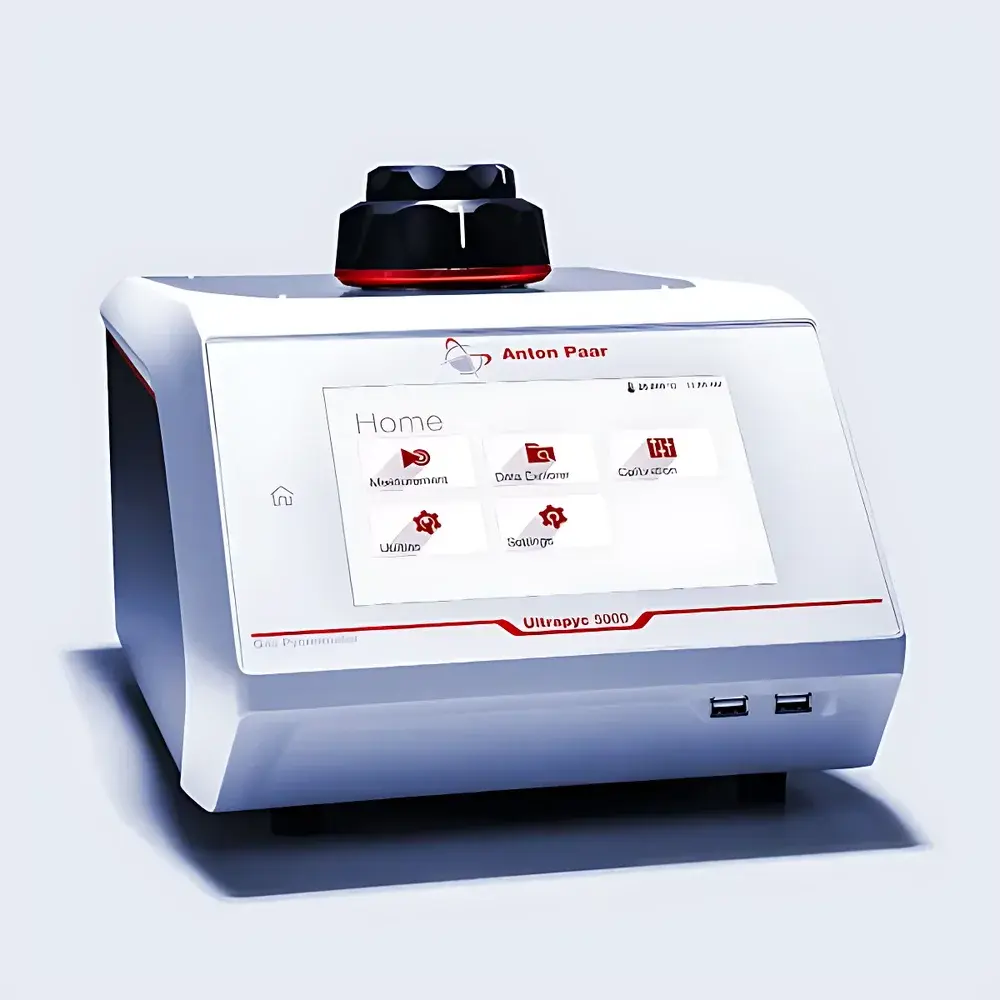
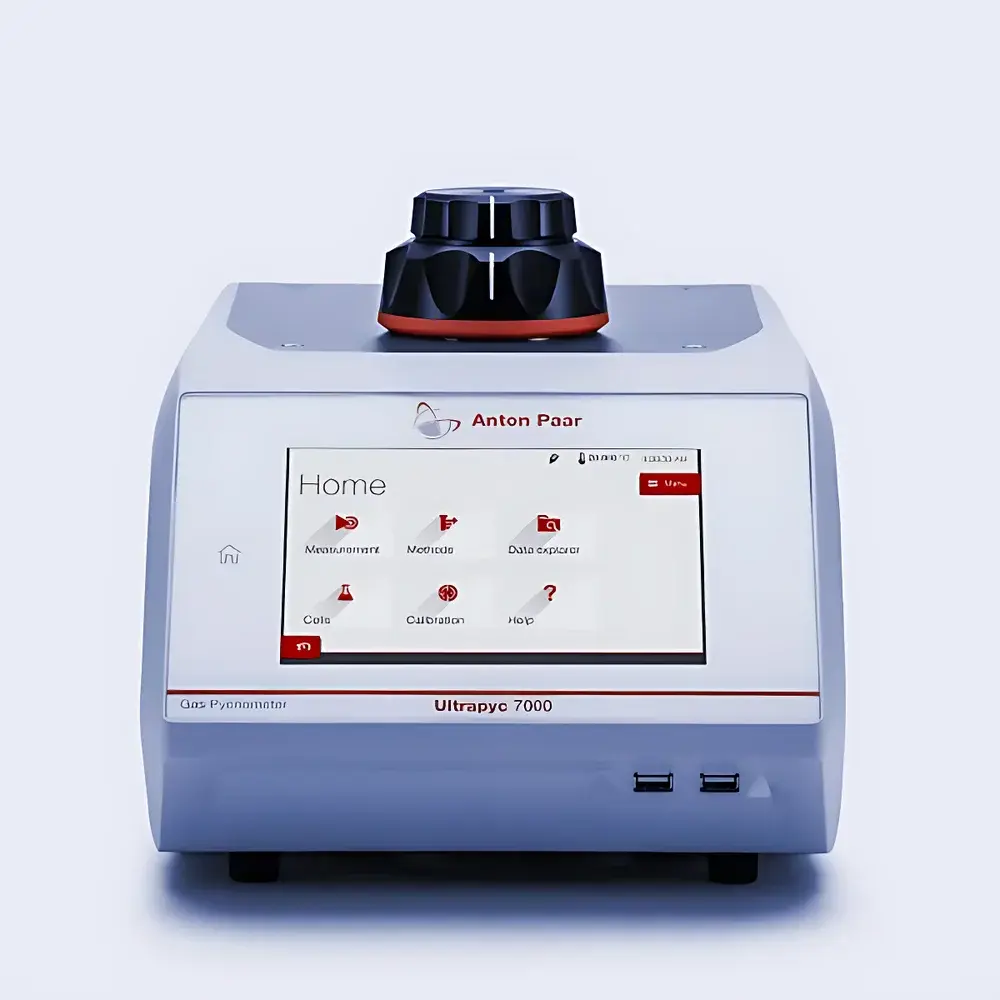
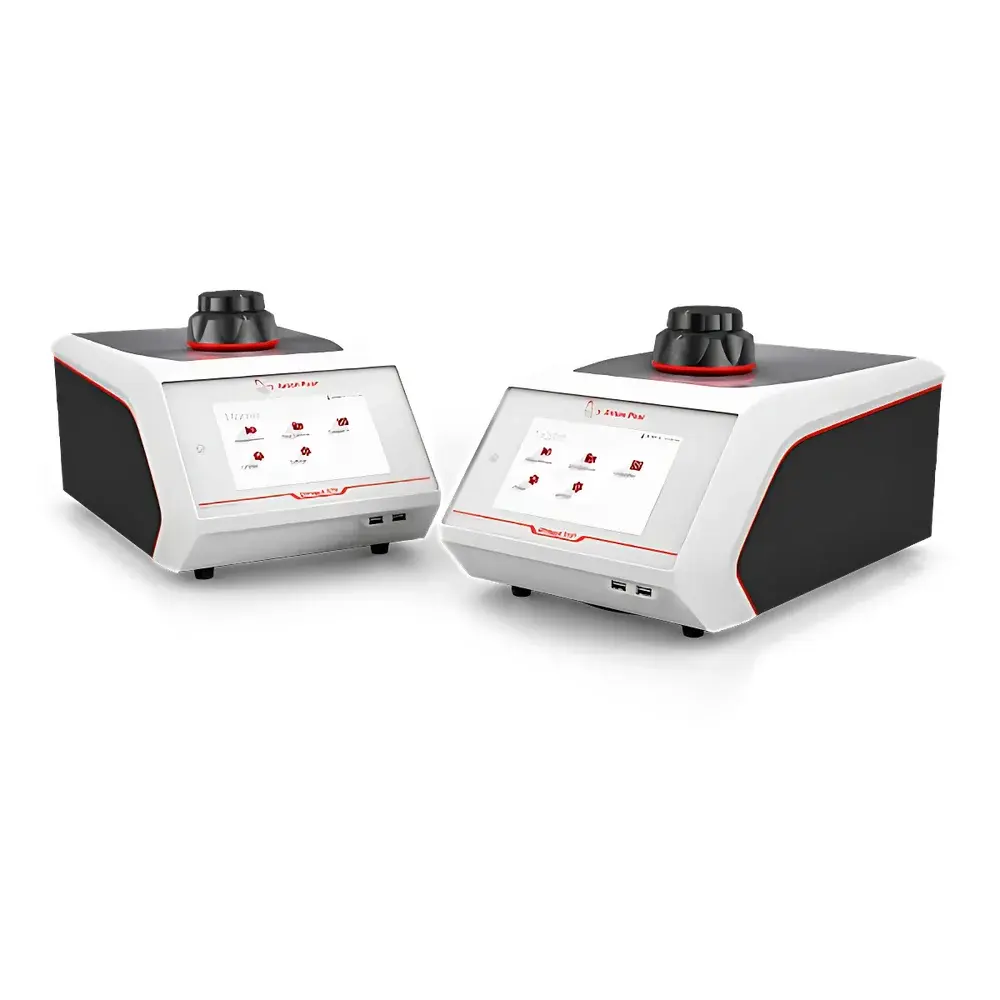
Anton Paar Quantachrome Ultrapyc Series Automated True Density Analyzer
| Brand | Anton Paar |
|---|---|
| Origin | USA |
| Manufacturer Type | Manufacturer |
| Origin Category | Imported |
| Model | Ultrapyc Series |
| Instrument Type | True Density Analyzer |
| Instrument Class | Benchtop Laboratory |
| Sample Type | Solids (bulk & granular), Powders, Pastes, Slurries, Foams |
| Density Accuracy | ≤0.015% |
| Display | 7-inch TFT WVGA (800 × 480 px) PCAP Touchscreen |
| Temperature Range | 3–60 °C |
| Minimum Sample Volume | 0.1 cm³ |
Overview
The Anton Paar Quantachrome Ultrapyc Series is an automated true density analyzer engineered for high-precision gas pycnometry based on the gas expansion principle (ASTM D5550, ISO 12154, USP <699>). It determines the skeletal (true) density of solid and semi-solid materials by measuring the volume displacement of a non-reactive gas—typically ultra-high-purity helium—within a sealed, thermally stabilized measurement chamber. Unlike bulk or apparent density methods, true density excludes interstitial voids and pore spaces, making it essential for quality control in pharmaceuticals, advanced ceramics, battery electrode materials, catalysts, polymers, and geoscience applications. The Ultrapyc Series integrates TruLock dual-rotating self-aligning chamber lids, patented PowderProtect bidirectional gas flow, and active temperature regulation to ensure repeatability across heterogeneous, volatile, or low-cohesion samples—including powders, slurries, foams, and viscous pastes.
Key Features
- Automated method selection and execution: Full measurement cycle—from sample loading to result display—in under 3 minutes; single-density measurement completed in ≤60 seconds.
- TruLock chamber sealing system: Ensures repeatable, leak-free cavity volume with mechanical self-alignment and torque-controlled closure, eliminating operator-induced variability in chamber volume.
- PowderProtect technology: Patented bidirectional gas flow prevents powder entrainment into pressure sensors and valves, enabling safe analysis of fine, cohesive, or volatile powders without risk of contamination or instrument damage.
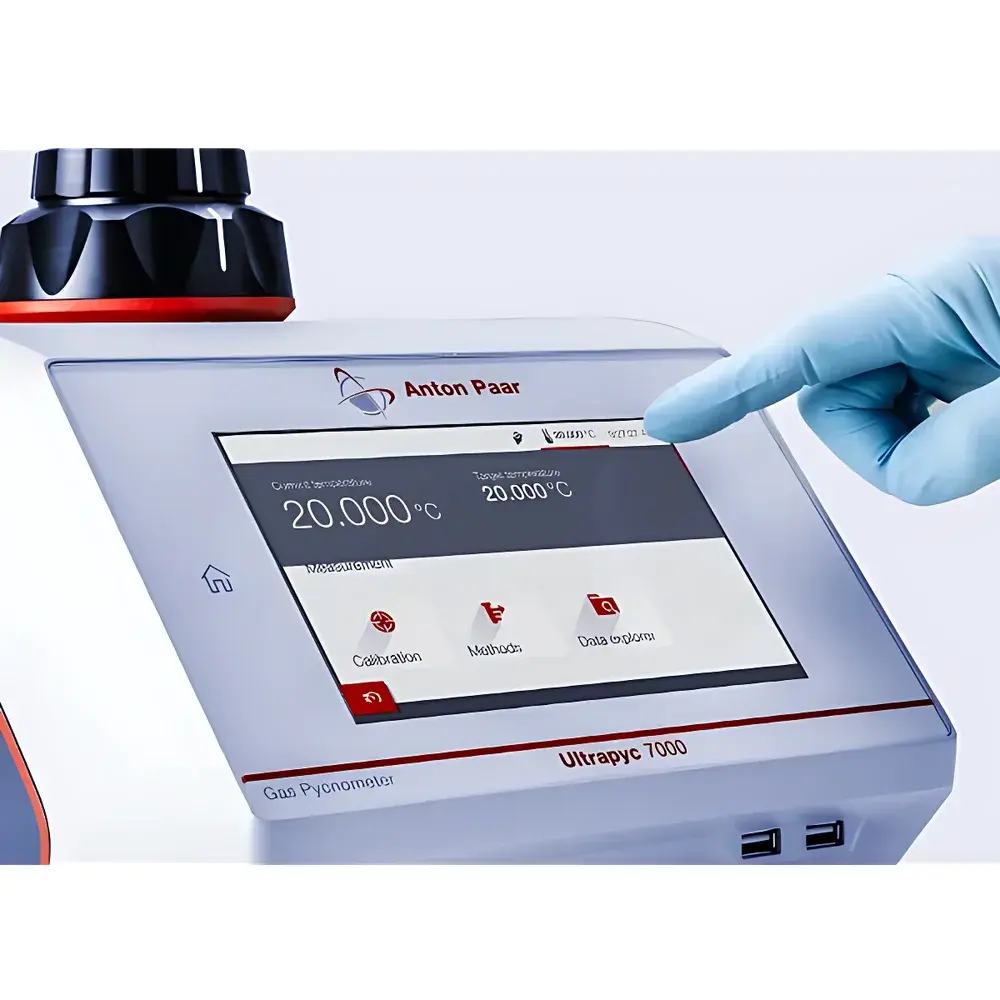
- Ultra-precise thermal management: Active Peltier-based temperature control (3–60 °C) with stability of ±0.02 °C at sample level (per ISO 17025-compliant validation protocols), critical for temperature-sensitive gels, bituminous materials, and suspensions.
- Modular sample cell architecture: Interchangeable cells ranging from 0.1 cm³ (Ultrapyc 7000 Micro) to 135 cm³ support diverse sample forms—from rare reference standards to industrial bulk aggregates—without recalibration.
- One-touch disposable cup integration: Enables rapid, contamination-free measurement of sticky, adhesive, or residue-prone substances (e.g., asphalt, polymer melts, wet clays) using certified single-use cups compatible with ASTM D7897.
Sample Compatibility & Compliance
The Ultrapyc Series accommodates a broad spectrum of physical states: rigid solids (metals, ceramics), friable granules (APIs, excipients), free-flowing powders (metal oxides, carbon black), semi-solids (gels, ointments), slurries (catalyst suspensions), and low-density open-cell foams. Its design complies with key regulatory and metrological frameworks: ISO/IEC 17025 for laboratory competence; FDA 21 CFR Part 11 requirements via AP Connect’s audit-trail-enabled electronic records; GLP/GMP-aligned workflow logging; and alignment with pharmacopeial standards (USP <699>, EP 2.2.47). All pressure transducers meet NIST-traceable calibration standards, and gas handling components are rated for use with ultra-high-purity He, N₂, or Ar at ≤2.07 bar (30 psi).
Software & Data Management
Controlled via a 7-inch capacitive touchscreen running a dedicated embedded OS, the Ultrapyc interface supports multilingual operation (English, German, French, Spanish, Japanese, Korean, Chinese, Portuguese, Turkish, Polish) and integrates natively with Anton Paar’s AP Connect Laboratory Execution System (LES). AP Connect provides secure, role-based user access, method versioning, digital signature capture, full audit trail (including parameter changes, calibration events, and environmental logs), and seamless export to LIMS or ELN platforms via CSV, PDF, or direct API. Built-in customizable method libraries include pre-validated routines for foam porosity calculation (ASTM D6226), slurry density correction, and temperature-dependent drift compensation. All data files are timestamped, digitally signed, and stored with cryptographic integrity verification.
Applications
- Pharmaceutical QA/QC: True density of active pharmaceutical ingredients (APIs), excipients, and lyophilized formulations to assess crystallinity, polymorphic transitions, and batch consistency.
- Battery R&D: Skeletal density of cathode/anode powders (e.g., NMC, LFP, silicon composites) to correlate with tap density, compaction behavior, and electrode porosity modeling.
- Advanced Materials: Characterization of metal-organic frameworks (MOFs), aerogels, and porous carbons where pore volume exclusion is critical for BET surface area cross-validation.
- Geotechnical & Mining: Density profiling of mineral concentrates, tailings, and clay fractions to support beneficiation process optimization and resource estimation.
- Quality Assurance in Polymers & Composites: Verification of filler loading homogeneity, void content in cured composites, and degradation-induced density shifts in recycled plastics.
FAQ
What gases are compatible with the Ultrapyc Series?
Helium is recommended for highest accuracy due to its small molecular size and inertness; nitrogen and argon are acceptable alternatives for non-critical applications or cost-sensitive workflows.
Can the Ultrapyc measure closed-cell foam density?
Yes—when combined with optional vacuum-degassing pretreatment, the system accurately measures true density of closed-cell foams per ASTM D2842, provided cell walls are impermeable to the test gas.
Is calibration traceable to national standards?
All pressure and temperature sensors are factory-calibrated against NIST-traceable references; users may perform in-house verification using certified reference volumes (TruPyc standards) supplied with each instrument.
How does PowderProtect prevent sensor fouling during powder analysis?
PowderProtect dynamically reverses gas flow direction before pressure equilibration, sweeping particulates away from the sensing diaphragm and back toward the sample chamber—eliminating need for filter maintenance or downtime.
Does the system support 21 CFR Part 11 compliance?
Yes—when operated within AP Connect with enabled electronic signatures, audit trails, and user access controls, the Ultrapyc meets all technical and procedural requirements for regulated environments.



