
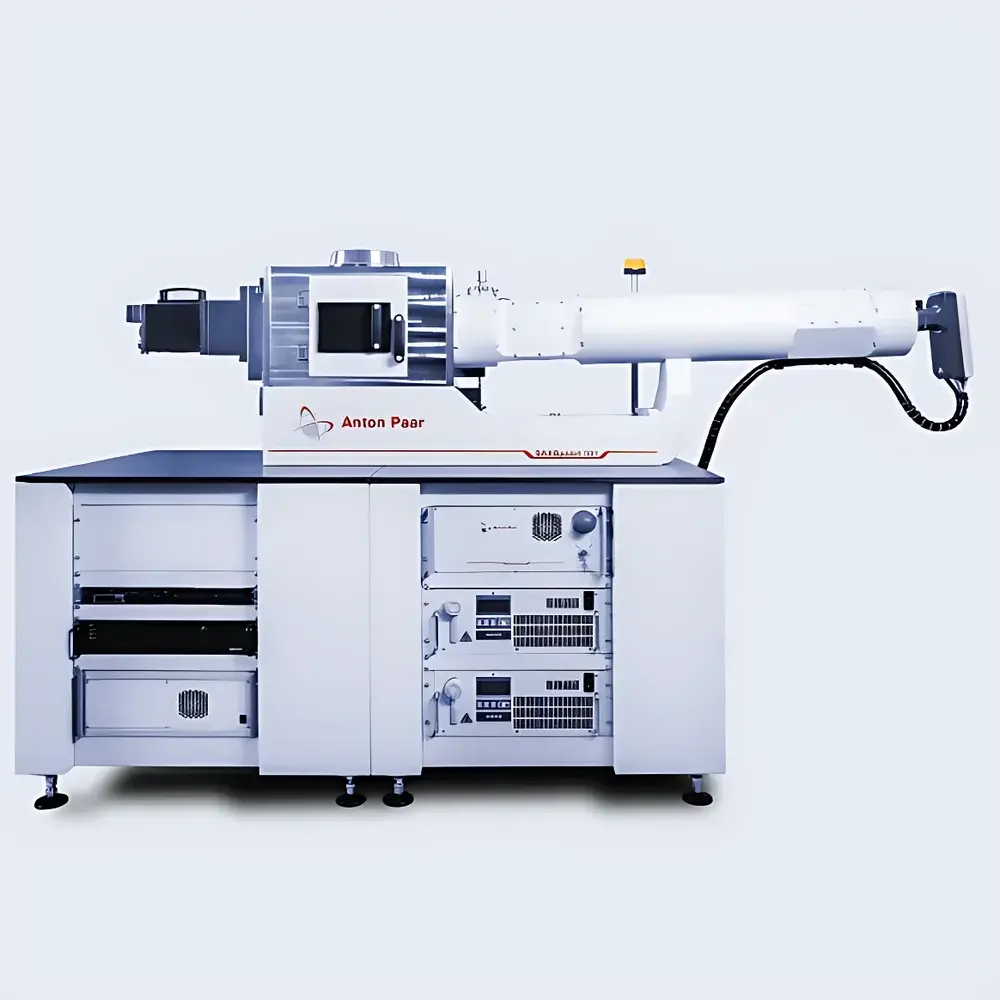
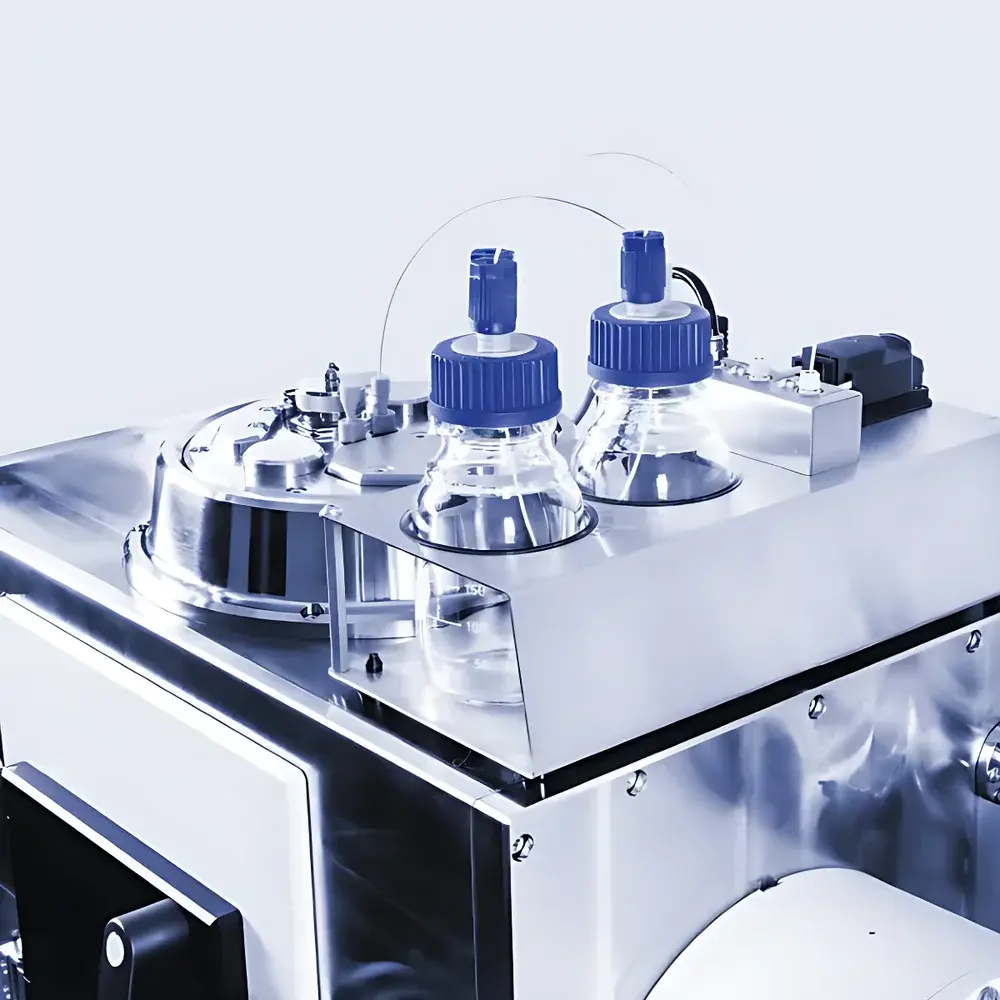
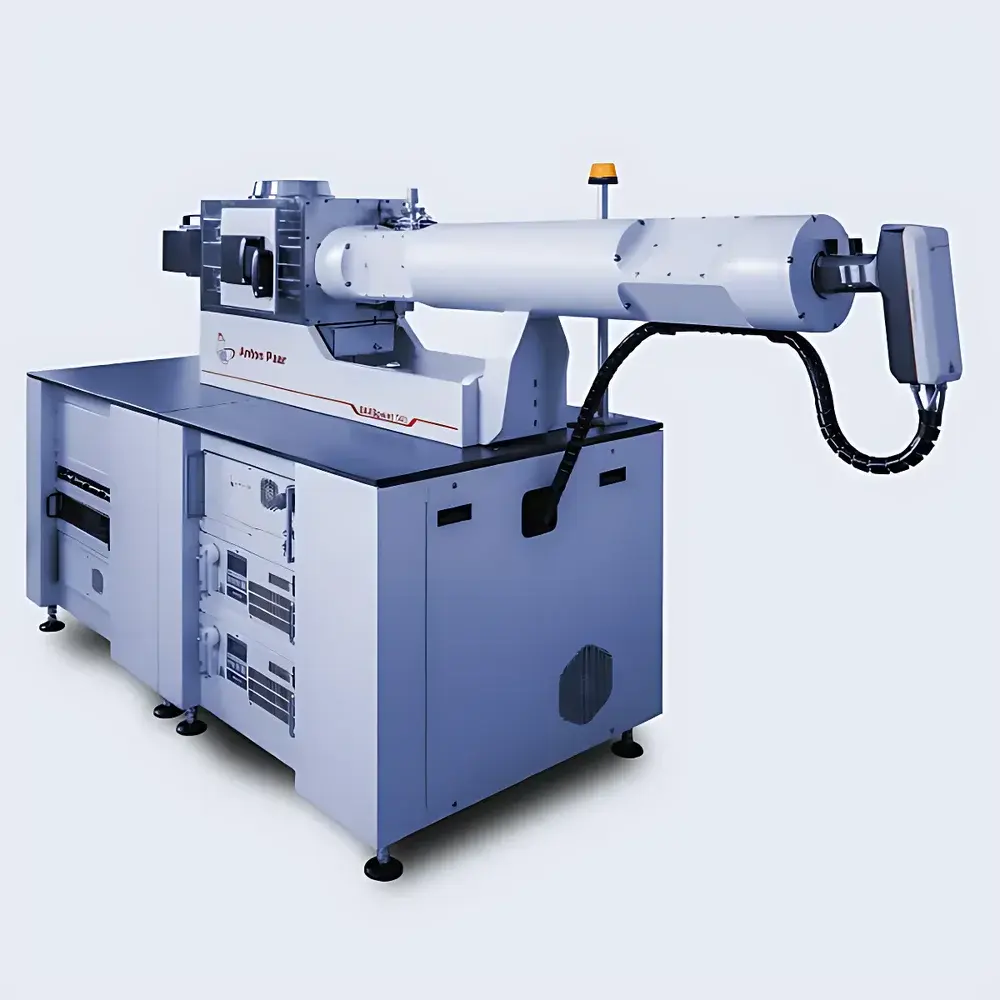
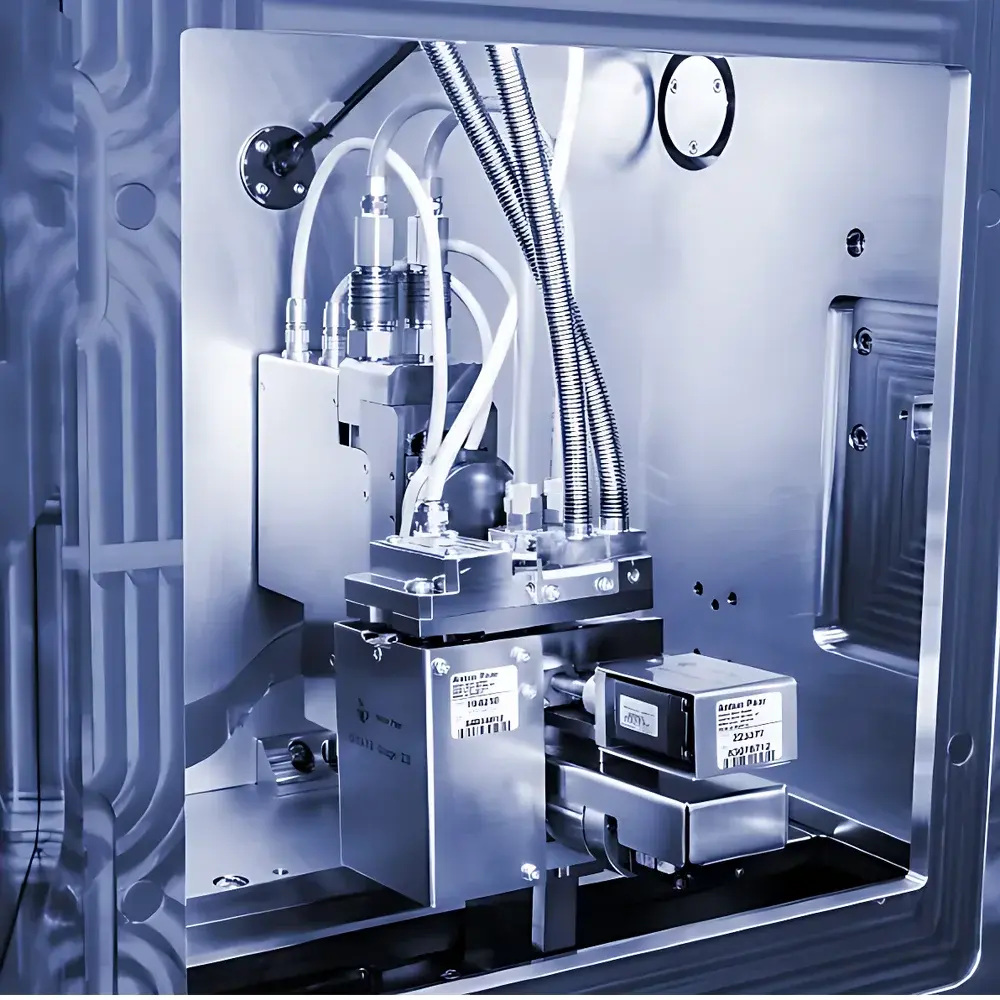
Anton Paar SAXSpoint 500 Small-Angle X-ray Scattering System
| Brand | Anton Paar |
|---|---|
| Origin | Austria |
| Manufacturer Type | Manufacturer |
| Origin Category | Imported |
| Model | SAXSpoint 500 |
| Instrument Type | Small-Angle X-ray Scattering (SAXS) System |
| q-Range | 0.02 nm⁻¹ to 43 nm⁻¹ |
Overview
The Anton Paar SAXSpoint 500 is a benchtop small-angle X-ray scattering (SAXS) system engineered for high-fidelity structural characterization of nanoscale materials in laboratory environments. Based on Cu Kα radiation (λ = 0.154 nm) and utilizing a microfocus X-ray source (Primux 100), the system delivers synchrotron-comparable data quality through a fully vacuum-enclosed, custom-designed optical path incorporating AXO ASTIX/ASTIX++ monochromators and scatter-free beam collimation. Its core measurement principle relies on elastic X-ray scattering at low momentum transfer (q = 4πsinθ/λ), enabling quantitative analysis of particle size distributions, shape anisotropy, internal density fluctuations, and long-range order in soft matter, polymers, colloids, proteins, and nanostructured solids. With a measurable q-range spanning 0.02–43 nm⁻¹ — corresponding to real-space structural information from ~0.15 nm up to ~300 nm — the SAXSpoint 500 supports both conventional SAXS and combined SAXS/WAXS (wide-angle X-ray scattering) experiments, including grazing-incidence (GISAXS) configurations for thin-film and surface-sensitive studies.
Key Features
- TrueFocus™ Automatic Beam Alignment: Real-time, motorized collimator and detector positioning ensures optimal beam geometry without manual intervention, minimizing setup time and operator dependency.
- TrueSWAXS™ Simultaneous Acquisition: Enables concurrent collection of small-angle and wide-angle scattering patterns using dual-detector configurations or energy-resolved detection, critical for correlating nanoscale morphology with crystallinity.
- Stagemaster™ Intelligent Sample Stage Recognition: Fully motorized XYZ platform auto-detects mounted sample holders (e.g., TCStage, GISAXS stage, ASX autosampler), applying preconfigured calibration and safety parameters per module.
- Ultra-High Spectral Purity: >99.9% Cu Kα monochromatic output eliminates parasitic radiation, reducing background noise and improving signal-to-noise ratio in low-intensity scattering regimes.
- Compact Footprint & Vacuum-Optimized Optics: Entire beam path operates under high vacuum (≤10⁻³ mbar), eliminating air scattering and enabling stable, reproducible measurements across extended exposure times — all within a footprint of only 2.7 m × 0.9 m.
- High-Flux Optional Optics: Upgradable to high-performance optics delivering >6 × 10⁸ photons/s at the sample position, significantly reducing acquisition time for radiation-sensitive or low-concentration samples.
Sample Compatibility & Compliance
The SAXSpoint 500 accommodates diverse sample formats via interchangeable, application-specific stages and holders. These include quartz capillaries for liquids, low-background SiN membranes for ultra-dilute solutions, rotating sample stages for isotropic averaging, flow cells for in situ reaction monitoring, and multi-capillary racks for high-throughput screening. Temperature control spans –150 °C to +500 °C with ±0.1 °C accuracy, supporting cryogenic polymer studies, thermal denaturation of biomacromolecules, and high-temperature catalysis research. Environmental control options include inert gas purging, humidity regulation, and reactive atmosphere compatibility (e.g., H₂, O₂) for operando experiments. All hardware and software modules comply with ISO 20804:2018 (Determination of particle size distribution by SAXS), and data handling workflows support audit trails required for GLP/GMP-regulated laboratories. Full traceability of instrument calibration, sample metadata, and processing history aligns with FDA 21 CFR Part 11 requirements when configured with electronic signature and user access controls.
Software & Data Management
SAXSdrive™ provides intuitive, scriptable control over measurement sequences — including temperature ramps, time-resolved kinetics, and multi-sample batch runs — with full integration of hardware interlocks and environmental feedback loops. SAXSanalysis™ offers standardized, publication-ready workflows for Guinier analysis, Porod modeling, Kratky plot generation, pair-distance distribution function (p(r)) computation, and model-based fitting (e.g., core-shell spheres, cylinders, lamellae). Templates are fully customizable and exportable; results are saved in HDF5 format with embedded metadata compliant with NeXus standards. Both applications receive free, lifetime updates, ensuring continuous alignment with evolving SAXS data reduction best practices and international standard revisions. Raw and processed datasets can be exported in ASCII, CSV, or CBF formats for third-party analysis or integration into LIMS environments.
Applications
- Structural characterization of block copolymers, micelles, and vesicles in solution
- Aggregation kinetics and conformational changes of therapeutic proteins and monoclonal antibodies
- Nanoparticle size distribution and polydispersity analysis in pharmaceutical formulations
- Morphology evolution during polymer melt processing and annealing
- Thin-film nanostructure development in organic photovoltaics and perovskite devices (via GISAXS)
- Pore size distribution and specific surface area quantification in mesoporous catalysts and MOFs
- In situ monitoring of sol-gel transitions, crystallization, and phase separation processes
FAQ
What is the minimum detectable particle size using the SAXSpoint 500?
The system resolves structures down to ~0.15 nm in real space, limited primarily by the qmax (43 nm⁻¹) and beam coherence — suitable for atomic-scale density fluctuations and fine-grained crystallites.
Can the SAXSpoint 500 perform time-resolved measurements?
Yes — SAXSdrive™ supports programmable trigger-based acquisition synchronized with external stimuli (e.g., syringe pumps, temperature controllers, light sources), enabling millisecond-to-hour scale kinetic studies.
Is remote operation supported?
Full remote access is enabled via secure VNC or RDP connections; instrument status, live detector images, and queue management are accessible through web-based dashboards.
Does the system meet regulatory compliance for pharmaceutical QA/QC?
When deployed with validated SOPs, electronic signatures, and audit-trail-enabled software configuration, it satisfies requirements for ISO 17025, USP <85>, and ICH Q5E guidelines for higher-order structure assessment.
What maintenance intervals are recommended?
Annual preventive maintenance is advised, including X-ray tube performance verification, vacuum integrity checks, optical alignment validation, and detector gain calibration — all performed by Anton Paar-certified field service engineers.
Related Products




