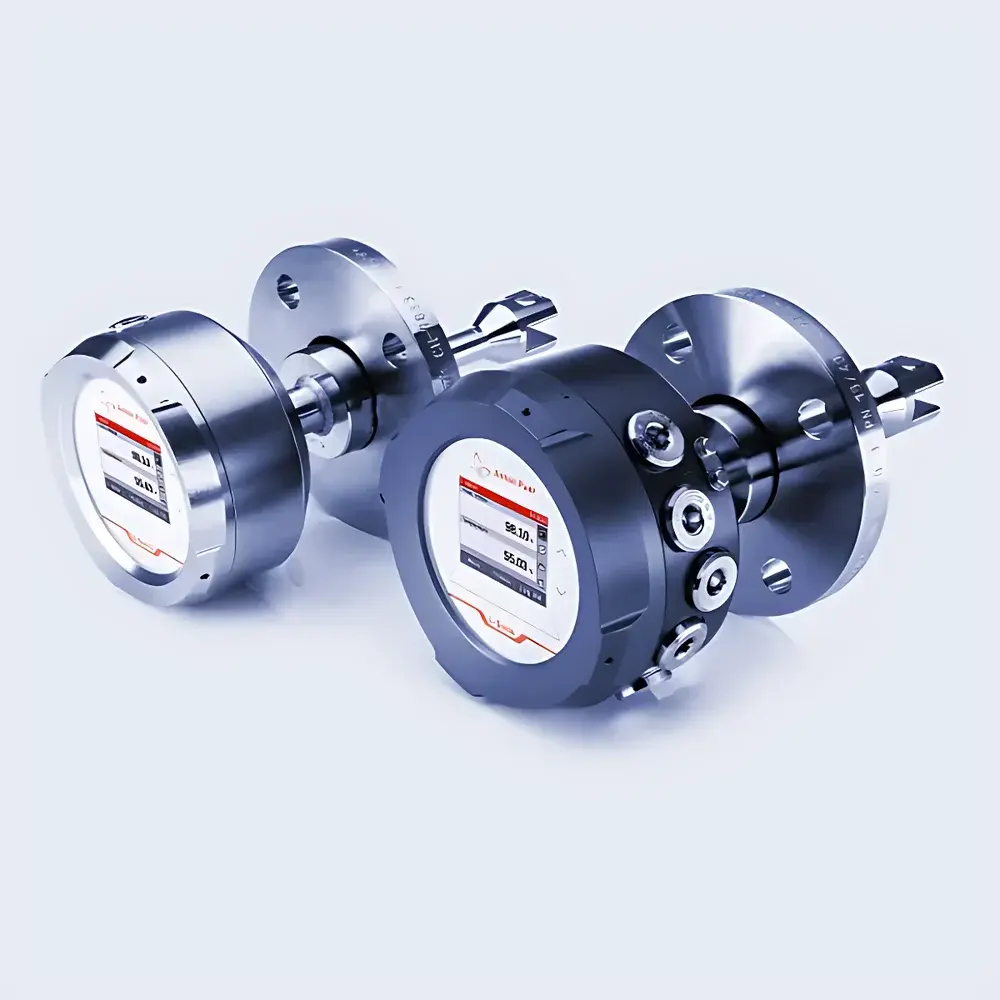
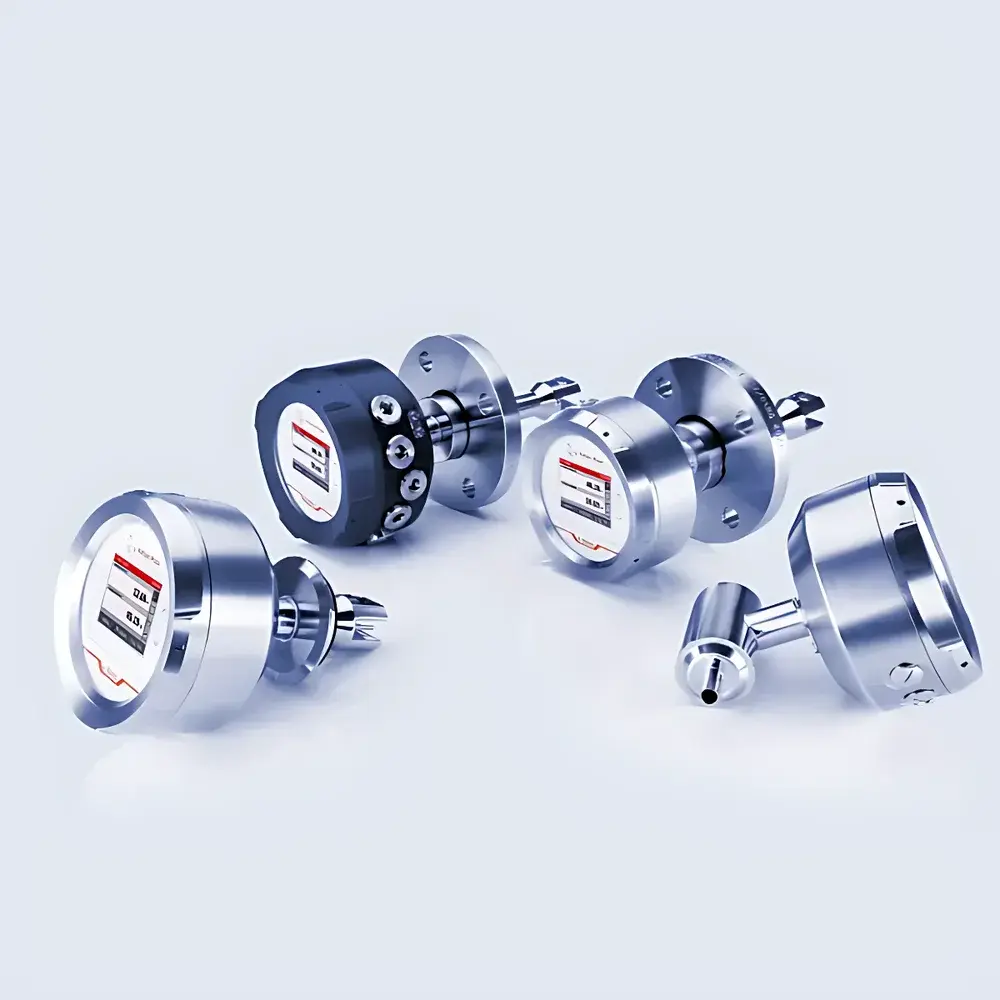

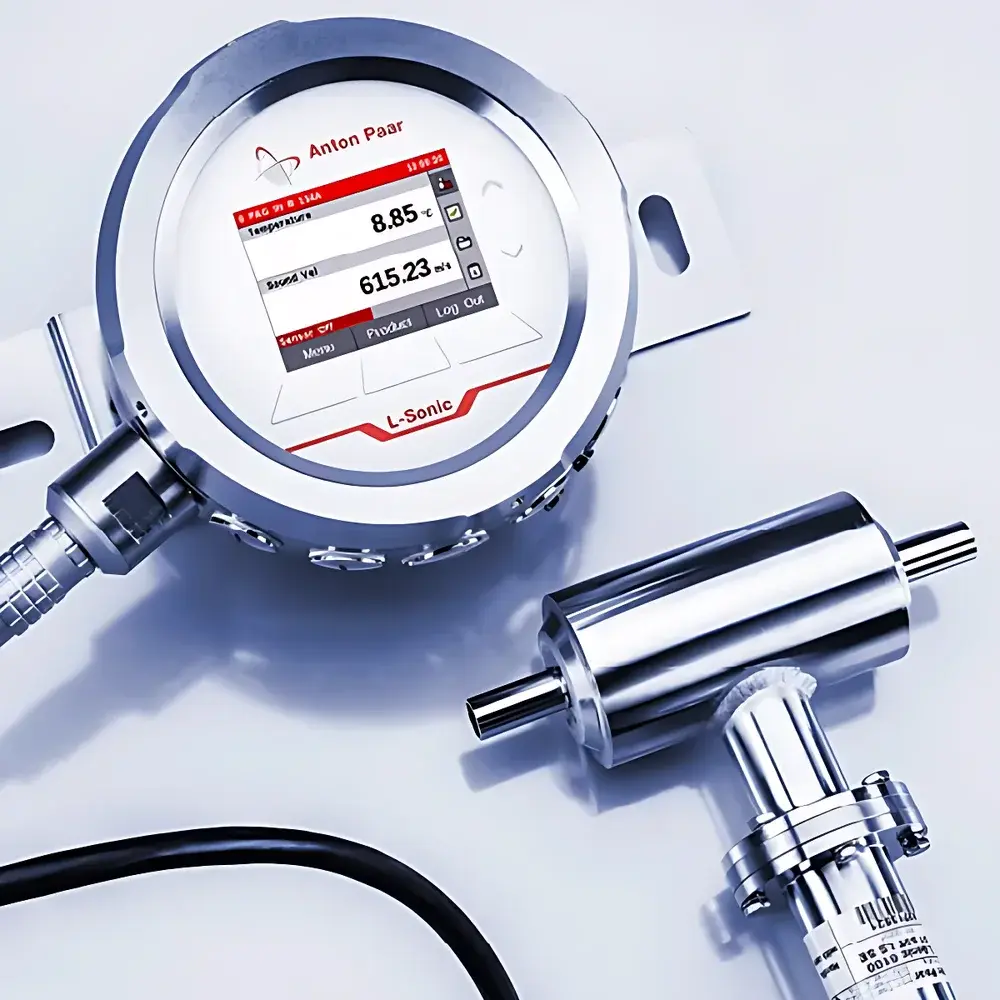
Anton Paar L-Sonic 5100/6100 In-Line Ultrasonic Velocity Sensors
| Brand | Anton Paar |
|---|---|
| Origin | Austria |
| Manufacturer Type | Original Equipment Manufacturer (OEM) |
| Origin Category | Imported |
| Model | L-Sonic 5100 / L-Sonic 6100 |
| Pricing | Upon Request |
Overview
The Anton Paar L-Sonic 5100 and L-Sonic 6100 are industrial-grade in-line ultrasonic velocity sensors engineered for continuous, real-time determination of sound speed in liquids under process conditions. Based on over three decades of proprietary acoustic measurement development, these sensors operate on the principle of time-of-flight (TOF) ultrasonics—measuring the transit time of high-frequency pressure waves across a precisely defined path length within the medium. Sound velocity is a thermodynamically sensitive physical property directly correlated with liquid composition, density, concentration, phase state, and temperature. As such, the L-Sonic series enables non-invasive, calibration-free quantification of critical process parameters—including mass fraction of solutes (e.g., ethanol, sugars, KOH), oil-in-water ratios (OCR), emulsion stability, and phase transitions—without requiring sample extraction or flow diversion. Both models comply with fundamental metrological requirements for in-process analytical instrumentation, delivering traceable, physics-based measurements rooted in first-principles acoustics rather than empirical curve-fitting alone.
Key Features
- Two complementary sensor architectures: L-Sonic 5100 (tuning fork-type) optimized for tank immersion and low-flow applications; L-Sonic 6100 (inline tube-type) designed for pressurized pipeline integration and high-accuracy OCR monitoring.
- Measurement repeatability of ±0.005 m/s (L-Sonic 5100) and ±0.01 m/s (L-Sonic 6100), enabling detection of sub-0.01% w/w compositional changes in stable process streams.
- Bubble-insensitive operation: robust signal acquisition even at near-zero flow velocities (≥0 m/s), eliminating reliance on turbulent flow conditioning.
- Integrated high-accuracy Pt100 RTD (±0.1 °C) for real-time temperature compensation—critical for maintaining sound speed accuracy across thermal transients.
- Process-compensated design: immunity to variations in flow velocity, static pressure (up to 100 bar), and dynamic viscosity ensures stable output under changing hydraulic conditions.
- Modular wetted-material selection: standard 1.4404 (316L) stainless steel; optional Hastelloy® C-276 for sulfuric acid service; Monel 400 for caustic and saline environments; 24k gold or rhodium plating for extreme corrosion resistance.
- Full compliance with hygienic and hazardous-area standards: EHEDG-certified designs, CIP/SIP-ready construction (145 °C / 30 min), ATEX/IECEx Ex d certification available.
Sample Compatibility & Compliance
The L-Sonic 5100/6100 sensors are validated for use across chemically aggressive, thermally demanding, and microbiologically sensitive process streams. Wetted materials meet FDA 21 CFR §177.2600 (for food-contact polymers) and USP Class VI biocompatibility requirements where applicable. The sensor housing and process connections conform to DIN 11851, EN 1092-1, ANSI B16.5, JIS B2220, and VARIVENT® GD/N specifications—ensuring seamless integration into existing sanitary or industrial piping systems. All variants support GLP/GMP-aligned data integrity when paired with compatible Anton Paar mPDS 5 or Pico 3000 controllers, which provide full audit trails, electronic signatures, and 21 CFR Part 11–compliant user access control.
Software & Data Management
Sensors interface via industry-standard protocols including Modbus TCP/RTU, PROFIBUS DP, PROFINET IO, EtherNet/IP, and DeviceNet. The Pico 3000 controller offers analog (4–20 mA) and digital outputs with configurable linearization, temperature compensation, and alarm thresholds. The mPDS 5 platform supports advanced diagnostics, predictive maintenance alerts, and direct OPC UA connectivity to MES/SCADA systems. Pre-validated concentration models—covering R-134a, R-1234yf, R-290, CO₂, maltose solutions, ethanol–water mixtures, and rolling oil emulsions—are embedded in firmware and accessible via intuitive web-based configuration tools. All measurement data can be timestamped, logged with metadata (temperature, pressure, flow status), and exported in CSV or XML format for QA/QC reporting.
Applications
- Chemical & petrochemical: real-time concentration monitoring of H₂SO₄, KOH, NaOH, HCl, and organic solvent blends.
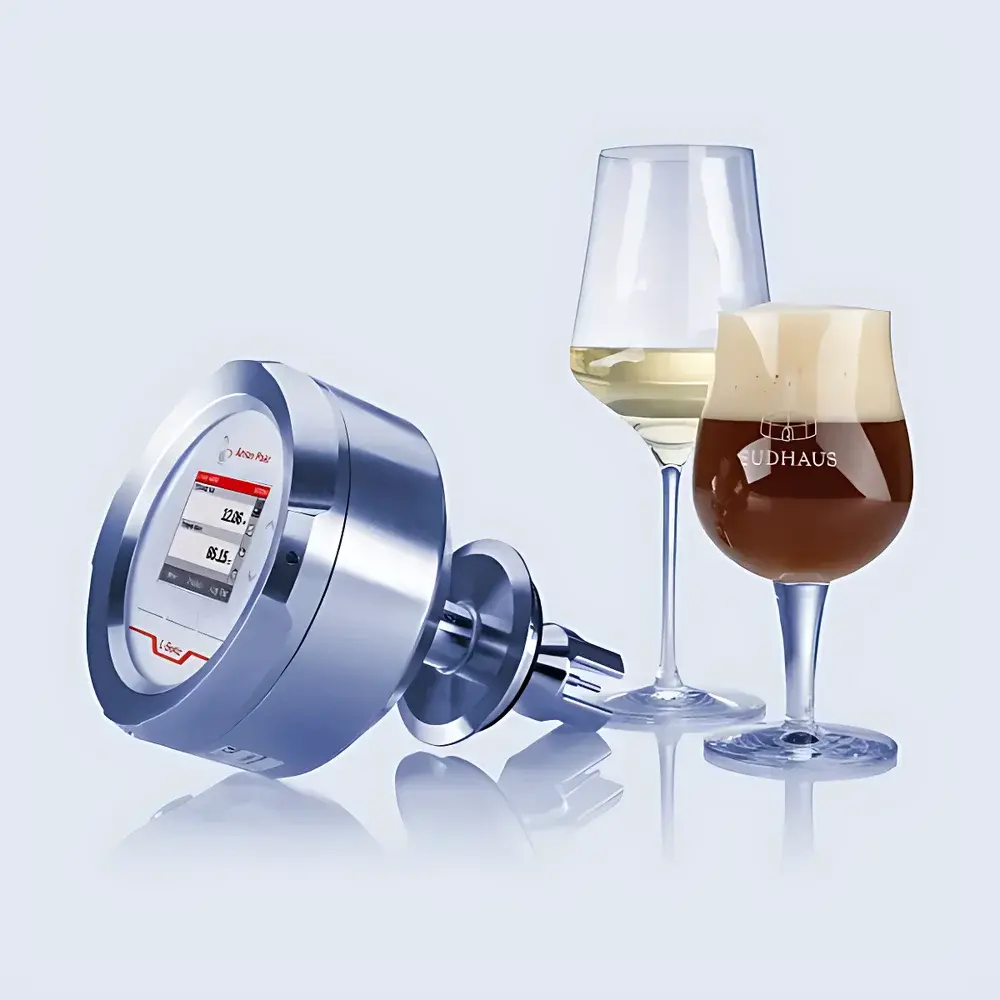
- Food & beverage: Brix and alcohol content verification in brewing, distillation, and soft drink production.
- Metals processing: online control of rolling oil–water emulsion ratios in cold-rolling mills (steel, aluminum, copper).
- HVAC & automotive: refrigerant charge verification and oil circulation ratio (OCR) optimization in R-744 and R-1234yf systems.
- Pharmaceutical & biotech: phase detection in extractive purification, cleaning validation (CIP endpoint detection), and buffer composition verification.
- Mining & hydrometallurgy: leach solution assay and electrolyte concentration tracking in SX/EW processes.
FAQ
What is the minimum required flow velocity for accurate measurement?
No minimum flow is required—the L-Sonic 5100 operates reliably at 0 m/s (static tank immersion); the L-Sonic 6100 requires only ≥50 L/h (≈0.014 m/s in DN25 pipe) for stable signal coupling.
Can the sensor be installed without process shutdown?
Yes—both models support hot-tap installation using standard sanitary or flanged adapters; no bypass loop, pump, or isolation valves are needed.
How often does the sensor require recalibration or maintenance?
Zero scheduled maintenance: the solid-state design, absence of moving parts, and CIP/SIP compatibility eliminate routine recalibration or disassembly.
Is it possible to integrate the L-Sonic into an existing DCS or PLC system?
Yes—native support for Modbus TCP, PROFINET IO, and EtherNet/IP ensures plug-and-play integration with major automation platforms without protocol gateways.
Does Anton Paar provide application-specific sound speed models?
Yes—over 120 pre-validated, thermodynamically consistent models are included; custom model development is supported under NDA for proprietary formulations.