
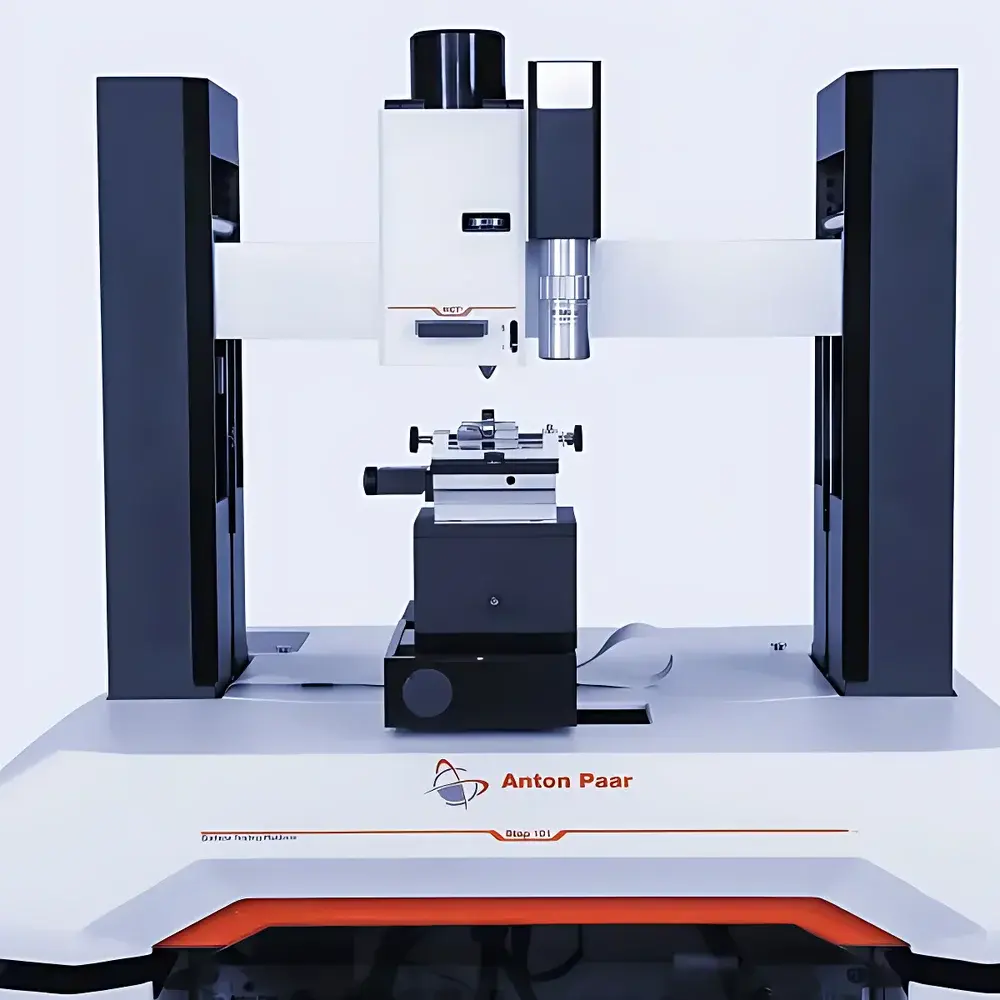
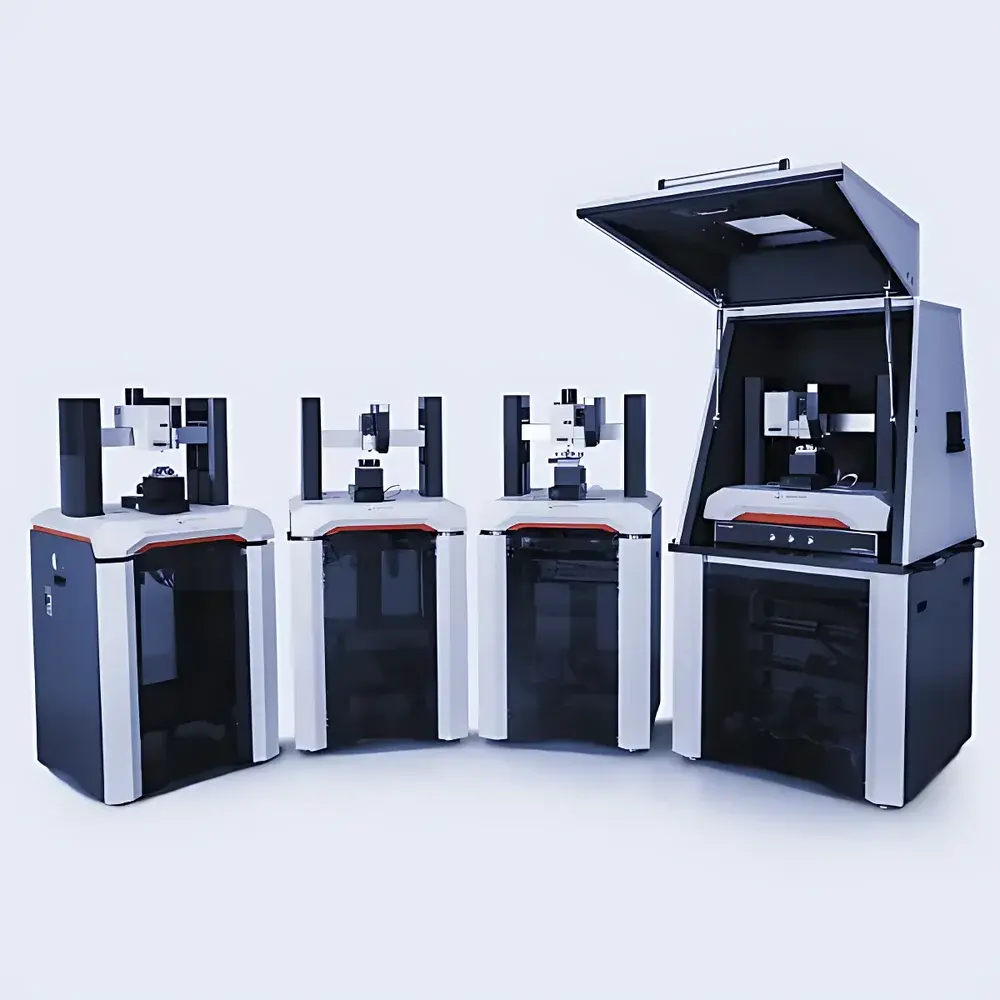
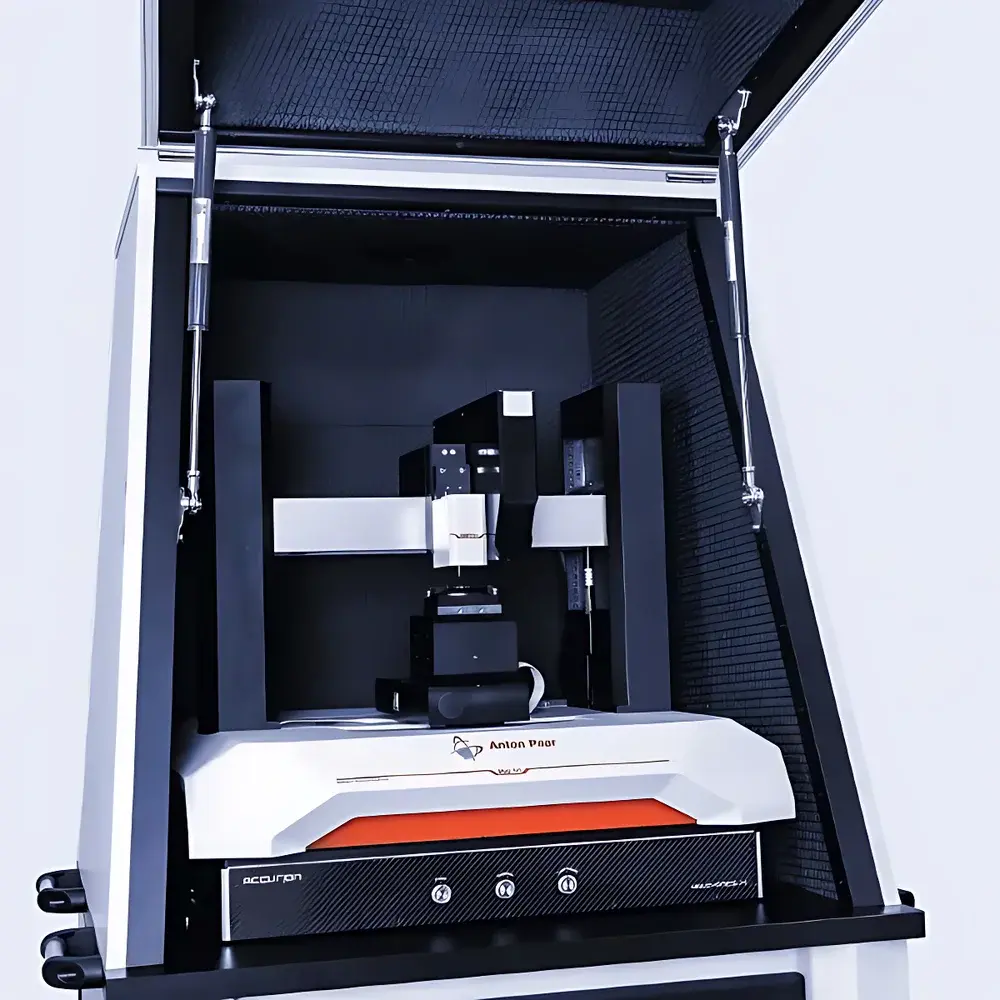
Anton Paar STEP x01 Surface Mechanical Testing Platform
| Brand | Anton Paar |
|---|---|
| Origin | Switzerland |
| Manufacturer | Anton Paar GmbH |
| Type | Imported Instrument |
| Model | STEP x01 |
| Instrument Category | Nanoindentation and Scratch Tester |
| Indenter Tip Material | Diamond |
| Base Platform | Modular Mechanical Surface Testing System |
| Maximum Load Capacity | Not specified in input |
| Compliance | GLP/GMP-ready architecture, ASTM E2546, ISO 14577, ISO 20502, USP <1089> compatible (inferred from platform class) |
| Vibration Isolation | Optional active damping table & acoustic enclosure |
| Microscopy | Dual-view optical microscope (20×–10,000× continuous zoom) |
| Positioning Accuracy | <1 µm over extended scan range |
| Automation Interface | Integrated for factory-floor QC integration |
Overview
The Anton Paar STEP x01 Surface Mechanical Testing Platform is a modular, high-precision foundation system designed for quantitative mechanical characterization of surfaces and thin films at micro- and nanoscales. Engineered around the MCT³ (Modular Contact Testing) measurement head architecture, the STEP x01 serves as the structural and control backbone for standardized and research-grade nanoindentation, scratch testing, Vickers hardness mapping, and basic tribological evaluation—all within a single, unified mechanical frame. Its core principle relies on closed-loop force-displacement feedback with sub-nanometer displacement resolution and real-time load control, enabling compliance with ISO 14577 (metallic and non-metallic coatings), ASTM E2546 (instrumented indentation testing), and ISO 20502 (scratch adhesion assessment). The platform integrates a rigid granite base structure with optional active vibration isolation—critical for maintaining measurement fidelity during low-load (<1 mN) or high-resolution topographic correlation tasks. Unlike monolithic testers, the STEP x01 decouples motion control, sensing, and optics into interoperable subsystems, allowing method-specific calibration traceability and long-term metrological stability.
Key Features
- Modular architecture supporting up to three interchangeable MCT³ measurement heads (STEP 501/701 variants)—enabling concurrent or sequential nanoindentation, scratch, hardness, and friction modules without recalibration.
- Sub-micrometer positioning accuracy (<1 µm) across extended travel ranges (X: up to 215 mm, Y: 75 mm, Z: 30 mm), achieved via high-resolution linear encoders and piezo-assisted coarse/fine motion stages.
- Dual-view optical microscopy system with continuous zoom (20×–10,000×), enabling seamless transition from macro-scale sample overview to sub-µm feature targeting—critical for site-specific testing on heterogeneous or patterned substrates.
- Automated method switching via software-defined zero-point referencing—eliminating manual repositioning and reducing inter-test setup time by >60% compared to legacy systems.
- Factory-integration ready: Ethernet/IP and OPC UA interfaces support direct linkage to MES/QMS platforms; compatible with robotic sample loaders and inline QC workflows per ISO/IEC 17025 laboratory requirements.
- Configurable environmental enclosures available: glovebox-integrated (inert gas), vacuum (<10⁻³ mbar), or humidity-controlled (10–95% RH) chambers—ensuring test repeatability under application-relevant conditions.
Sample Compatibility & Compliance
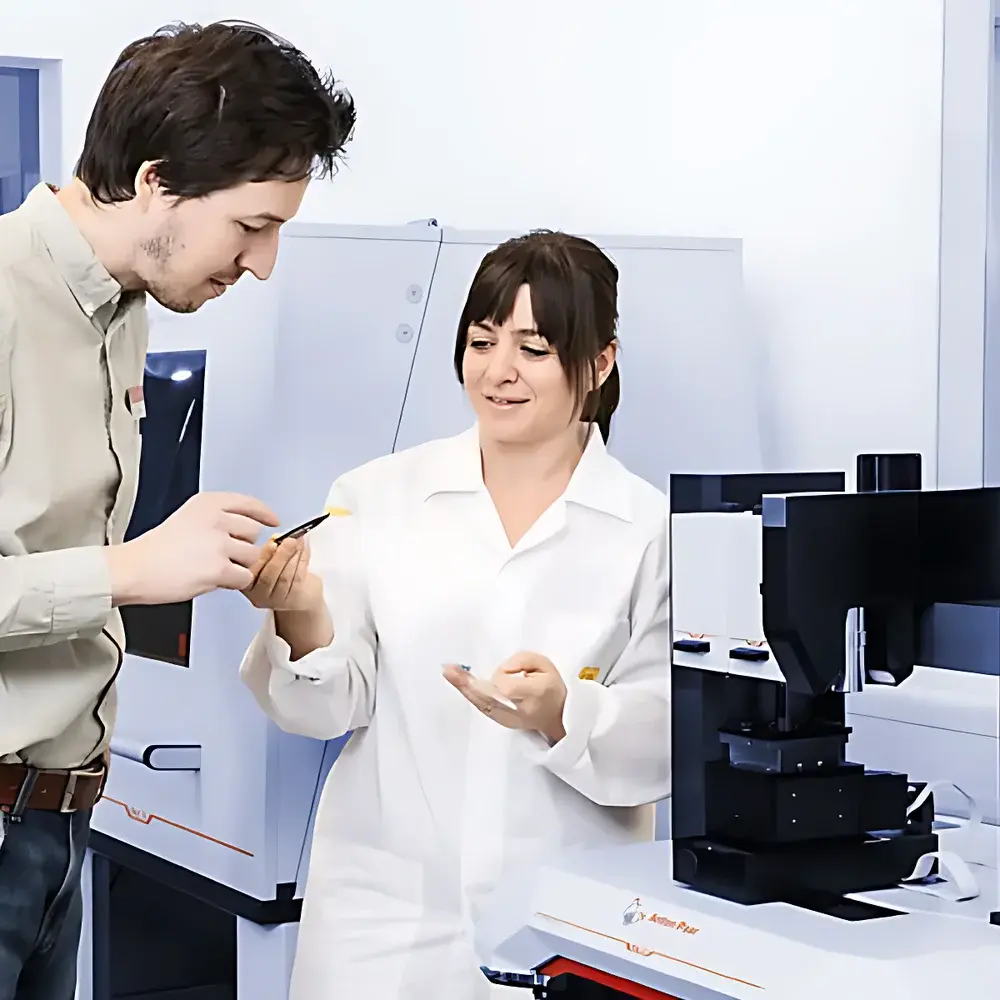
The STEP x01 accommodates samples ranging from wafers (up to 300 mm diameter) and coated metallic components to polymer films, biomedical implants, and MEMS devices. Its open-stage design permits custom fixturing for irregular geometries—including curved, tapered, or multi-layered specimens. All measurement modules comply with international standards for instrumented indentation (ISO 14577-1/2/3), scratch testing (ISO 20502, ASTM D7027), and microhardness (ASTM E384, ISO 6507). Data acquisition meets FDA 21 CFR Part 11 requirements when paired with Anton Paar’s certified software suite, including full audit trail, electronic signature, and role-based access control—validated for GLP and GMP-regulated environments.
Software & Data Management
Control and analysis are executed via Anton Paar’s proprietary Nova software—designed for metrology-grade data integrity. It provides real-time force-displacement curve visualization, automated pile-up correction, modulus/hardness mapping, scratch track morphology quantification (depth, width, delamination area), and statistical reporting per ISO 5725. Raw data is stored in vendor-neutral HDF5 format with embedded metadata (timestamp, operator ID, calibration certificate ID, environmental parameters). Export options include CSV, MATLAB .mat, and ASTM E1392-compliant XML for third-party LIMS integration. Software validation packages (IQ/OQ/PQ documentation) and 21 CFR Part 11 compliance kits are available upon request.
Applications
- Thin-film adhesion strength assessment of PVD/CVD coatings on aerospace turbine blades (ISO 20502 scratch critical load analysis).
- Nano-mechanical property mapping of battery electrode cross-sections—correlating local hardness/modulus with SEI layer thickness observed via SEM.
- Quality assurance of medical-grade stainless steel implants: batch-wise Vickers hardness uniformity verification across complex contours.
- Development of wear-resistant polymer composites: simultaneous scratch resistance and nanohardness profiling under controlled humidity.
- Failure analysis of semiconductor packaging: interfacial delamination onset detection during progressive-load scratch testing.
FAQ
What distinguishes the STEP x01 from conventional nanoindenters?
It is not a standalone indenter but a scalable platform architecture—allowing co-location of multiple physical testing modalities with shared motion control, metrology, and software infrastructure.
Is the STEP x01 suitable for ISO/IEC 17025 accredited laboratories?
Yes—when configured with certified calibration kits, documented uncertainty budgets, and validated software, it supports full accreditation scope for surface mechanical testing.
Can atomic force microscopy (AFM) be integrated directly?
AFM is offered as an add-on module (not built-in), mounted alongside MCT³ heads on STEP 501/701 configurations for correlative topography–mechanics studies.
What level of technical support is provided globally?
Anton Paar operates 37 subsidiaries with application engineers trained in ISO 14577 methodology, on-site installation, and method transfer support—backed by a standard 3-year comprehensive warranty.
Does the platform support automated batch testing of production parts?
Yes—via programmable stage sequencing, barcode-triggered test protocols, and API-driven reporting to enterprise quality databases.



