
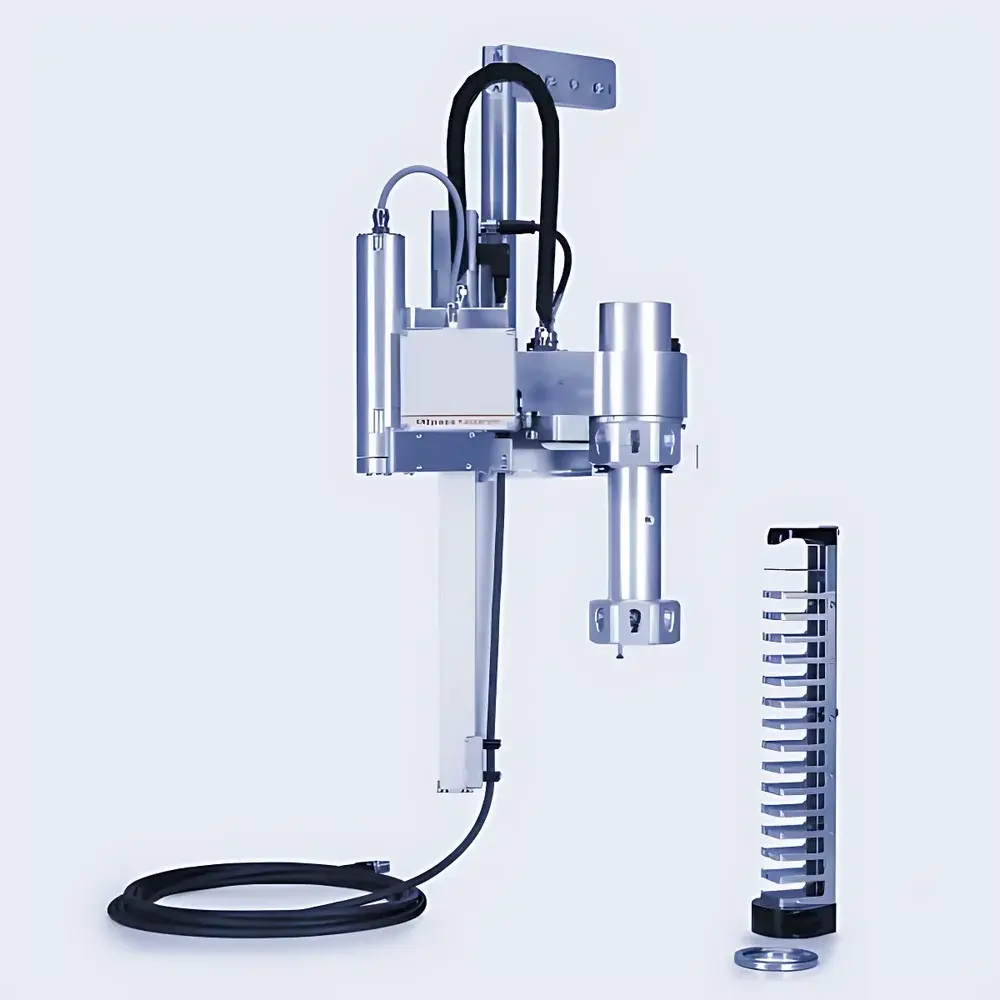
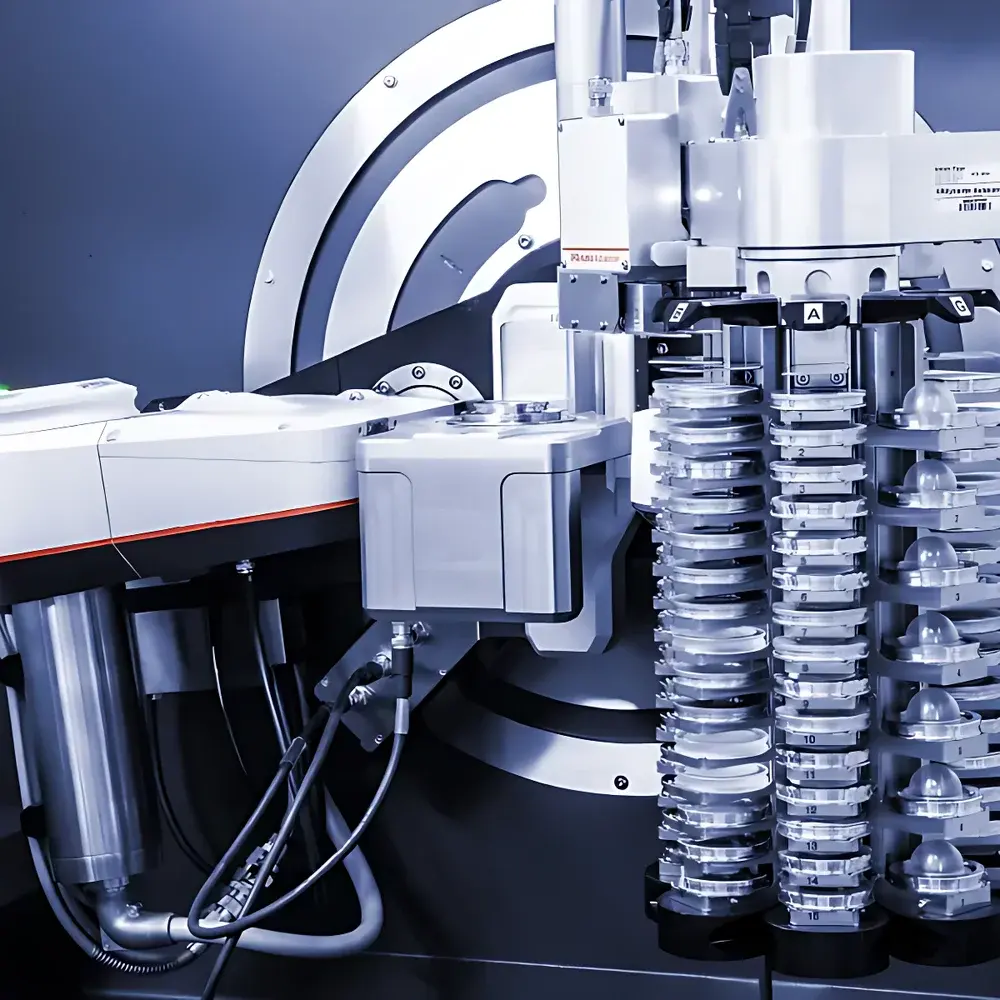
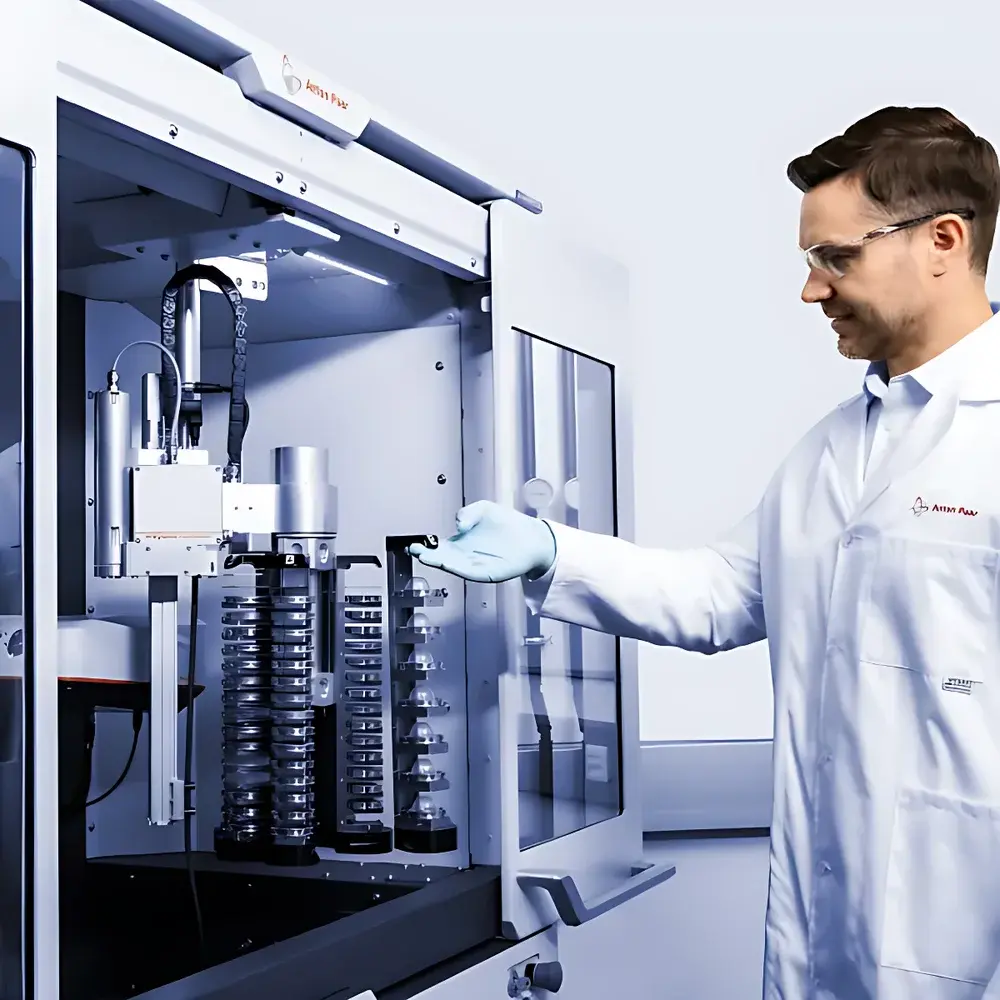
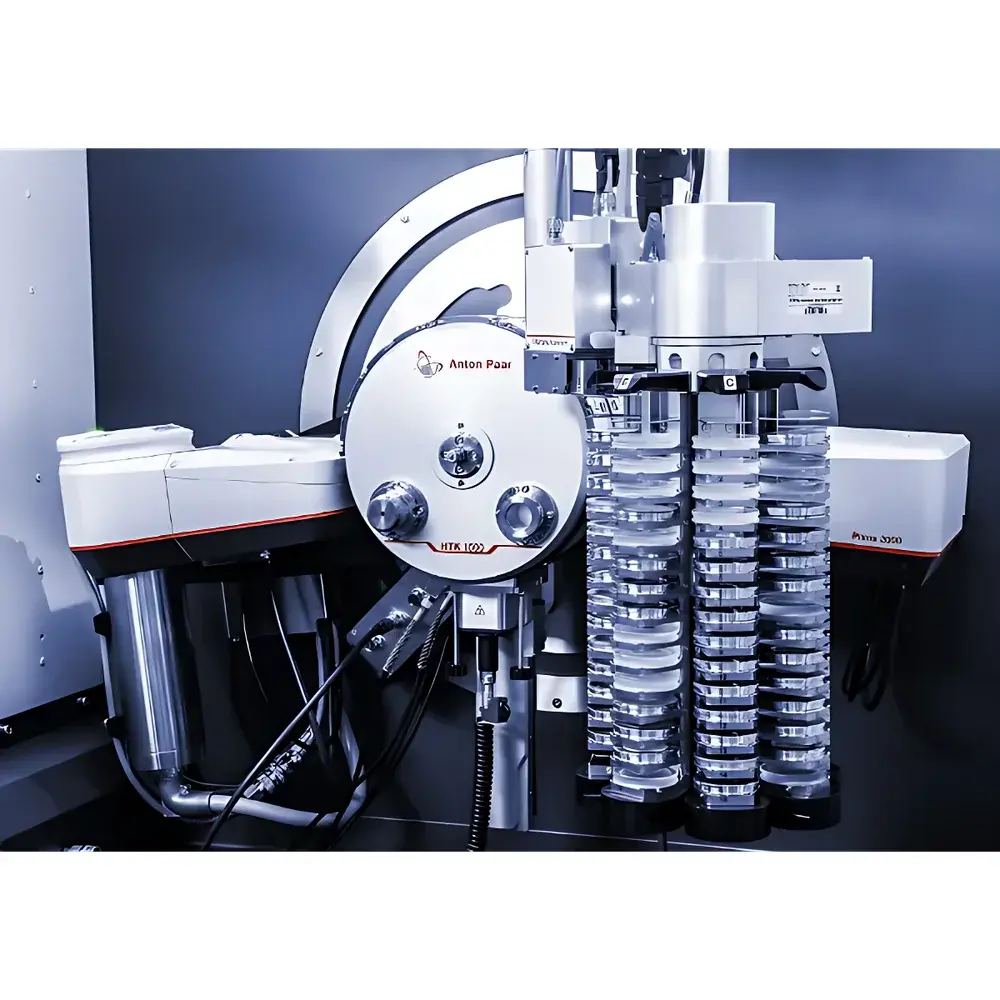
Anton Paar XRDynamic Autosampler for X-ray Diffractometers
| Brand | Anton Paar |
|---|---|
| Origin | Austria |
| Manufacturer Type | Original Equipment Manufacturer (OEM) |
| Product Origin | Imported |
| Model | XRDynamic Autosampler |
| Instrument Type | X-ray Crystal Orientation Analyzer |
| Instrument Configuration | Floor-standing |
| Sample Capacity | Up to 105 positions |
| Compatible With | XRDynamic 500 XRD system |
| Integration | Native integration with XRDdrive software |
| Sample Holder Compatibility | Standard ISO/ASTM-compliant sample holders (powder, solid, fiber, foil, thin film, air-sensitive samples) |
| Measurement Modes | Reflective and transmission geometries |
| Automation Level | Fully automated sample loading, positioning, alignment, and beam path switching |
| Compliance | Designed to support GLP/GMP workflows with audit-trail-capable software logging |
Overview
The Anton Paar XRDynamic Autosampler is a purpose-engineered, floor-standing robotic sample handling module designed exclusively for integration with the XRDynamic 500 high-resolution X-ray diffractometer platform. It operates on the principle of precision motorized XYZ-stage positioning combined with programmable beam-path selection—enabling fully automated, reproducible sample presentation in both Bragg–Brentano reflection and Debye–Scherrer transmission geometries. Unlike generic sample changers, the XRDynamic Autosampler is co-developed with the XRDynamic 500’s optical and goniometric architecture, ensuring sub-arcminute angular repeatability and minimal beam misalignment during sequential measurements. Its mechanical design adheres to ISO 17025 traceability requirements for automated analytical instrumentation, supporting rigorous metrological validation of diffraction data acquisition protocols.
Key Features
- High-throughput capacity: Supports up to 105 standard sample positions per load using ISO 3639-compliant sample holders—enabling multi-day unattended operation without manual intervention.
- Dual-mode compatibility: Seamlessly switches between reflection and transmission measurement configurations via motorized collimator and detector arm repositioning—no hardware recalibration required.
- Air-sensitive sample handling: Optional dome-style sample trays with inert gas purging ports (N₂ or Ar) maintain controlled atmospheres for hygroscopic, oxidizable, or reactive materials.
- Sub-micron positional accuracy: Integrated laser-based homing and encoder feedback ensure ±1.5 µm stage repeatability across all axes—critical for maintaining consistent incident angle and focal spot alignment.
- Non-intrusive modularity: Installs directly onto the XRDynamic 500 base frame without modifying existing goniometer or detector mounts; remains mechanically decoupled during non-automated measurements.
- Scalable tray configuration: Accepts 1–7 independently loaded sample trays (3, 6, 12, or 48-position variants available), allowing users to optimize throughput versus footprint based on lab workflow demands.
Sample Compatibility & Compliance
The XRDynamic Autosampler accommodates diverse physical forms—including loose powders, pressed pellets, single crystals, rolled foils, spun fibers, sputtered thin films, and air-sensitive compounds—without requiring custom fixtures. All sample holders conform to ASTM E1361 and ISO 13122-1 dimensional standards for XRD sample preparation. The system supports compliance with FDA 21 CFR Part 11 through XRDdrive software’s electronic signature, role-based access control, and immutable audit trails. Full documentation packages—including IQ/OQ protocols, calibration certificates traceable to PTB (Physikalisch-Technische Bundesanstalt), and risk assessments per ISO 14971—are provided for regulated environments operating under GMP or GLP frameworks.
Software & Data Management
Native integration with XRDdrive v4.x enables zero-configuration recognition upon physical connection. The software provides a unified interface for method-driven batch sequencing, real-time status monitoring (including tray position, beam status, and vacuum integrity), and automatic metadata tagging (sample ID, operator, timestamp, instrument parameters). Raw 2θ-intensity datasets are exported in industry-standard formats (XYE, CIF, HDF5) and synchronized with LIMS via RESTful API. All user actions—including method edits, tray swaps, and emergency aborts—are logged with cryptographic timestamps and stored locally in encrypted SQLite databases compliant with NIST SP 800-90B entropy requirements.
Applications
- Pharmaceutical polymorph screening: Automated sequential analysis of >100 crystalline API batches under controlled humidity and temperature conditions.
- Materials science R&D: High-fidelity phase mapping of alloy libraries, battery cathode composites, and MOF synthesis series with statistical confidence intervals.
- Geological core analysis: Rapid mineralogical quantification of drill-core powder segments with integrated internal standard correction.
- Quality control in advanced manufacturing: In-line verification of coating crystallinity, residual stress, and texture coefficients for aerospace-grade turbine blades.
- Academic crystallography: Unattended collection of single-crystal datasets from fragile or radiation-sensitive specimens using low-dose exposure scheduling.
FAQ
Is the XRDynamic Autosampler compatible with instruments other than the XRDynamic 500?
No—it is engineered as a proprietary subsystem with mechanical, electrical, and software interfaces specific to the XRDynamic 500 platform. Retrofitting to third-party diffractometers is not supported.
Can the autosampler be operated manually if automation fails?
Yes—mechanical override levers and emergency stop interlocks allow safe manual tray removal and goniometer reset without disassembly.
Does the system support cryogenic or heated sample stages?
The base autosampler does not include thermal control; however, it is fully compatible with Anton Paar’s HTK-X or Cryo-X sample stages when mounted within the designated sample chamber aperture.
What maintenance intervals are recommended for long-term reliability?
Lubrication of linear guides every 12 months and encoder calibration verification every 6 months—both procedures documented in the OEM service manual and supported by Anton Paar Field Service Engineers globally.
How is data integrity ensured during extended unattended runs?
Each measurement cycle triggers SHA-256 hashing of raw detector frames and parameter logs; checksum mismatches trigger automatic reacquisition and alert escalation via SMTP or SNMP.





