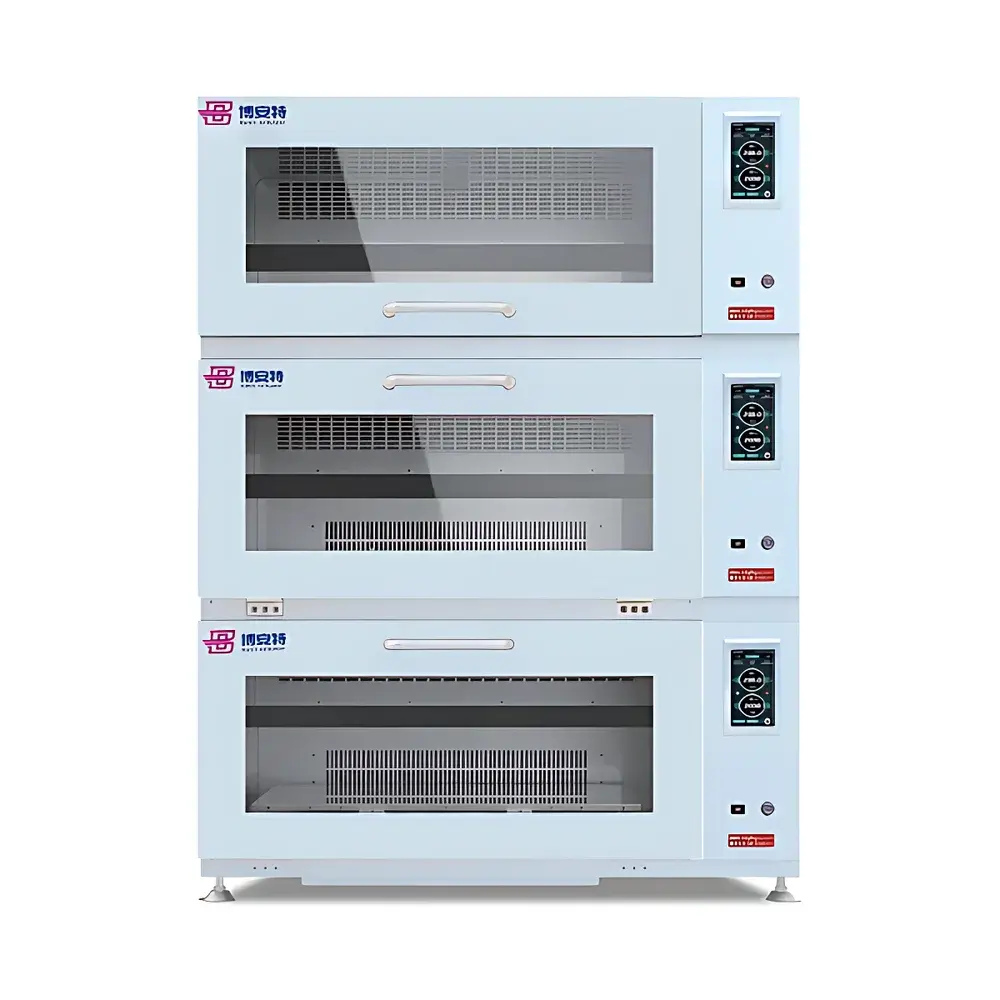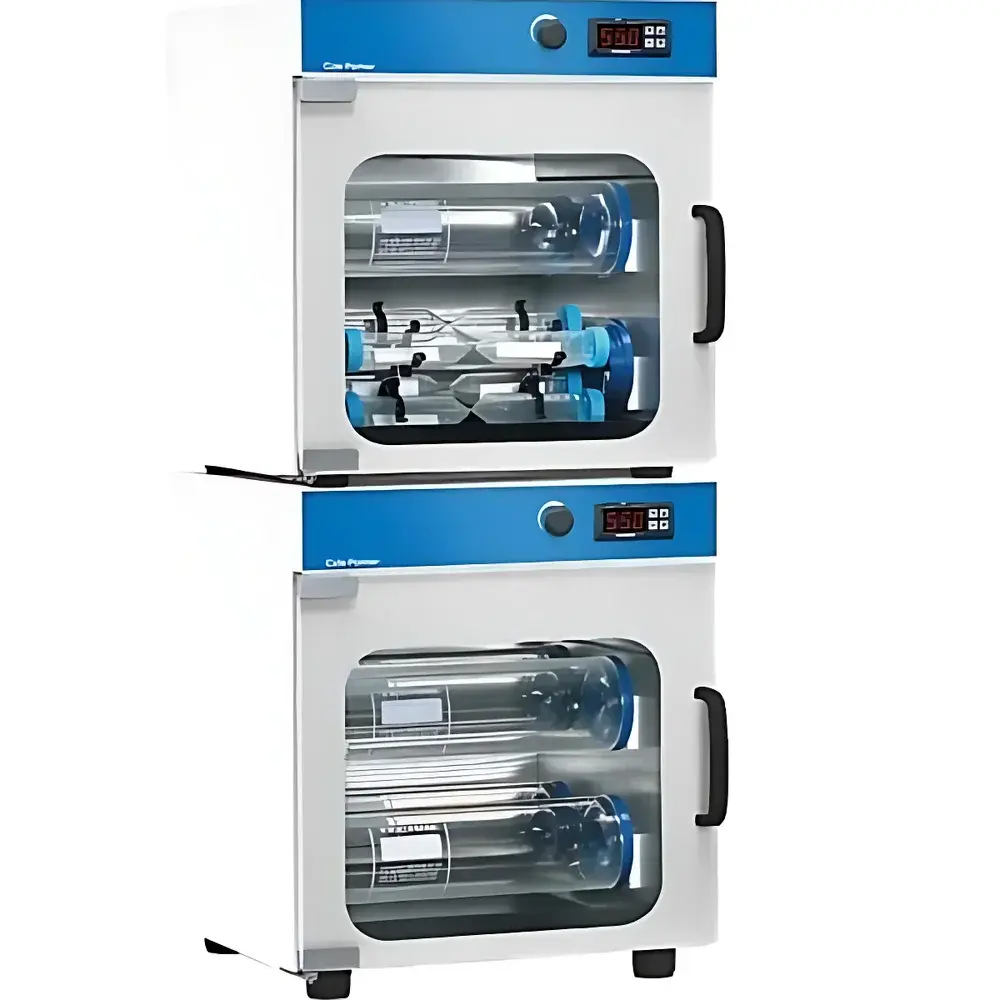
Antylia Cole-Parmer HI-200D Advanced Molecular Hybridization Oven
| Brand | Antylia/Cole-Parmer |
|---|---|
| Model | HI-200D |
| Temperature Stability (in tube) | ±0.1°C |
| Rotational Speed Range | 0–20 rpm |
| Oscillation Frequency | 5–20 or 15–60 opm |
| Max Operating Temperature | 100°C |
| Min Operating Temperature | Ambient +10°C |
| Temperature Accuracy | ±0.3°C |
| Temperature Uniformity (in tube) | ±0.5°C |
| Chamber Uniformity | ±1.5°C |
| Temp Set Resolution | 0.1°C |
| Dimensions (L×W×H) | 285 × 385 × 555 mm |
| Voltage | 230 V, 50–60 Hz |
| Power Consumption | 750 W |
| Net Weight | 24 kg |
Overview
The Antylia Cole-Parmer HI-200D Advanced Molecular Hybridization Oven is an engineered platform for controlled nucleic acid hybridization under precisely regulated thermal and mechanical conditions. Designed for reproducible in situ hybridization (ISH), Southern/Northern blotting, and probe-based detection workflows, the instrument employs dual-mode agitation—programmable rotational tumbling and adjustable platform oscillation—to ensure uniform reagent contact across solid-phase membranes, tissue sections, or microarrays. Its core architecture integrates a high-stability PID-controlled heating system with direct tube-sensing feedback loops, enabling ±0.1°C temperature stability within sample vessels—a critical requirement for stringent hybridization stringency control. Unlike ambient-air ovens, the HI-200D maintains thermal integrity during extended incubations (up to 72 h) without drift, minimizing false-positive signals and improving signal-to-noise ratios in low-abundance target detection.
Key Features
- Precision thermal management: Independent tube-sensor monitoring delivers ±0.1°C intra-vessel temperature stability and ±0.5°C uniformity—validated per ASTM E2209 for laboratory thermal equipment.
- Dual agitation modes: Selectable rotation (0–20 rpm) and platform oscillation (5–20 or 15–60 opm) optimize hybridization kinetics for varied formats including glass slides, nitrocellulose membranes, and sealed hybridization tubes.
- Modular, insertable tube carrier system: Accommodates up to 24 standard hybridization tubes (e.g., 39455-11 roll bottles); carriers feature integrated radiation shielding and leak-resistant sealing for radioactive or hazardous probe handling.
- Ergonomic service design: Removable drip tray simplifies decontamination; adjustable leveling feet ensure operational stability on non-planar lab benches; front-accessible controls reduce workflow interruption.
- Compliance-ready operation: Supports audit-trail-capable data logging when paired with optional external USB data loggers compliant with FDA 21 CFR Part 11 requirements for GLP/GMP environments.
Sample Compatibility & Compliance
The HI-200D supports hybridization volumes ≥5 mL in certified RNase/DNase-free polypropylene or borosilicate glass tubes. Its chamber geometry accommodates standard ISH slide racks (up to 12 × 3” × 1” slides), membrane cassettes, and custom-printed microarray substrates. All wetted components meet USP Class VI biocompatibility standards. The system is compatible with common hybridization buffers (e.g., Church buffer, ULTRAhyb™), formamide-based denaturation protocols, and enzymatic post-hybridization washes. It conforms to IEC 61010-1:2010 safety standards for laboratory electrical equipment and carries CE marking for use in EU-regulated research laboratories.
Software & Data Management
While the HI-200D operates via intuitive front-panel digital interface (no embedded OS), it interfaces seamlessly with third-party laboratory information management systems (LIMS) via RS-232 serial output (optional adapter). Time-stamped temperature logs—including setpoint, actual tube sensor reading, and chamber ambient—can be exported as CSV files for traceability. When used in regulated environments, integration with validated data acquisition software enables electronic signature capture, user access control, and change history tracking aligned with ALCOA+ principles (Attributable, Legible, Contemporaneous, Original, Accurate).
Applications
- In situ hybridization (ISH) of DNA/RNA targets in formalin-fixed paraffin-embedded (FFPE) tissue sections.
- High-stringency Northern and Southern blot hybridizations requiring precise Tm-based temperature control.
- Fluorescence in situ hybridization (FISH) probe annealing with minimized background from non-specific binding.
- Antisense oligonucleotide and LNA probe hybridization where kinetic optimization reduces incubation time without compromising specificity.
- Validation studies supporting ISO/IEC 17025-accredited molecular pathology labs performing diagnostic hybridization assays.
FAQ
What is the difference between the HI-200 and HI-200D models?
The HI-200D features an extended maximum operating temperature of 100°C (vs. 80°C for the HI-200), enabling high-stringency denaturation steps without external heat blocks.
Can the HI-200D be used for radioactive hybridizations?
Yes—the included hybridization tubes (39455-11) are lead-lined and certified for containment of 32P and 35S probes per NRC guidelines for Category B sealed sources.
Is temperature calibration traceable to NIST standards?
Factory calibration uses NIST-traceable RTDs; users may perform in-house verification using calibrated thermistors meeting ISO/IEC 17025 requirements.
Does the unit support programmable multi-step hybridization protocols?
No—temperature and agitation parameters are manually set per run; protocol automation requires external timer or PLC integration.
What maintenance is required for long-term reliability?
Annual verification of heater response time and sensor drift is recommended; no routine lubrication or consumable replacement is needed beyond periodic drip tray cleaning.