
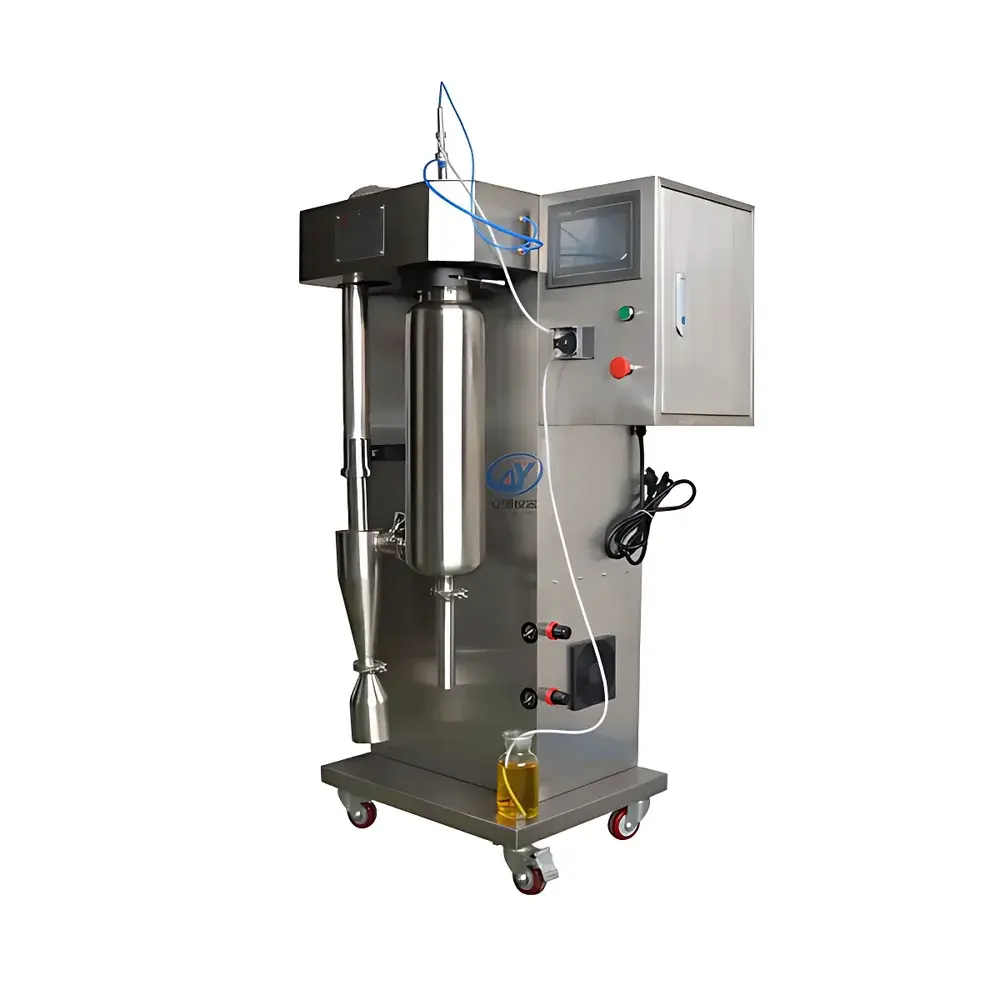
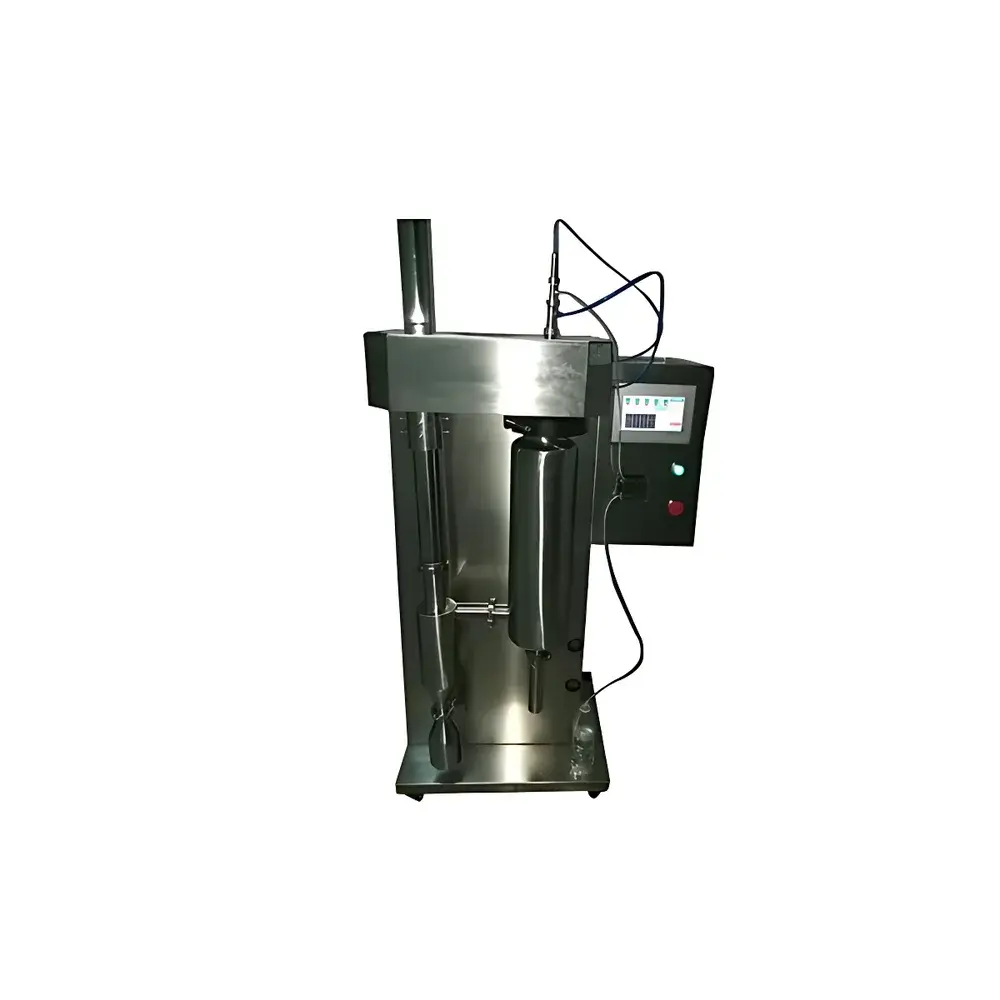
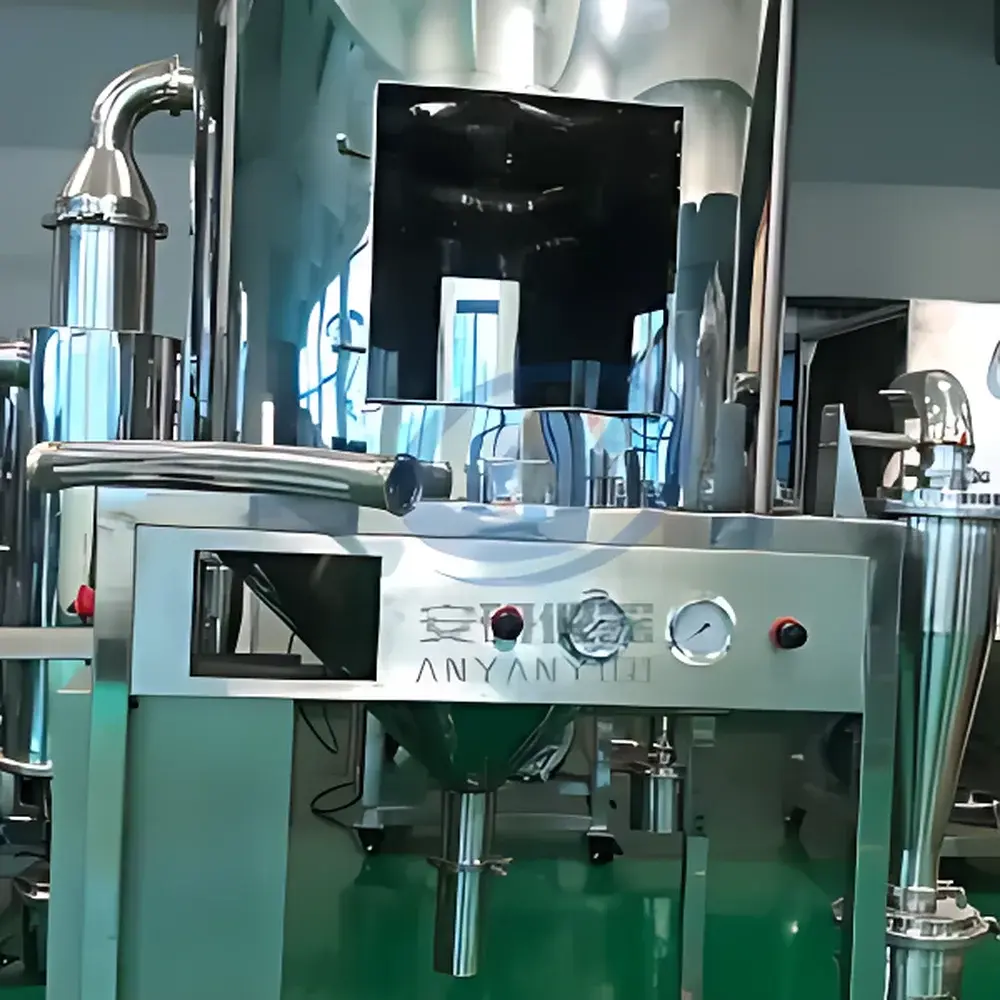
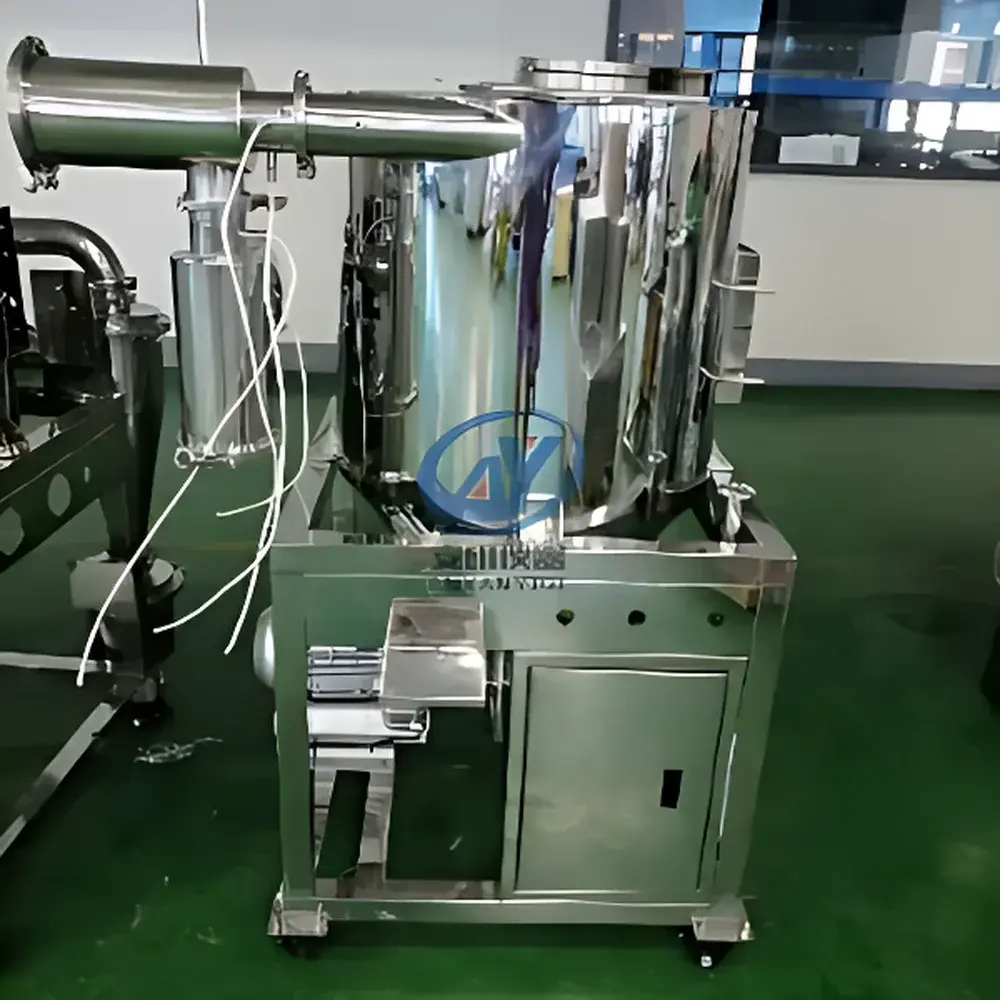
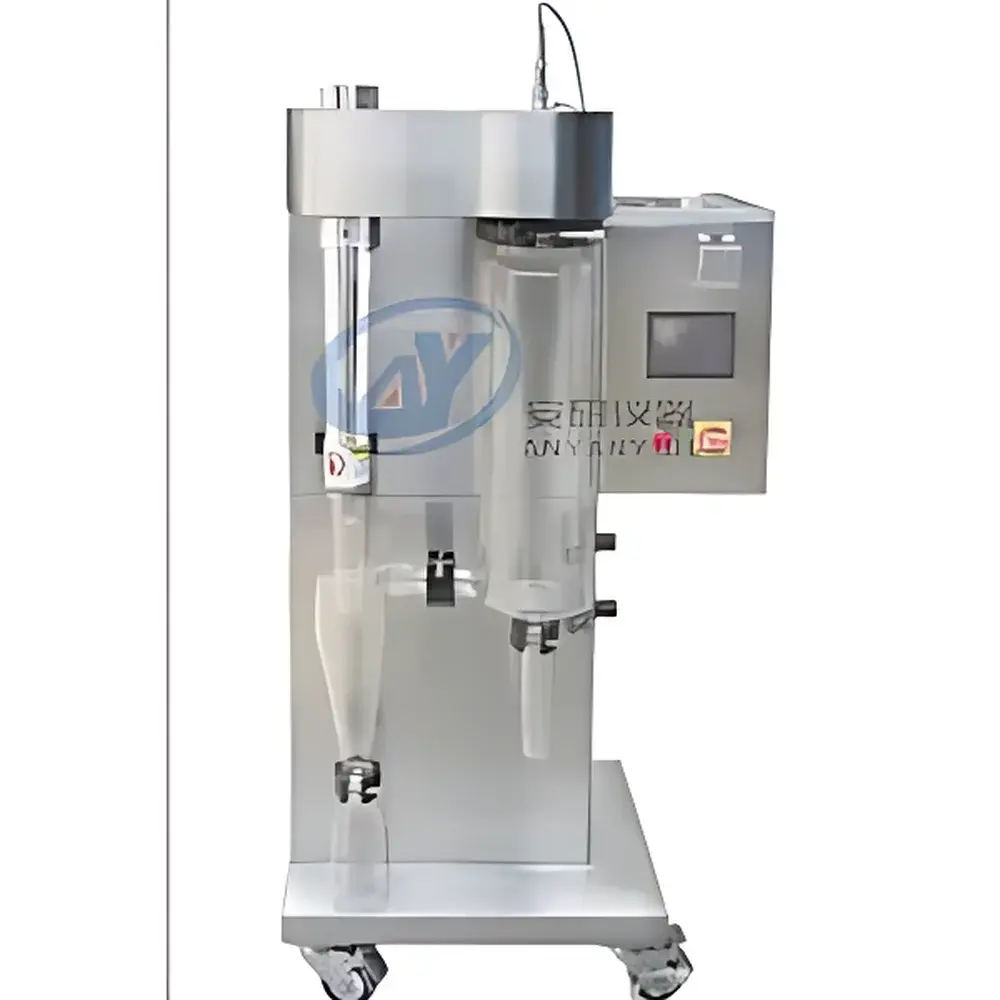
Anyan 8000Y Full-Stainless-Steel Benchtop High-Temperature Spray Dryer
| Brand | Anyan Instruments |
|---|---|
| Origin | Zhejiang, China |
| Manufacturer Type | Authorized Distributor |
| Country of Origin | China |
| Model | 8000Y |
| Sample Compatibility | Aqueous & organic solutions, emulsions, suspensions |
| Max Feed Volume | 2000 mL |
| Inlet Temperature Range | 30–300 °C |
| Outlet Temperature Range | 30–200 °C |
| Evaporation Capacity | 1500–2000 mL/h |
| Drying Time | 0.8–1.0 s |
| Temperature Control Accuracy | ±0.5 °C (PID) |
| Nozzle Orifice Options | 0.5 / 0.75 / 1.0 / 1.5 / 2.0 mm |
| Power Supply | 3.8 kW / 220 V |
| Dimensions (H×L×W) | 1380 × 770 × 590 mm |
| Noise Level | <60 dB(A) |
| Material | 316L stainless steel frame + borosilicate glass drying chamber & collection system |
Overview
The Anyan 8000Y is a fully stainless-steel benchtop high-temperature spray dryer engineered for precise, reproducible micro-scale powder production in academic, pharmaceutical, and industrial R&D laboratories. It operates on the principle of flash evaporation: liquid feedstock is atomized into fine droplets via a dual-fluid nozzle system and instantly exposed to a controlled stream of heated air—typically at inlet temperatures up to 300 °C. Due to the extremely short residence time (0.8–1.0 seconds), thermolabile compounds—including enzymes, probiotics, monoclonal antibody formulations, and biopesticides—retain structural integrity and biological activity post-drying. The unit integrates real-time PID temperature regulation for both inlet and outlet air streams, ensuring process stability across variable feed viscosities and solvent compositions. Its compact footprint and self-contained architecture eliminate dependency on external compressed air sources or exhaust ducting, making it suitable for ISO Class 7 cleanroom-adjacent lab environments.
Key Features
- Full 316L stainless-steel construction with electropolished internal surfaces for corrosion resistance and GMP-compliant cleanability
- Borosilicate glass drying chamber and cyclone collector (high thermal shock resistance, ≥500 °C tolerance) enabling visual process monitoring under inert or ambient conditions
- Dual-mode operation: fully automated sequence control (pre-set temperature ramp, pump start/stop logic, auto needle clearance) and manual override for method development
- Integrated oil-free scroll air compressor delivering consistent atomizing air pressure (0.1–0.3 MPa adjustable) with noise emission <60 dB(A)
- Intelligent nozzle cleaning system with programmable needle frequency and dwell time—critical for handling viscous feeds, polymer solutions, and nanoparticle suspensions
- Tower wall-sweeping airflow geometry minimizing wall deposition and achieving ≥95% product recovery efficiency
- Color LCD touchscreen interface displaying real-time parameters: inlet/outlet temperature, peristaltic pump RPM, airflow rate, and needle actuation status
- HEPA-grade inlet air filtration (ISO 14644-1 Class 5 compatible) and optional nitrogen purge capability for oxygen-sensitive materials
- Precision temperature control with ±0.5 °C accuracy across full operating range (30–300 °C inlet), validated per ASTM E2251
Sample Compatibility & Compliance
The 8000Y accommodates a broad spectrum of feedstocks: aqueous buffers, ethanol/water mixtures, ethyl acetate-based formulations, protein-containing emulsions, ceramic precursor sols, and nanosuspensions. Its modular nozzle system (standard orifices: 0.5–2.0 mm, customizable upon request) supports particle size tuning from submicron aerosols to coarse granules (d50 ≈ 1–25 µm, dependent on feed solids content and drying kinetics). All wetted parts comply with USP cytotoxicity requirements and FDA 21 CFR Part 11 data integrity standards when paired with optional audit-trail-enabled software. The system meets CE machinery directive 2006/42/EC and conforms to IEC 61000-6-3 EMC emission limits. Routine IQ/OQ documentation packages are available for GLP and GMP-regulated environments.
Software & Data Management
Embedded firmware logs all critical process variables at 1-second intervals to internal non-volatile memory (≥10,000 cycles retention). Export formats include CSV and PDF reports compliant with ALCOA+ principles (Attributable, Legible, Contemporaneous, Original, Accurate, Complete, Consistent, Enduring, Available). Optional Ethernet/Wi-Fi connectivity enables remote monitoring via secure HTTPS interface and integration with LIMS or MES platforms. Data archiving supports 21 CFR Part 11 compliance through electronic signatures, role-based access control, and immutable audit trails—validated using NIST-traceable temperature sensors and calibrated flow meters.
Applications
- Pharmaceutical: Preparation of inhalable dry powders (DPIs), amorphous solid dispersions, vaccine adjuvant carriers, and lysozyme-stabilized nanoparticles
- Food Science: Encapsulation of omega-3 oils, probiotics, anthocyanins, and heat-labile vitamins
- Materials Research: Synthesis of LiFePO4 cathode precursors, silica aerogel nanoparticles, and metal-organic framework (MOF) microspheres
- Agrochemical Development: Formulation of water-dispersible granules (WDGs) and controlled-release pesticide microcapsules
- Academic Method Development: Parameter screening for response surface modeling (RSM) of particle morphology, residual moisture, and dissolution kinetics
FAQ
What is the minimum recommended sample volume for method development?
50 mL is the practical lower limit to ensure stable atomization and representative thermal mass transfer; however, method optimization trials may begin with as little as 30 mL using reduced feed rate and extended drying time.
Can the 8000Y operate under inert atmosphere?
Yes—optional nitrogen or argon purge kits enable operation at O2 concentrations <100 ppm, validated with integrated O2 sensor output.
Is the glassware autoclavable?
Borosilicate components are rated for autoclaving at 121 °C/15 psi; however, repeated sterilization cycles may affect optical clarity—validation per ISO 17025 is advised for regulated use.
How is residue removal handled after processing sticky materials?
The wall-sweeping airflow design minimizes adhesion; residual deposits are removed using ultrasonic cleaning (30 min, 40 kHz) followed by passivation with 10% nitric acid solution.
Does the system support multi-nozzle configurations for parallel processing?
No—the 8000Y uses a single precision dual-fluid nozzle; parallel operation requires separate units synchronized via external PLC control.



