
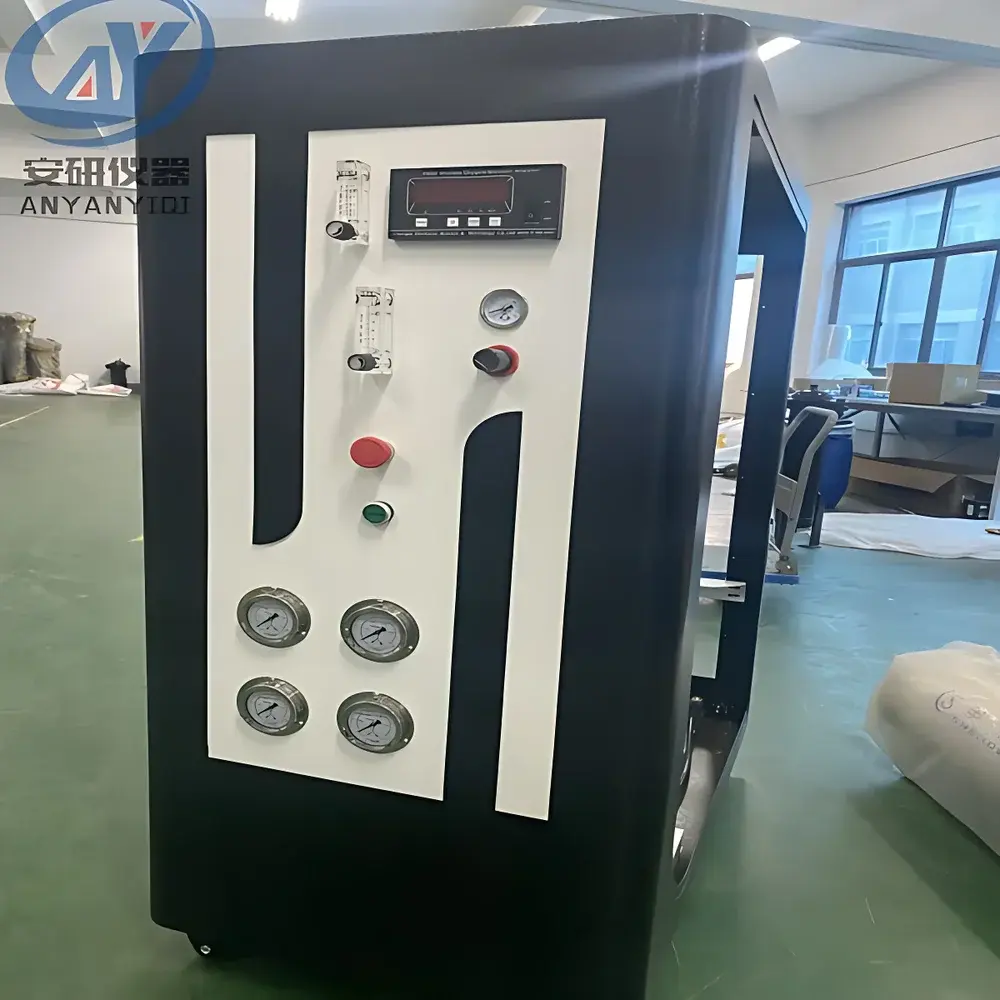
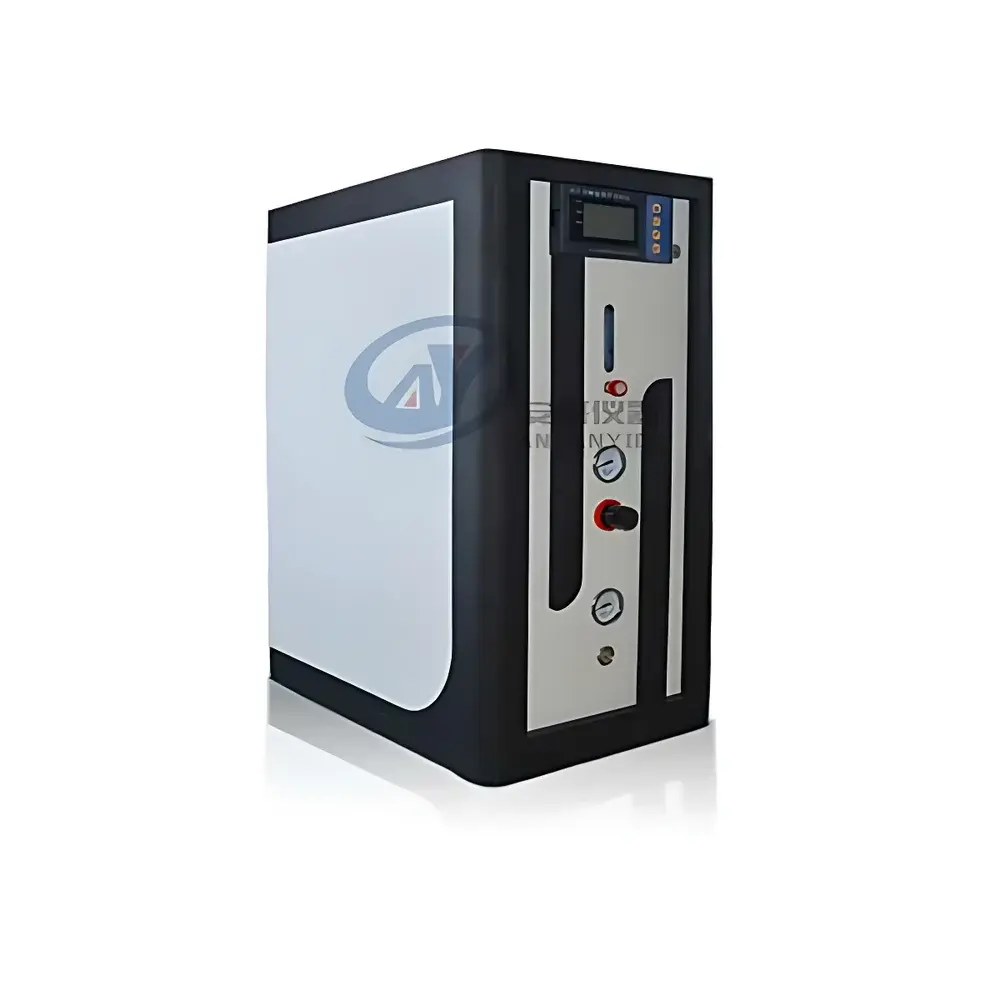
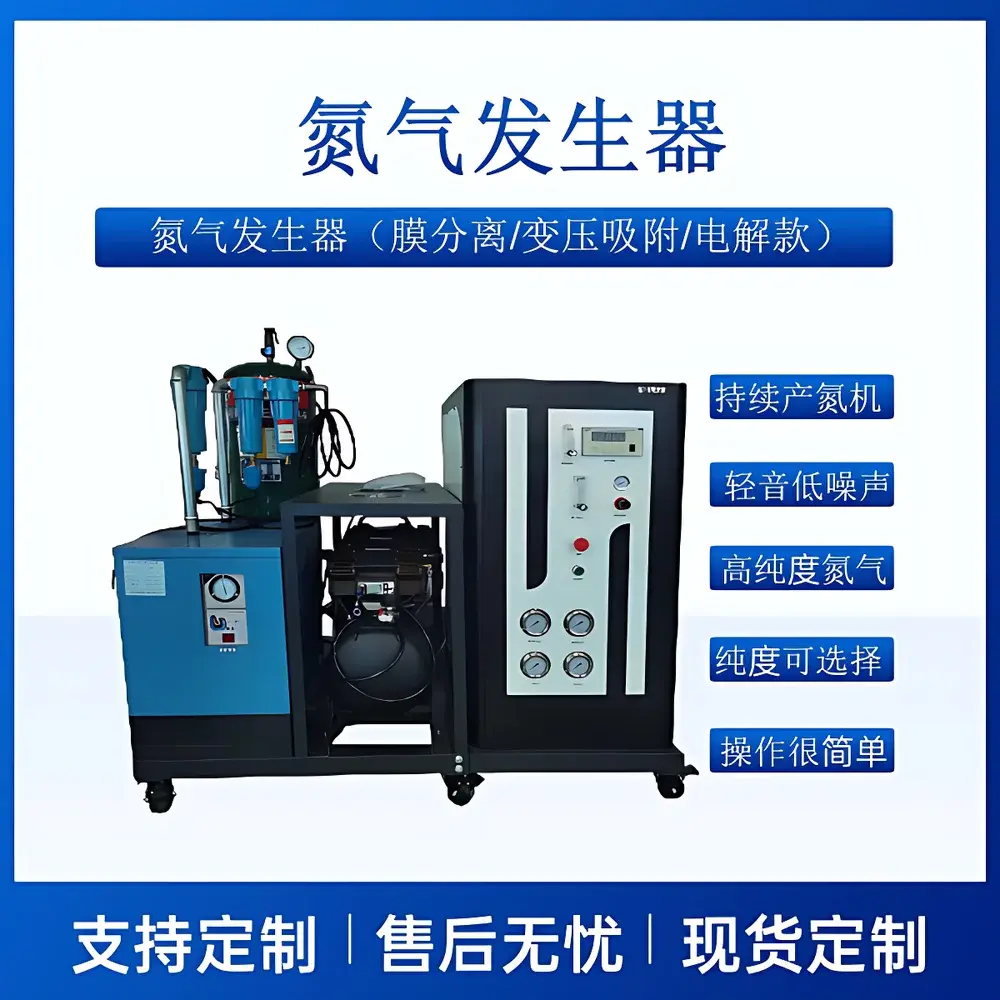
Anyan AYAN-10LB Laboratory-Scale PSA Nitrogen Generator (5N, 99.999% Purity)
| Brand | Anyan Instruments |
|---|---|
| Origin | Zhejiang, China |
| Model | AYAN-10LB |
| Nitrogen Purity | 95–99.999% (selectable at order) |
| Output Flow | 0–10 L/min |
| Output Pressure | 0–0.6 MPa (factory-set at 0.5 MPa) |
| Oxygen Content | ≤0.01% |
| Dew Point | −40 °C |
| Noise Level | 65 dB(A) |
| Power Supply | 220 V ±10%, 50 Hz ±5% |
| Power Consumption | 2200 W |
| Ambient Temp. | 10–40 °C |
| Relative Humidity | ≤85% RH (non-condensing) |
| Dimensions (W×D×H) | 950 × 750 × 1200 mm |
| Weight | 180 kg |
Overview
The Anyan AYAN-10LB is a compact, self-contained laboratory-scale nitrogen generator engineered for precision gas supply in analytical, research, and quality control environments. It employs pressure swing adsorption (PSA) technology — a proven, robust method for separating nitrogen from compressed air using carbon molecular sieve (CMS) media. Unlike membrane-based systems, the AYAN-10LB achieves ultra-high purity up to 99.999% (5N), meeting stringent requirements for GC carrier gas, LC-MS blanking, glove box purging, and inert atmosphere synthesis. Its dual-tower PSA architecture enables continuous nitrogen production with automatic alternation between adsorption and regeneration cycles — ensuring uninterrupted output while maintaining stable pressure, flow, and purity. The integrated system includes an oil-free scroll air compressor, refrigerated air dryer, coalescing and activated carbon filtration stages, air storage tank, and nitrogen buffer tank — eliminating dependency on external air sources or ancillary equipment.
Key Features
- Integrated air compression and purification: Built-in oil-free air compressor (2200 W), refrigerated dryer (−40 °C dew point), and multi-stage filtration (particulate, coalescing, and micro-oil adsorption) ensure CMS protection and long-term performance stability.
- Dual-buffered gas delivery: Separate air storage tank dampens pressure fluctuations and reduces pulsation across the CMS beds; nitrogen buffer tank homogenizes output purity and pressure, delivering consistent 5N-grade gas even under variable demand.
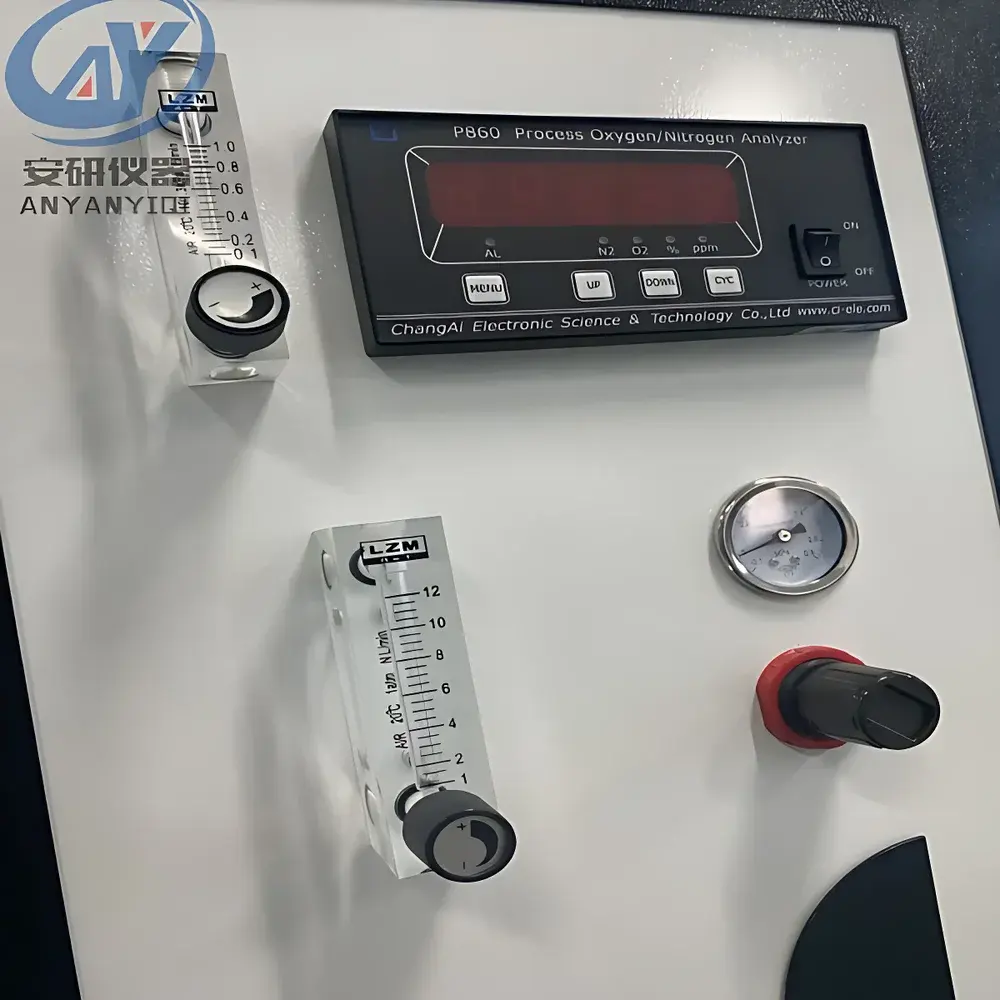
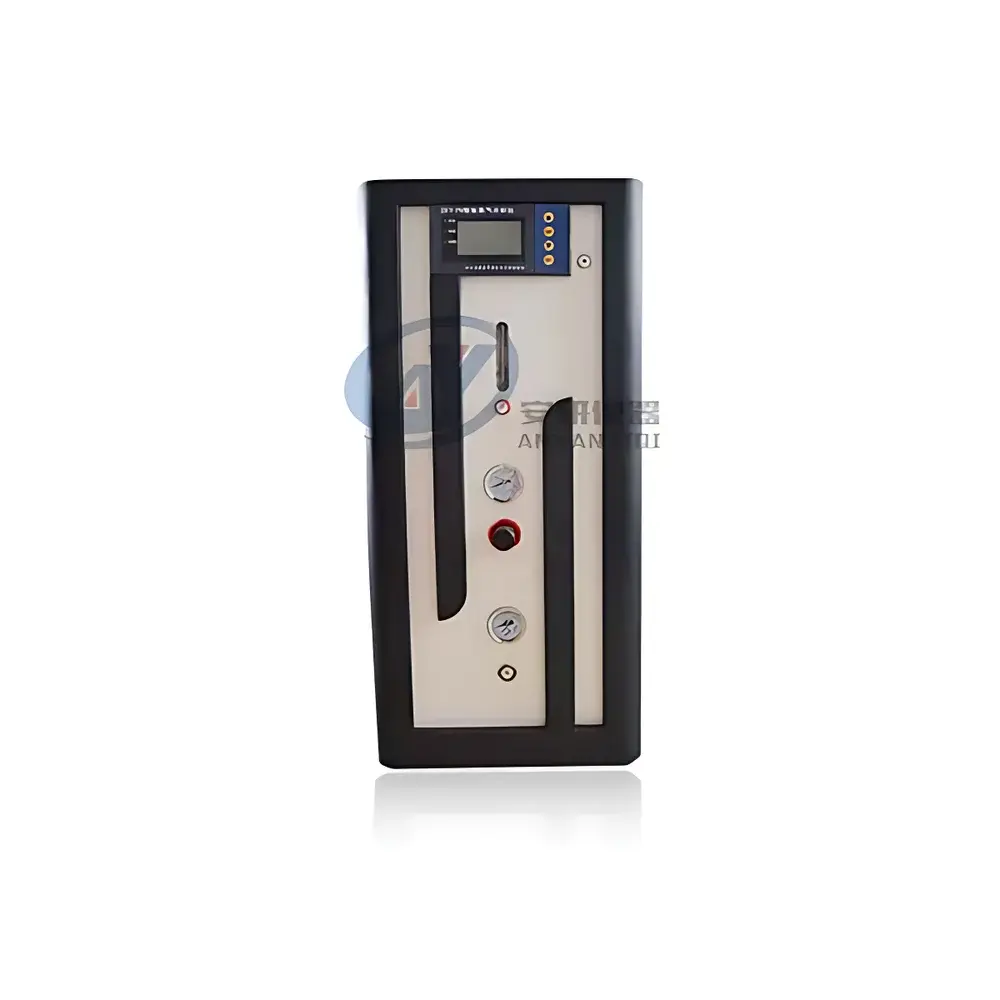
- Real-time process monitoring: Front-panel digital display shows real-time nitrogen purity (%N₂), volumetric flow rate (L/min), and system pressure — enabling immediate verification of compliance with method specifications.
- Modular CMS compatibility: Designed for interoperability with globally sourced carbon molecular sieves; selection optimized per target purity and flow profile to maximize energy efficiency and service life.
- Lab-optimized ergonomics: Heavy-duty casters with locking brakes support safe repositioning in shared lab spaces; footprint (0.95 × 0.75 m) accommodates standard fume hood alcoves or utility islands.
- Thermal and acoustic management: Enclosed thermal shielding maintains CMS operating temperature within optimal 20–25 °C range; acoustic enclosure limits operational noise to ≤65 dB(A) — suitable for open-plan laboratories.
Sample Compatibility & Compliance
The AYAN-10LB delivers nitrogen compliant with ISO 8573-1:2010 Class 2:2:2 (solid particles, water, oil) when operated with recommended inlet air quality (≤0.1 µm particulates, ≤−40 °C pressure dew point, ≤0.01 mg/m³ oil aerosol). Its output meets ASTM D6349-20 (standard practice for nitrogen purity verification in analytical applications) and supports GLP/GMP workflows requiring documented gas source traceability. While not certified to FDA 21 CFR Part 11 out-of-the-box, the unit’s analog/digital signal outputs (4–20 mA purity and flow) are compatible with third-party SCADA or LIMS integration for audit-ready data logging. No consumables beyond scheduled filter elements (coalescing, activated carbon, CMS replacement every 20,000–30,000 hours depending on inlet air quality) are required.
Software & Data Management
The AYAN-10LB operates via embedded microcontroller logic without proprietary software dependency. All operational parameters — including tower cycle timing, pressure setpoints, alarm thresholds (e.g., low purity, high dew point, filter saturation), and runtime counters — are configurable via intuitive front-panel keypad navigation. Optional RS-485 Modbus RTU interface enables integration into centralized facility monitoring systems. For laboratories requiring electronic records, analog outputs (4–20 mA) for purity and flow can be routed to validated data acquisition hardware compliant with 21 CFR Part 11 Annex 11 requirements. Internal event logging stores timestamped fault codes and maintenance alerts for technician review.
Applications
- Gas chromatography (GC) carrier gas supply for FID, TCD, and ECD detectors — especially where baseline stability and oxygen-free conditions are critical.
- LC-MS system blanking and instrument purge gas, reducing background contamination and improving detection limits.
- Inert atmosphere control in glove boxes, Schlenk lines, and reactor vessels for moisture- and oxygen-sensitive syntheses (e.g., organometallic catalysis, battery material processing).
- Sample preparation workflows including nitrogen blow-down concentrators and automated solvent evaporation systems.
- Calibration gas blending stations requiring stable, metered 5N nitrogen as diluent or balance gas.
- Quality assurance labs performing ASTM D3612 (dissolved gas analysis in transformer oil) or ISO 8573-compliant compressed air testing.
FAQ
What is the expected service life of the carbon molecular sieve (CMS) under normal lab conditions?
CMS lifetime typically exceeds 20,000 operating hours when inlet air meets ISO 8573-1 Class 2:2:2 specifications and pre-filtration stages are maintained per schedule (coalescing filter every 6 months; activated carbon every 12 months).
Can the AYAN-10LB be used for GC-MS carrier gas without additional purification?
Yes — when configured for ≥99.999% purity and operated with full filtration train active, its output satisfies ASTM D6349-20 requirements for high-resolution GC-MS carrier gas.
Is remote monitoring supported?
Standard configuration includes analog outputs (4–20 mA) for purity and flow; optional RS-485 Modbus RTU enables integration with building management or lab automation platforms.
Does the unit require external cooling water or exhaust venting?
No — it is air-cooled and designed for ambient indoor operation; no external water connection or dedicated exhaust ducting is needed.
How does the dual-tank design improve nitrogen stability compared to single-tank PSA systems?
The air storage tank decouples compressor cycling from CMS adsorption dynamics, minimizing pressure ripple; the nitrogen buffer tank absorbs short-term demand spikes, maintaining constant outlet pressure and purity during transient flow changes — critical for sensitive analytical instruments.



