
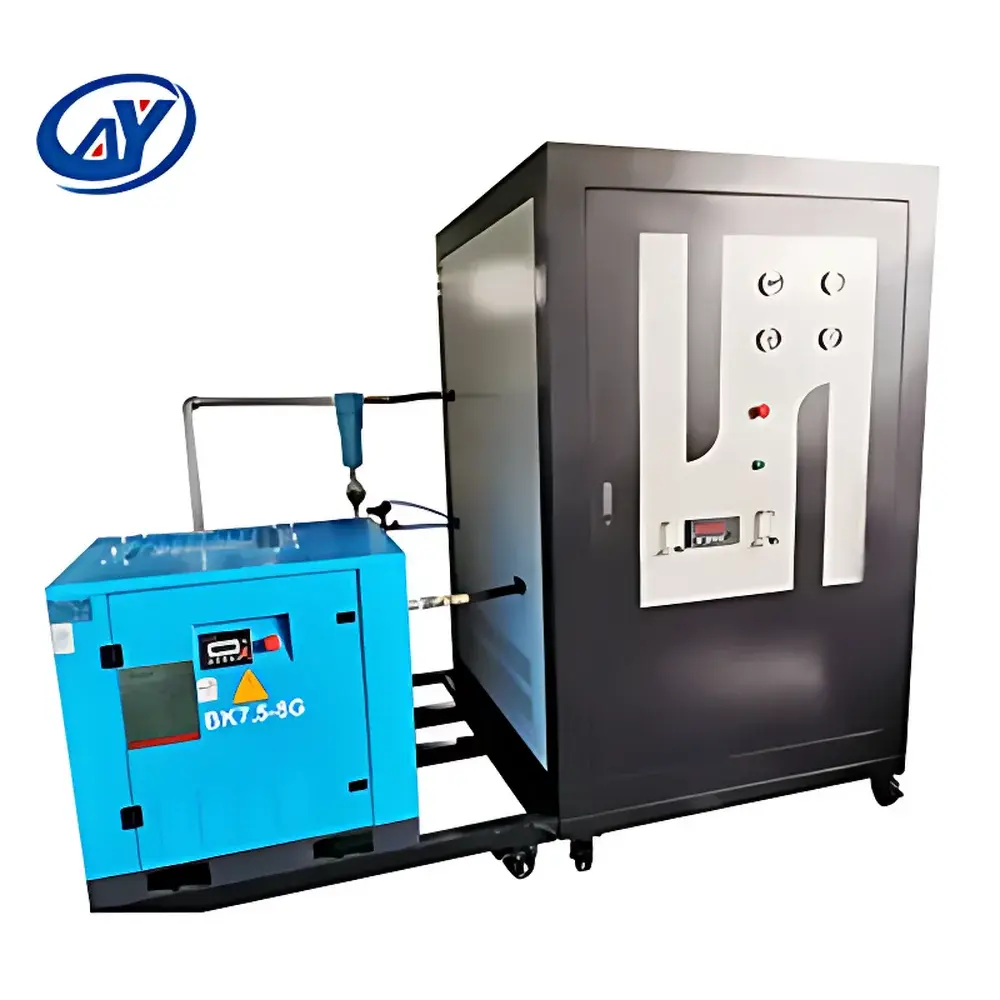
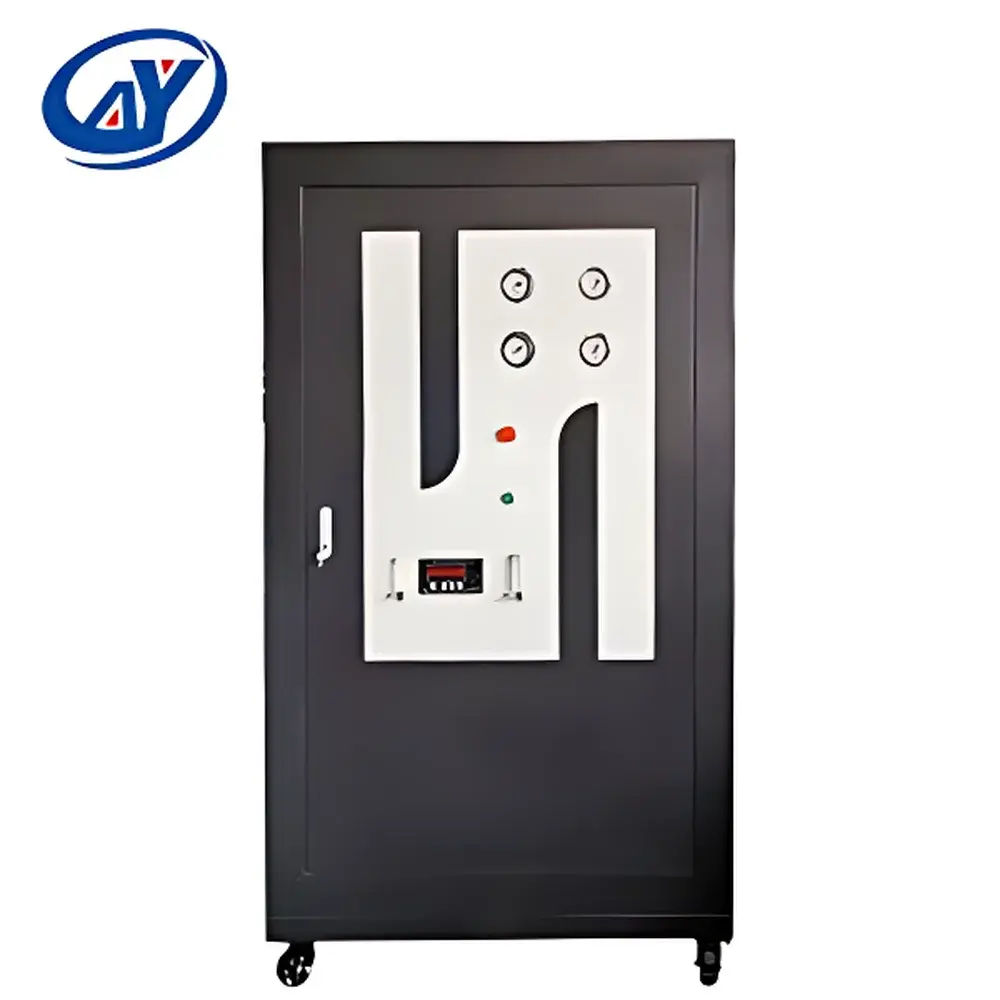
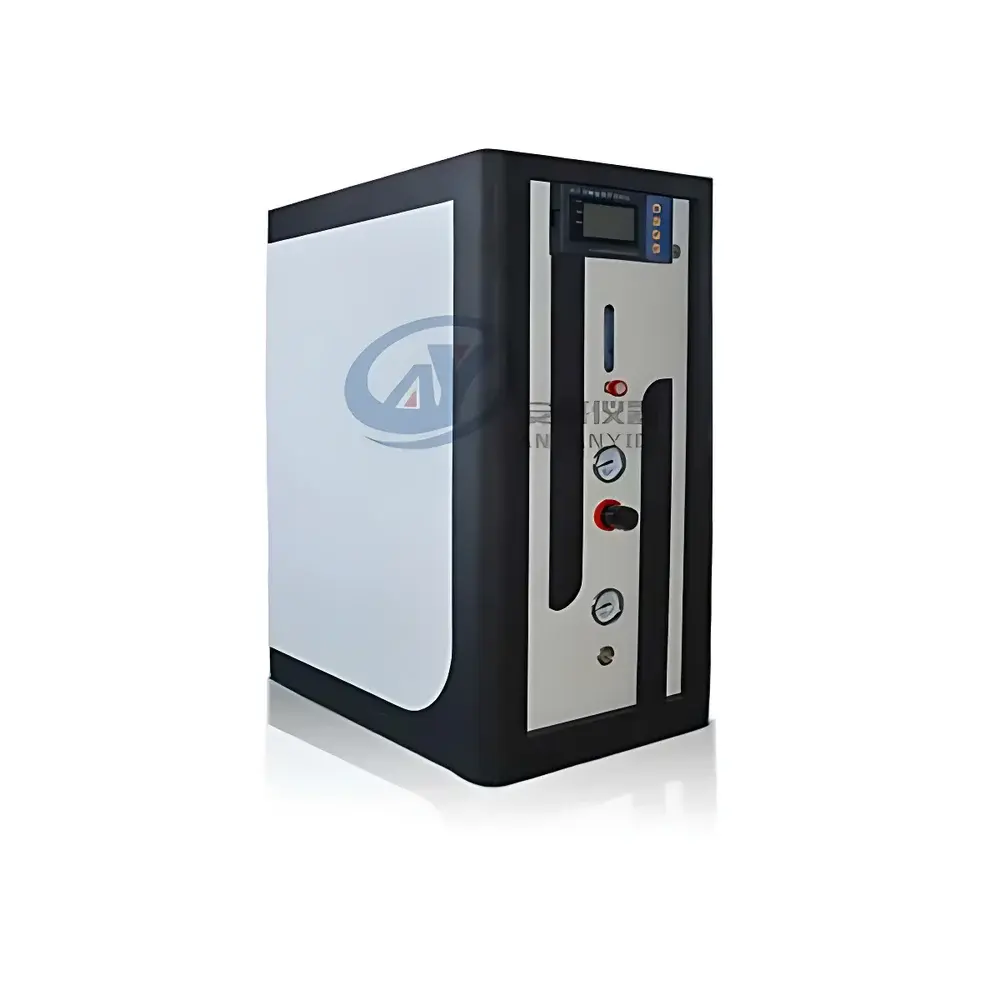
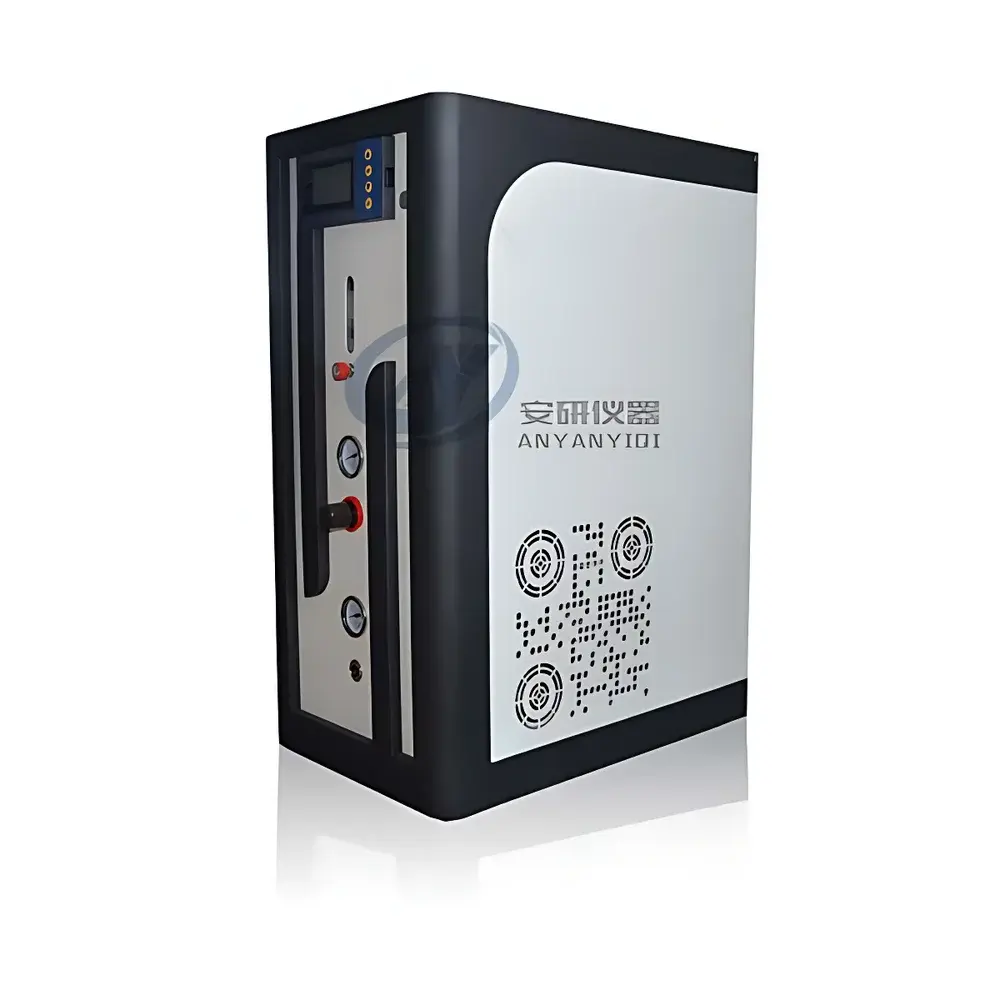
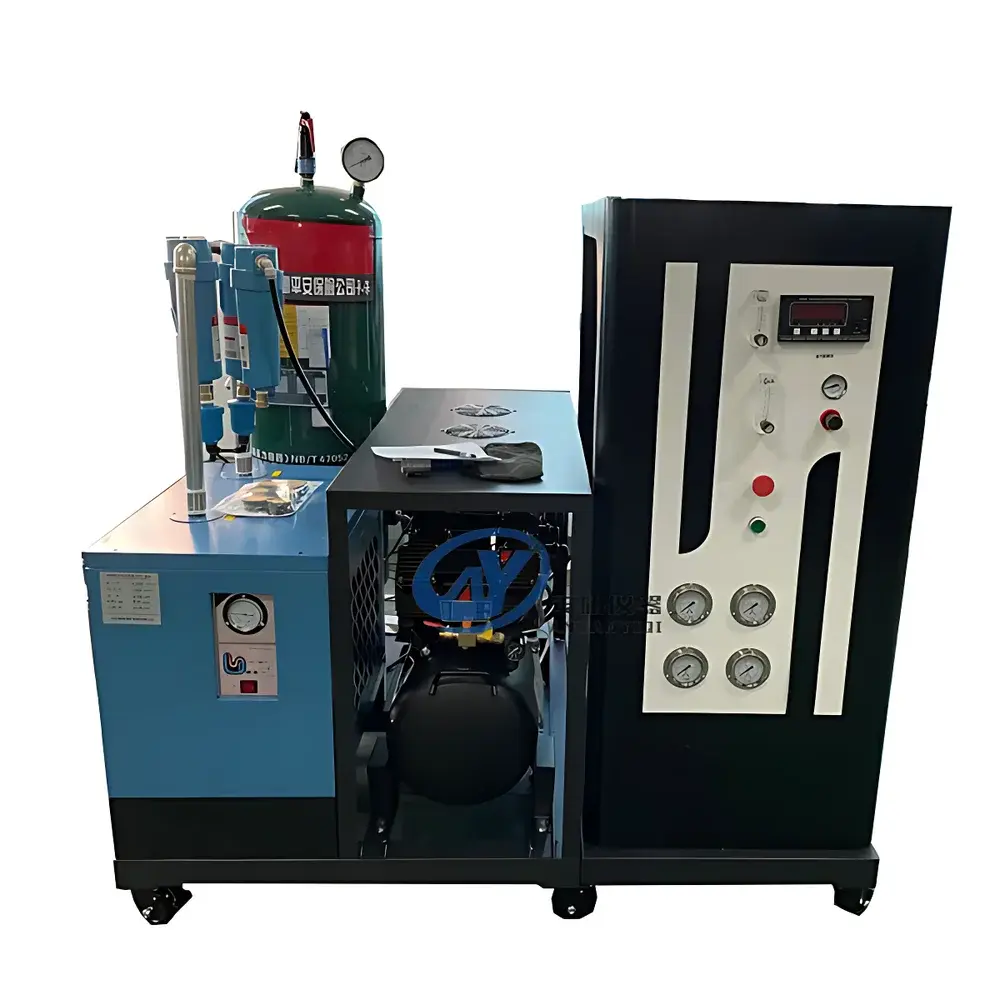
Anyan AYAN-10LG Membrane-Based Nitrogen Generator
| Brand | Anyan Instruments |
|---|---|
| Origin | Zhejiang, China |
| Manufacturer Type | Authorized Distributor |
| Category | Domestic Equipment |
| Model | AYAN-10LG |
| Nitrogen Generation Principle | Hollow-Fiber Membrane Separation |
| Output Flow Rate | 10 L/min |
| Output Pressure Range | 0–0.4 MPa |
| Nitrogen Purity | 99.9% (v/v) |
| Dew Point | –40 °C |
| Power Supply | 220 V AC, 50 Hz |
| Ambient Operating Temperature | 5–35 °C |
| Noise Level | ≤60 dB(A) |
| Dimensions (W×D×H) | 500 × 400 × 750 mm |
| Weight | 42 kg |
Overview
The Anyan AYAN-10LG is a laboratory-grade membrane-based nitrogen generator engineered for continuous, on-demand supply of high-purity nitrogen gas (99.9% v/v) at a stable flow rate of up to 10 L/min. Unlike cryogenic or pressure swing adsorption (PSA) systems, this unit employs proprietary hollow-fiber polymeric membrane technology to separate nitrogen from compressed ambient air—leveraging differential permeation rates of oxygen, water vapor, and carbon dioxide through selective polymer layers. The resulting nitrogen stream exhibits low residual oxygen (<3 ppm), a dew point of –40 °C, and consistent purity across variable flow conditions. Designed for integration into analytical instrumentation workflows—including LC-MS, GC carrier gas supply, glovebox purging, and sample preparation environments—the AYAN-10LG eliminates dependency on high-pressure cylinders while maintaining ISO 8573-1 Class 2.2.2 compressed air quality compliance when fed with appropriately filtered and dried inlet air.
Key Features
- Stable 10 L/min output capacity with pressure regulation from 0 to 0.4 MPa—optimized for multi-instrument feed or centralized lab distribution.
- Hollow-fiber membrane module with integrated pre-filtration (coalescing + activated carbon + desiccant) ensures long-term membrane integrity and resistance to oil aerosol, particulate, and moisture contamination.
- Automated pressure- and flow-regulated control system with microprocessor-based logic—enables precise setpoint maintenance and real-time response to downstream demand fluctuations.
- Integrated dew point monitoring and auto-drain function prevents condensate accumulation during shutdown cycles; dual-stage desiccant beds further reduce residual humidity to –40 °C (ISO 8573-1:2010 Class 2).
- Compact benchtop footprint (500 × 400 × 750 mm) with vibration-damped chassis and acoustic enclosure—meets laboratory noise limits (<60 dB[A]) without external silencing.
- Fail-safe design includes overpressure relief valve, thermal cut-off switch, and inlet air quality interlock to prevent membrane degradation under substandard feed conditions.
Sample Compatibility & Compliance
The AYAN-10LG is compatible with all standard nitrogen-dependent laboratory instruments requiring Grade 5 (ISO 8573-1:2010) or USP <857> compliant gas—particularly suitable for LC-MS mobile phase sparging, GC carrier gas, FTIR purge lines, and inert atmosphere reactors. It complies with CE marking requirements for electrical safety (EN 61000-6-3, EN 61000-6-4) and meets essential health and safety provisions under the EU Machinery Directive 2006/42/EC. While not certified to FDA 21 CFR Part 11, its programmable logic controller supports audit-trail-capable operation when integrated with validated lab information management systems (LIMS). All internal wetted materials—including stainless steel 316 tubing, EPDM seals, and food-grade polymer membranes—are compliant with USP Class VI biocompatibility standards.
Software & Data Management
The AYAN-10LG operates via embedded firmware with no external PC dependency. Its control interface provides real-time display of outlet pressure, flow rate, operating hours, and membrane service life estimation based on cumulative runtime and inlet air quality logs. Optional RS-485 Modbus RTU output enables integration into building management systems (BMS) or centralized gas monitoring platforms. Data logging intervals are configurable (1 min to 24 h), supporting GLP-compliant record retention when paired with external SCADA or historian software. No cloud connectivity or proprietary software installation is required—configuration remains accessible via front-panel keypad and OLED display.
Applications
- Carrier gas supply for gas chromatography (GC) and gas chromatography–mass spectrometry (GC-MS) systems requiring stable, ultra-dry nitrogen at constant pressure.
- Mobile phase degassing and solvent sparging in liquid chromatography (LC) and LC-MS workflows—reducing baseline noise and improving detection sensitivity.
- Inert blanketing of reaction vessels, storage cabinets, and gloveboxes where oxygen exclusion below 10 ppm is critical for air-sensitive synthesis or material handling.
- Instrument purge gas for FTIR, Raman, and XRD systems to minimize atmospheric CO₂/H₂O interference in spectral acquisition.
- Calibration gas dilution systems requiring traceable, repeatable nitrogen background streams for gas standard preparation.
FAQ
What inlet air quality is required for optimal membrane performance?
The AYAN-10LG requires inlet air meeting ISO 8573-1 Class 2.2.2 specifications: ≤0.1 µm particles, ≤0.1 mg/m³ total oil content (including aerosol and vapor), and dew point ≤–40 °C. Use of a refrigerated dryer followed by coalescing and activated carbon filtration is strongly recommended.
Can the unit be operated continuously for 24/7 applications?
Yes—the membrane module and control electronics are rated for uninterrupted operation at rated load. Mean time between failures (MTBF) exceeds 20,000 hours under nominal conditions.
Is routine maintenance required, and what does it involve?
Annual replacement of pre-filters (particulate, coalescing, activated carbon) and desiccant cartridges is advised. Membrane replacement is typically required every 5–7 years depending on inlet air quality history and duty cycle.
Does the generator support remote monitoring or alarm outputs?
Standard configuration includes dry-contact fault alarms (overpressure, high temperature, filter clogging) and optional analog 4–20 mA output for pressure or flow telemetry.
How does ambient temperature affect nitrogen purity and flow stability?
Operation is validated between 5–35 °C. Below 10 °C, inlet air dew point must be actively controlled to prevent ice formation in pre-filters; above 35 °C, output flow may decrease by ≤5% due to reduced membrane permeability.



