
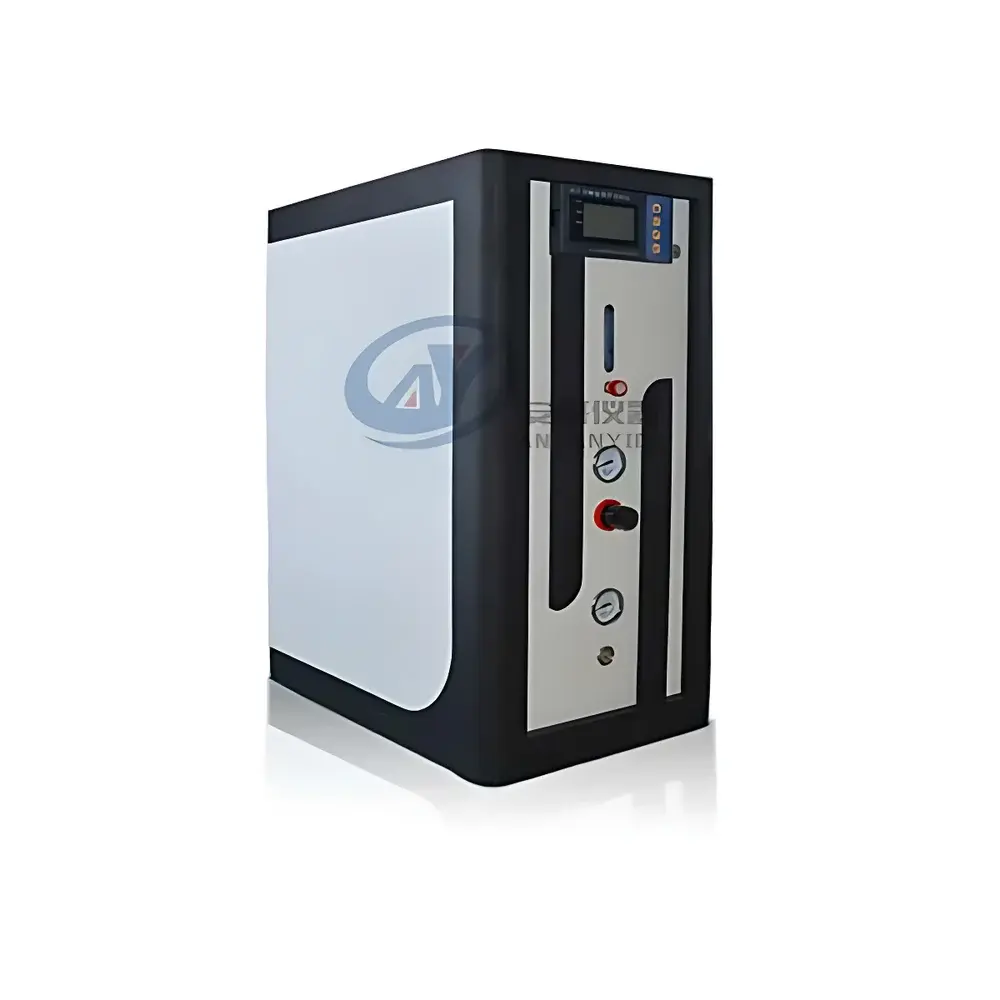
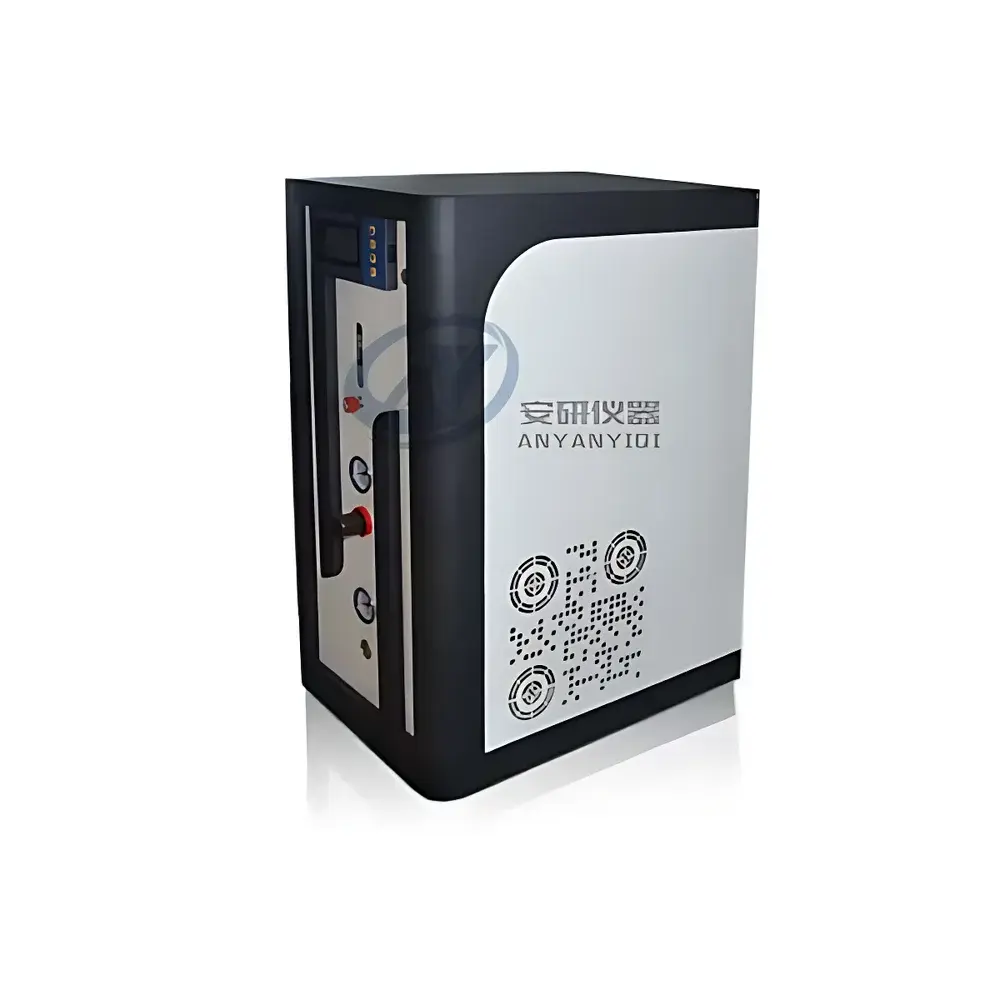
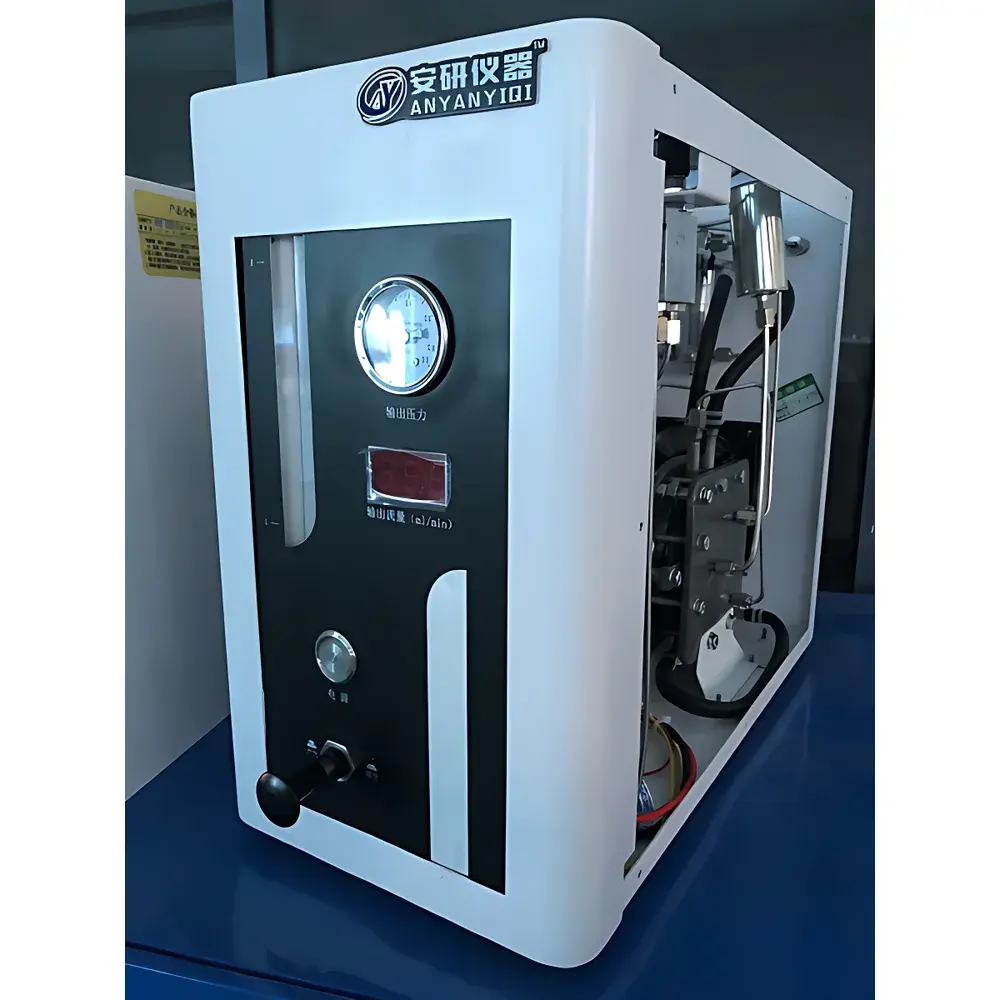
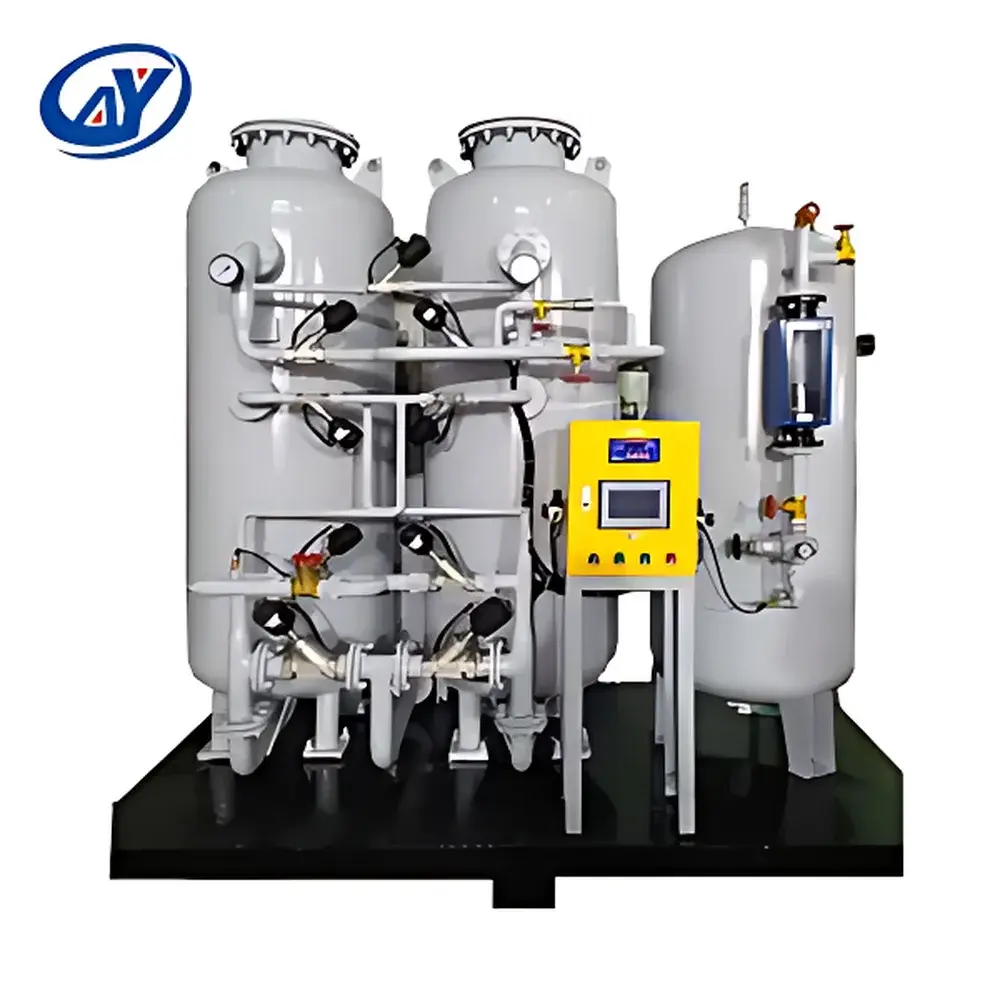
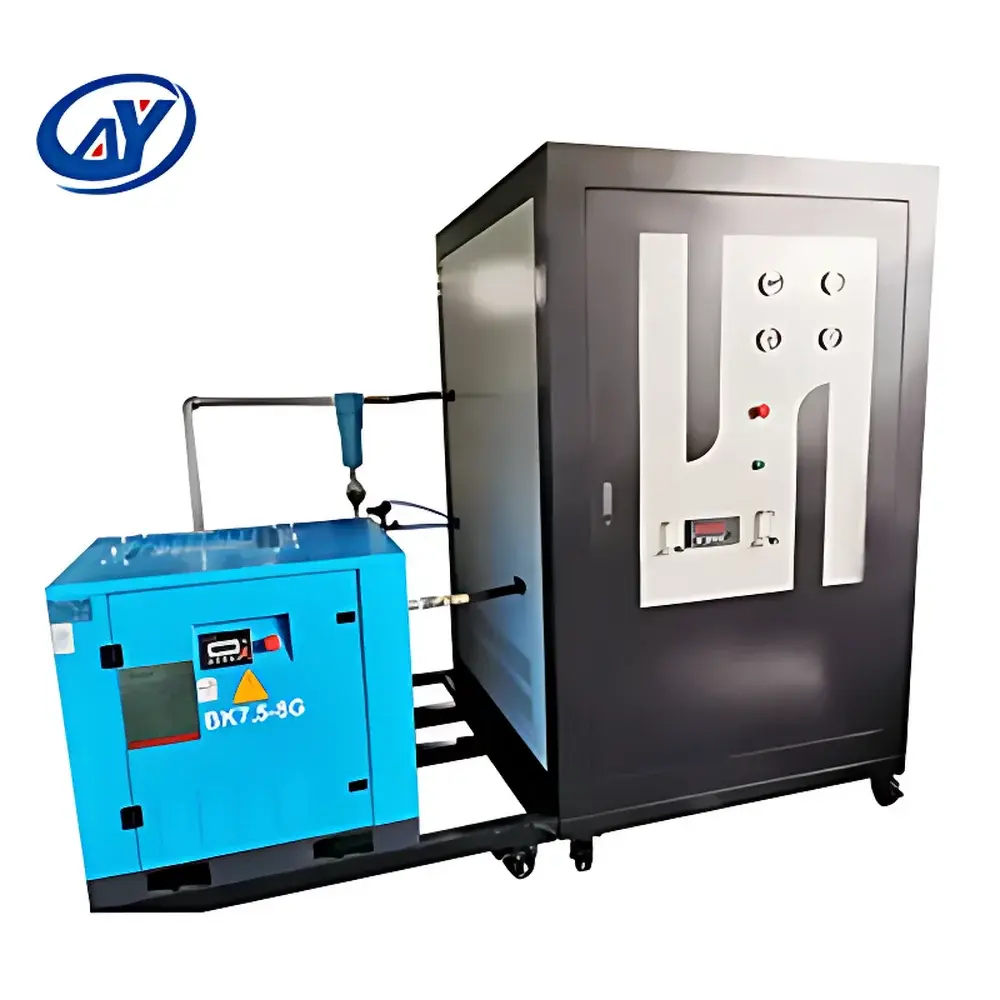
Anyan AYAN-15L PSA Nitrogen Generator
| Brand | Anyan Instruments (Hangzhou) |
|---|---|
| Origin | Zhejiang, China |
| Manufacturer Type | Authorized Distributor |
| Country of Origin | China |
| Model | AYAN-15L2 |
| Nitrogen Generation Principle | Pressure Swing Adsorption (PSA) |
| Output Flow Rate | 15 L/min |
| Output Pressure | 0–0.6 MPa |
| Nitrogen Purity | 99.99% |
| Dew Point | −40 °C |
| Power Supply | 220 V ±10%, 50 Hz ±5% |
| Max. Power Consumption | 600 W |
| Ambient Operating Temperature | 0–40 °C |
| Relative Humidity | ≤85% (non-condensing) |
| Noise Level | ≤65 dB(A) |
| Enclosure Material | Food-grade 304 stainless steel |
| Dimensions (L×W×H) | 2600 × 950 × 2400 mm |
| Weight | 2400 kg |
Overview
The Anyan AYAN-15L2 PSA Nitrogen Generator is an engineered solution for on-site, continuous nitrogen supply in laboratory and light industrial environments. It employs pressure swing adsorption (PSA) technology — a well-established, energy-efficient gas separation method — to extract high-purity nitrogen from ambient compressed air. At its core, the system utilizes carbon molecular sieve (CMS) beds that selectively adsorb oxygen, moisture, and trace contaminants based on molecular kinetic diameter and diffusion rate differences: O₂ molecules (kinetic diameter ≈ 0.346 nm) diffuse more rapidly into CMS micropores than N₂ molecules (≈ 0.364 nm), enabling preferential retention of oxygen under elevated pressure and subsequent release during depressurization. Dual-bed architecture ensures uninterrupted nitrogen delivery through alternating adsorption and regeneration cycles (typical cycle time: ~120 seconds), delivering stable output at up to 15 L/min with verified purity of 99.99% (≤100 ppm O₂) and a certified dew point of −40 °C.
Key Features
- Integrated pre-treatment train: Compressed air inlet accommodates external oil-free or oil-lubricated air sources (recommended ≥7 bar input); includes coalescing filter, refrigerated dryer, and high-efficiency particulate/oil removal filter prior to CMS adsorption.
- Dual-bed PSA configuration with automatic valve sequencing controlled by industrial-grade PLC; enables continuous nitrogen production with <1-second switchover and no downtime during regeneration.
- Stainless steel wetted components: All internal piping, buffer tanks, and CMS vessels constructed from food-grade 304 stainless steel (ASTM A240/A276), ensuring corrosion resistance and compliance with ISO 8573-1:2010 Class 2:2:2 air quality standards.
- Real-time process monitoring: Integrated electrochemical oxygen analyzer (0–1000 ppm range, ±2% FS accuracy), thermal mass flow meter (0–20 L/min, ±1.5% reading), and calibrated pressure transducers for inlet, adsorption, and outlet lines.
- Robust mechanical design: Skid-mounted base with anti-vibration mounts; CE-compliant electrical cabinet (IP54 enclosure); acoustic insulation to maintain operational noise ≤65 dB(A) at 1 m distance.
- Intuitive HMI interface: 7-inch color touchscreen displays real-time purity, flow, pressure, CMS bed status, alarm logs, and maintenance countdown timers.
Sample Compatibility & Compliance
The AYAN-15L2 is designed for compatibility with analytical instruments requiring stable, low-oxygen, dry nitrogen — including GC carrier gas, LC-MS purge gas, glovebox inerting, sample preparation purging, and thermal analysis blanking. Its output meets ASTM D6349-20 (Standard Practice for Determination of Trace Oxygen in High-Purity Gases) verification requirements and supports GLP/GMP workflows where documented gas quality is essential. While not certified to ISO 8573-1 Class 1 for particle/oil content without upstream filtration upgrades, the unit achieves Class 2:2:2 when paired with a validated 0.01 µm coalescing filter and refrigerated dryer. The system complies with IEC 61000-6-2 (EMC immunity) and IEC 61000-6-4 (EMC emissions), and supports audit-ready operation via optional data logging compliant with FDA 21 CFR Part 11 (when integrated with third-party validated software platforms).
Software & Data Management
The embedded PLC controller records all critical process parameters (flow, purity, pressure, cycle timing, alarm events) with timestamped storage for ≥30 days. USB export enables CSV-based reporting for QA/QC documentation. Optional RS485 Modbus RTU or Ethernet TCP/IP communication allows integration into centralized facility monitoring systems (e.g., LabVantage, DeltaV). Alarm thresholds are user-configurable: e.g., purity deviation >99.95%, flow drop >10% nominal, or dew point rise >−35 °C triggers visual/audible alerts and automatic venting of substandard gas. No proprietary cloud platform is required; raw data remains fully accessible and exportable without vendor lock-in.
Applications
- Gas chromatography (GC) carrier and detector make-up gas, particularly for ECD, TCD, and FID applications demanding consistent O₂-free baseline stability.
- LC-MS and GC-MS systems requiring ultra-dry, hydrocarbon-free nitrogen for ion source drying and collision gas.
- Controlled-atmosphere sample storage, solvent evaporation stations, and nitrogen-purged reaction vessels in synthetic chemistry labs.
- Calibration gas blending systems where precise nitrogen diluent composition is critical.
- Quality control labs performing metallographic sample preparation, where oxidation-sensitive etching requires inert ambient conditions.
FAQ
What is the recommended inlet air quality for optimal performance?
Compressed air must be oil-free or treated with a Class 1.2 coalescing filter (0.01 µm, 99.9999% efficiency) and refrigerated drying to ≤3 °C pressure dew point prior to generator inlet.
Can the unit operate continuously for 24/7 applications?
Yes — designed for unattended, long-term operation with scheduled maintenance intervals every 6–12 months depending on air quality and duty cycle.
How often does the carbon molecular sieve require replacement?
Under typical lab conditions (clean, dry feed air), CMS service life exceeds 30,000 operating hours (~3.4 years at 100% duty); replacement is indicated only upon persistent purity decline despite pressure and flow optimization.
Is external cooling water required?
No — the integrated refrigerated dryer uses air-cooled condenser technology; ambient ventilation clearance of ≥500 mm is required on all sides.
Does the system support remote diagnostics or predictive maintenance?
Basic remote monitoring is enabled via Modbus; advanced predictive analytics (e.g., CMS degradation modeling) require integration with third-party IIoT platforms and historical trend analysis.



