
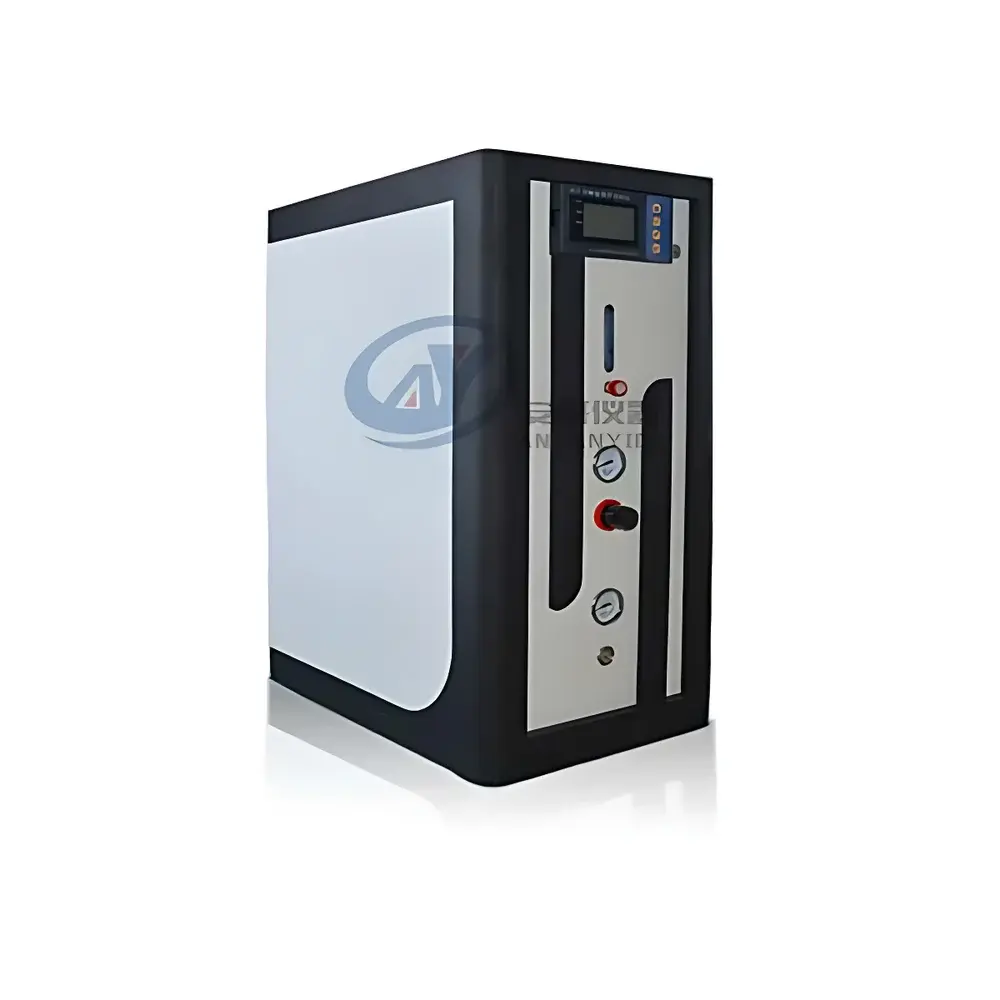
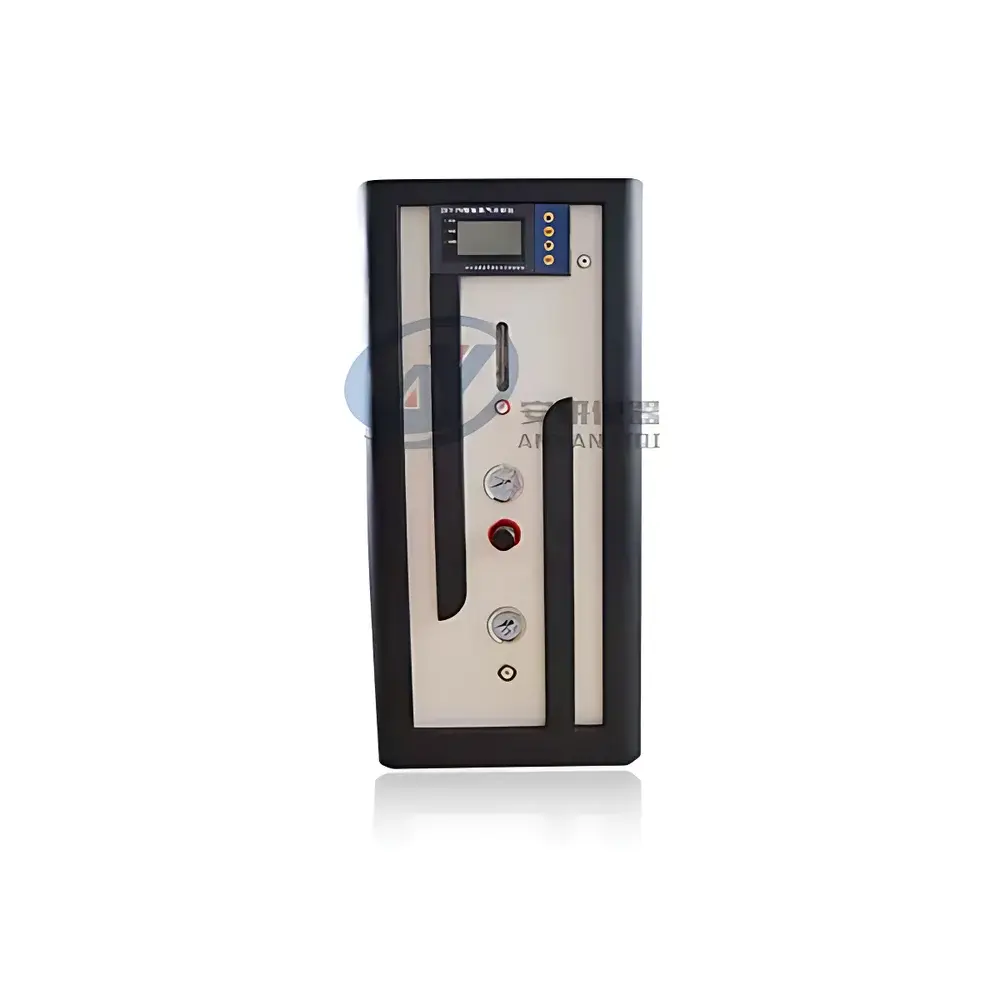
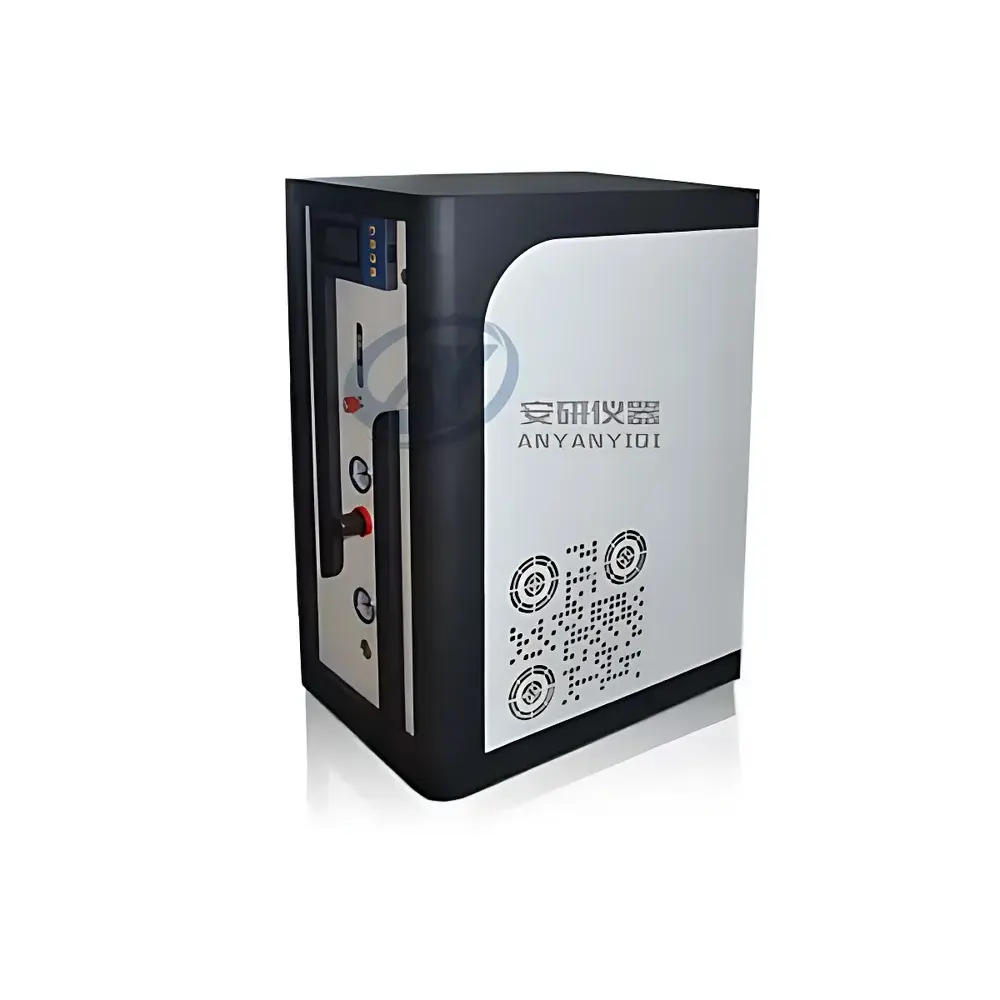
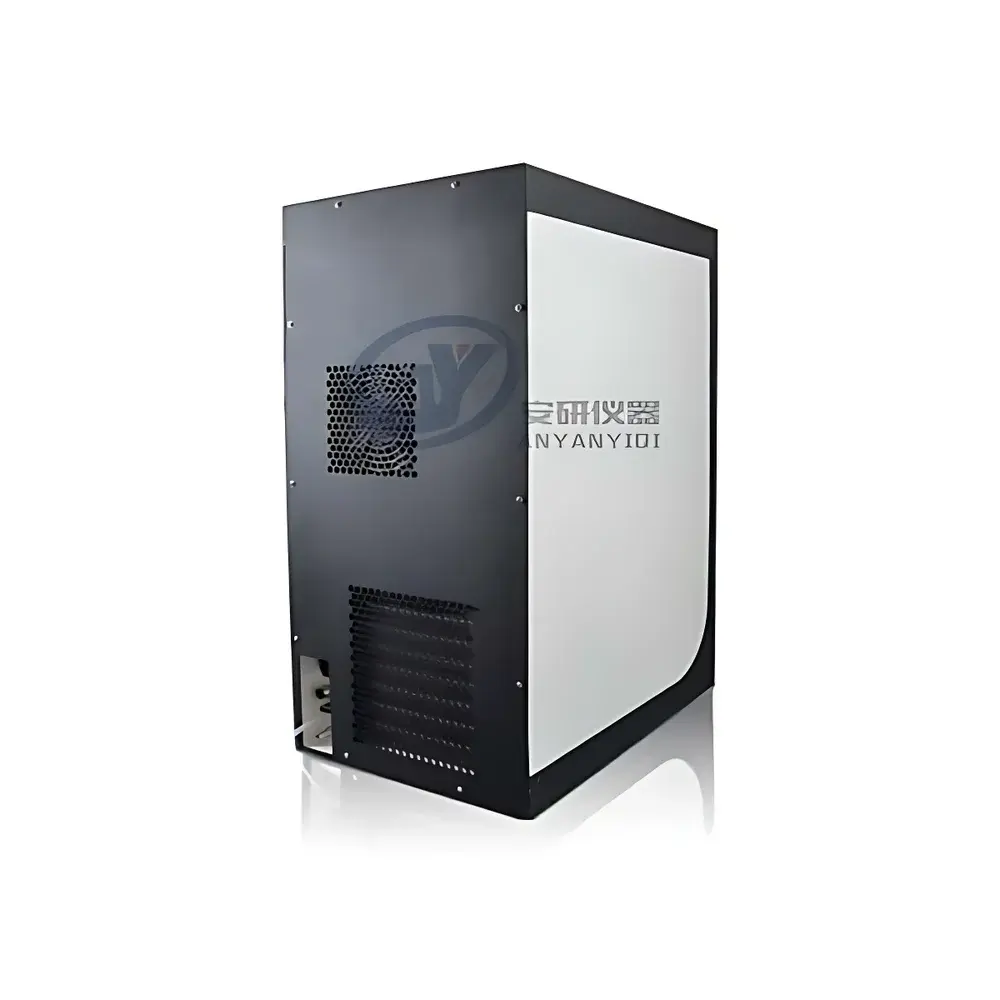
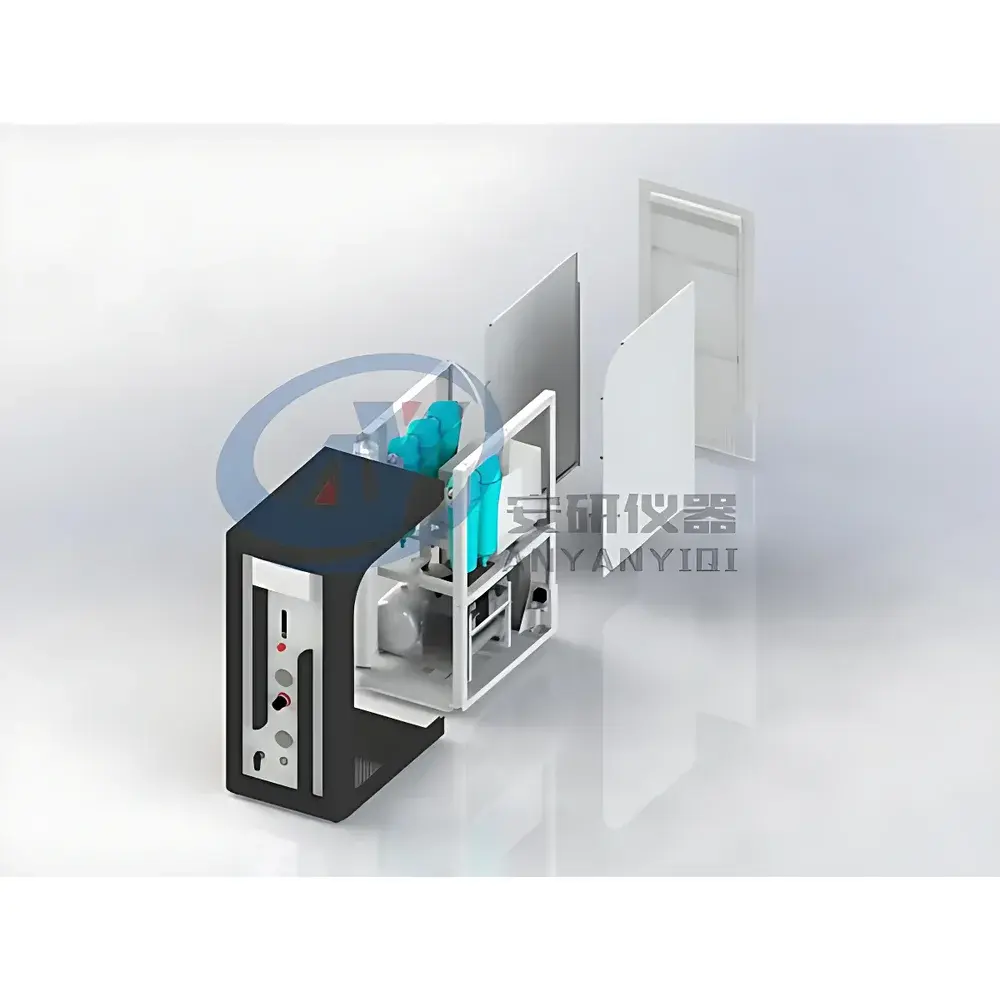
Anyan AYAN-20L Membrane-Based Nitrogen Generator
| Brand | Anyan Instruments |
|---|---|
| Origin | Zhejiang, China |
| Manufacturer Type | Authorized Distributor |
| Model | AYAN-20L |
| Nitrogen Generation Principle | Hollow-Fiber Membrane Separation |
| Output Flow Rate | 20 L/min |
| Output Pressure Range | 0–0.6 MPa |
| Nitrogen Purity | 99% (v/v) |
| Dew Point | ≤ −40 °C (typical, dependent on inlet air quality and ambient conditions) |
| Power Supply | 220 V AC, 50 Hz |
| Air Inlet Requirement | Oil-free, dried compressed air (dew point ≤ −20 °C recommended) |
| Dimensions (W×D×H) | 600 × 500 × 1,200 mm |
| Weight | ~85 kg |
Overview
The Anyan AYAN-20L Membrane-Based Nitrogen Generator is an engineered solution for on-site, continuous nitrogen supply in laboratory and light industrial environments. It employs hollow-fiber membrane separation technology—where compressed, pre-treated air passes through selectively permeable polymeric membranes—to separate atmospheric oxygen, water vapor, and CO₂ from nitrogen based on differential gas permeation rates. This physical separation process yields a stable stream of nitrogen with consistent 99% purity (v/v), suitable for non-critical inerting, blanketing, and purging applications. Unlike pressure swing adsorption (PSA) systems, the AYAN-20L operates without moving parts or cyclic valves, delivering silent, vibration-free, and maintenance-light operation. Its design prioritizes reliability over ultra-high purity, making it ideal for applications where >99% N₂ suffices and long-term operational stability is valued over trace-level impurity control.
Key Features
- Hollow-fiber membrane module with integrated pre-filtration (coalescing + activated carbon + desiccant stages) ensures feed air meets ISO 8573-1 Class 2:2:2 requirements prior to membrane separation.
- Stable 20 L/min nitrogen output at pressures up to 0.6 MPa, with pressure-regulated delivery via stainless-steel diaphragm regulator and dual-stage filtration (0.01 µm final particulate filter).
- Real-time monitoring interface displaying outlet pressure, flow rate (rotameter with calibrated scale), and visual purity indicator (colorimetric O₂ sensor optional upgrade).
- Robust cabinet construction (powder-coated steel frame, IP54-rated enclosure) supports benchtop or floor-mounted installation in controlled lab or QC environments.
- No consumables beyond standard filter elements (recommended replacement every 6–12 months depending on air quality); no molecular sieves, no regeneration cycles, no purge loss.
- Compliance-ready architecture: Supports integration into GLP-compliant workflows via analog 4–20 mA output for flow/purity logging (with external DAQ system) and configurable alarm relays for pressure/flow deviation.
Sample Compatibility & Compliance
The AYAN-20L is compatible with ambient air as feed gas when supplied via an oil-free, refrigerated dryer-equipped compressor meeting ISO 8573-1 Class 2:2:2 specifications. It is not designed for direct connection to oil-lubricated compressors or untreated shop air. The unit complies with CE safety directives (2014/30/EU EMC, 2014/35/EU LVD) and conforms to IEC 61000-6-2/6-3 immunity/emission standards. While not certified to FDA 21 CFR Part 11 out-of-the-box, its analog signal outputs and mechanical interlocks support audit-trail-capable integration in regulated food packaging and pharmaceutical R&D settings where nitrogen is used per USP “Water for Pharmaceutical Purposes” and ISO 8573-7:2019 for compressed gas purity.
Software & Data Management
The base model operates via manual controls and analog instrumentation; no embedded microprocessor or proprietary software is included. Optional digital add-ons include a PLC-based controller (Siemens LOGO! 8) with Modbus RTU interface, enabling remote status monitoring (flow, pressure, filter life countdown), event logging (alarm history), and scheduled maintenance alerts. All data points are exportable as CSV via USB or RS-485. For GMP-aligned labs, third-party SCADA platforms (e.g., Ignition, LabVIEW) can acquire real-time signals for electronic batch records under validated configurations.
Applications
- Food & Beverage Packaging: Blanketing of modified-atmosphere packaging (MAP) lines for fresh-cut produce, roasted nuts, baked goods, and snack foods—extending shelf life by inhibiting lipid oxidation and microbial growth.
- Beverage Dispensing & Canning: Nitrogen sparging and headspace purging in beer kegging, aluminum can filling, and PET bottle line pressurization—reducing dissolved O₂ to <50 ppb and preventing flavor degradation.
- Lab-Scale Inerting: Glove box purging, solvent evaporation under inert atmosphere (rotary evaporators), GC carrier gas backup, and sample storage in nitrogen-purged desiccators.
- Electronics Manufacturing: Solder paste storage cabinets and reflow oven inert zones requiring continuous low-oxygen environments (O₂ < 1,000 ppm).
- Quality Control Testing: Supporting ASTM D3107 (textile shrinkage), ISO 11843 (detection limit validation), and USP plastic container testing where nitrogen serves as process gas or purge medium.
FAQ
What maintenance intervals are recommended for optimal performance?
Filter elements (coalescing, carbon, desiccant) should be replaced every 6 months under continuous operation; membrane lifetime exceeds 15,000 operating hours with proper inlet air conditioning.
Can this generator supply nitrogen for GC carrier gas applications?
No—99% purity is insufficient for high-resolution GC; use only for non-analytical inerting, blanketing, or purging where trace oxygen or moisture does not compromise process integrity.
Is dew point guaranteed at the outlet?
Dew point depends on inlet air quality; with recommended −20 °C inlet dew point and ambient temperature <35 °C, typical outlet dew point is ≤ −40 °C (measured per ISO 8573-3).
Does the unit require cooling water or external ventilation?
No—air-cooled design with passive convection; ensure ≥150 mm clearance around rear and top panels for thermal dissipation.
How is nitrogen purity verified during operation?
Built-in visual O₂ indicator provides qualitative verification; for quantitative validation, integrate a handheld electrochemical O₂ analyzer (e.g., Geotech G110) upstream of critical processes per ISO 8573-7 Annex B protocols.



