
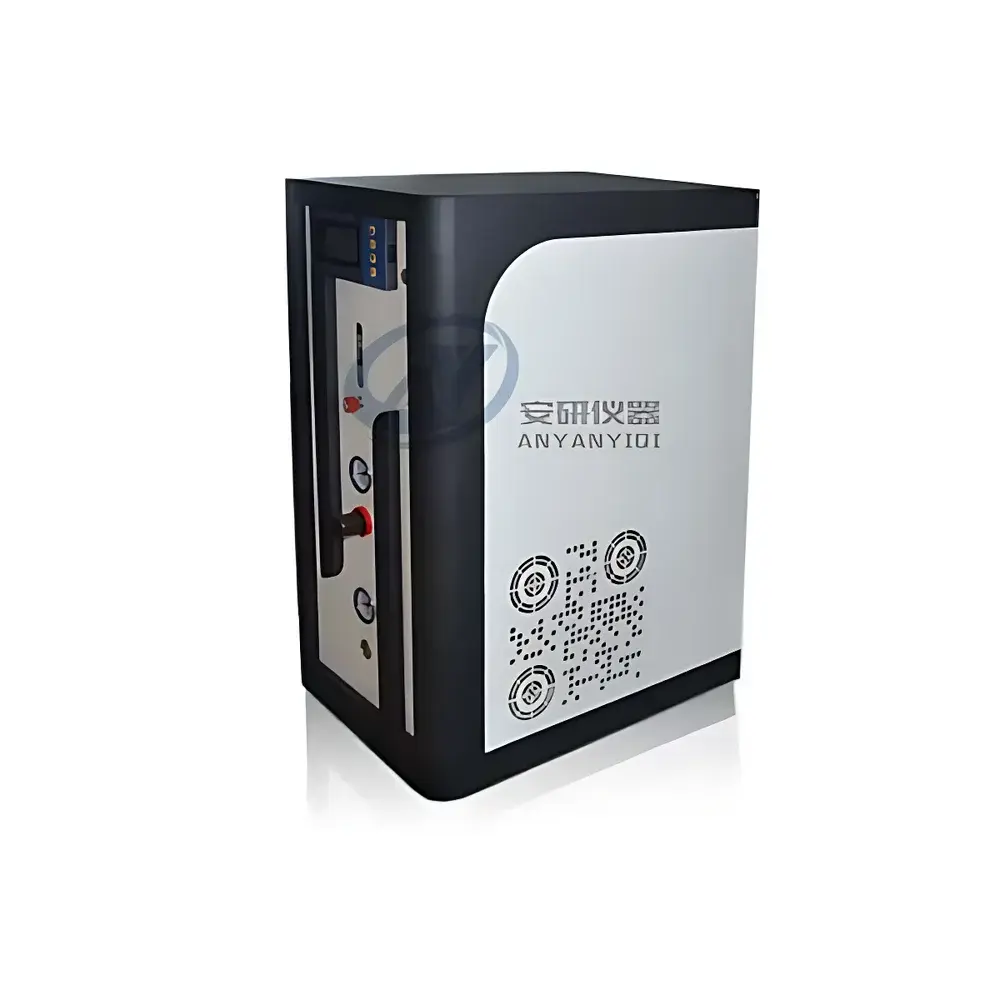
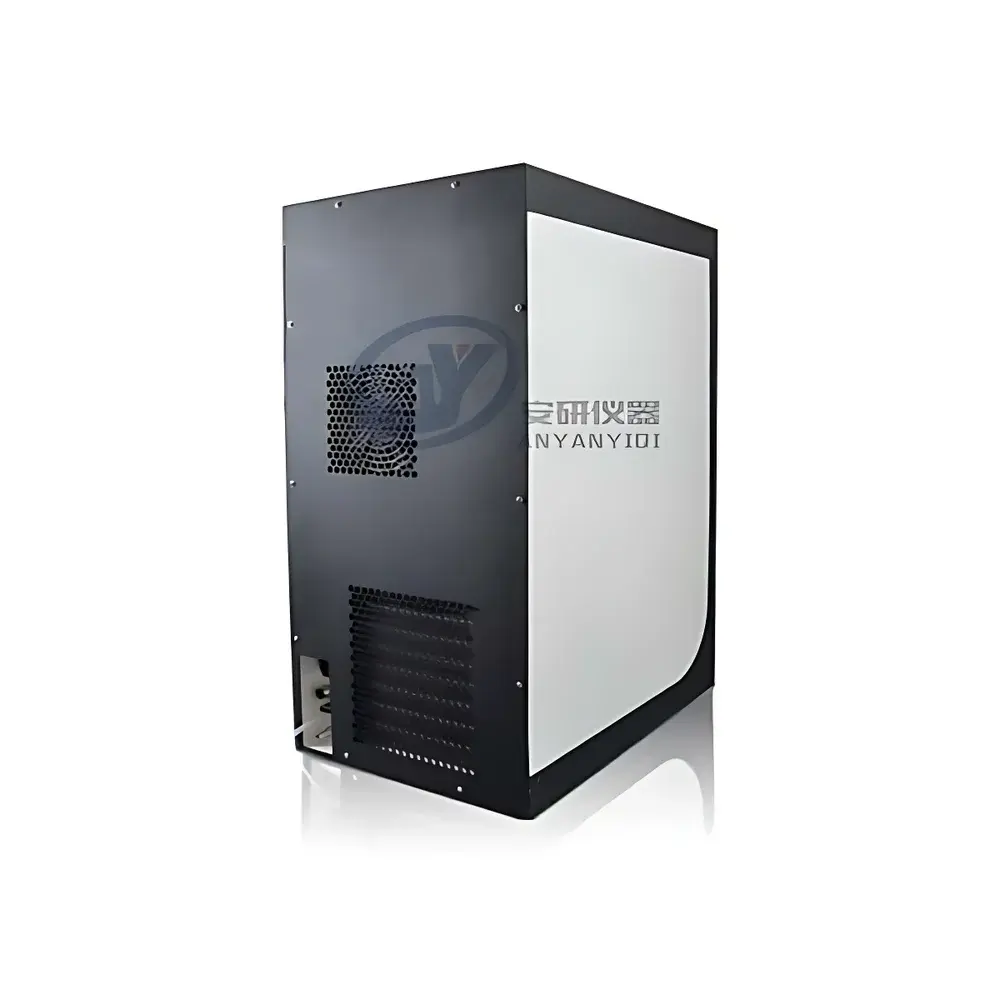
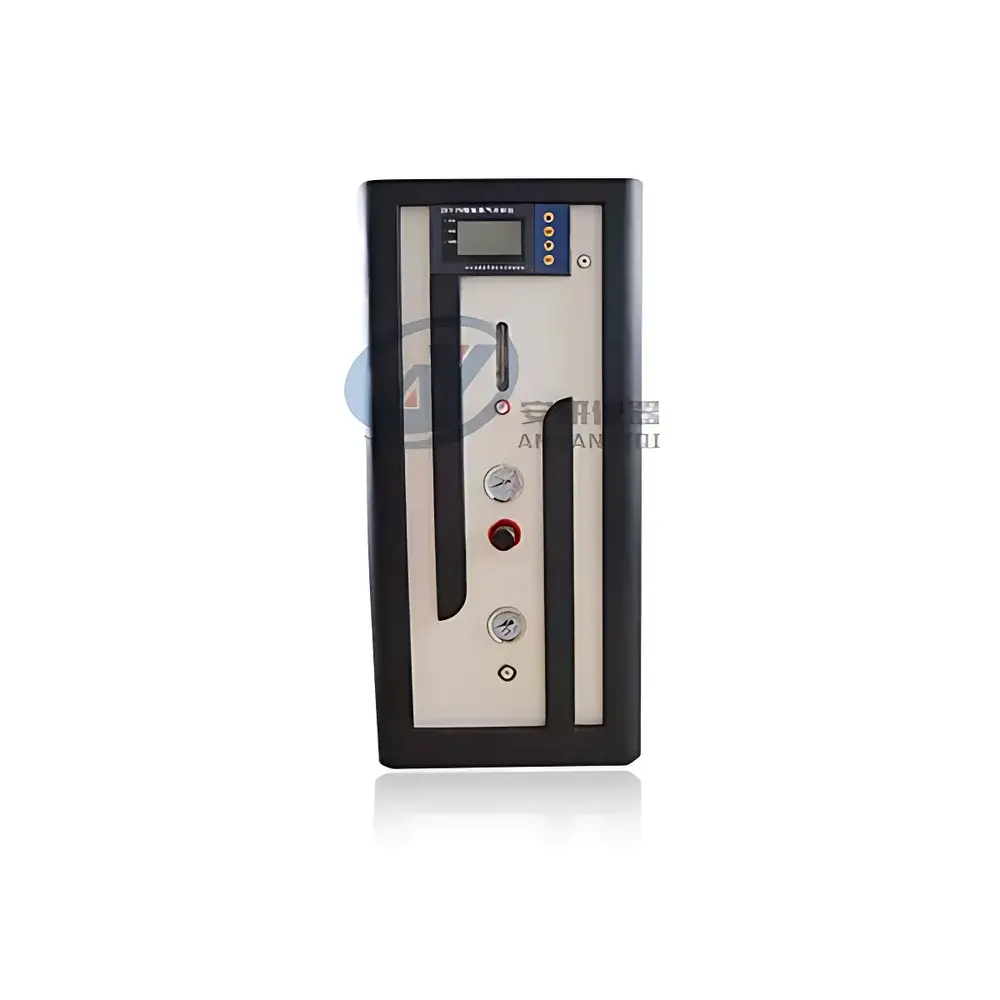
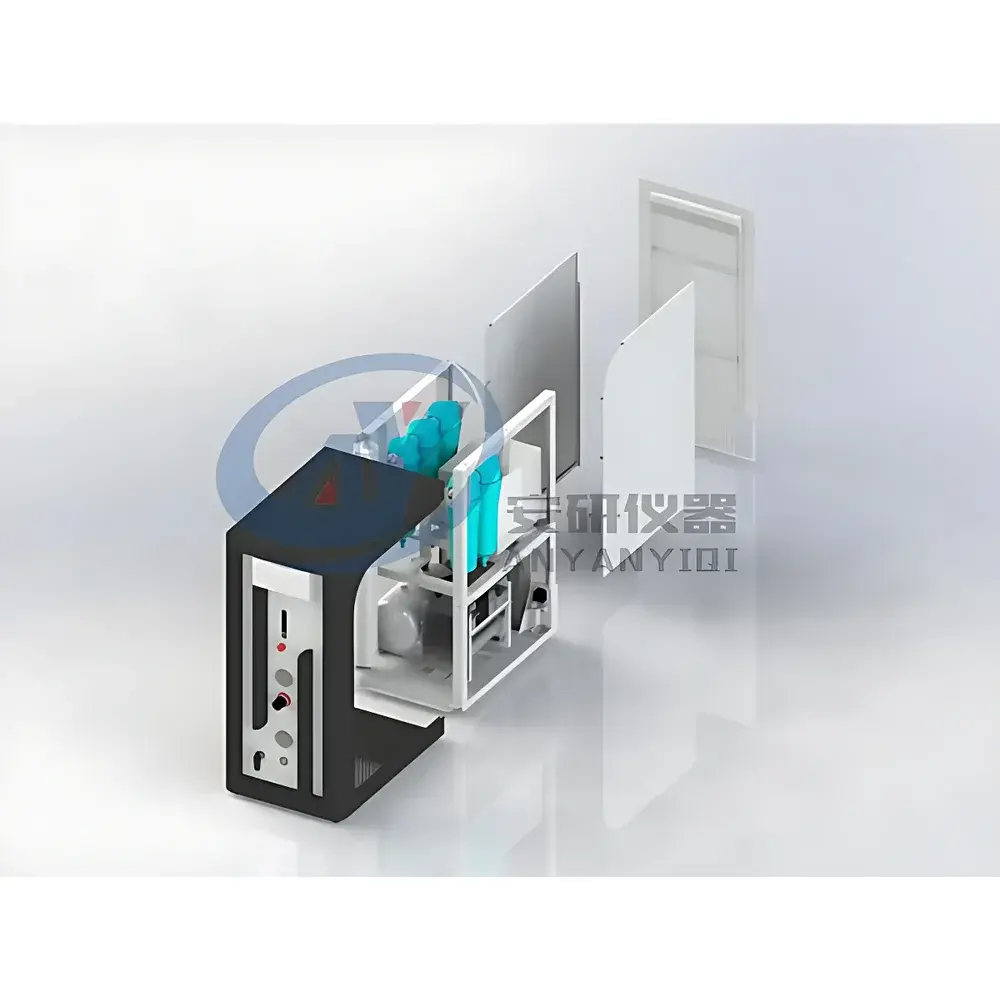
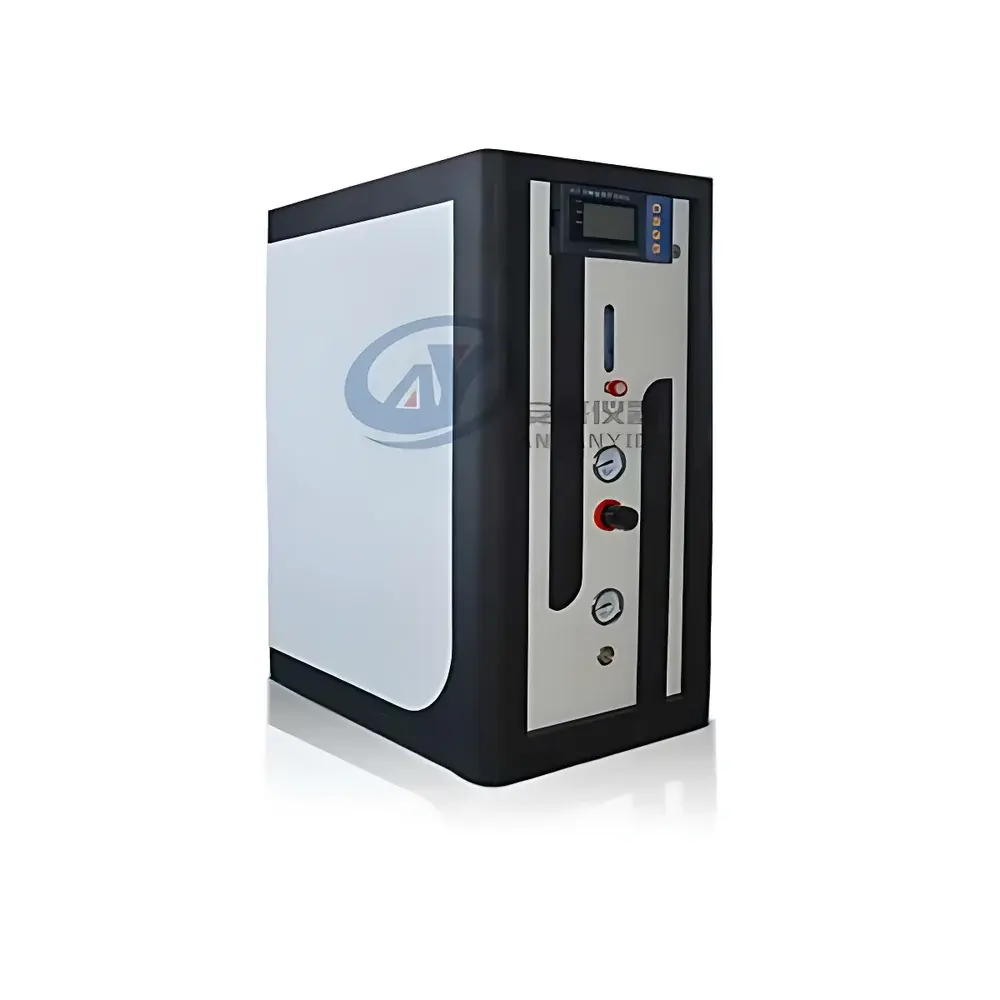
Anyan AYAN-20LG High-Flow Membrane Nitrogen Generator
| Brand | Anyan |
|---|---|
| Origin | Zhejiang, China |
| Manufacturer Type | Authorized Distributor |
| Country of Origin | China |
| Model | AYAN-20LG |
| Nitrogen Generation Principle | Polymeric Membrane Separation |
| Output Flow Rate | 20 L/min |
| Output Pressure Range | 0–0.6 MPa |
| Nitrogen Purity | 99.9% |
| Dew Point | ≤ −40 °C (typical for membrane systems with integrated desiccant pre-filtration) |
| Power Consumption | 2600 W |
| Input Voltage | 380 V AC |
| Dimensions (W×D×H) | 400 × 300 × 1300 mm |
| Filtration Stages | Three-stage (particulate < 0.01 µm, oil aerosol < 0.003 mg/m³) |
| Internal Air Compressor | Yes |
| Noise Level | ≤ 62 dB(A) |
| Start-up Time | ≤ 3 min |
| Display | Real-time nitrogen purity indicator |
Overview
The Anyan AYAN-20LG High-Flow Membrane Nitrogen Generator is an engineered solution for laboratories and industrial applications requiring a continuous, on-demand supply of high-purity nitrogen gas at up to 20 liters per minute. It operates on the principle of polymeric membrane gas separation—a physical process leveraging differential permeability of gases through selective polymer membranes. Compressed ambient air—first conditioned via integrated multi-stage filtration—is introduced into hollow-fiber membrane modules where oxygen, water vapor, and carbon dioxide exhibit higher permeation rates than nitrogen due to their smaller kinetic diameters and greater solubility in the membrane polymer. This results in a nitrogen-enriched permeate stream (product gas) exiting the low-pressure side, while oxygen-rich retentate is vented. Unlike pressure swing adsorption (PSA) systems, the AYAN-20LG employs no moving valves or cyclic regeneration, enabling stable output within seconds of startup and eliminating downtime associated with adsorbent saturation or valve wear.
Key Features
- Imported Korean polymeric membrane modules delivering consistent 99.9% nitrogen purity (v/v), validated per ISO 8573-1:2010 Class 2:2:2 for particulates, water, and oil content
- Integrated three-stage air purification system: coalescing filter (0.01 µm particulate removal), activated carbon adsorber (hydrocarbon and odor reduction), and desiccant-based moisture separator (achieving dew point ≤ −40 °C)
- Self-contained design with built-in oil-free scroll air compressor—no external air source required; acoustically isolated mounting reduces operational noise to ≤ 62 dB(A)
- Dual independent pressure regulation: upstream pre-membrane pressure control ensures optimal membrane flux, while downstream precision regulator maintains stable delivery pressure (0–0.6 MPa)
- Real-time digital display showing actual nitrogen purity (%N₂), outlet pressure, and system status—calibrated against traceable NIST-traceable reference standards
- No consumable adsorbents or periodic replacement cartridges; membrane service life exceeds 15,000 operating hours under specified inlet air quality conditions
Sample Compatibility & Compliance
The AYAN-20LG is compatible with nitrogen-dependent instrumentation including LC-MS, GC carrier gas supply, glove box inerting, laser cutting assist gas, and thermal analysis purge environments. Its output meets ASTM D6349-22 requirements for nitrogen used in chromatographic carrier gas applications and complies with ISO 8573-1:2010 Class 2 for compressed air quality feeding membrane generators. While not certified to FDA 21 CFR Part 11 out-of-the-box, its analog pressure and purity monitoring outputs support integration into validated GxP workflows when paired with compliant data acquisition systems. The unit adheres to IEC 61000-6-3 (EMC emissions) and IEC 61000-6-2 (immunity) standards, and carries CE marking for safe operation within EU regulatory frameworks.
Software & Data Management
The AYAN-20LG operates as a standalone hardware platform without embedded firmware-based data logging. However, its analog 4–20 mA output signals for nitrogen purity and outlet pressure are compatible with third-party SCADA, LIMS, or PLC systems for centralized monitoring and audit-trail generation. Optional RS-485 Modbus RTU interface (available upon request) enables remote parameter readout and basic alarm status reporting—supporting GLP/GMP-aligned record retention when integrated with validated electronic lab notebooks or environmental monitoring platforms. All calibration points—including purity sensor zero/span—are accessible via front-panel service mode and documented per ISO/IEC 17025 traceability guidelines.
Applications
- LC-MS and GC-MS carrier and nebulizer gas supply, replacing high-pressure nitrogen cylinders and mitigating supply chain dependency
- Inert atmosphere maintenance in glove boxes, anaerobic chambers, and battery electrode drying ovens
- Laser cutting and welding assist gas—providing stable flow and purity critical for cut-edge quality and spatter control
- Thermal gravimetric analysis (TGA), differential scanning calorimetry (DSC), and thermomechanical analysis (TMA) purge gas
- Pharmaceutical stability testing chambers requiring oxygen-free environments per ICH Q1A(R2)
- Electronics manufacturing: reflow soldering nitrogen blankets and component passivation processes
FAQ
What is the expected lifetime of the membrane module under normal operating conditions?
Under continuous operation with inlet air meeting ISO 8573-1 Class 2 specifications (dew point ≤ −40 °C, oil content ≤ 0.003 mg/m³), the membrane stack is rated for ≥15,000 hours before performance degradation exceeds 5% of initial purity output.
Does the unit require external cooling or ventilation?
Yes—adequate ambient airflow around the rear and top grilles is essential; minimum clearance of 20 cm is recommended to maintain internal operating temperature below 45 °C.
Can output purity be adjusted to lower levels (e.g., 99% or 95%) for cost-sensitive applications?
Purity is inherently fixed by membrane selectivity and feed pressure ratio; however, flow rate can be throttled to increase purity marginally—or blended with ambient air via external mixing manifold if lower-grade nitrogen is acceptable.
Is the internal compressor oil-free and suitable for ISO 8573-1 Class 0 applications?
The integrated scroll compressor is oil-free and certified to ISO 8573-1 Class 0 for total oil content; final gas purity remains dependent on downstream filtration integrity and membrane performance.
What maintenance intervals are recommended?
Pre-filter elements should be inspected every 500 operating hours and replaced every 2,000 hours or sooner if pressure drop exceeds 0.1 MPa; desiccant media requires replacement annually or after 8,000 hours, whichever occurs first.



