
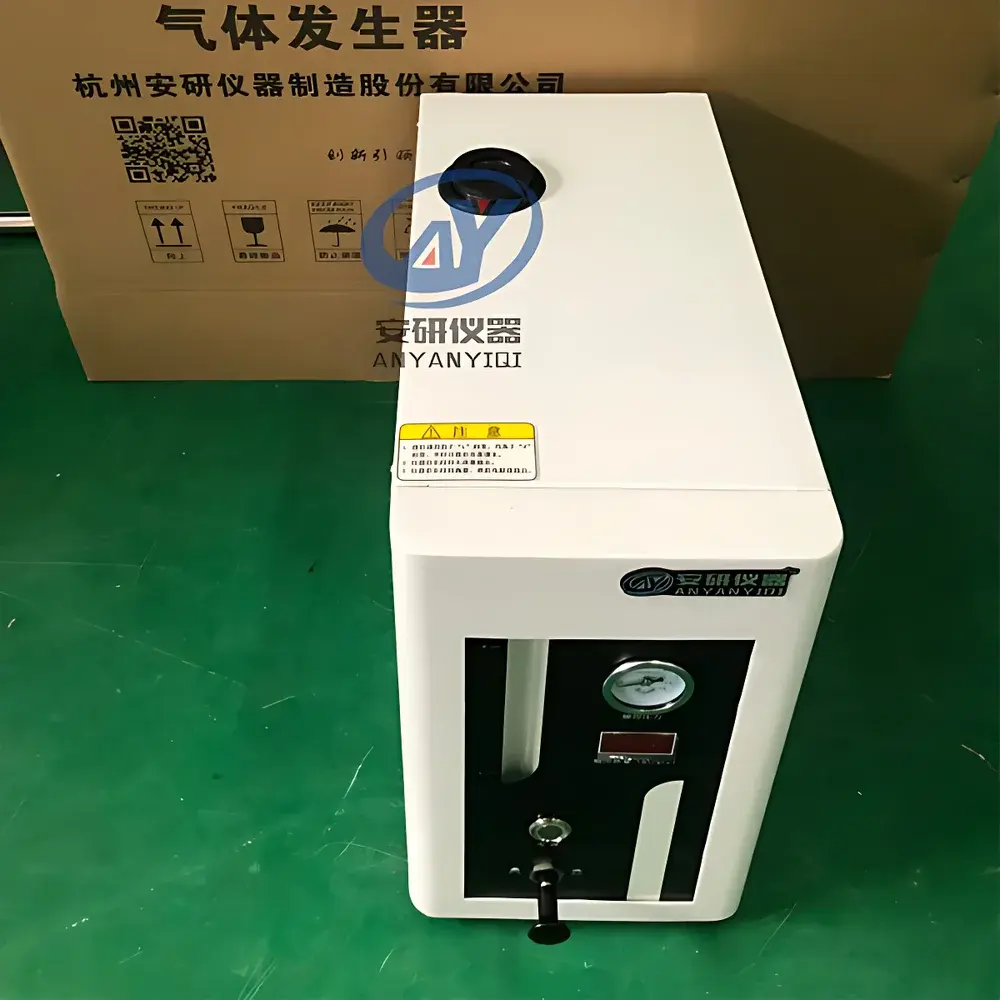
Anyan AYAN-300MLG High-Purity Nitrogen Generator
| Brand | Anyan |
|---|---|
| Origin | Zhejiang, China |
| Manufacturer Type | Authorized Distributor |
| Country of Origin | China |
| Model | AYAN-300MLG |
| Nitrogen Generation Principle | Electrolytic Separation |
| Output Flow Rate | 0–300 mL/min |
| Output Pressure | 0–0.4 MPa |
| Nitrogen Purity | 99.997% |
| Dew Point | −40 °C |
| Power Consumption | 150 W |
| Input Water Conductivity | ≥1 MΩ·cm (Resistivity) |
| Dimensions (L×W×H) | 400 × 250 × 350 mm |
| Weight | Approx. 18 kg |
| Operating Temperature | 10–40 °C |
| Relative Humidity | <85% RH (non-condensing) |
| Output Port | 3 mm OD tubing or 1/8″ male NPT (M8×1 external thread) |
| Integrated Buffer Tank | Yes |
| Safety Valve | ISO-compliant pressure relief device |
| Mobility | Equipped with locking casters |
Overview
The Anyan AYAN-300MLG High-Purity Nitrogen Generator is an electrolytic nitrogen generation system engineered for continuous, on-demand supply of high-purity nitrogen gas in analytical and research laboratories. Unlike membrane- or PSA-based generators, the AYAN-300MLG employs a dual-stage process combining electrochemical water splitting and catalytic purification to isolate nitrogen directly from deionized water feedstock—eliminating dependence on ambient air compression and associated hydrocarbon or moisture contamination risks. The core electrolysis cell utilizes platinum-group metal catalysts to ensure stable oxygen evolution and high-fidelity nitrogen separation, achieving a certified purity of 99.997% (v/v) with a dew point of −40 °C — suitable for GC carrier gas, LC-MS mobile phase blanking, glovebox purging, and inert atmosphere synthesis. Its compact footprint, integrated buffer tank, and built-in safety relief valve conform to ISO 4414 pneumatic safety guidelines, supporting unattended operation under GLP-compliant laboratory environments.
Key Features
- Electrolytic nitrogen generation using ultra-pure water (≥1 MΩ·cm resistivity) as sole feedstock — no compressed air required, eliminating oil vapor, particulate, and VOC carryover.
- Stable output flow control across 0–300 mL/min range with pressure regulation up to 0.4 MPa; pressure stability maintained within ±0.2% under variable load conditions.
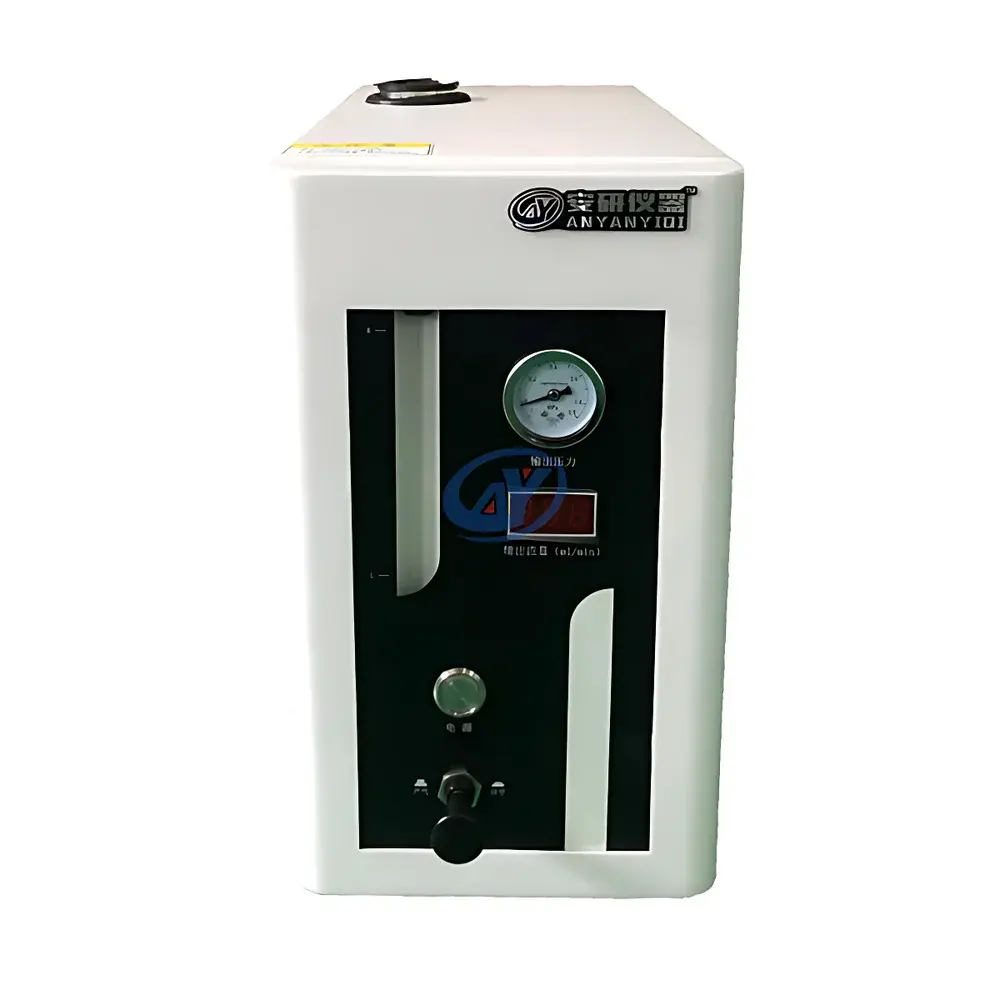
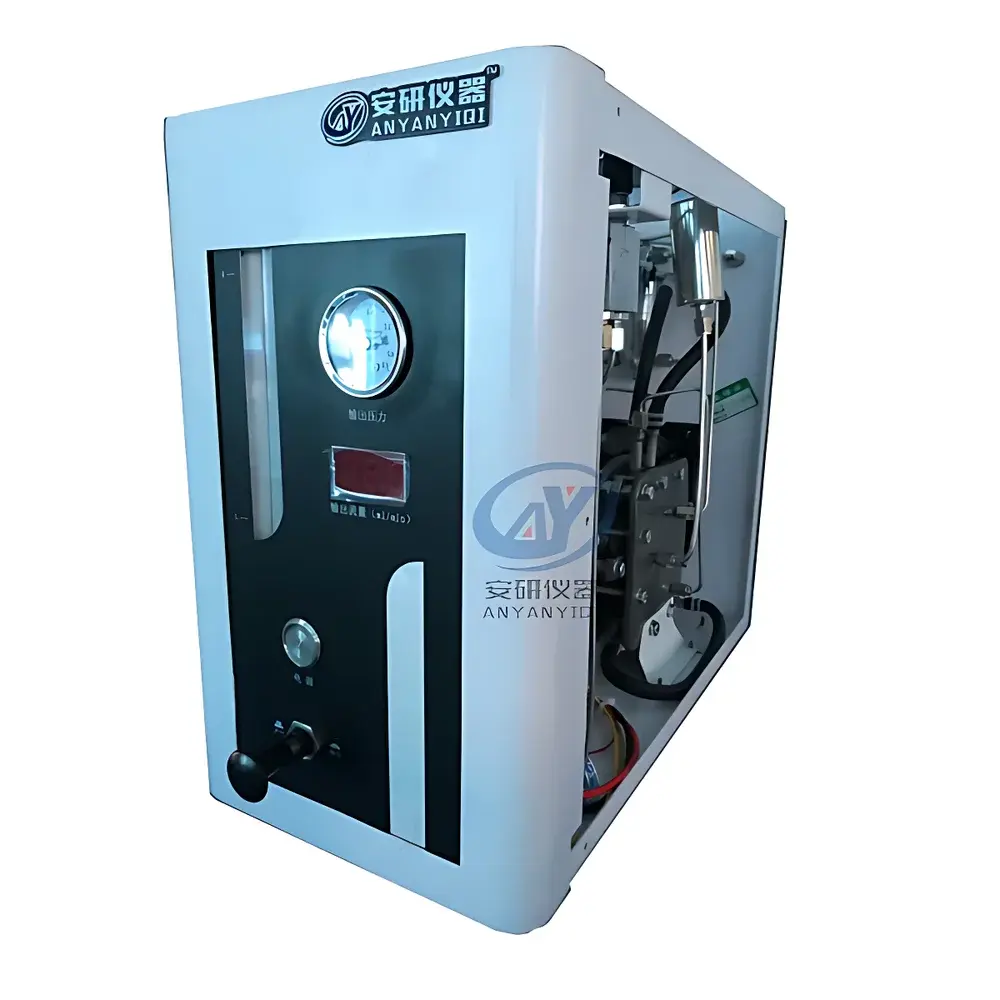
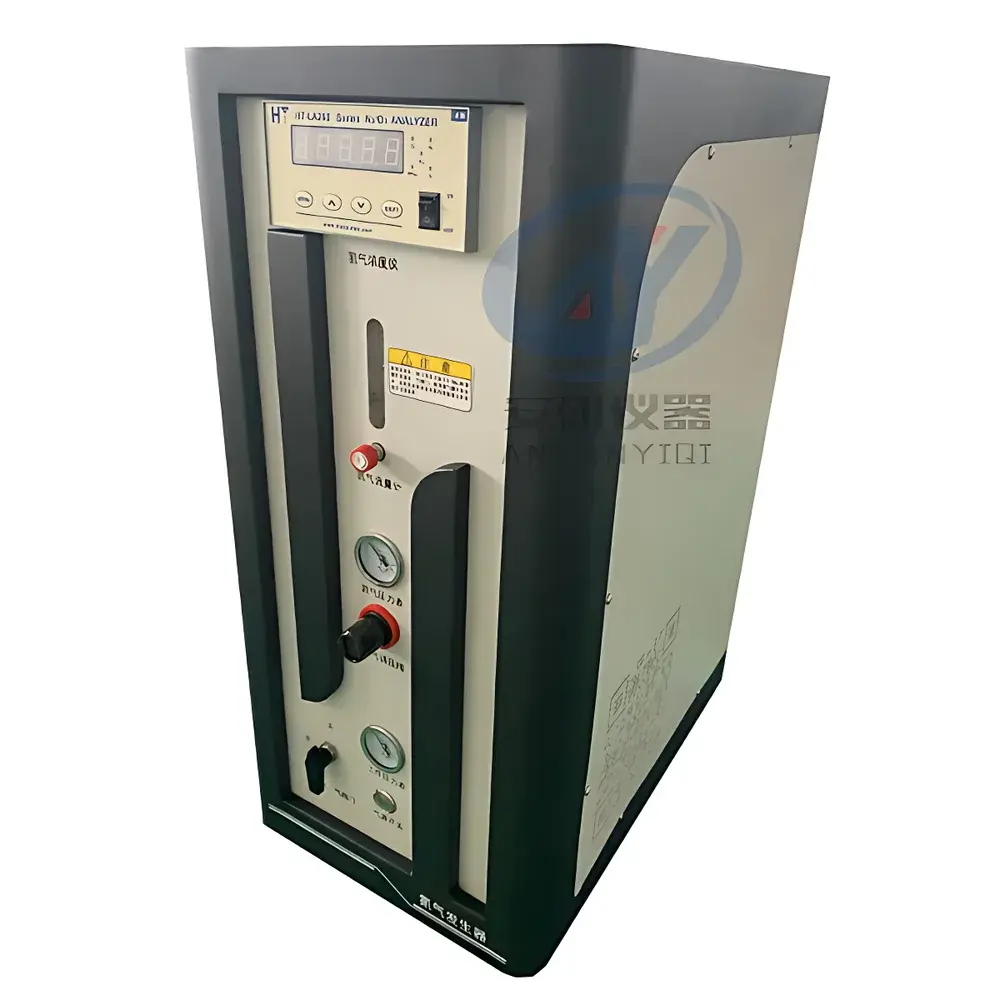
- Digital LED display showing real-time flow rate, system status, and self-diagnostic alerts — supports rapid fault identification and operational transparency.
- Modular architecture with integrated 1.2 L buffer tank and ISO-certified spring-loaded safety relief valve (set at 0.45 MPa), ensuring pressure integrity during transient demand spikes.
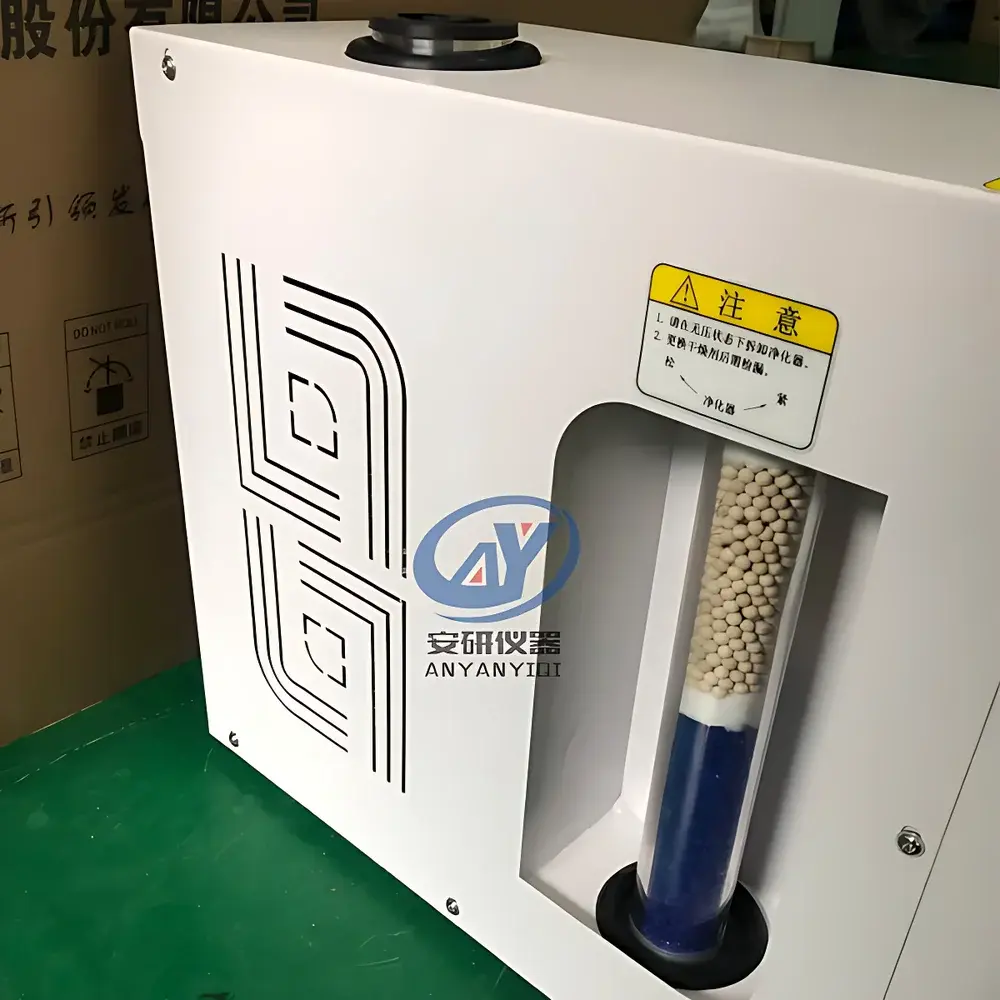
- Low-maintenance design: catalyst longevity exceeds 10,000 hours under continuous operation; no consumable filters or desiccant cartridges required.
- Mobile configuration with four locking casters and ergonomic handle — facilitates repositioning between GC, FTIR, or reaction station workbenches without gas line disconnection.
- Compliance-ready firmware architecture: timestamped event logging (power-on, alarm, shutdown) supports basic audit trail requirements aligned with FDA 21 CFR Part 11 Annex 11 principles for non-critical gas supply systems.
Sample Compatibility & Compliance
The AYAN-300MLG delivers nitrogen meeting ASTM D6866-22 specifications for isotopic purity and ISO 8573-1:2010 Class 2:2:2 for particulate, water, and oil content — validated for use with flame ionization detectors (FID), thermal conductivity detectors (TCD), and electron capture detectors (ECD). It satisfies USP requirements for inert gas quality in pharmaceutical stability testing chambers and complies with IEC 61000-6-3 EMC emission standards. While not classified as GMP-grade equipment per EU Annex 1, its documented performance envelope and traceable calibration protocol support qualification under laboratory-specific IQ/OQ protocols.
Software & Data Management
The generator operates via embedded microcontroller logic with no external PC dependency. All operational parameters — including cumulative runtime, total water consumption (~10 mL/h), and fault codes (e.g., low-water, overpressure, thermal cutoff) — are stored in non-volatile memory and accessible via front-panel navigation. Event logs retain the last 50 entries with UTC timestamps, exportable via optional RS-232 interface (available upon request). Data retention supports periodic review for preventive maintenance scheduling and aligns with internal lab SOPs for instrument lifecycle tracking.
Applications
- Gas chromatography carrier and detector gases (FID, TCD, ECD)
- LC-MS source gas and collision gas blanking
- Inert atmosphere control for Schlenk lines and gloveboxes
- Blanking and purge cycles in elemental analyzers (CHNS/O)
- Nitrogen sparging in solvent evaporation and sample concentration systems
- Calibration gas dilution in environmental monitoring instrumentation
FAQ
What feedwater quality is required for optimal performance?
Deionized water with resistivity ≥1 MΩ·cm (equivalent to conductivity ≤1 µS/cm) is mandatory. Tap water, distilled water, or RO-only water will cause rapid electrode fouling and invalidates warranty.
Can the unit operate continuously for 24/7 applications?
Yes — rated for uninterrupted duty cycle at ambient temperatures between 10–40 °C and relative humidity below 85%. Thermal management includes passive finned heatsink and duty-cycled fan control.
Is the nitrogen output compatible with mass spectrometry applications?
The 99.997% purity and −40 °C dew point meet baseline requirements for most LC-MS and GC-MS configurations; however, for high-sensitivity HRMS or SRM workflows, users should verify residual oxygen and moisture levels via in-line analyzers per ASTM E260-20.
Does the system require annual recalibration?
No factory recalibration is specified. Users are advised to perform quarterly verification using a calibrated thermal conductivity analyzer or paramagnetic O2 sensor per ISO 8573-7:2019.
What safety certifications does the unit hold?
The AYAN-300MLG carries CE marking per Machinery Directive 2006/42/EC and Low Voltage Directive 2014/35/EU. Electrical insulation meets IEC 61010-1:2010 Class II requirements.



