
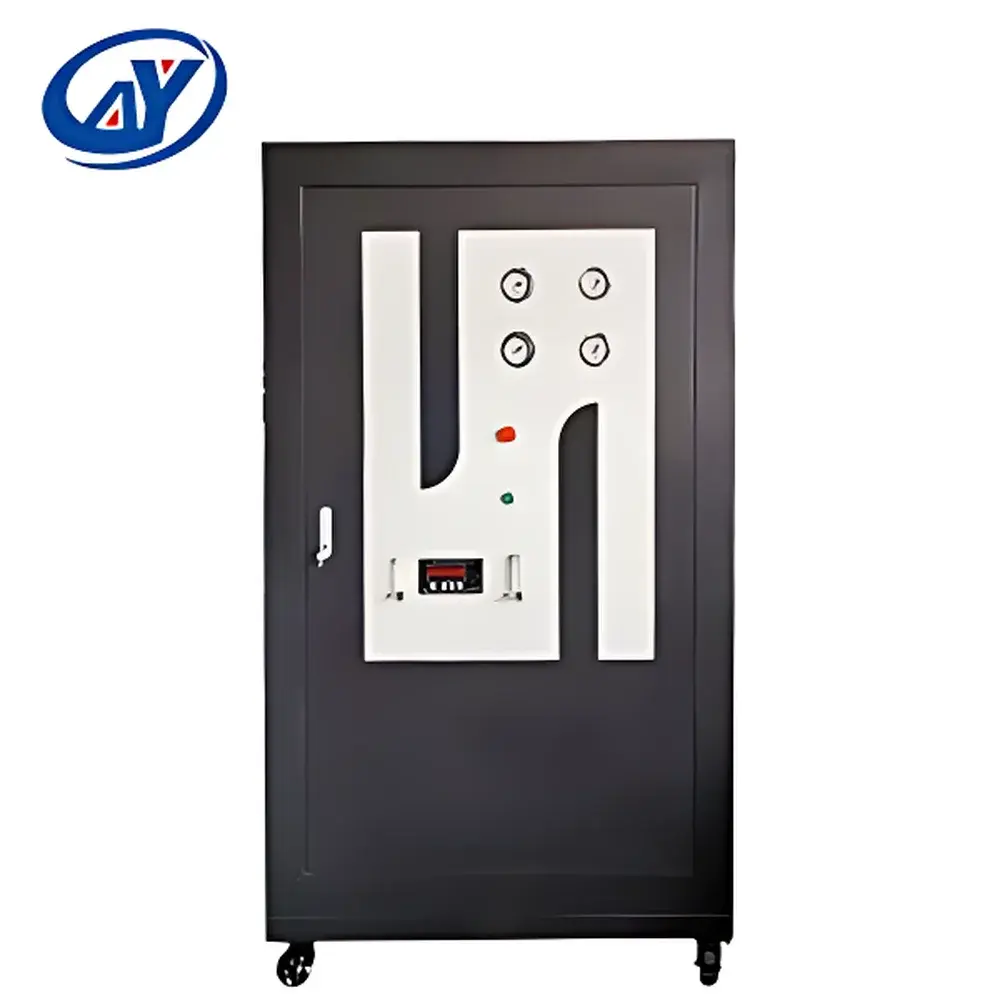
Anyan AYAN-30LB High-Purity Pressure Swing Adsorption (PSA) Nitrogen Generator
| Brand | Anyan Instruments |
|---|---|
| Origin | Zhejiang, China |
| Manufacturer Type | Authorized Distributor |
| Model | AYAN-30LB |
| Nitrogen Purity | 99.999% |
| Output Flow Rate | 100 L/min |
| Output Pressure Range | 0–0.6 MPa |
| Dew Point | −40 °C |
| Nitrogen Generation Principle | Pressure Swing Adsorption (PSA) with Carbon Molecular Sieve (CMS) |
Overview
The Anyan AYAN-30LB is a turnkey, high-purity nitrogen generator engineered for continuous on-site nitrogen supply in analytical laboratories, QC/QA environments, and controlled industrial processes requiring inert gas protection. It employs Pressure Swing Adsorption (PSA) technology—a well-established, energy-efficient gas separation method that exploits differential adsorption kinetics of oxygen and nitrogen on carbon molecular sieve (CMS) under varying pressure conditions. Compressed ambient air is purified through a multi-stage filtration train (coalescing, refrigerated drying, and ultra-fine particulate removal), then introduced into dual CMS adsorption towers operating in alternating cycles: one tower adsorbs oxygen, CO₂, moisture, and trace hydrocarbons at elevated pressure (~0.6 MPa), while the other undergoes depressurization and purging to regenerate the CMS bed. This cyclic operation yields a steady stream of nitrogen with consistent purity up to 99.999% (5.0 grade per ISO 8573-1:2010 Class 2.2.1), with a dew point of −40 °C—meeting stringent requirements for GC carrier gas, ICP-MS blanking, glovebox purging, and semiconductor process annealing.
Key Features
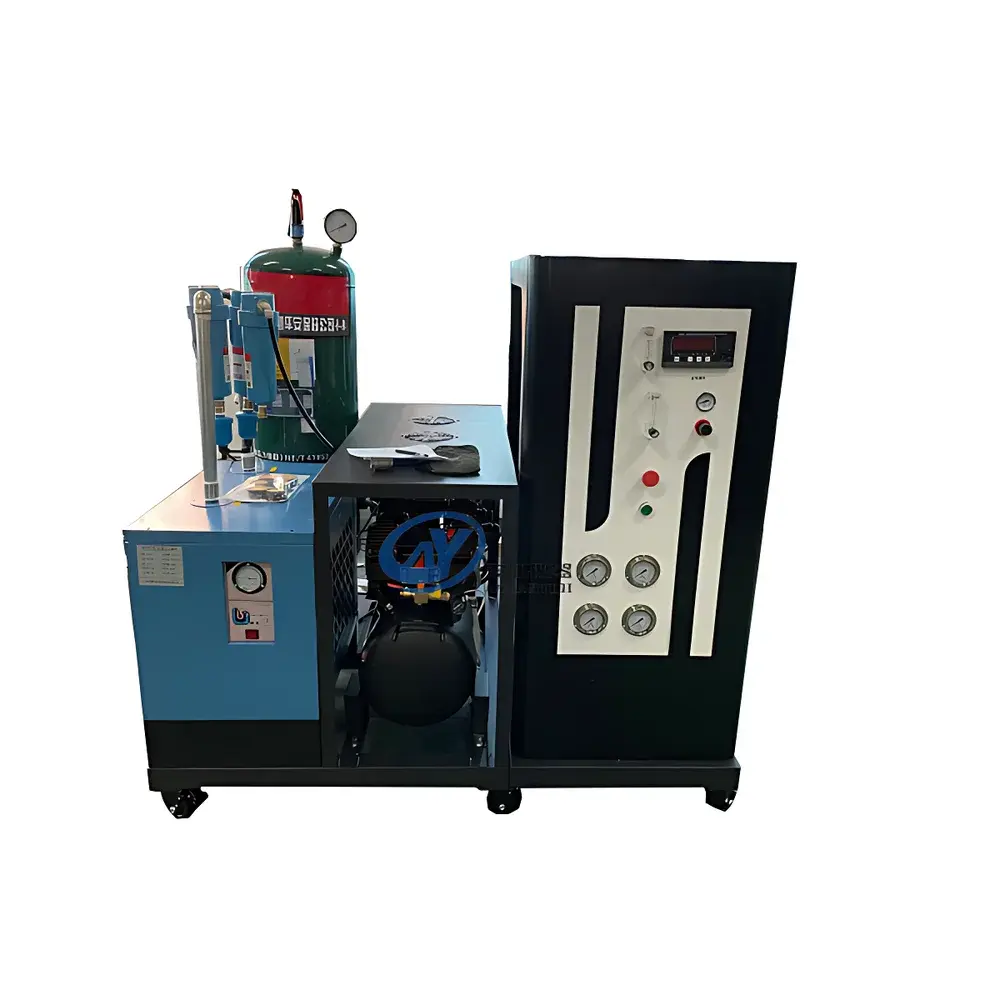
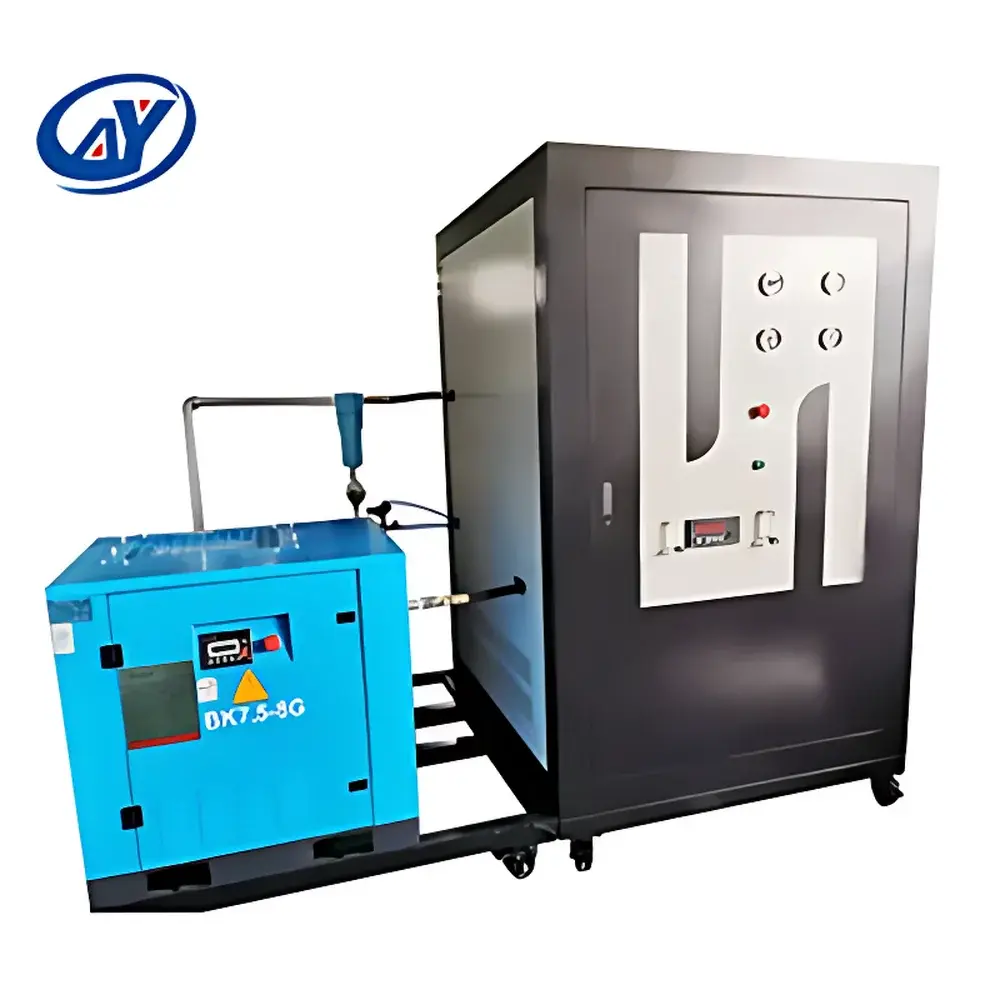
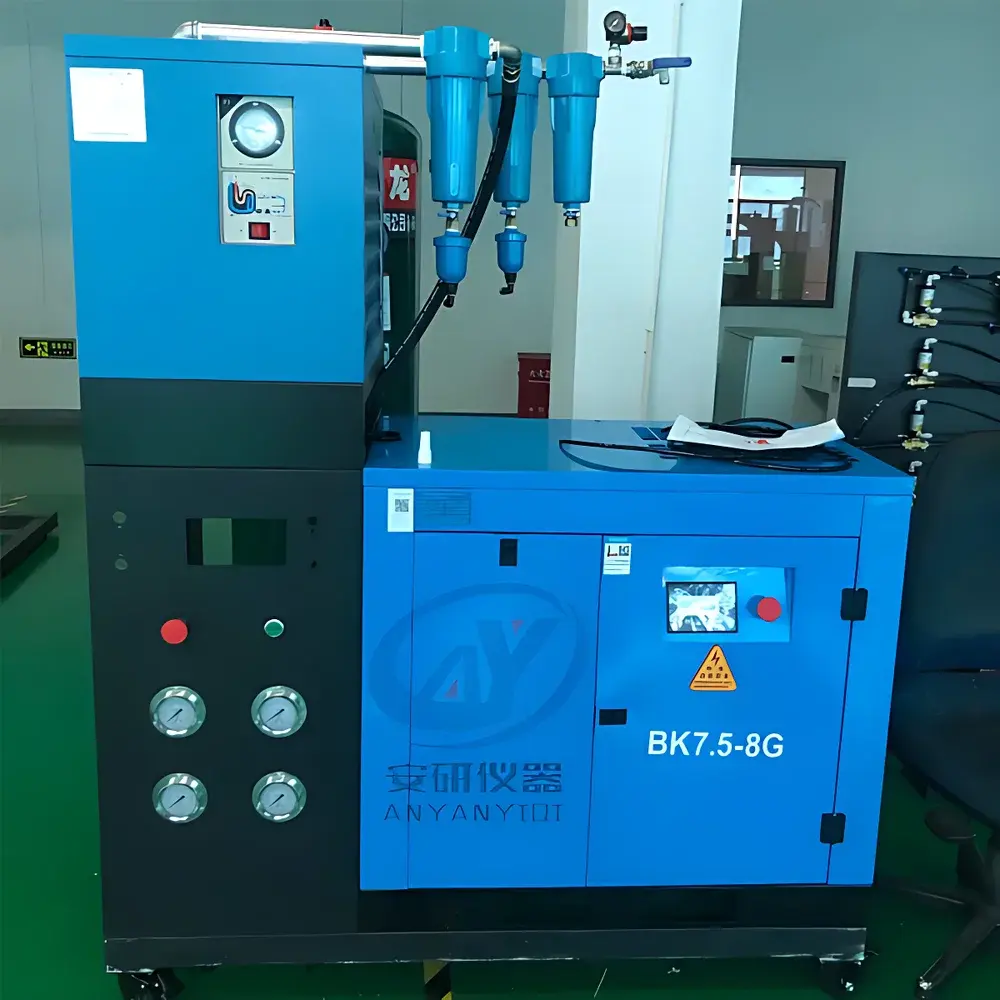
- Integrated system architecture: Includes built-in oil-lubricated air compressor, refrigerated air dryer, and a 9-stage progressive filtration cascade (ISO 8573-compliant)—eliminating external utility dependencies.
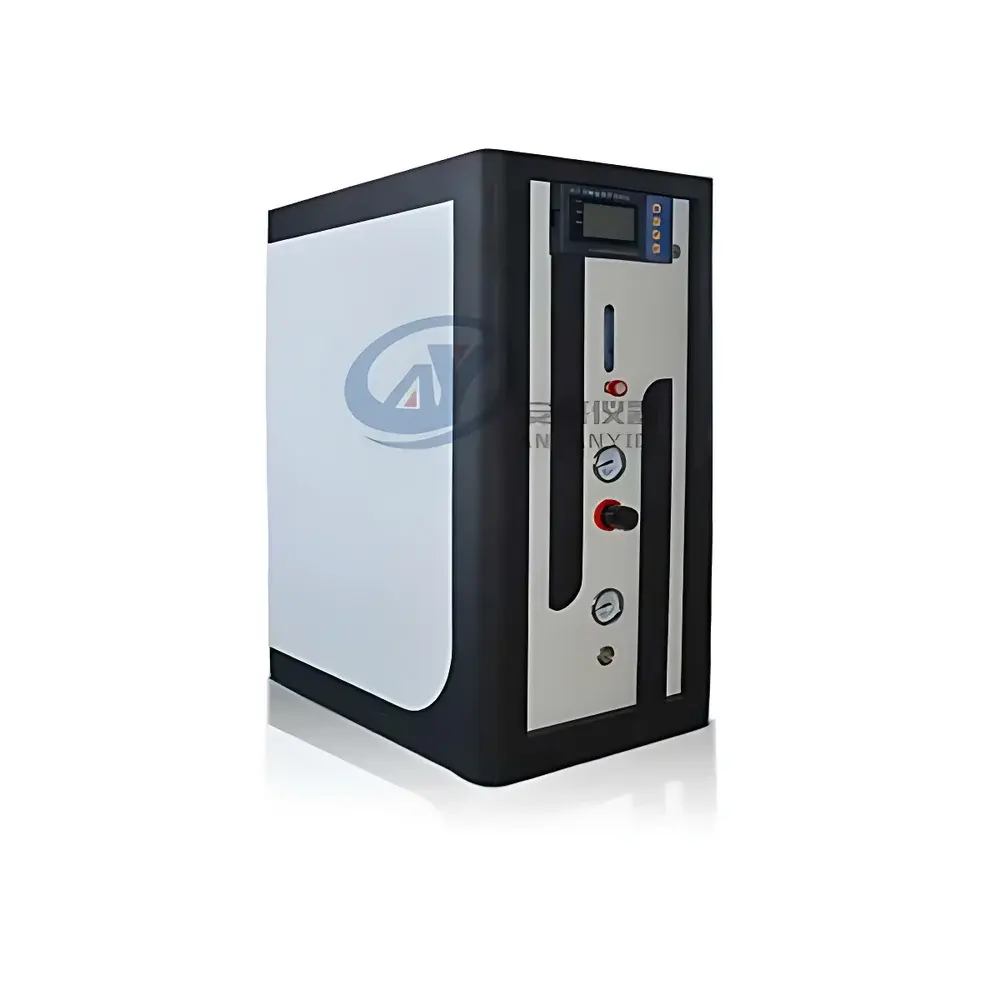
- Real-time process monitoring: Onboard electrochemical nitrogen purity analyzer (0–100% O₂ range, ±0.01% resolution) and digital mass flow meter (0–120 L/min, ±1% FS accuracy) provide continuous display of purity, flow rate, and pressure on an intuitive LED interface.
- Robust CMS protection system: Dedicated micro-oil adsorption cartridge (activated carbon-based) upstream of the CMS beds removes residual hydrocarbon vapors (<0.003 mg/m³), extending CMS service life beyond 8 years under typical lab usage.
- Stabilized gas delivery: Dual-buffer design—air buffer tank dampens compressor pulsation and reduces load on downstream purification; nitrogen buffer tank homogenizes output pressure and purity, ensuring stable feed to sensitive instruments (e.g., FTIR purge lines or LC-MS source gas).
- Mobile laboratory-ready configuration: Heavy-duty casters with locking brakes, reinforced steel frame, and compact footprint (W×D×H: 1200 × 700 × 1650 mm) enable safe repositioning within shared lab spaces without structural anchoring.
- Compliance-oriented controls: All critical parameters—including purity alarm thresholds, auto-purge timing, and pressure setpoints—are user-configurable and logged with timestamped audit trail, supporting GLP/GMP documentation workflows.
Sample Compatibility & Compliance
The AYAN-30LB delivers nitrogen meeting ISO 8573-1:2010 Class 2.2.1 specifications (solid particles ≤ 0.1 µm, water dew point ≤ −40 °C, oil content ≤ 0.01 mg/m³). Its output is compatible with all major analytical instrumentation requiring high-purity inert gas—including gas chromatographs (GC, GC-MS), thermal analyzers (TGA/DSC), electron microscopes (SEM/TEM), and plasma-based systems (ICP-OES, ICP-MS). The unit conforms to CE safety directives (2014/30/EU EMC, 2014/35/EU LVD), and its electrical components meet IP54 ingress protection rating. While not FDA 21 CFR Part 11-certified out-of-the-box, its data logging architecture supports integration with validated third-party LIMS or ELN platforms for regulated environments.
Software & Data Management
The generator operates via embedded firmware with no external PC dependency. All operational data—including purity (%N₂), flow (L/min), inlet/outlet pressure (MPa), CMS cycle count, and filter service alerts—are stored locally for ≥12 months. USB export (CSV format) enables offline trend analysis in Excel or LabChart. Optional RS-485 Modbus RTU interface allows integration into building management systems (BMS) or centralized lab gas monitoring networks. Alarm events (e.g., low purity, high dew point, filter saturation) trigger visual indicators and relay outputs for interlocking with instrument shutdown protocols.
Applications
- GC carrier and detector make-up gas (replacing liquid nitrogen dewars or high-pressure cylinders)
- Inert atmosphere control for oxidation-sensitive synthesis, catalyst handling, and battery electrode coating
- Purging and blanking in ICP-MS and HRMS to minimize polyatomic interferences (e.g., 14N16O+)
- Continuous nitrogen blanket for HPLC solvent reservoirs and sample vial storage
- Calibration gas standard preparation where matrix gas stability is critical
- Long-duration thermal gravimetric analysis (TGA) under controlled N₂ flow
FAQ
What is the expected service life of the carbon molecular sieve (CMS) under normal laboratory operation?
With proper inlet air quality (post-filtration oil content <0.01 mg/m³ and dew point <−20 °C), CMS lifespan exceeds 8 years or 60,000 operating hours—verified by accelerated aging tests per ASTM D5757.
Does the AYAN-30LB require external cooling water or ventilation ducting?
No. The integrated refrigerated dryer uses air-cooled condenser technology; ambient airflow clearance of ≥30 cm on all sides suffices for thermal management.
Can the unit be configured for higher output pressure (e.g., 0.7 MPa) as stated in some documentation?
The standard AYAN-30LB is rated for 0–0.6 MPa. Pressure upgrades to 0.7 MPa require factory modification of the pressure relief valve setpoint and validation of CMS tower weld integrity—available as a custom order with extended lead time.
How frequently must filter elements be replaced?
Pre-filter cartridges (stages 1–3) require replacement every 3,000–4,000 operating hours; coalescing filters (stages 4–6) every 6,000 hours; and final particulate/adsorption filters (stages 7–9) every 8,000 hours—per ISO 8573 maintenance guidelines and real-time differential pressure monitoring.
Is remote monitoring supported via Ethernet or Wi-Fi?
Not natively. Remote access requires optional Modbus-to-Ethernet gateway hardware and configuration by qualified network personnel—no cloud connectivity or proprietary apps are provided.



