
Anyan AYAN-40LB PSA Nitrogen Generator
| Brand | Anyan Instruments |
|---|---|
| Origin | Zhejiang, China |
| Manufacturer Type | Authorized Distributor |
| Country of Origin | China |
| Model | AYAN-40LB |
| Nitrogen Generation Principle | Pressure Swing Adsorption (PSA) using Carbon Molecular Sieve (CMS) |
| Output Flow Rate | 40 L/min |
| Output Pressure | 0–0.6 MPa (factory-set at 0.5 MPa) |
| Nitrogen Purity | 99% |
| Dew Point | −40 °C |
| Power Supply | 220 V ±10%, 50 Hz ±5% |
| Power Consumption | 2800 W |
| Noise Level | ≤65 dB(A) |
| Ambient Temperature Range | 10–40 °C |
| Relative Humidity | ≤85% RH (non-condensing) |
| Dimensions (W×D×H) | 1200 × 900 × 1400 mm |
| Weight | 180 kg |
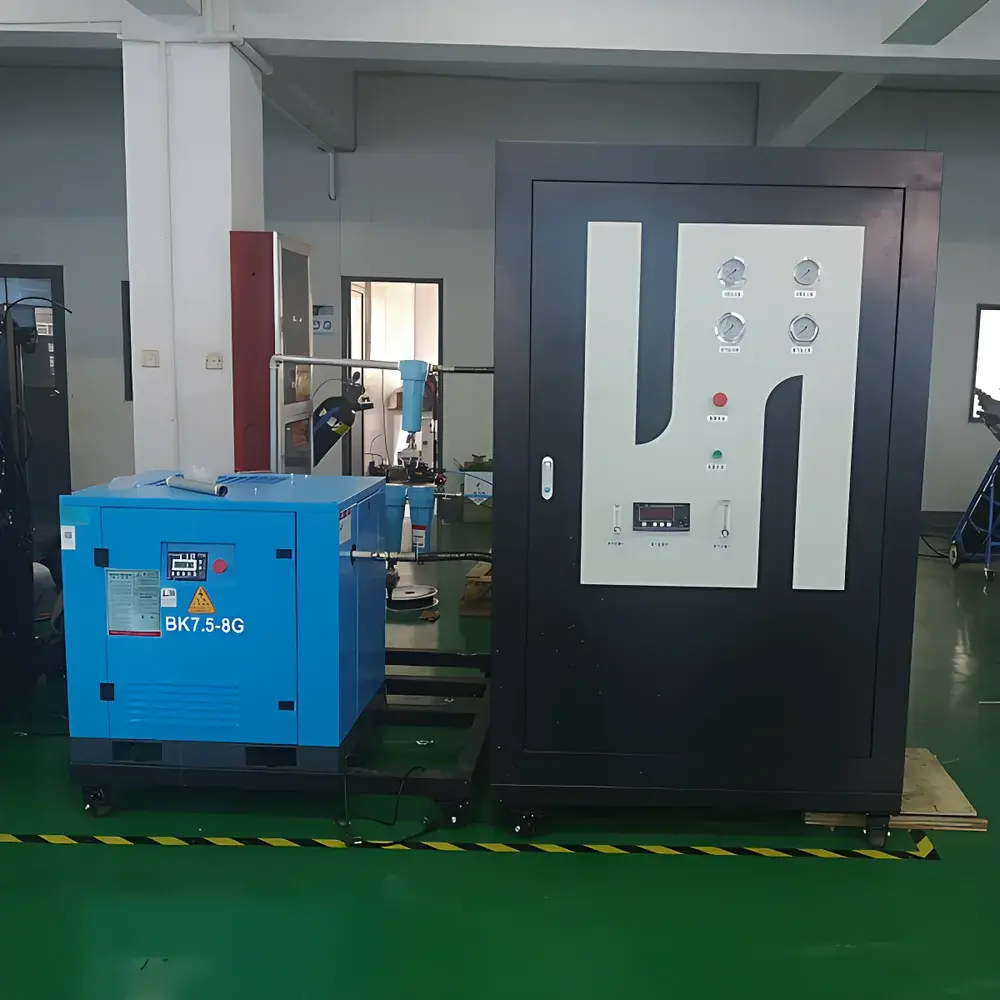
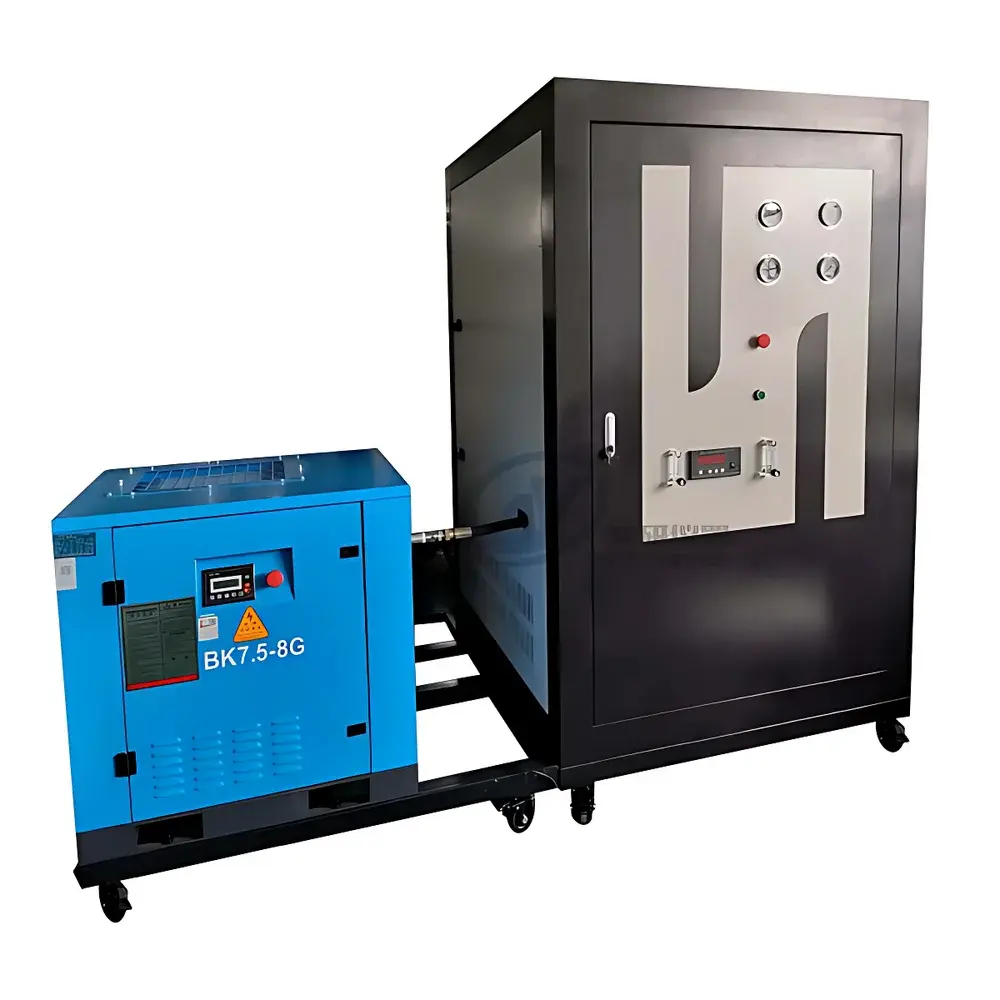
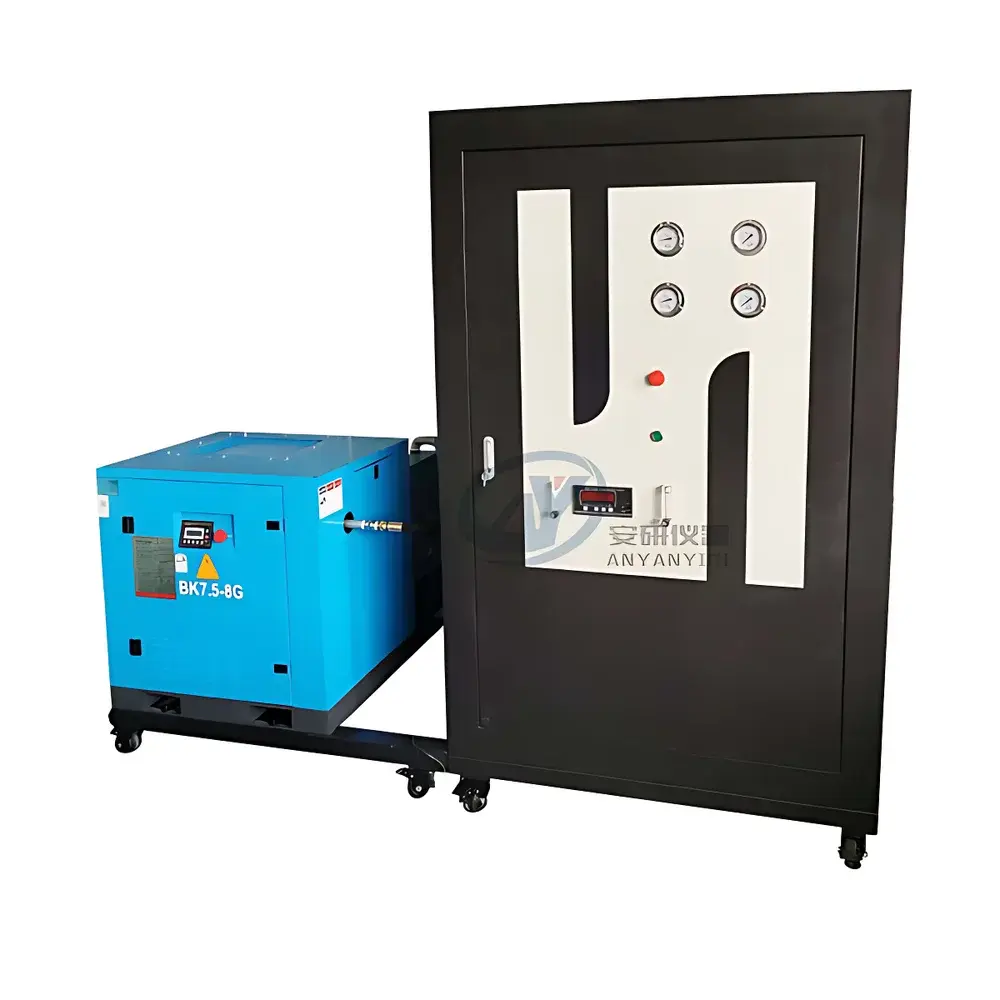
| Air Intake Requirement | Integrated oil-lubricated air compressor, refrigerated dryer, and multi-stage filtration system (coalescing, activated carbon, ultra-fine) |
| Onboard Monitoring | Real-time nitrogen purity analyzer (electrochemical O₂ sensor), digital flow meter, pressure gauges on inlet, adsorption tower, and output lines |
| Structural Features | Castor-mounted chassis with locking brakes, integrated nitrogen buffer tank, CMS bed stabilization mechanism (pneumatic cylinder-based compaction), dual-tower PSA architecture with automatic valve sequencing |
Overview
The Anyan AYAN-40LB PSA Nitrogen Generator is an integrated, turnkey laboratory and pilot-scale nitrogen supply system engineered for continuous, on-demand production of high-purity nitrogen gas via Pressure Swing Adsorption (PSA) technology. At its core, the system utilizes carbon molecular sieve (CMS) media to selectively adsorb oxygen, CO₂, water vapor, and trace hydrocarbons from compressed air—leveraging differential diffusion rates and equilibrium adsorption isotherms under controlled pressure cycles. Unlike membrane or cryogenic systems, PSA offers optimal balance between purity flexibility (95–99.999%), operational simplicity, and footprint efficiency for non-critical analytical and process applications. The AYAN-40LB incorporates a fully integrated air compression train—including an oil-lubricated rotary screw air compressor, refrigerated air dryer, and a five-stage filtration cascade (particulate, coalescing, activated carbon, ultra-fine, and CMS pre-protection micro-oil adsorber)—ensuring CMS longevity and consistent separation performance. Designed for ISO 8573-1 Class 2:2:2 compressed air quality at the CMS inlet, the unit meets baseline requirements for GC carrier gas, LC-MS purge gas, inert blanketing, and sample preparation environments where ultra-high purity is not mandated but reliability and stability are essential.
Key Features
- Integrated architecture: All critical subsystems—including air compression, drying, filtration, PSA adsorption towers, nitrogen buffering, and real-time monitoring—are housed in a single industrial-grade enclosure.
- Dual-tower PSA design with electro-pneumatic valve sequencing ensures uninterrupted nitrogen delivery during regeneration cycles; cycle time and pressure profiles are factory-optimized for 99% purity at 40 L/min.
- Onboard electrochemical oxygen sensor continuously measures residual O₂ concentration (0–1% range, ±0.02% accuracy), feeding data to a local display and enabling automatic venting of off-spec nitrogen.
- Stabilized CMS bed compaction system employs regulated pneumatic cylinders to maintain uniform packing density across operational life—mitigating CMS fluidization, channeling, or pulverization caused by pressure pulsation or thermal cycling.
- Nitrogen buffer tank dampens flow and pressure transients, improves purity homogeneity, and provides short-term surge capacity during intermittent demand spikes.
- Mobile platform with heavy-duty castors and locking brakes enables repositioning within lab or facility without disassembly or external rigging.
- Comprehensive pre-filtration includes a dedicated micro-oil adsorber stage using high-activity activated carbon, specifically calibrated to remove sub-ppm oil aerosols and vapors that would otherwise irreversibly foul CMS surface sites.
Sample Compatibility & Compliance
The AYAN-40LB is compatible with ambient air intake under standard atmospheric conditions (10–40 °C, ≤85% RH, non-corrosive environment). It is not intended for use with enriched oxygen streams, hydrogen-containing gases, or chemically aggressive atmospheres. While not certified to UL/CE for hazardous locations, the unit complies with general electrical safety standards per IEC 61000-6-3 (EMI emission) and IEC 61000-6-2 (immunity). Its compressed air treatment train satisfies ISO 8573-1:2010 Class 2:2:2 specifications at the CMS inlet when maintained per scheduled service intervals. For GLP/GMP-regulated laboratories, optional audit-trail-capable data logging (RS485/Modbus RTU) supports traceability of purity, flow, and pressure parameters—aligning with FDA 21 CFR Part 11 principles when paired with validated third-party software.
Software & Data Management
The AYAN-40LB operates via embedded microcontroller logic with no proprietary software dependency. All operational parameters—including nitrogen purity (%N₂), volumetric flow (L/min), inlet/outlet pressures (MPa), and runtime hours—are displayed on a backlit LCD interface with tactile keypad navigation. Optional analog (4–20 mA) and digital (RS485 Modbus RTU) outputs enable integration into building management systems (BMS) or centralized lab infrastructure dashboards. Raw sensor data can be logged externally using standard SCADA platforms. Firmware updates are performed locally via USB port; no cloud connectivity or remote access capability is included—ensuring data sovereignty and network isolation per institutional IT policy.
Applications
- Gas chromatography (GC) carrier and detector make-up gas for FID, TCD, and ECD systems requiring ≥99% N₂.
- LC-MS and GC-MS instrument purge and curtain gas where ultra-high purity (>99.999%) is unnecessary but flow stability and dew point control (−40 °C) are critical.
- Inert atmosphere generation for glove boxes, sample storage desiccators, and solvent evaporation stations.
- Blanketing of reactive reagents, catalysts, or moisture-sensitive intermediates during synthesis or formulation.
- Calibration gas dilution systems requiring stable, low-oxygen background gas.
- Pilot-scale food packaging line testing, electronics component passivation, and laser cutting assist gas evaluation.
FAQ
What maintenance intervals are recommended for optimal CMS lifespan?
CMS replacement is typically required every 20,000–30,000 operating hours under compliant inlet air quality (ISO 8573-1 Class 2:2:2). Pre-filters must be replaced every 1,000–2,000 hours; refrigerant dryer desiccant every 6 months; and CMS bed compaction pressure verified quarterly.
Can the unit be configured for higher purity (e.g., 99.9% or 99.99%)?
Yes—higher purity grades require modified PSA cycle timing, increased CMS volume, and upgraded O₂ sensing. These configurations are available as factory-engineered variants (AYAN-40LB-H, AYAN-40LB-U) with corresponding derating of maximum flow rate.
Is external compressed air supply compatible?
The unit is designed for self-contained operation. However, an external clean, dry, oil-free air source (meeting ISO 8573-1 Class 2:2:2) may be connected by bypassing the internal compressor—requiring mechanical modification and voiding compressor-related warranty coverage.
How does ambient temperature affect dew point performance?
The integrated refrigerated dryer maintains −40 °C pressure dew point across the specified ambient range (10–40 °C). Operation outside this range may compromise drying efficiency and increase risk of liquid water ingress into CMS beds.
Does the system support remote monitoring or alarm notification?
Standard configuration includes local visual/audible alarms for low purity, high pressure, filter clogging, and CMS saturation. Remote SNMP or email alerting requires third-party IoT gateway integration and is not natively supported.



