
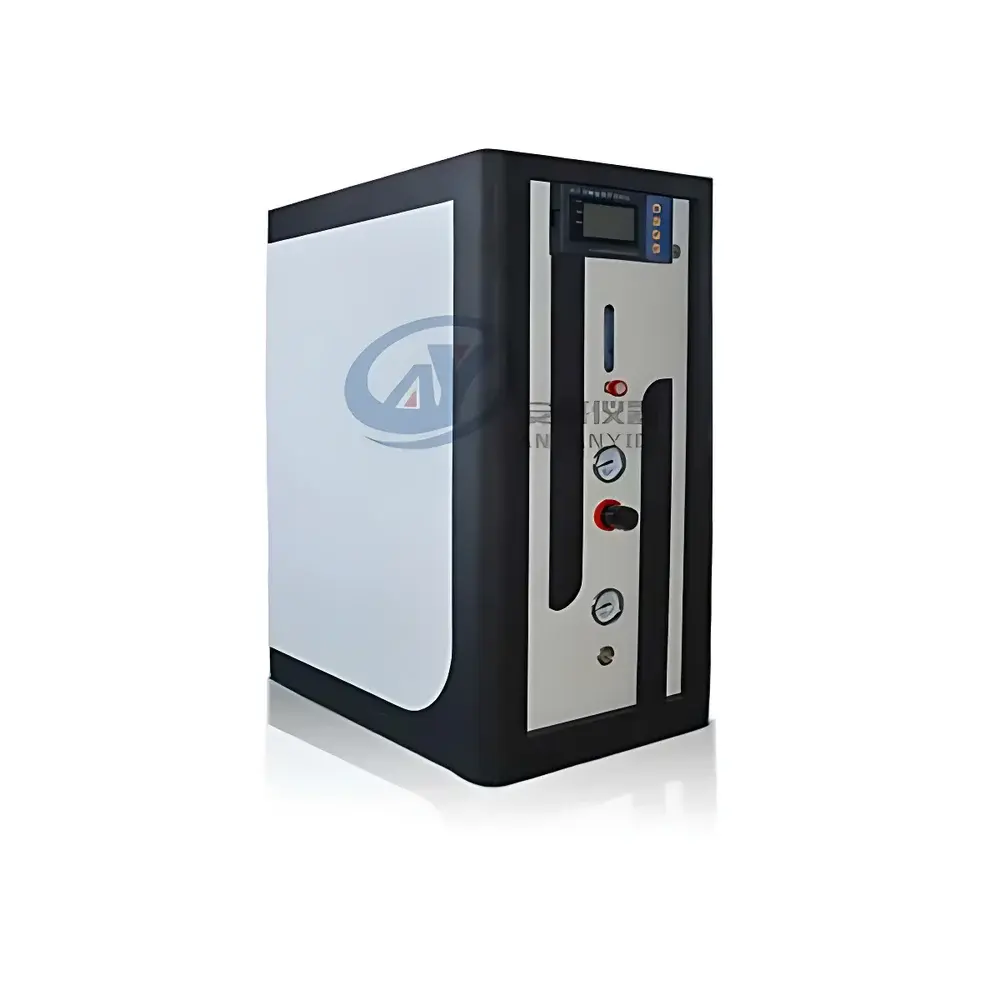
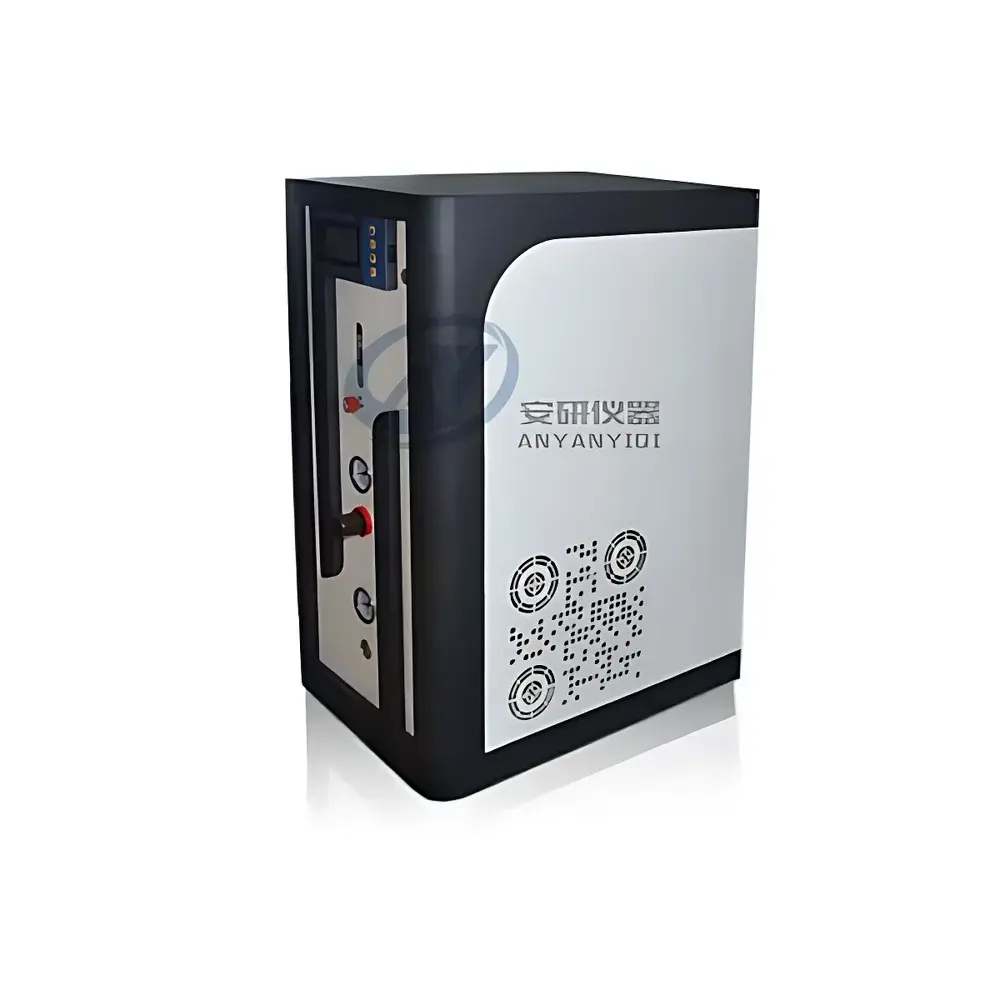
Anyan AYAN-50LB Pressure Swing Adsorption (PSA) Nitrogen Generator
| Brand | Anyan Instruments |
|---|---|
| Origin | Zhejiang, China |
| Model | AYAN-50LB PSA Nitrogen Generator |
| Nitrogen Production Principle | Pressure Swing Adsorption (PSA) |
| Output Flow Rate | 50 L/min |
| Output Pressure Range | 0–0.6 MPa |
| Nitrogen Purity | 99% |
| Dew Point | −40 °C |
Overview
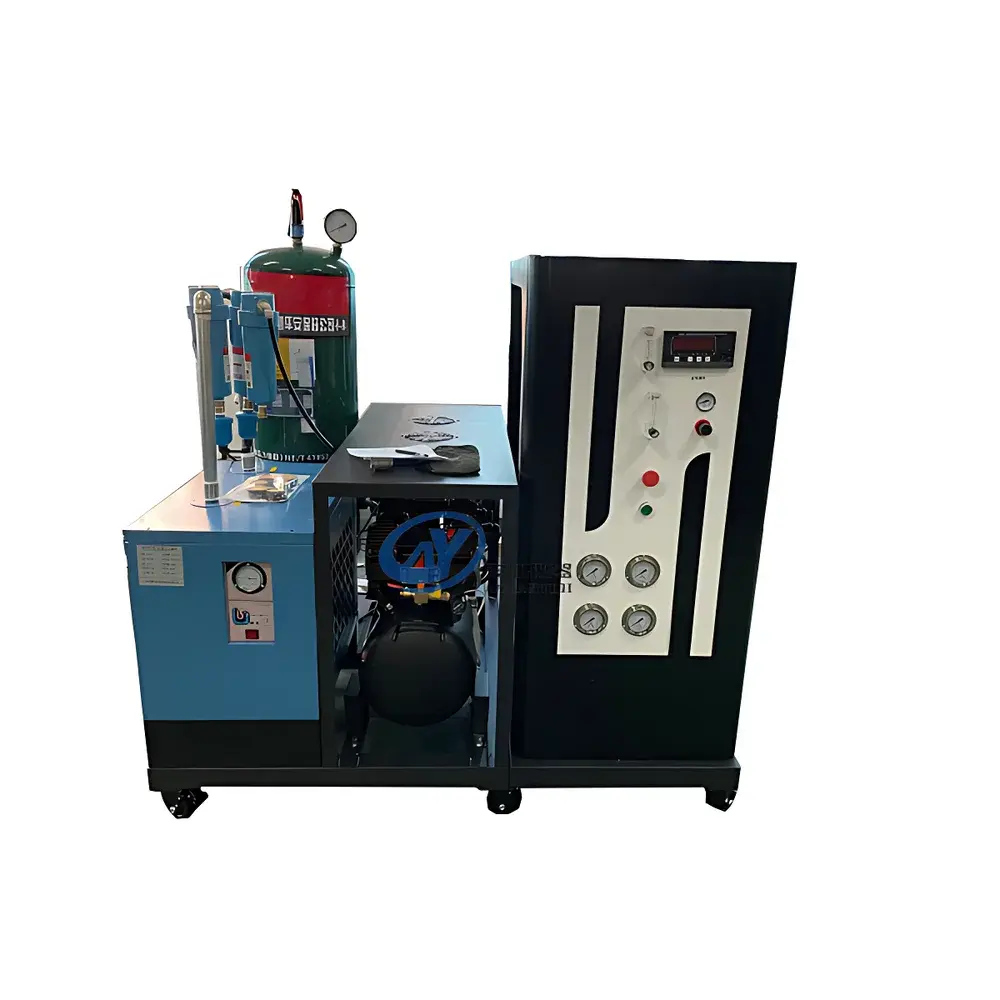
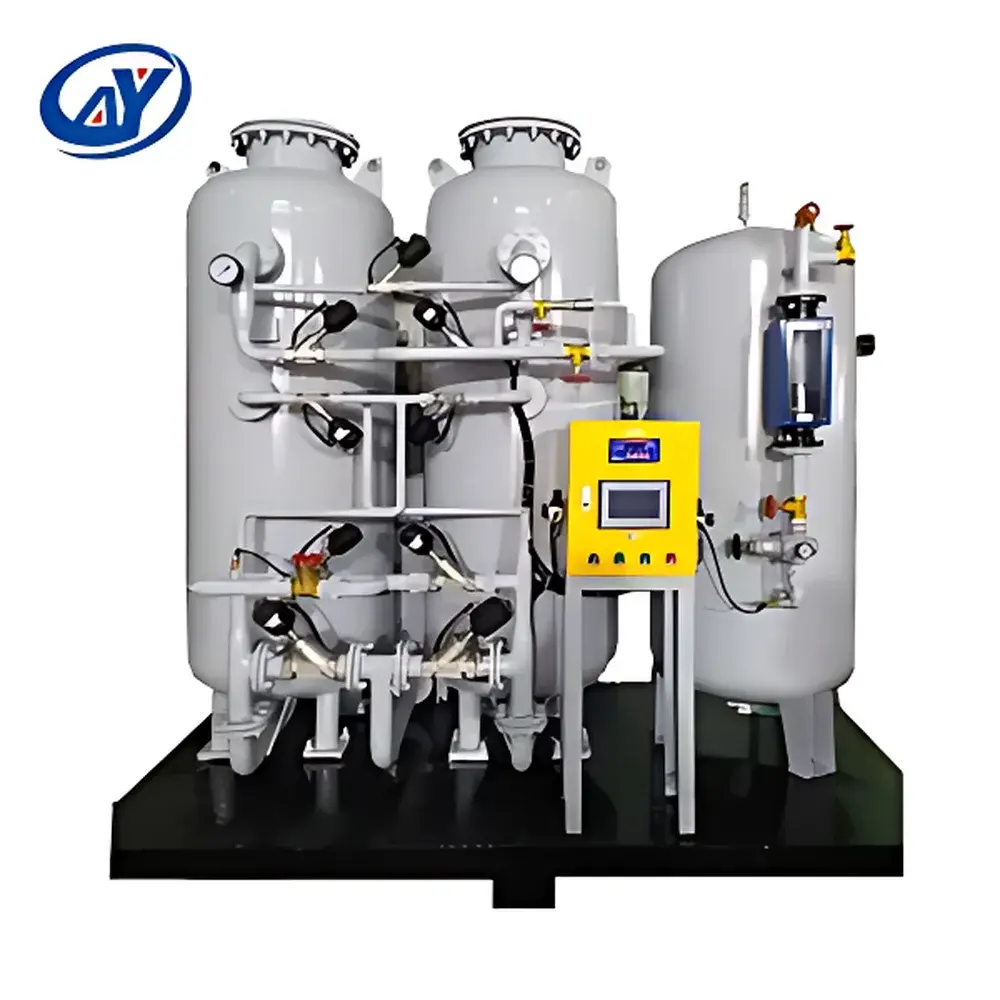
The Anyan AYAN-50LB Pressure Swing Adsorption (PSA) Nitrogen Generator is an integrated on-site gas generation system engineered for reliable, continuous production of high-purity nitrogen from ambient air. Utilizing the well-established PSA separation principle, this generator separates nitrogen from atmospheric air by exploiting differential adsorption kinetics of oxygen and nitrogen on carbon molecular sieve (CMS) media under varying pressure conditions. During high-pressure adsorption, oxygen, water vapor, and trace CO₂ are preferentially retained on the CMS surface, while nitrogen passes through with minimal retention. Upon depressurization, the adsorbed components are desorbed, regenerating the CMS bed for the next cycle. This dual-tower, alternating-cycle architecture ensures uninterrupted nitrogen delivery at stable purity and flow—critical for laboratory inerting, GC carrier gas supply, sample preparation, and controlled-atmosphere storage applications.
Key Features
- Integrated system architecture: Includes built-in oil-free air compressor, refrigerated air dryer, multi-stage coalescing and activated carbon filtration (pre- and post-CMS), air buffer tank, and nitrogen buffer tank—eliminating external ancillary equipment requirements.
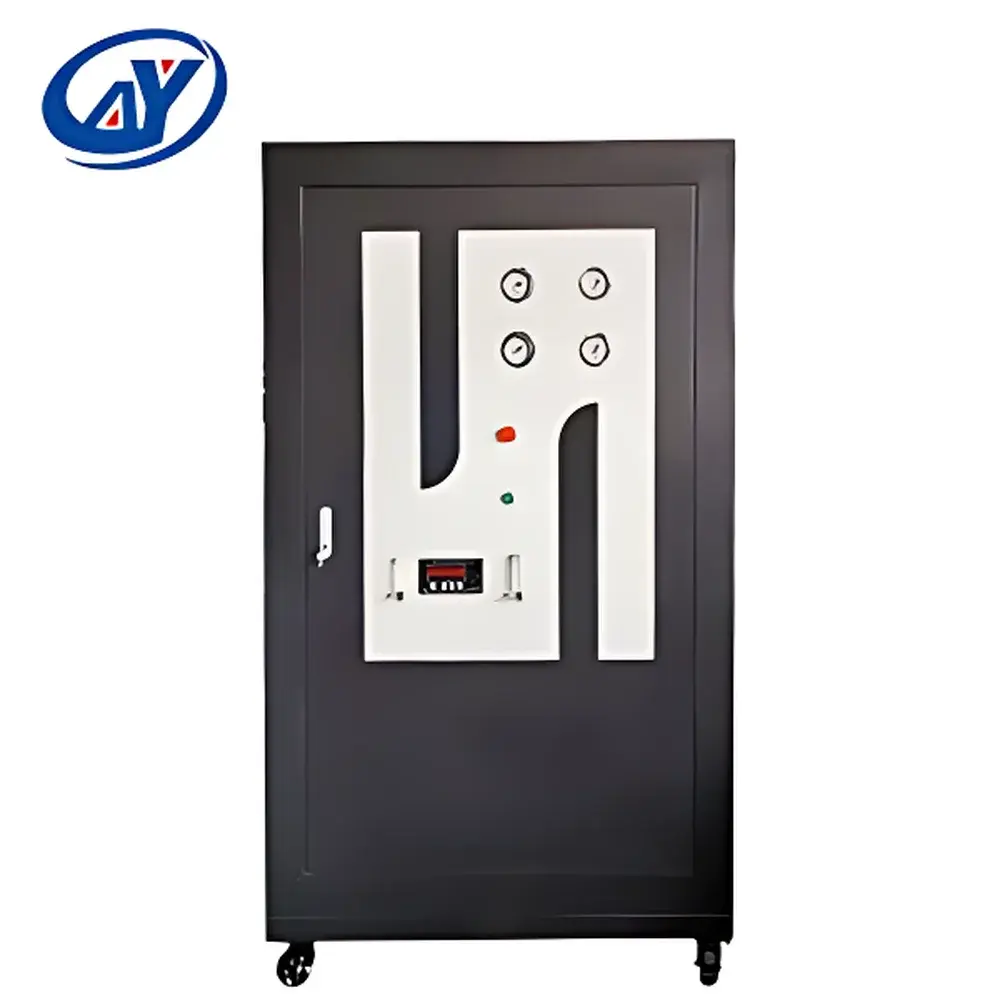
- Real-time process monitoring: Equipped with inline nitrogen purity analyzer (electrochemical sensor), digital mass flow meter, and pressure transducers—displaying purity (% N₂), flow rate (L/min), and outlet pressure (MPa) on a dedicated HMI interface.
- Robust CMS protection system: Features a dedicated micro-oil adsorption unit upstream of the CMS beds to capture residual hydrocarbons (<0.01 mg/m³), preventing CMS fouling and extending service life.
- Mobility and stability design: Heavy-duty casters with locking brakes enable safe repositioning; reinforced base frame ensures mechanical stability during operation and vibration isolation.
- Optimized pressure management: Air and nitrogen buffer tanks dampen pulsation, reduce pressure fluctuations across adsorption cycles, and improve CMS bed utilization efficiency and long-term reproducibility.
- Modular CMS vessel design: Dual-bed configuration with pneumatic cylinder-based bed compaction ensures uniform CMS packing density and minimizes channeling or fluidization—key factors in maintaining consistent purity and avoiding CMS attrition or “black smoke” events.
Sample Compatibility & Compliance
The AYAN-50LB is compatible with standard laboratory compressed air infrastructure (ISO 8573-1 Class 3:2:3 or better recommended). Its output meets common technical specifications for non-critical nitrogen applications, including inert blanketing (ASTM D3967), GC carrier gas (USP general chapter for gas purity), and environmental chamber purging. While not certified to ISO 8573-1 Class 1 for particle/oil/water content in final nitrogen output, it consistently delivers nitrogen with ≤99% purity, −40 °C pressure dew point, and particulate levels compliant with ISO 8573-1 Class 4. The system supports GLP-compliant operation when paired with external audit-trail-capable data loggers; however, native software does not provide FDA 21 CFR Part 11-compliant electronic signatures or user access control.
Software & Data Management
The generator operates via a standalone industrial-grade HMI panel with local data logging (up to 30 days of timestamped purity, flow, and pressure values). No proprietary PC software is required for basic operation or calibration. Export of logged data is supported via USB flash drive in CSV format. Remote monitoring is possible via optional 4–20 mA analog outputs (purity and flow) or Modbus RTU over RS-485, enabling integration into existing SCADA or building management systems. Firmware updates are performed manually using factory-provided binaries; no over-the-air (OTA) capability is included.
Applications
- Gas chromatography (GC) carrier and detector gas supply where 99% purity suffices for FID, TCD, or ECD operation.
- Inert atmosphere maintenance in glove boxes, sample storage cabinets, and solvent evaporation stations.
- Blanketing of reactive chemicals, lithium battery electrode coating lines, and pharmaceutical drying ovens.
- Food packaging line nitrogen flushing (non-sterile applications).
- Calibration gas dilution systems requiring stable, low-moisture nitrogen background gas.
- Research laboratories requiring on-demand nitrogen without cylinder logistics or dew point variability.
FAQ
What is the expected service life of the carbon molecular sieve (CMS) under normal operating conditions?
CMS lifespan typically ranges from 3 to 5 years, depending on inlet air quality, duty cycle, and adherence to scheduled maintenance—including replacement of pre-filters, dryer desiccant (if applicable), and CMS bed compaction verification every 12 months.
Does the system require external cooling water or external power beyond standard 220 VAC / 50 Hz?
No. The unit is fully self-contained and operates on single-phase 220 VAC ±10%, 50 Hz, with internal air-cooled heat exchangers for both compressor and refrigerated dryer stages.
Can the nitrogen purity be adjusted or upgraded beyond 99%?
The AYAN-50LB is configured for fixed 99% output. Higher purity (e.g., 99.5% or 99.9%) would require CMS reconfiguration, additional purification stages (e.g., oxygen scavengers), or a different model variant—not achievable via field modification.
Is routine validation documentation (IQ/OQ) provided with the system?
Factory test reports (including flow, purity, and dew point verification at rated conditions) are supplied. Full IQ/OQ protocols must be developed and executed by the end user or qualified third party in accordance with internal quality procedures.
How often should the air and nitrogen buffer tanks be drained?
Manual condensate drains on both tanks should be operated daily before startup; automated solenoid drains are available as optional accessories for unattended operation.



