
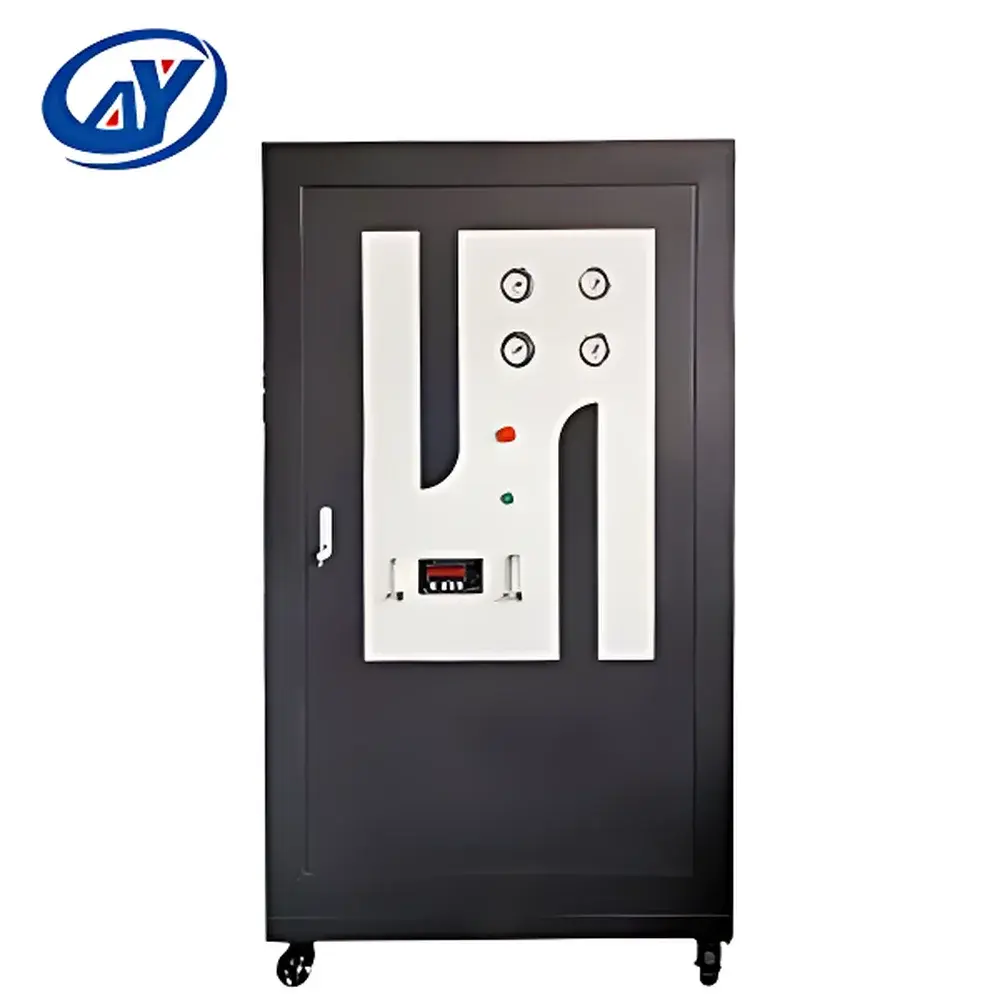
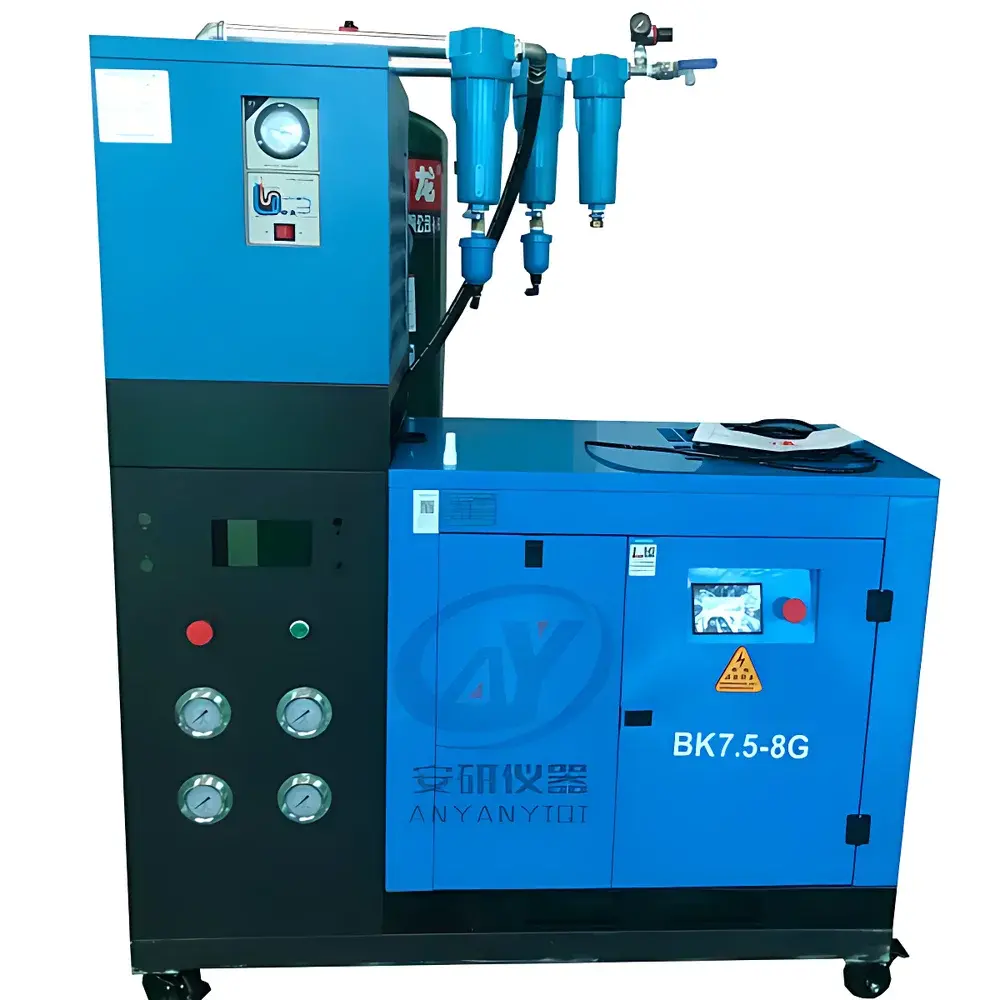
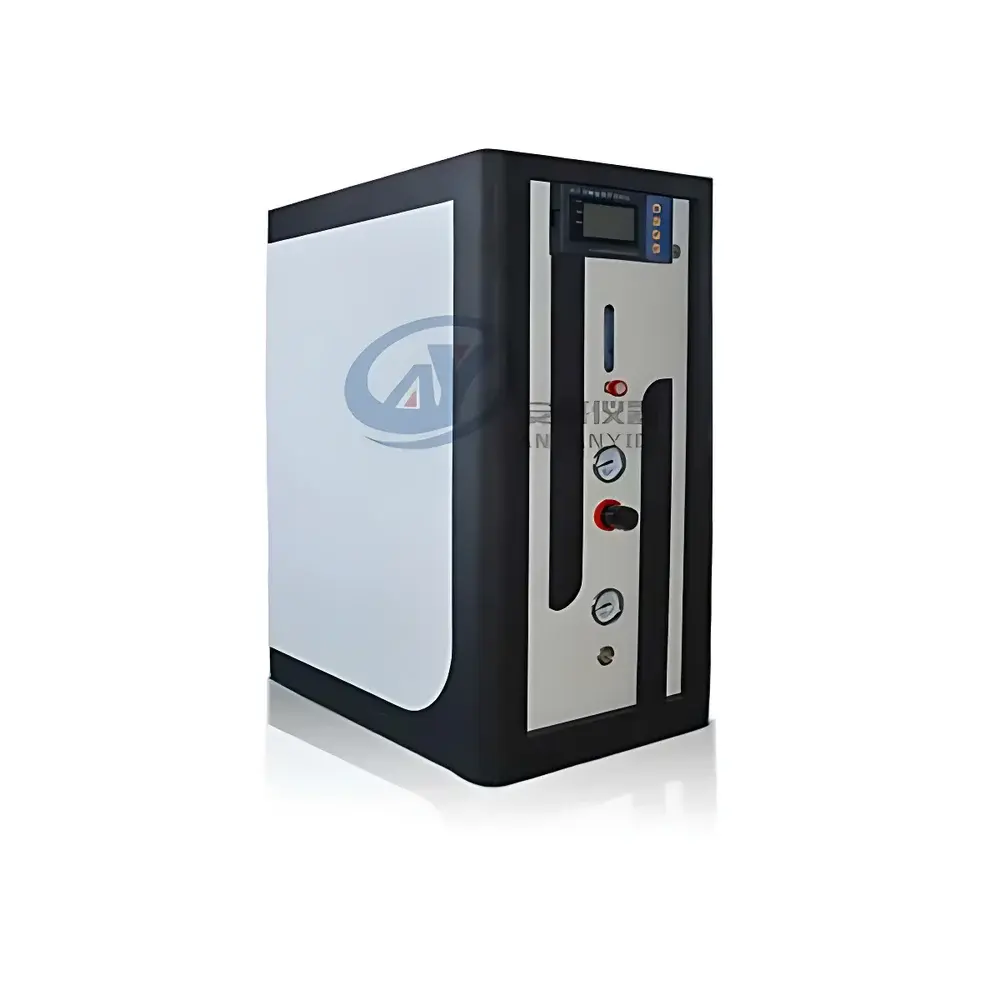
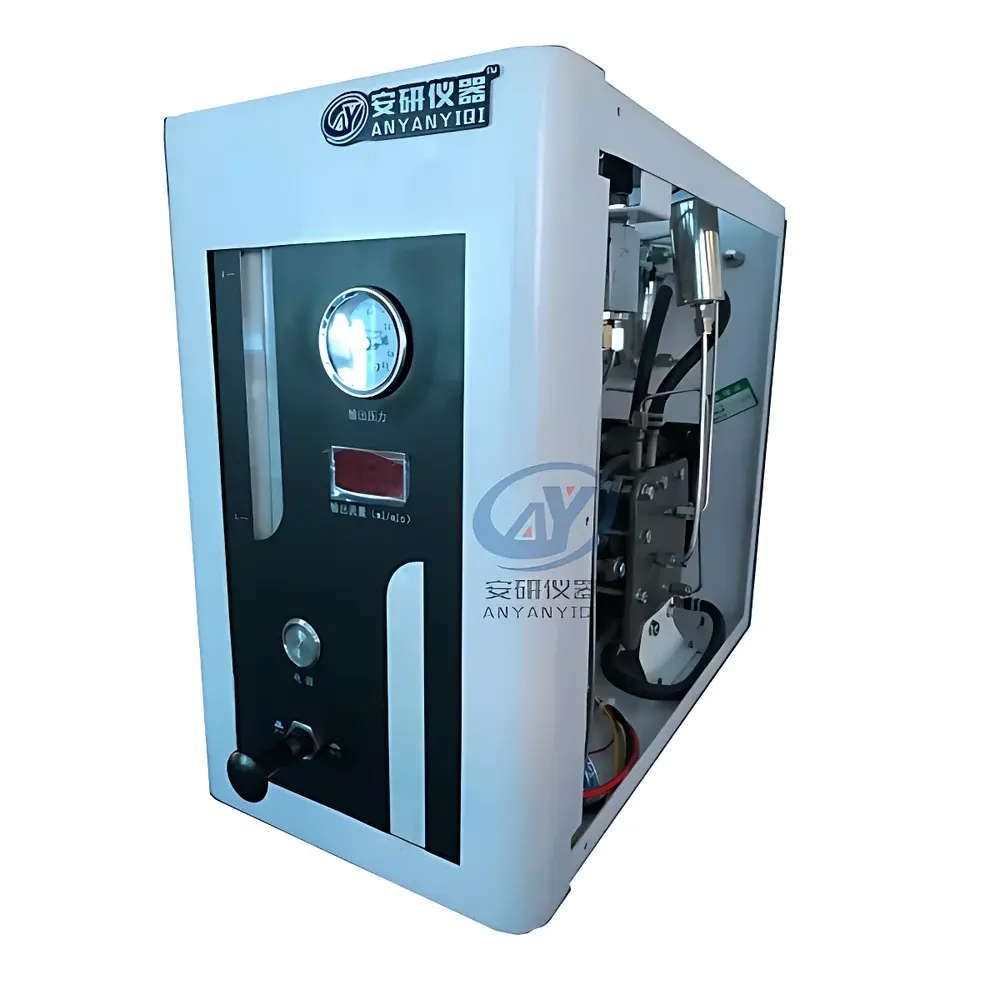
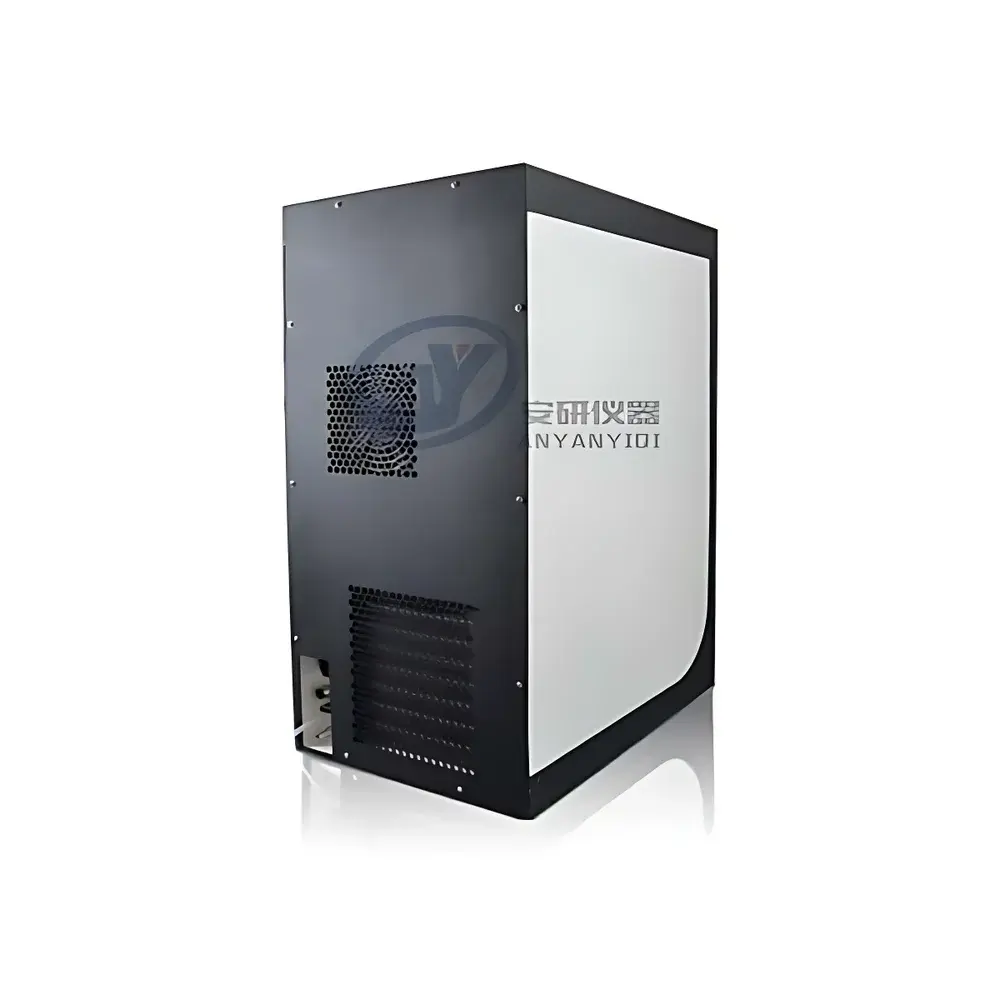
Anyan AYAN-5L Membrane-Based Nitrogen Generator for Fermentation Vessel Purging
| Brand | Anyan |
|---|---|
| Origin | Zhejiang, China |
| Manufacturer Type | Authorized Distributor |
| Category | Domestic Lab Equipment |
| Model | AYAN-5L |
| Pricing | ¥25,000 (excl. VAT) |
| Nitrogen Generation Principle | Polymeric Membrane Separation |
| Output Flow Rate | 5 L/min |
| Output Pressure Range | 0–0.6 MPa |
| Nitrogen Purity | 99% |
| Dew Point | Not specified in source data |
| Power Consumption | 1000 W |
| Input Voltage | 220 V, 50 Hz |
| Dimensions (W×D×H) | 500 × 330 × 710 mm |
| Filtration Stages | Triple-stage (particulate <0.01 µm, oil aerosol <0.003 mg/m³) |
| Integrated Air Compressor | Yes |
| Noise Level | Reduced via suspended acoustic isolation mount |
| Pressure Regulation | Dual independent pressure adjustment system |
| Display | Real-time nitrogen purity indication |
Overview
The Anyan AYAN-5L Membrane-Based Nitrogen Generator is an engineered solution designed specifically for controlled inert gas blanketing in bioprocess applications—particularly fermentation vessel headspace purging, anaerobic culture maintenance, and oxygen-sensitive media preparation. It employs polymeric membrane separation technology to extract high-purity nitrogen directly from compressed ambient air. This principle relies on the differential permeability of atmospheric gases (primarily O₂, N₂, H₂O, and CO₂) through asymmetric hollow-fiber membranes. Under applied pressure, oxygen, water vapor, and carbon dioxide exhibit higher diffusion rates across the membrane wall, while nitrogen—being less soluble and slower-diffusing—remains enriched in the retentate stream. The result is a continuous, on-demand supply of nitrogen at ≥99% purity, with typical dew point performance aligned with ISO 8573-1 Class 4 (−20 °C pressure dew point) when paired with integrated coalescing and desiccant filtration stages.
Key Features
- Imported Korean polymeric membrane modules ensure stable long-term separation performance and extended service life without consumable replacement.
- Integrated three-stage air purification system: pre-filter (coarse particulate), coalescing filter (oil/water aerosols), and activated carbon adsorption stage—achieving particulate removal down to <0.01 µm and residual oil content <0.003 mg/m³.
- Dual independent pressure regulation circuitry enables precise control over both feed air pressure and output nitrogen pressure—critical for compatibility with variable-pressure bioreactor manifolds and sparging systems.
- Real-time digital purity display provides continuous verification of nitrogen composition, supporting routine operational checks and documentation for GLP-compliant workflows.
- Onboard oil-free scroll compressor eliminates external air supply dependencies; acoustic suspension mounting reduces operational noise to ≤55 dB(A) at 1 m distance.
- Start-up time ≤3 minutes—significantly faster than PSA-based alternatives—enabling rapid deployment during batch transitions or emergency inerting scenarios.
Sample Compatibility & Compliance
The AYAN-5L is compatible with standard 5–20 L benchtop fermenters, stainless-steel bioreactors, glove boxes, and anaerobic chambers requiring low-oxygen environments. Its consistent 5 L/min flow rate at 0.4–0.6 MPa supports single-vessel purging protocols per ASTM D6645 and ISO 8573-1:2010 Annex B for compressed gas quality assessment. While not certified to ISO 13485 or FDA 21 CFR Part 11 out-of-the-box, its digital purity readout, pressure logging capability (via optional RS485/Modbus interface), and traceable calibration records support internal validation under GMP-aligned laboratory quality systems. All wetted components comply with USP Class VI biocompatibility standards for non-contact gas delivery.
Software & Data Management
The unit operates as a standalone hardware system with no proprietary software dependency. However, analog 4–20 mA outputs (optional) enable integration into existing SCADA or LabVantage platforms for centralized monitoring of purity and outlet pressure. Internal event logging captures runtime hours, compressor cycles, and alarm states (e.g., filter saturation, pressure deviation), facilitating preventive maintenance scheduling and audit-ready record retention. For laboratories implementing electronic lab notebooks (ELN), raw sensor values may be exported via USB or serial interface for metadata tagging in accordance with ALCOA+ principles.
Applications
- Fermentation vessel headspace inerting prior to inoculation and during fed-batch operation
- Oxygen-sensitive enzyme storage and lyophilization chamber purging
- Gas supply for GC carrier gas (where 99% purity meets method requirements per USP <621>)
- Inert atmosphere maintenance in glove boxes used for strict anaerobe handling (e.g., Clostridium, Bifidobacterium)
- Process validation support for sterilization cycle development (ISO 11135, ISO 11137)
FAQ
What is the expected service life of the membrane module?
Under continuous operation with properly maintained inlet air quality (ISO 8573-1 Class 2), the Korean-sourced membrane stack typically delivers >15,000 operating hours before measurable purity drift occurs.
Can this unit supply nitrogen to multiple fermenters simultaneously?
It is optimized for single-vessel use at rated flow. Parallel distribution requires pressure-balanced manifolding and may necessitate derating to maintain purity—consult engineering specifications prior to multi-point installation.
Is dew point specification available for this model?
The standard configuration achieves a pressure dew point of approximately −20 °C; optional refrigerated dryer integration can extend this to −40 °C for ultra-low moisture applications.
Does the unit meet regulatory requirements for pharmaceutical manufacturing?
While suitable for R&D and QC labs, formal qualification (IQ/OQ/PQ) against EU GMP Annex 1 or FDA guidance requires site-specific risk assessment, calibration traceability, and documented change control—services supported by Anyan’s authorized technical partners.
How frequently must filters be replaced?
Pre-filters are recommended for replacement every 6 months under normal lab air conditions; coalescing and carbon filters every 12 months—or sooner if pressure drop exceeds 0.1 MPa across the stage.



