
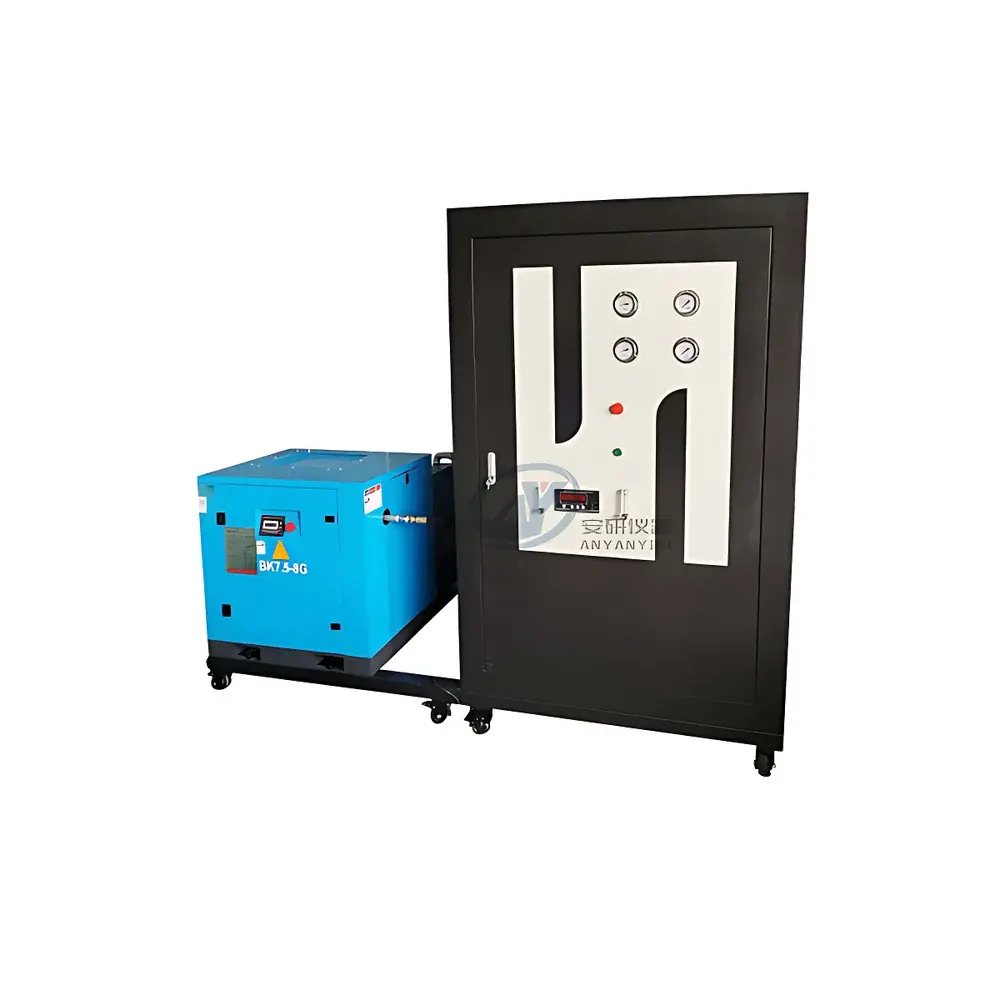
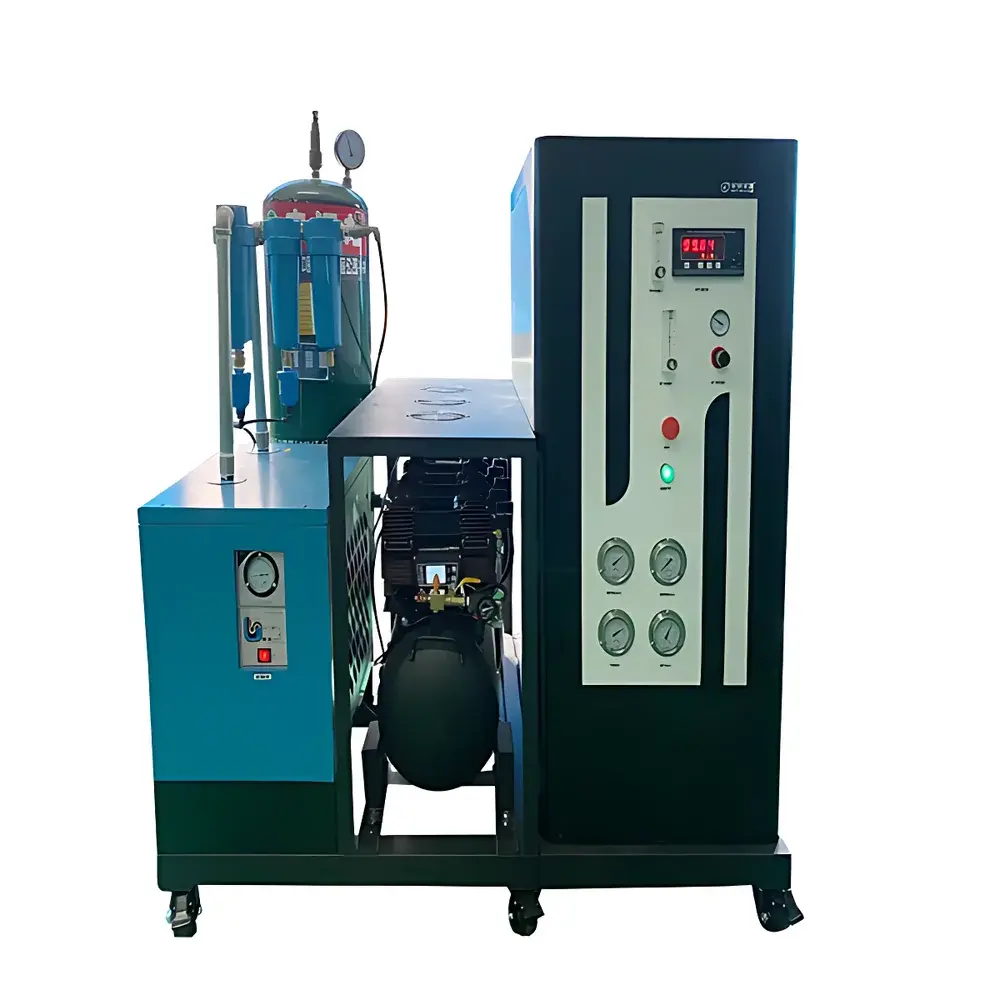
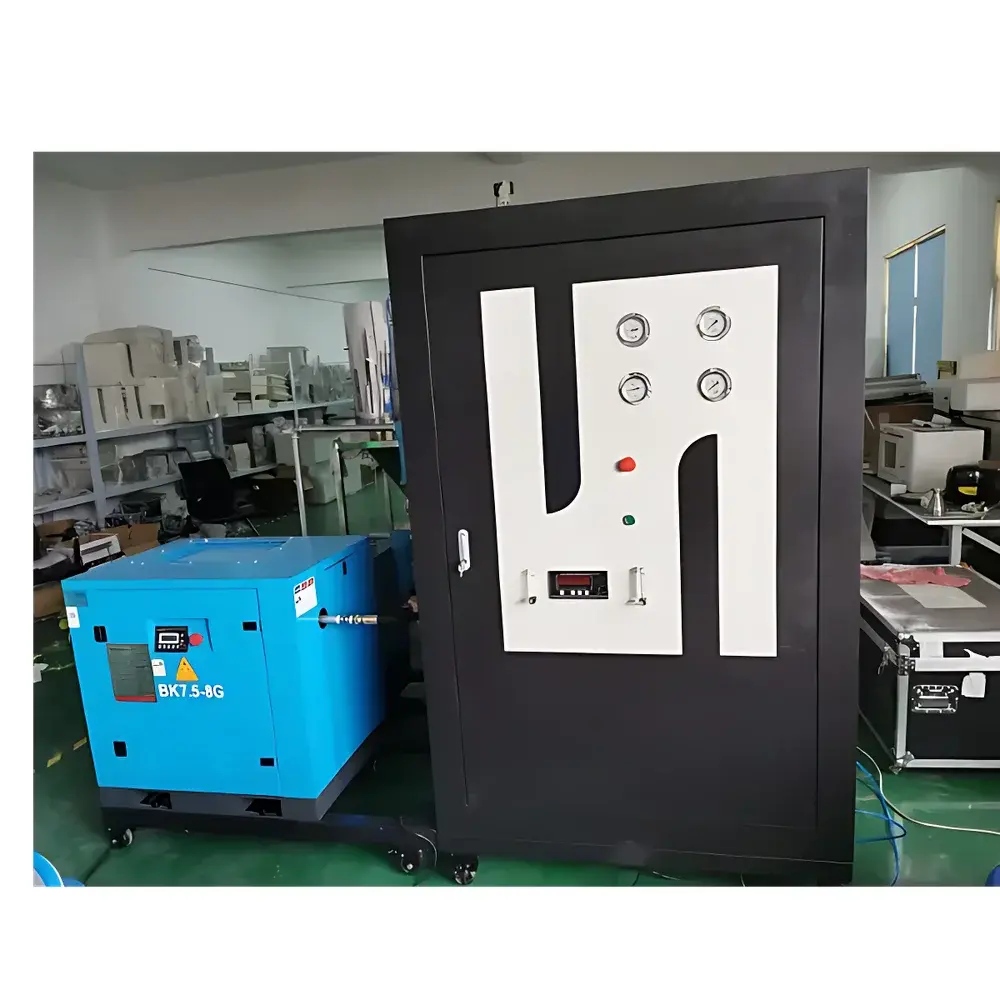
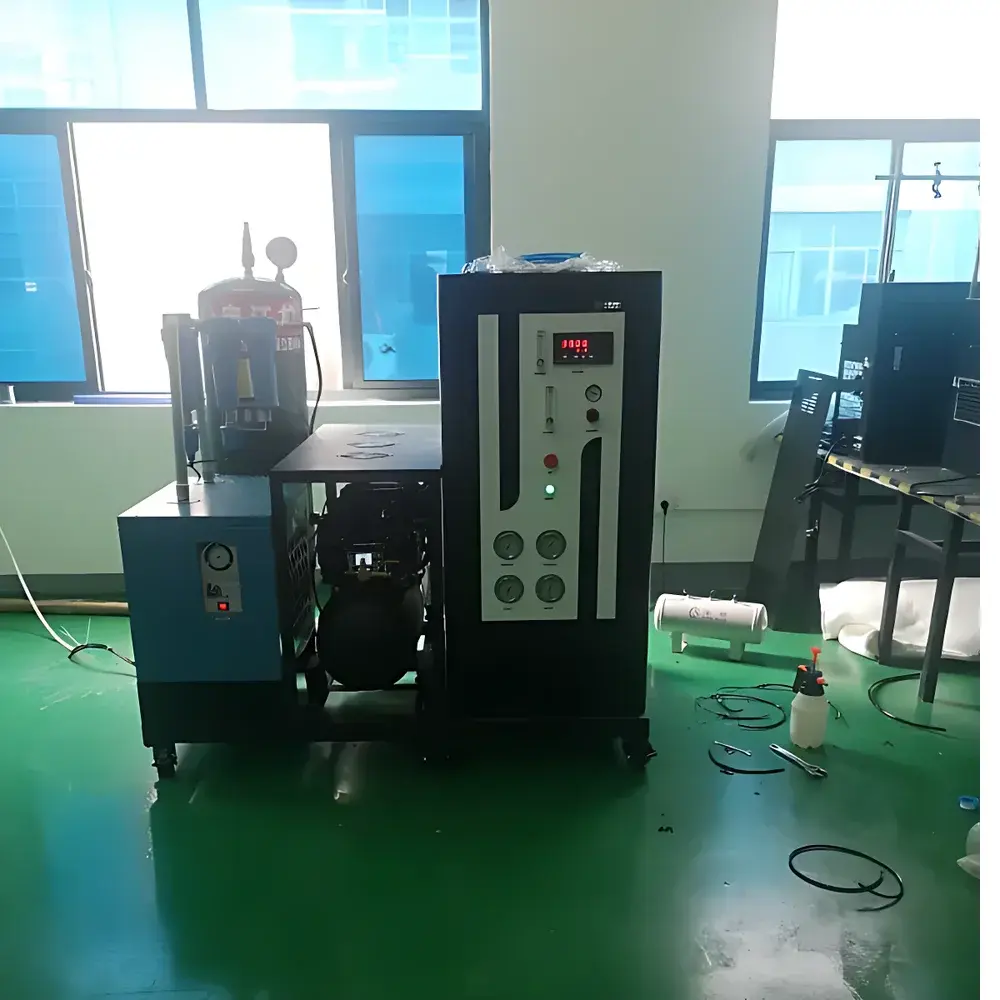
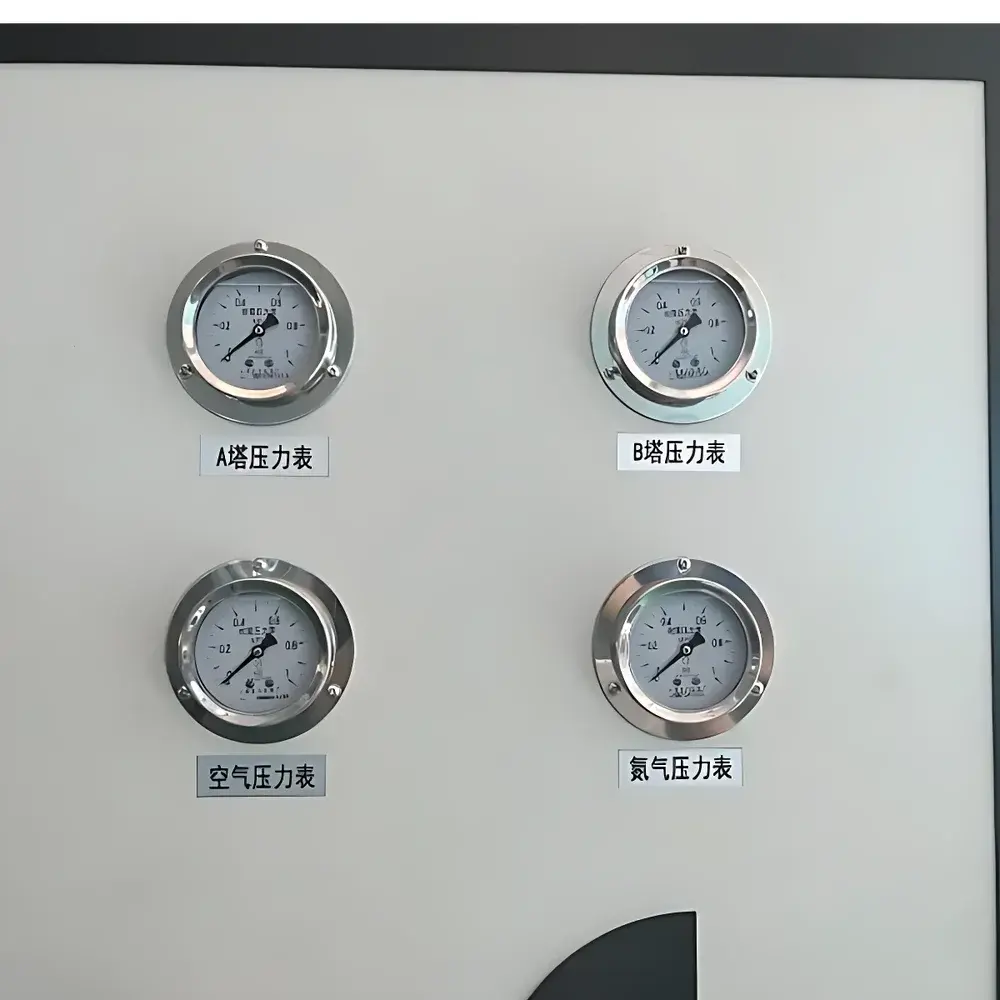
Anyan AYAN-60LB PSA Nitrogen Generator with Carbon Molecular Sieve
| [Brand | Anyan Instruments |
|---|---|
| Origin | Shanghai, China |
| Model | AYAN-60LB |
| Output Flow Rate | 0–60 L/min |
| Output Pressure | 0–0.7 MPa (factory-set at 0.5 MPa) |
| Nitrogen Purity | 99.9% (configurable up to 99.999%) |
| Oxygen Content | ≤1000 ppm |
| Dew Point | –40 °C |
| Power Supply | 220 V ±10%, 50 Hz ±5% |
| Power Consumption | 3600 W |
| Ambient Operating Temperature | 10–40 °C |
| Relative Humidity | ≤85% RH (non-condensing) |
| Dimensions (W×D×H) | 1300 × 900 × 1400 mm |
| Weight | 260 kg |
| Noise Level | ≤65 dB(A) |
| Compliance | CE-marked design principles |
| compatible with ISO 8573-1 Class 2 | 2:2 compressed air input] |
Overview
The Anyan AYAN-60LB PSA Nitrogen Generator is an industrial-grade, on-site nitrogen production system engineered for continuous, reliable operation in analytical laboratories, GC-NPD/FPD applications, inert atmosphere purging, and small-scale manufacturing environments. It employs pressure swing adsorption (PSA) technology — a proven, purely physical gas separation method — using high-selectivity carbon molecular sieve (CMS) media to separate nitrogen from ambient air. Unlike electrochemical or membrane-based alternatives, PSA offers scalable flow output, stable purity over time, and no consumables beyond periodic filter elements. The system integrates a built-in air compressor, multi-stage filtration (coalescing, activated carbon, and ultra-fine particulate), refrigerated air drying, dual-bed CMS adsorption towers, automated valve sequencing, and real-time nitrogen purity monitoring via integrated oxygen sensor feedback. All process stages operate at ambient temperature, eliminating thermal degradation risks and ensuring long-term CMS stability.
Key Features
- Integrated air compression and purification: Eliminates dependency on external compressed air sources; includes oil-free scroll compressor, pre-filter, coalescing filter, activated carbon tower, and refrigerated dryer (dew point ≤3 °C).
- Dual-tower PSA architecture with programmable PLC control: Enables uninterrupted nitrogen delivery through alternating adsorption and regeneration cycles, minimizing downtime and maximizing CMS utilization efficiency.
- Adjustable nitrogen purity: Factory-configured for 99.9% N₂ (≤1000 ppm O₂); optional configurations support 99.99% (≤100 ppm) and 99.999% (≤10 ppm) with auxiliary palladium-catalyzed deoxygenation and dual-bed desiccant drying (–60 °C dew point).
- Real-time process monitoring: Onboard oxygen analyzer with analog/digital output, mass flow meter, pressure transducers, and dew point sensor provide traceable operational data for GLP/GMP documentation.
- Robust mechanical construction: Heavy-duty steel frame, vibration-dampened mounting, IP54-rated electrical enclosure, and acoustic insulation ensure stable performance in shared lab environments (≤65 dB(A) at 1 m).
- Energy-efficient operation: Intelligent load-matching control reduces power draw during low-demand periods; full-load consumption remains within 3600 W at rated 60 L/min output.
Sample Compatibility & Compliance
The AYAN-60LB is designed for compatibility with gas chromatography systems requiring carrier or detector gases (e.g., NPD, FPD, TCD), glovebox inerting, sample preparation under nitrogen blanket, and LC-MS mobile phase sparging. Its output meets ISO 8573-1:2010 Class 2:2:2 specifications when fed with clean, dry instrument air. While not certified to FDA 21 CFR Part 11 out-of-the-box, the system supports audit-ready data logging when interfaced with compliant third-party SCADA or LIMS platforms. All internal wetted materials comply with USP Class VI biocompatibility standards; CMS media conforms to ASTM D6811 for carbon molecular sieve performance validation. No hazardous chemicals, electrolytes, or high-pressure cylinders are required — aligning with OSHA 1910.101 and EU Directive 2014/68/EU (PED) safety frameworks.
Software & Data Management
The embedded microcontroller provides local HMI operation via 5.7-inch TFT touchscreen with multilingual interface (English default). System logs — including runtime hours, total nitrogen volume produced, alarm history, and calibration timestamps — are stored internally (1-year retention) and exportable via USB 2.0. Optional RS-485 Modbus RTU or Ethernet TCP/IP communication enables integration into centralized facility monitoring systems. For regulated environments, optional firmware upgrade adds electronic signature capability, user role-based access control (admin/operator), and 21 CFR Part 11-compliant audit trail generation — including operator ID, timestamp, parameter change value, and reason-for-change annotation.
Applications
- Gas chromatography carrier and detector gas supply for routine QC/QA testing in pharmaceutical, food, and environmental labs.
- Inert atmosphere maintenance for moisture-sensitive synthesis, catalyst handling, and battery electrode coating processes.
- Blanketing of solvents during rotary evaporation or nitrogen purge of reaction vessels per ASTM E2654 guidelines.
- Calibration gas dilution systems requiring stable, low-oxygen background gas streams.
- Support for FTIR purge lines, XRD sample chambers, and SEM specimen preparation where hydrocarbon-free nitrogen is critical.
- On-demand nitrogen for packaging line leak testing and modified atmosphere packaging (MAP) R&D.
FAQ
What is the expected service life of the carbon molecular sieve (CMS)?
Under normal operating conditions (clean feed air, proper maintenance, and adherence to dew point specifications), CMS beds typically retain ≥95% of initial separation efficiency for 30,000–40,000 hours (~3.5–4.5 years of continuous operation). Replacement intervals are determined by trending oxygen breakthrough curves, not fixed calendar schedules.
Can this unit supply nitrogen directly to a GC system requiring <1 ppm oxygen?
Yes — when configured with the optional palladium-catalyzed deoxygenation module and dual-bed desiccant dryer, the system achieves ≤10 ppm O₂ and –60 °C dew point, suitable for high-sensitivity electron capture detectors (ECD) and low-background MS applications.
Is external cooling water required?
No — the refrigerated dryer uses sealed R134a vapor-compression cycle with passive ambient heat dissipation; no chilled water connection is needed.
How often must filters be replaced?
Pre-filters (coalescing and activated carbon) require replacement every 3,000–4,000 operating hours; the final particulate filter upstream of CMS should be changed annually or after 8,000 hours — whichever occurs first. Filter life is extended significantly when inlet air meets ISO 8573-1 Class 4:4:4 or better.
Does the system include automatic shutdown on fault detection?
Yes — integrated safeguards trigger immediate valve isolation and compressor stoppage upon high temperature, low airflow, oxygen sensor failure, or pressure deviation exceeding ±15% of setpoint, with latched alarm status until manual reset.



