
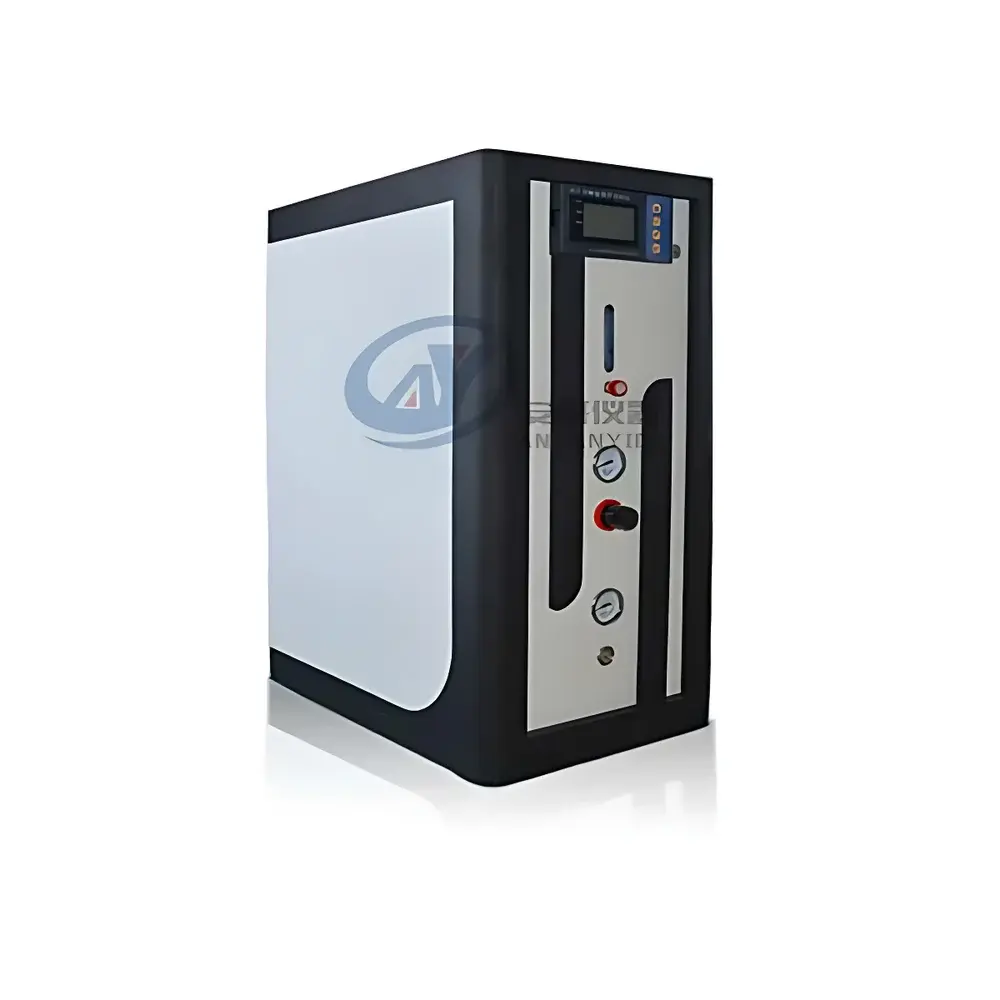
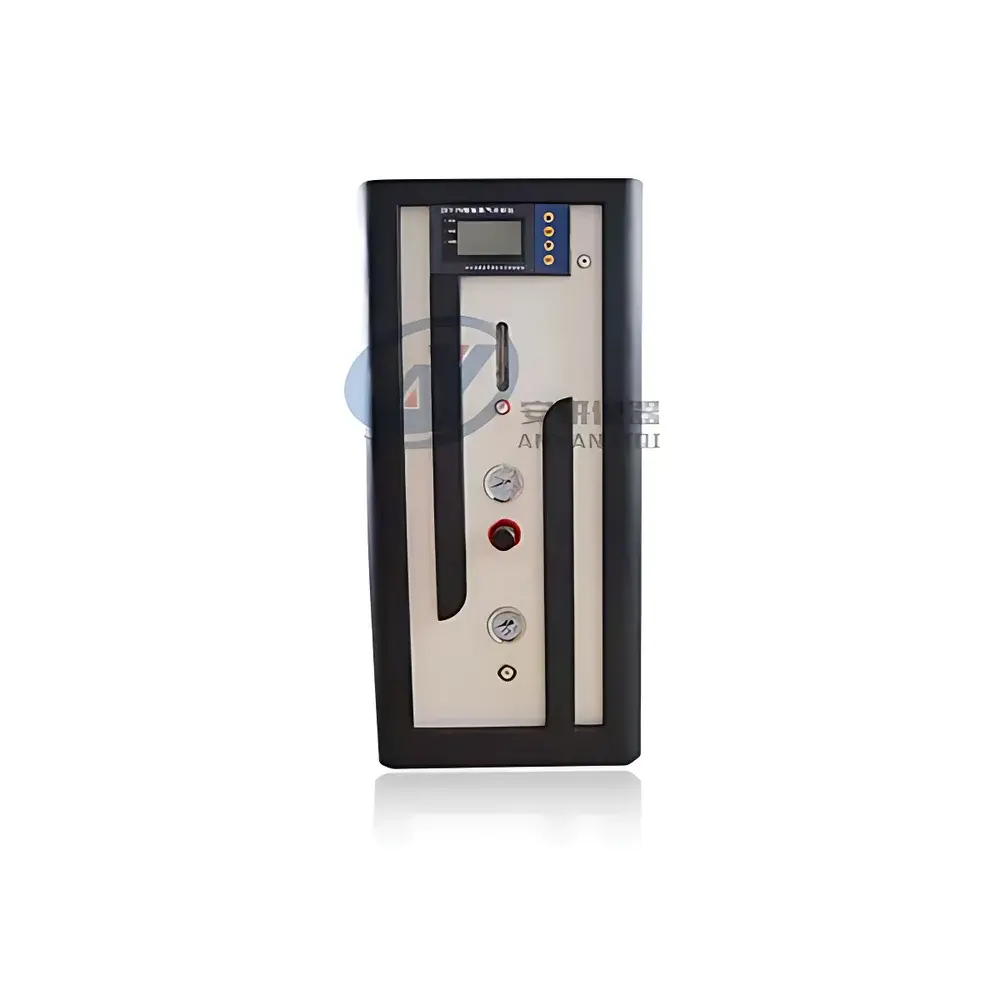
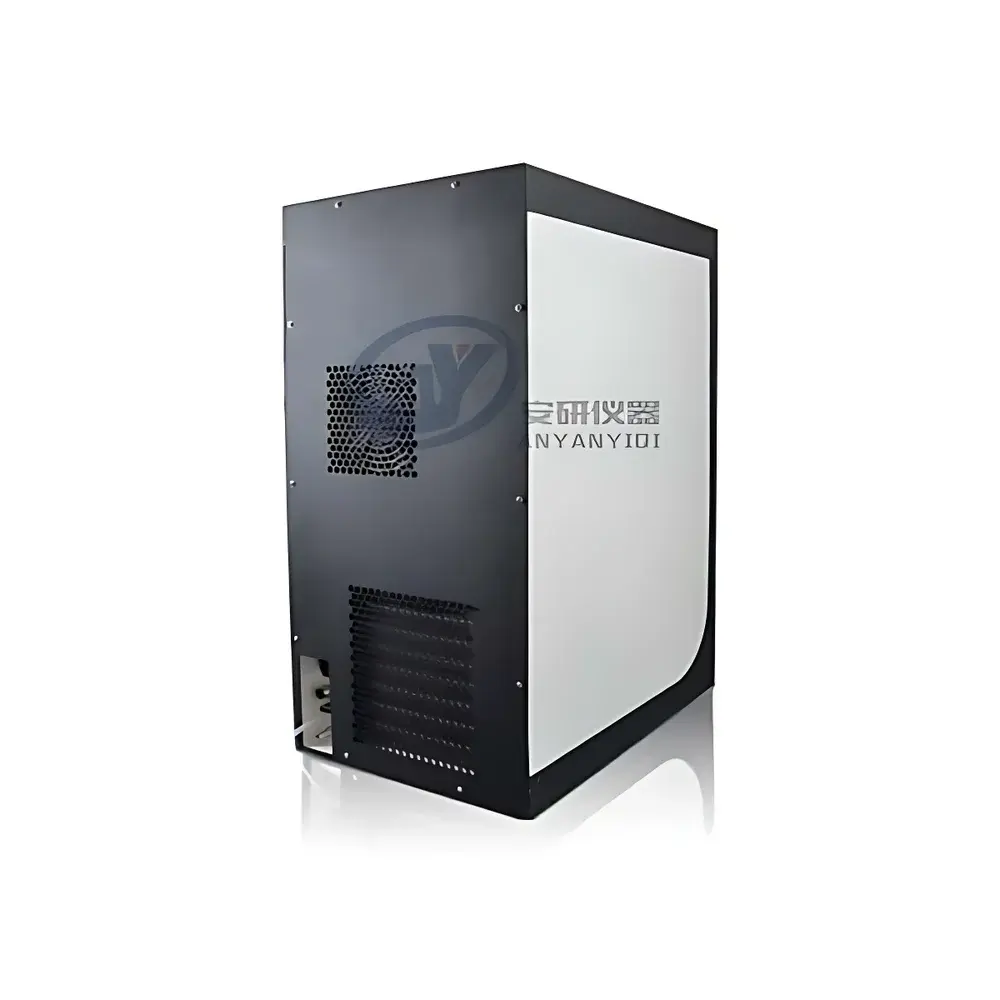
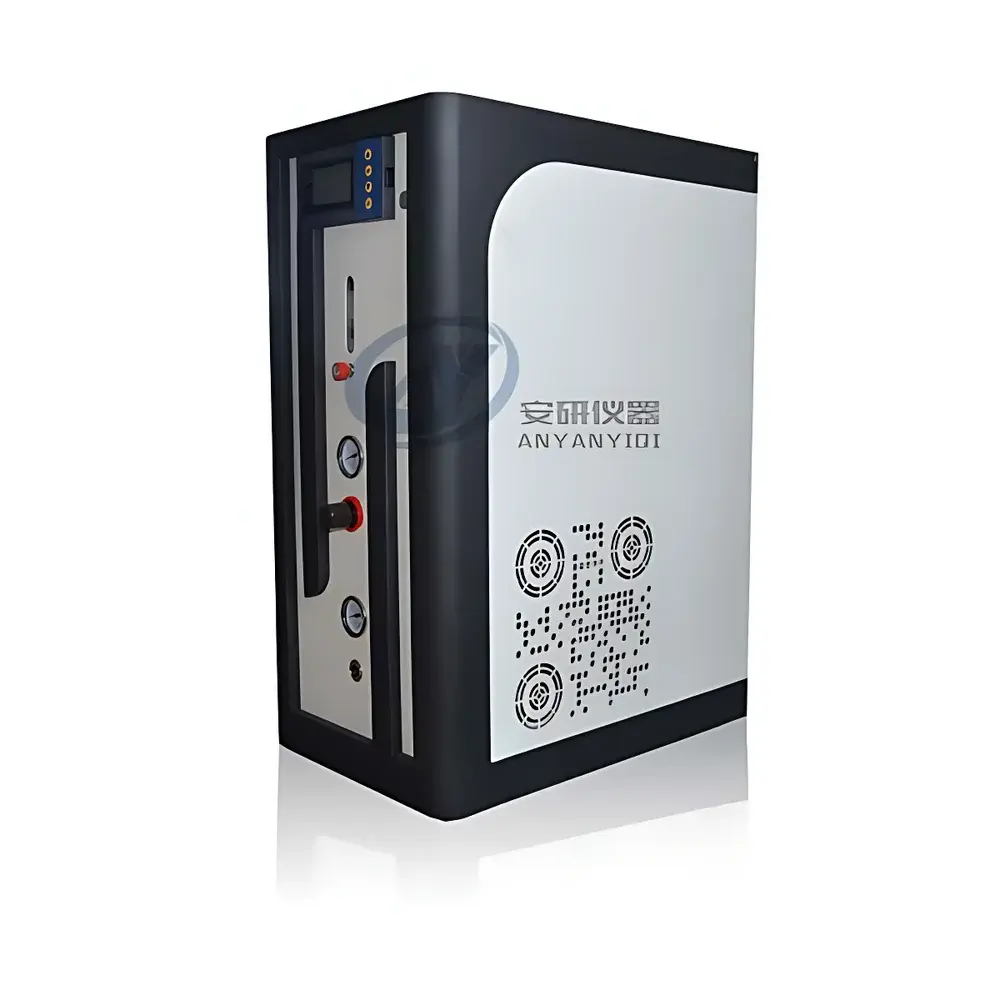
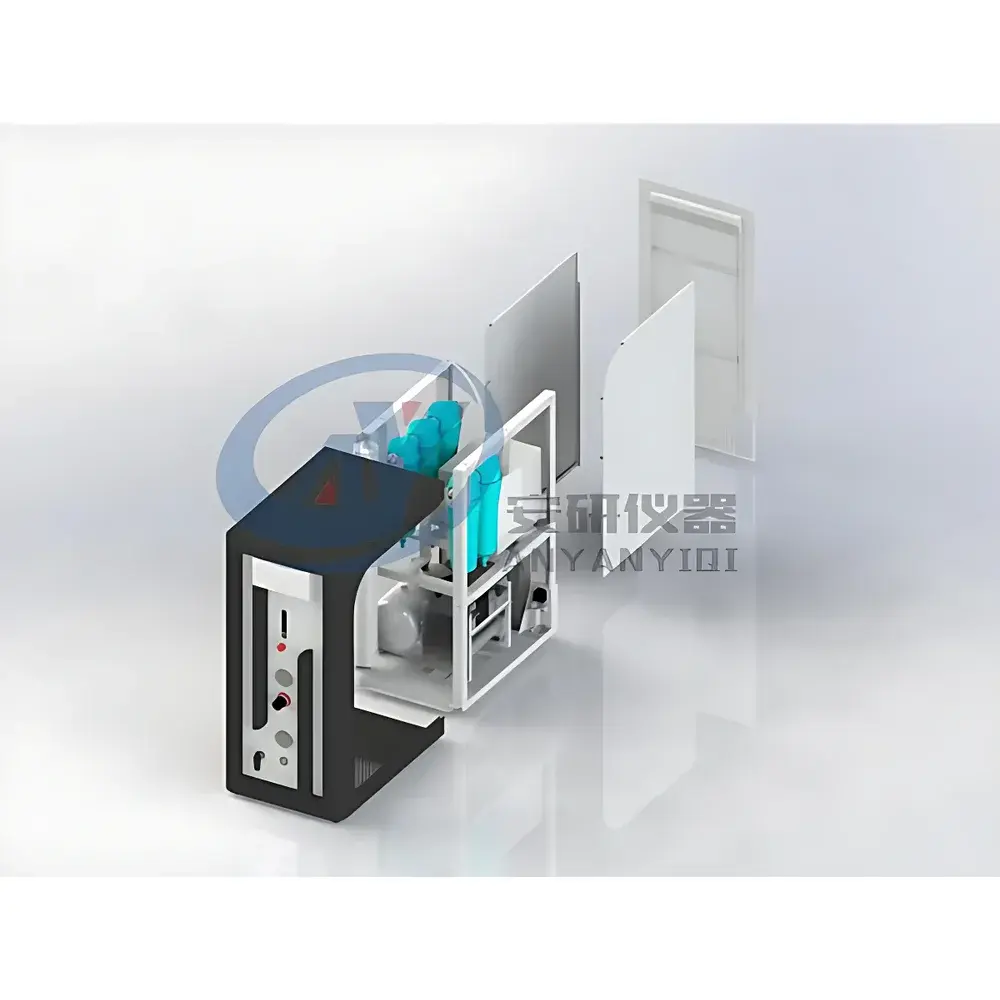
Anyan AYAN-60LG High-Flow Membrane Nitrogen Generator
| Brand | Anyan |
|---|---|
| Origin | Zhejiang, China |
| Manufacturer Type | Authorized Distributor |
| Country of Origin | China |
| Model | AYAN-60LG |
| Nitrogen Generation Principle | Polymeric Membrane Separation |
| Output Flow Rate | 60 L/min |
| Output Pressure Range | 0–0.6 MPa |
| Nitrogen Purity | 99.9% |
| Dew Point | ≤−40 °C (typical, as specified per ISO 8573-1 Class 3.2.2) |
| Integrated Air Compressor | Yes |
| Filtration Stages | Three-stage (particulate <0.01 µm, oil aerosol <0.003 mg/m³) |
| Power Consumption | 3800 W |
| Input Voltage | 380 V AC |
| Dimensions (W×D×H) | 400 × 300 × 1300 mm |
| Noise Level | ≤62 dB(A) |
| Start-up Time | ≤3 min |
| Display | Real-time N₂ purity indicator (electrochemical sensor-based) |
Overview
The Anyan AYAN-60LG High-Flow Membrane Nitrogen Generator is an engineered solution for laboratories and industrial applications requiring a continuous, on-demand supply of high-purity nitrogen gas at flow rates up to 60 L/min. It operates on the principle of polymeric membrane gas separation — a pressure-driven process in which compressed air is passed through asymmetric hollow-fiber membranes composed of selective polymer materials. Due to differences in solubility and diffusivity of oxygen, water vapor, carbon dioxide, and nitrogen in the membrane matrix, oxygen and other fast-permeating gases preferentially permeate through the fiber walls, while nitrogen — exhibiting lower permeability — remains concentrated in the retentate stream. This physical separation mechanism eliminates the need for adsorbent beds, switching valves, or cryogenic components, resulting in a compact, low-maintenance architecture with rapid start-up (<3 minutes) and stable output under variable demand conditions.
Key Features
- Imported Korean polymeric membrane modules engineered for long-term stability, delivering consistent 99.9% nitrogen purity without consumable replacement over typical service intervals exceeding 10,000 operating hours.
- Integrated three-stage filtration system: coalescing pre-filter (removes particulates >0.1 µm), activated carbon adsorber (eliminates hydrocarbons and oil vapors), and ultrafine particulate filter (<0.01 µm, ≤0.003 mg/m³ oil aerosol), compliant with ISO 8573-1:2010 Class 2.2.2 for compressed air quality.
- Onboard oil-lubricated air compressor with suspended anti-vibration mounting and acoustic enclosure, achieving noise emission ≤62 dB(A) at 1 m distance — suitable for shared laboratory environments.
- Dual independent pressure regulation: upstream (compression stage) and downstream (nitrogen delivery stage), enabling precise control across the full 0–0.6 MPa range without external regulators.
- Real-time electrochemical purity monitoring with digital display (0.1% resolution), traceable to NIST-traceable calibration protocols; output validated per ASTM D6667–22 for nitrogen purity verification.
- No moving parts in the separation module; no scheduled regeneration cycles or valve actuation — reducing mean time between failures (MTBF) and minimizing unscheduled downtime.
Sample Compatibility & Compliance
The AYAN-60LG is compatible with analytical instruments requiring dry, oil-free, particle-free nitrogen including GC carrier gas, LC-MS nebulizer and drying gas, FTIR purge, ICP-MS interface cooling, and inert atmosphere glove boxes. Its output meets ISO 8573-1 Class 3.2.2 for dew point (≤−40 °C), ensuring compatibility with moisture-sensitive applications. The unit complies with CE marking requirements (2014/30/EU EMC Directive and 2014/35/EU LVD Directive), RoHS 2011/65/EU, and conforms to electrical safety standards IEC 61010-1:2010 for laboratory equipment. Optional documentation packages support GLP/GMP audit readiness, including factory calibration certificates, IQ/OQ templates, and maintenance logs aligned with FDA 21 CFR Part 11 data integrity principles.
Software & Data Management
While the AYAN-60LG operates as a standalone hardware platform without embedded firmware-based control software, it supports analog 4–20 mA output for nitrogen purity and pressure signals, enabling integration into centralized lab infrastructure monitoring systems (e.g., LabVantage, Thermo Fisher SampleManager). Digital display logs include cumulative runtime, compressor cycles, and alarm history (e.g., filter saturation, pressure deviation, temperature excursion). All operational parameters are accessible via front-panel interface; no proprietary software installation or cloud connectivity is required — ensuring data sovereignty and network isolation for regulated environments.
Applications
- Gas chromatography (GC) carrier and detector make-up gas, meeting ASTM D3612 and USP requirements for baseline stability and retention time reproducibility.
- LC-MS and GC-MS systems requiring high-flow, low-dew-point nitrogen for electrospray ionization (ESI) and atmospheric pressure chemical ionization (APCI) sources.
- Automated sample preparation workstations (e.g., SPE, evaporation systems) where continuous inert blanketing prevents oxidation of volatile analytes.
- Materials testing labs performing thermal analysis (TGA/DSC) under controlled nitrogen purge atmospheres per ISO 11358 and ASTM E1131.
- Pharmaceutical stability chambers and packaging line inerting where 99.9% purity satisfies ICH Q1A(R2) environmental control specifications.
FAQ
What is the expected service life of the membrane module?
Under nominal operating conditions (ambient temperature 15–30 °C, inlet air dew point ≤−20 °C, oil-free feed air), the membrane core maintains rated performance for ≥10,000 hours before requiring recalibration or replacement.
Can the unit be integrated with existing lab gas distribution networks?
Yes — the outlet is fitted with a 1/4″ NPT male thread and supports connection to stainless steel or copper tubing; pressure-rated up to 1.0 MPa for seamless integration into centralized manifold systems.
Is routine maintenance required beyond filter element replacement?
Annual replacement of the three-stage filter cartridges is recommended; compressor oil change every 2,000 hours; no membrane servicing or system purging is necessary during normal operation.
Does the generator meet regulatory requirements for pharmaceutical QC labs?
It supports compliance with USP , EU GMP Annex 15, and ISO/IEC 17025:2017 when deployed with documented IQ/OQ, calibration records, and preventive maintenance logs.
How does ambient temperature affect nitrogen purity and flow stability?
Output purity remains stable within ±0.1% across 10–35 °C ambient; flow rate varies ≤±3% over this range due to compressor volumetric efficiency shifts — compensated by built-in pressure regulation.



