
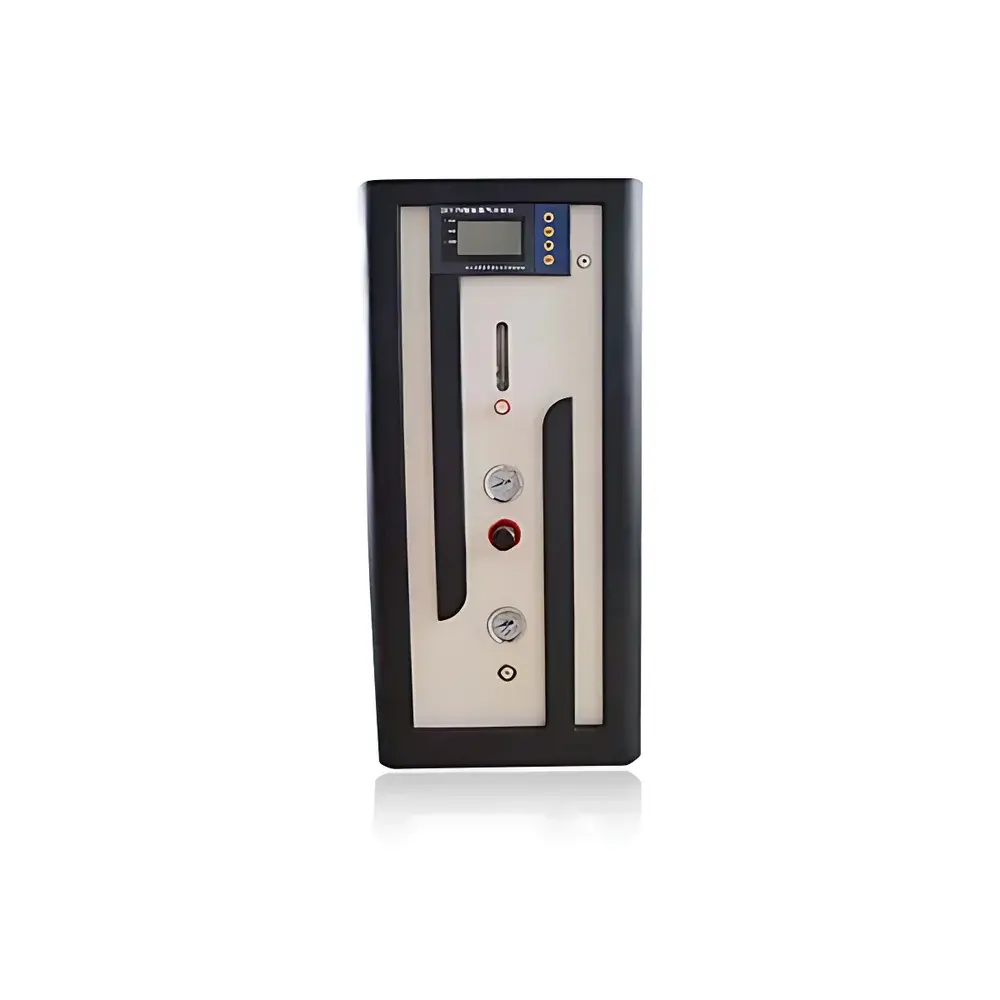
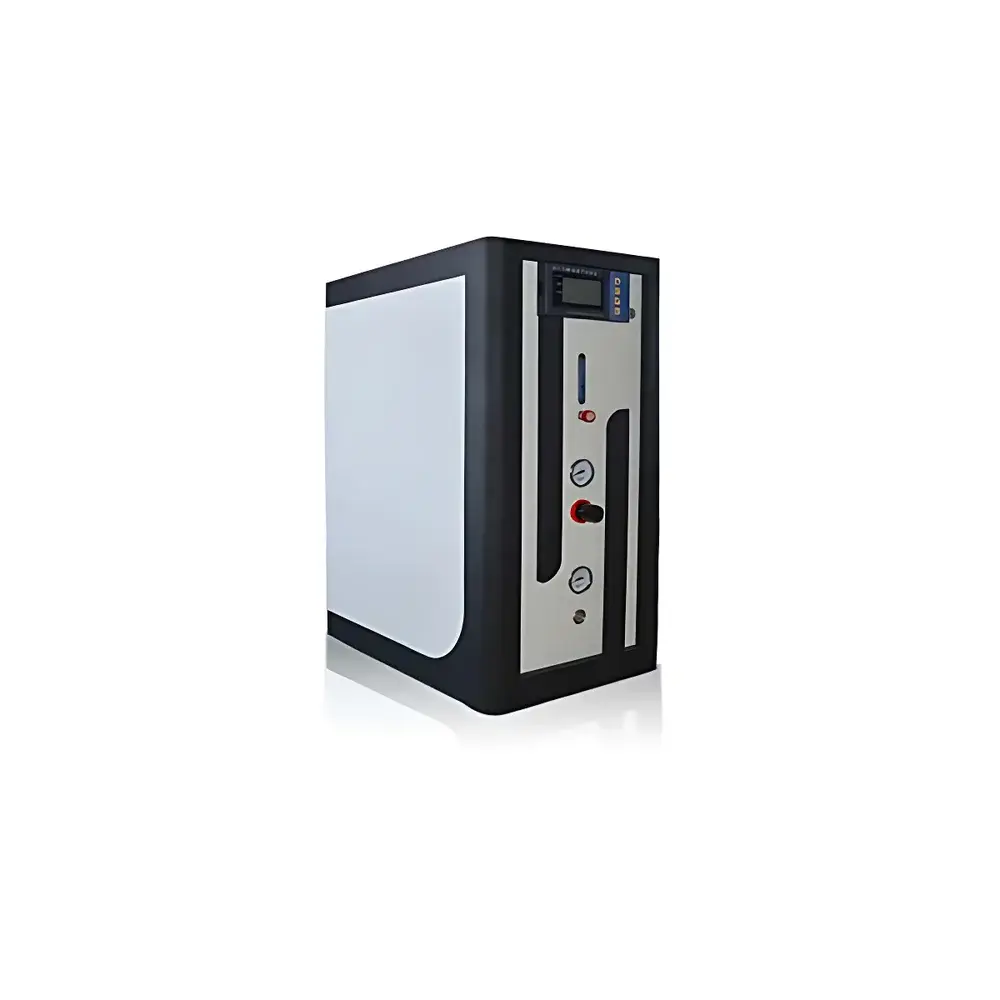
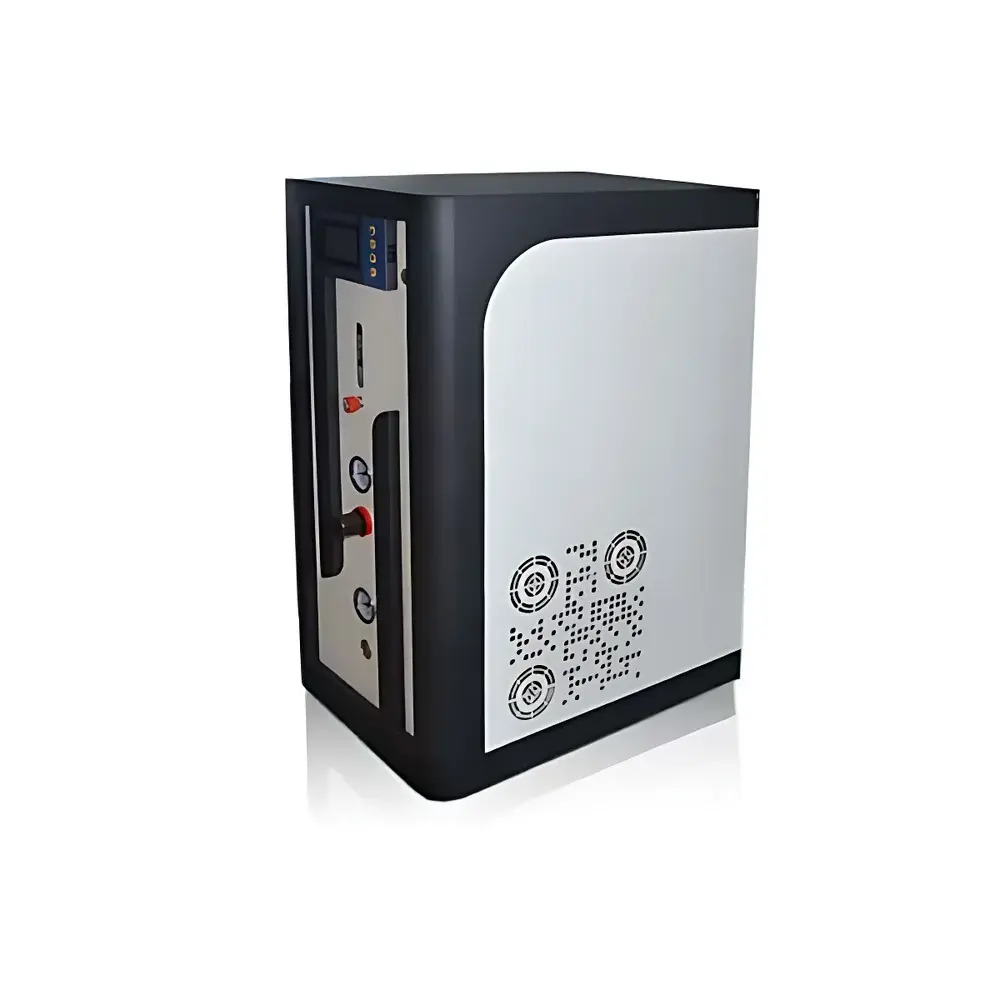
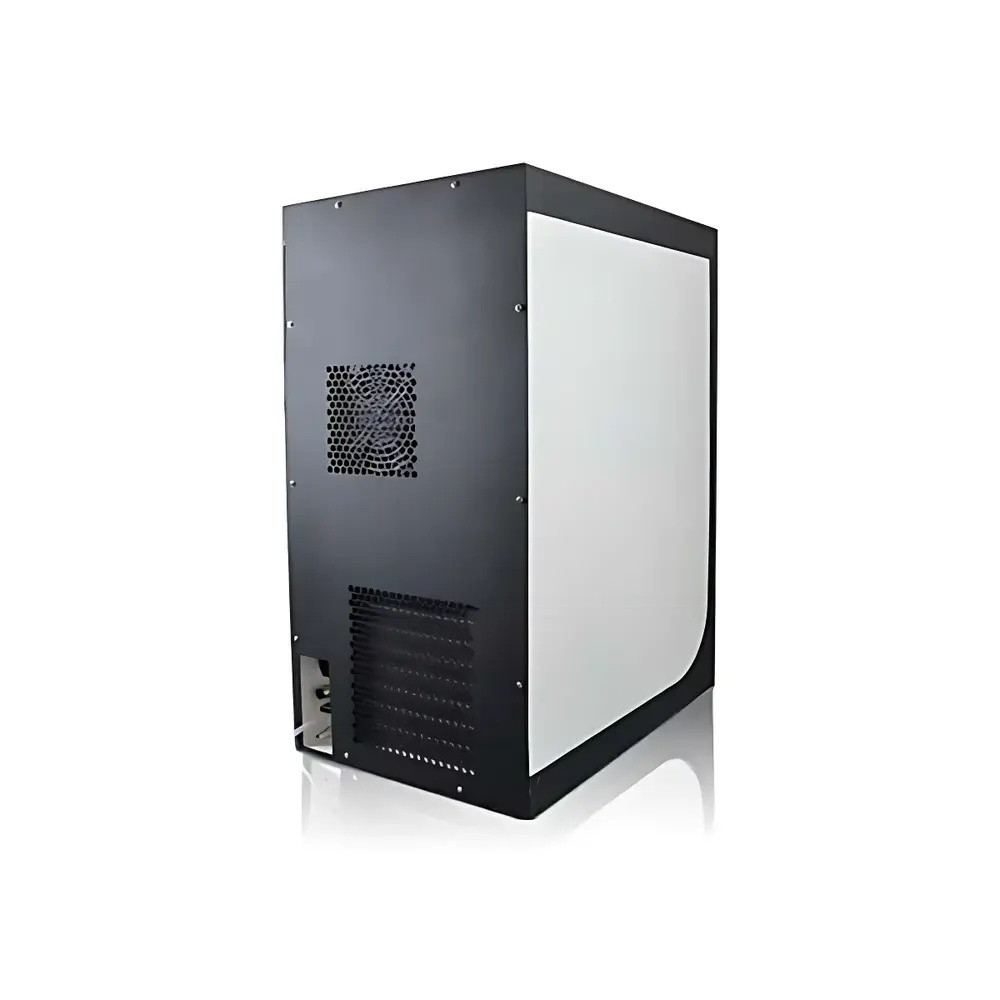
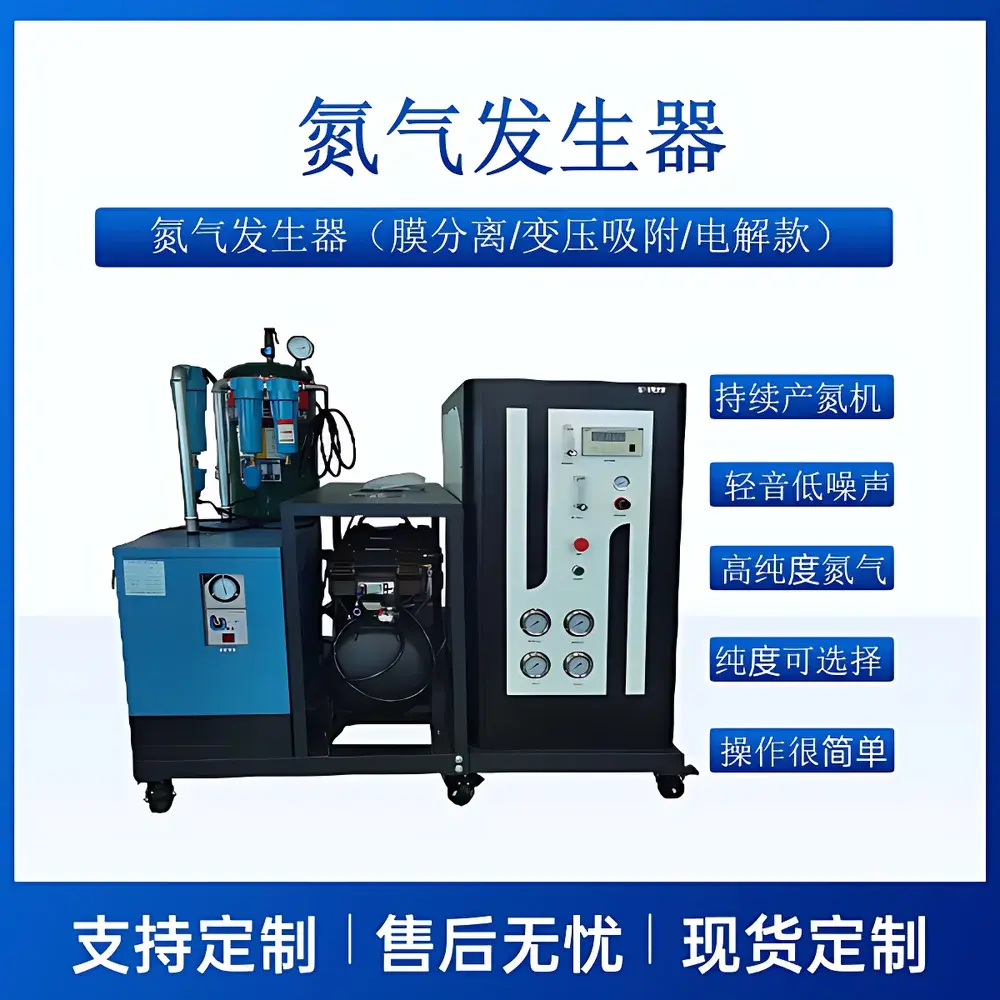
Anyan AYAN-60LG Laboratory Nitrogen Generator
| [Brand | Anyan (Hangzhou Anyan Instrument Co., Ltd.) |
|---|---|
| Origin | Zhejiang, China |
| Model | AYAN-60LG |
| Nitrogen Generation Principle | Membrane Separation Technology |
| Output Flow Rate | 60 L/min |
| Output Pressure | 0–0.6 MPa |
| Nitrogen Purity | 99%–99.9% |
| Dew Point | -40 °C |
| Filtration Stages | Three-Stage |
| Total Power Consumption | 3800 W |
| Input Voltage | 380 V AC |
| Dimensions (W×D×H) | 400 × 300 × 1300 mm] |
Overview
The Anyan AYAN-60LG Laboratory Nitrogen Generator is an engineered solution for on-demand, high-reliability nitrogen supply in analytical laboratories, GC carrier gas applications, inert atmosphere glove boxes, and sample preparation workflows. Unlike pressure swing adsorption (PSA) systems that rely on carbon molecular sieves—requiring periodic replacement, sensitivity to moisture/oil contamination, and complex valve sequencing—the AYAN-60LG employs hollow-fiber membrane separation technology. This principle leverages the differential permeation rates of oxygen, water vapor, and other trace gases through polymeric membranes under controlled pressure, allowing nitrogen molecules (larger kinetic diameter, ~0.364 nm) to pass through at a slower rate than oxygen (~0.346 nm) and CO₂, thereby enriching the retentate stream in nitrogen. The result is continuous, oil-free, dry nitrogen with stable purity between 99% and 99.9%, delivered at up to 60 L/min and adjustable pressure up to 0.6 MPa—without consumables, regeneration cycles, or scheduled sieve replacement.
Key Features
- Imported Korean hollow-fiber membrane module: Ensures consistent nitrogen purity, extended service life (>15,000 operating hours), and zero consumable replacement over standard operational lifetime.
- Integrated air compressor and suspended acoustic insulation system: Eliminates need for external compressed air supply; achieves noise level <62 dB(A) at 1 m distance—suitable for shared laboratory environments.
- Three-stage filtration architecture: Comprises coalescing pre-filter (removes >99.9% of particles ≥0.01 µm and oil aerosols ≥0.003 mg/m³), activated carbon adsorber (eliminates hydrocarbons and odors), and ultra-fine particulate final filter—protecting membrane integrity and ensuring long-term stability.
- Onboard dew point control: Integrated refrigerated air dryer delivers nitrogen with a guaranteed dew point of ≤−40 °C (ISO 8573-1 Class 3.2.2), minimizing moisture-related interference in sensitive instrumentation.
- Digital nitrogen purity monitoring: Real-time electrochemical sensor display with ±0.3% accuracy enables verification of gas quality prior to instrument connection—critical for GLP-compliant chromatography and elemental analysis.
- Dual-pressure regulation system: Independent adjustment of feed air pressure and nitrogen output pressure allows optimization for both high-flow (e.g., purge applications) and high-backpressure (e.g., GC carrier gas) configurations.
Sample Compatibility & Compliance
The AYAN-60LG is compatible with all major nitrogen-dependent laboratory instruments—including gas chromatographs (GC, GC-MS), liquid chromatography-mass spectrometry (LC-MS) nitrogen drying gas modules, FTIR purge systems, and inert-atmosphere sample storage enclosures. Its membrane-based architecture inherently avoids hydrocarbon carryover, making it suitable for trace-level VOC analysis per EPA Method TO-17 and ASTM D6348. While not certified to ISO 8573-1 Class 1 for particle/oil content without optional upgrades, its standard three-stage filtration meets ISO 8573-1 Class 3.2.2 for moisture and Class 4 for particles—sufficient for most QC/QA and research-grade applications. The unit operates within CE-compliant electrical safety parameters (EN 61000-6-3/6-4) and supports audit-ready documentation for internal GLP/GMP assessments.
Software & Data Management
The AYAN-60LG features a local digital interface with non-volatile memory logging of cumulative runtime, purity readings, and pressure events—exportable via USB for lab asset tracking. Though it lacks Ethernet or cloud connectivity, its analog output (4–20 mA) for nitrogen purity and digital I/O signals (dry contact alarm) allow integration into centralized building management systems (BMS) or LIMS via programmable logic controllers (PLCs). All operational data comply with FDA 21 CFR Part 11 requirements when recorded manually or via validated third-party acquisition software, supporting traceability in regulated environments.
Applications
- GC carrier and detector make-up gas (replacing high-pressure cylinders with consistent flow and purity)
- Nitrogen blanketing during solvent evaporation, lyophilization, and reactive synthesis
- Mobile phase sparging and degassing in HPLC and UPLC systems
- Inert purging of XRD sample chambers, SEM sample stages, and glovebox antechambers
- Calibration gas dilution systems requiring stable, low-moisture nitrogen background
- Environmental air monitoring labs requiring portable, cylinder-free nitrogen for field-deployable analyzers
FAQ
What is the expected service life of the membrane module?
Under continuous operation at rated flow and ambient temperature ≤35 °C, the Korean-sourced hollow-fiber membrane is rated for ≥15,000 hours with no performance degradation—equivalent to ~1.7 years of 24/7 use.
Does this generator require external compressed air?
No. It integrates a maintenance-free, oil-free scroll compressor; only electrical power (380 V AC) is required.
Can the nitrogen purity be adjusted in real time?
Purity is inversely related to flow rate and pressure setting. At 60 L/min, purity is 99%; reducing flow to 30 L/min increases purity to 99.9%. No manual recalibration is needed.
Is the unit compliant with ISO 8573-1 for compressed air quality?
Yes—its integrated filtration satisfies ISO 8573-1 Class 3.2.2 (dew point) and Class 4 (particles); optional coalescing + activated carbon + sterile filter kits extend compliance to Class 2.1.2.
How often does the filtration system require maintenance?
Pre-filter elements are recommended for replacement every 2,000 hours; activated carbon and final filters every 4,000 hours—schedule aligns with standard laboratory PM protocols.



