
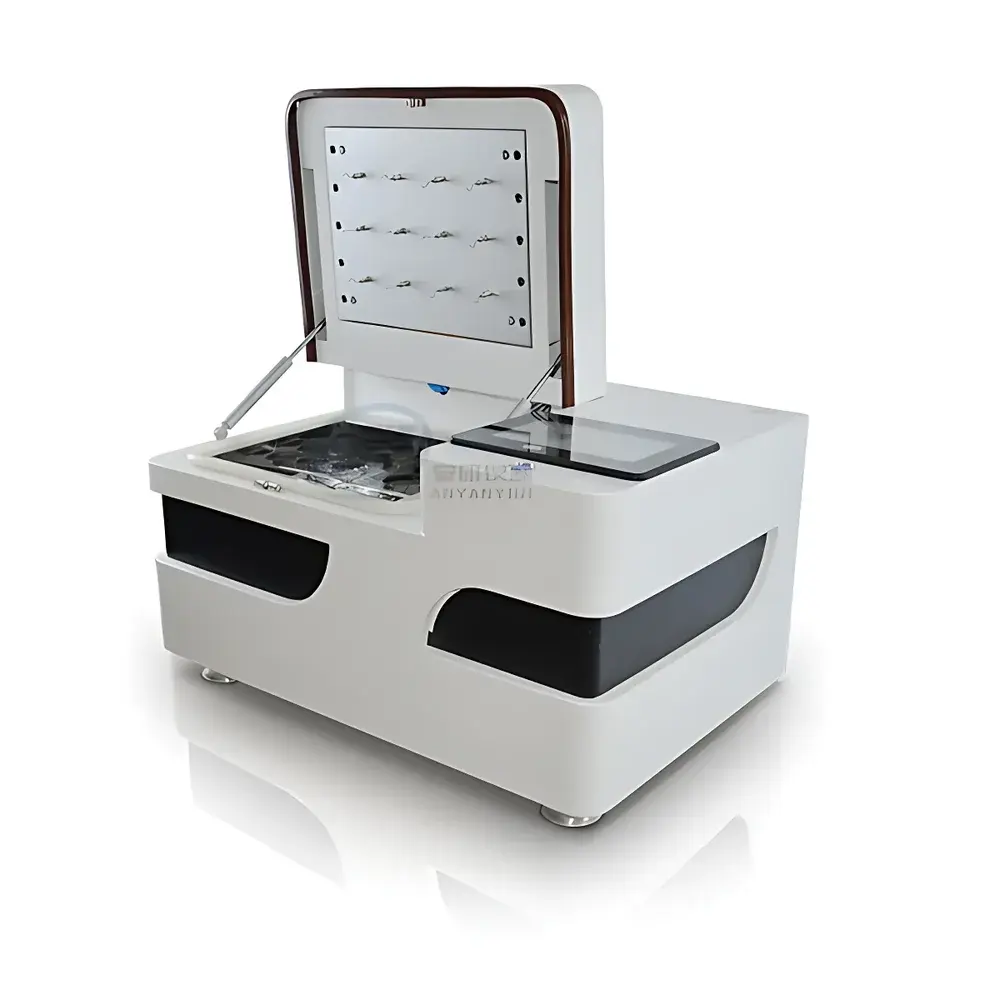
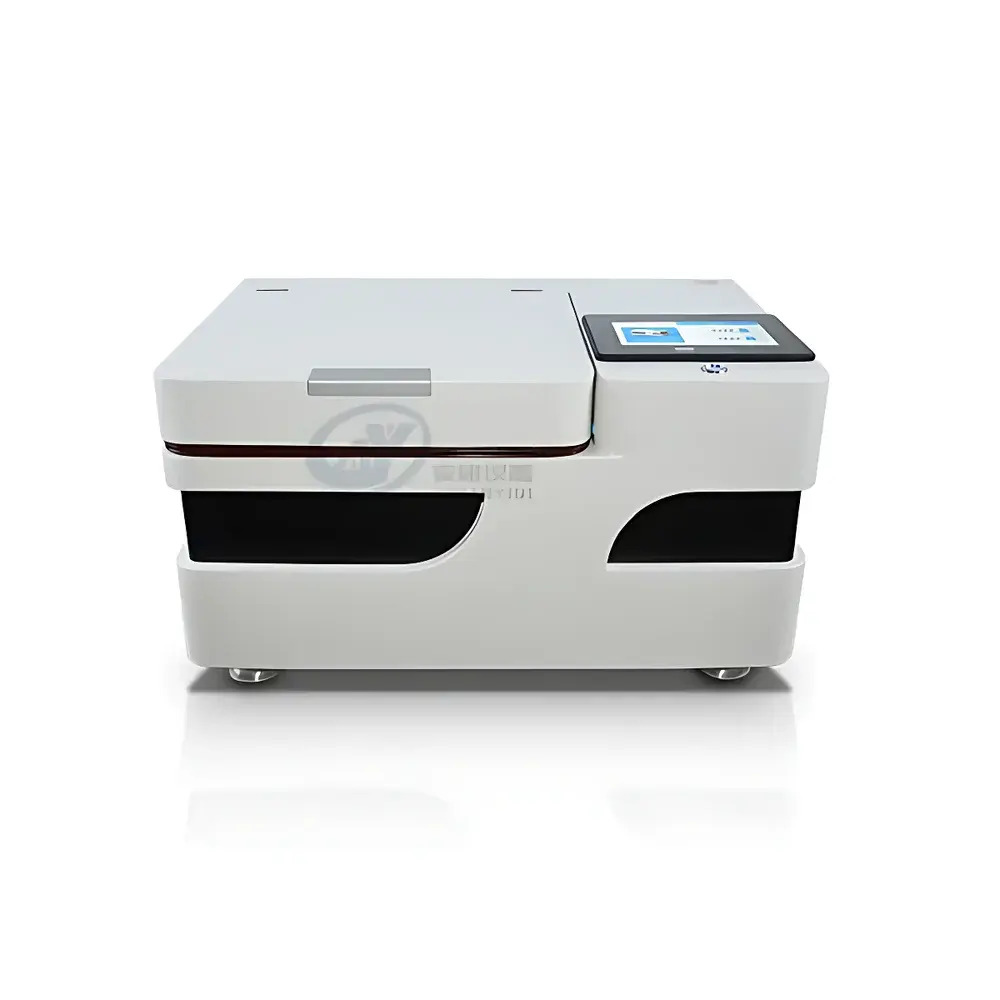
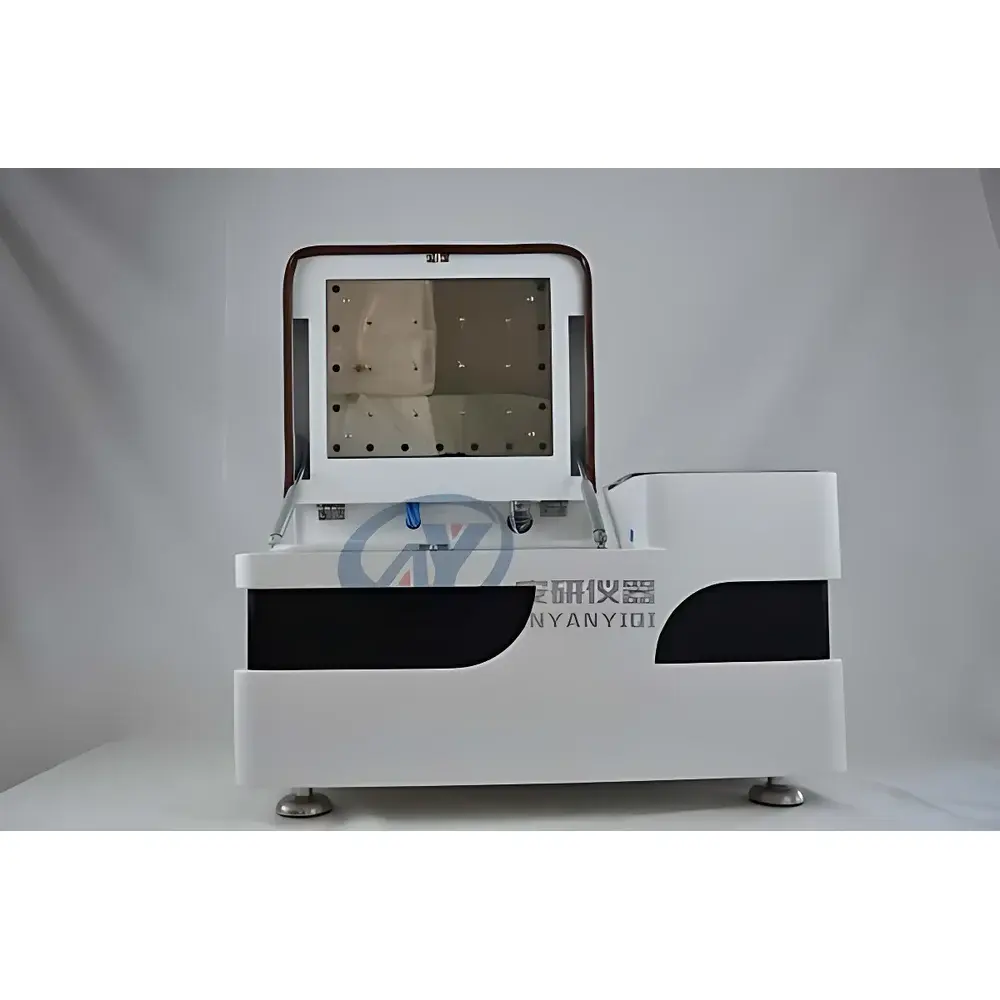
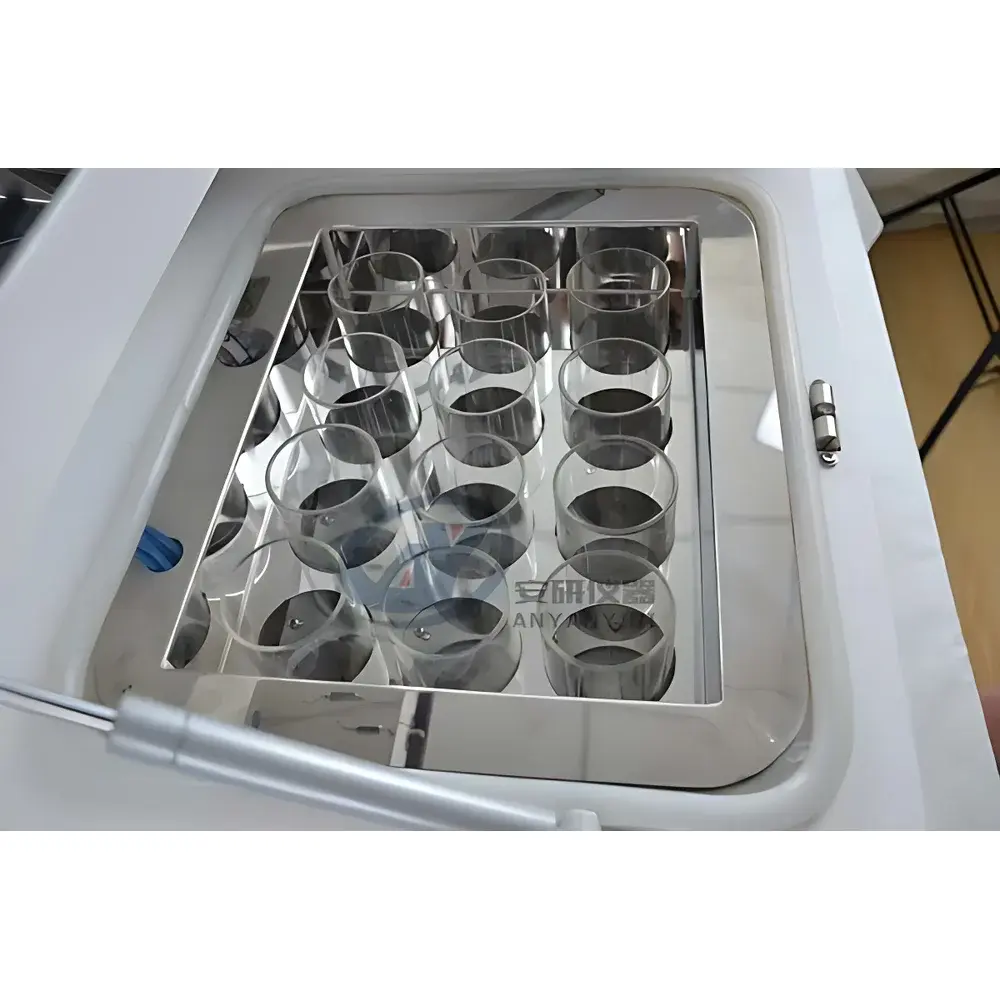
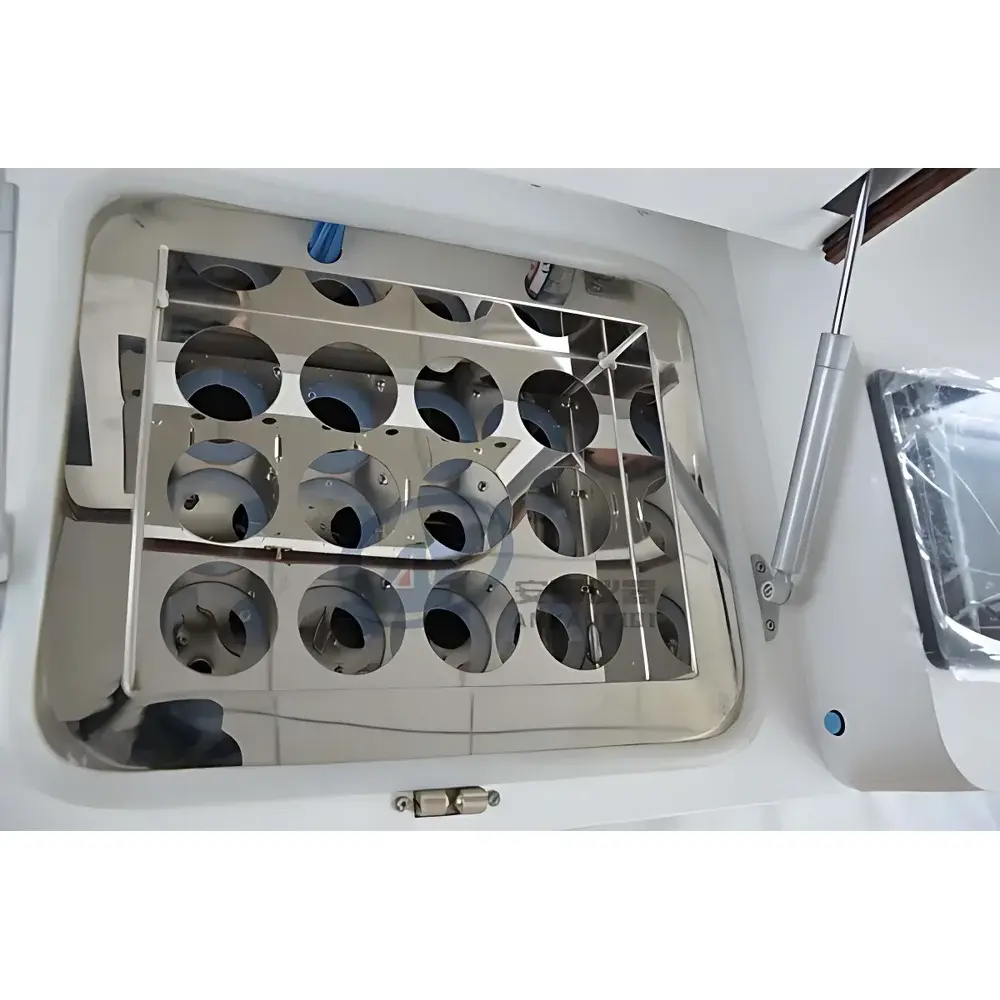
Anyan AYAN-AUTOM-12G 12-Position Automated Dry-Block Nitrogen Evaporator
| Brand | Anyan Instruments |
|---|---|
| Origin | Zhejiang, China |
| Manufacturer Type | Authorized Distributor |
| Country of Manufacture | China |
| Model | AYAN-AUTOM-12G |
| Heating Method | Dry-Block Heating |
| Temperature Range | Ambient to 100 °C |
| Temperature Uniformity | ±1 °C |
| Sample Capacity | 12 positions |
| Gas Flow Control Range | 0–999 mL/min |
| Heating Power | 300 W (typical for dry-block configuration) |
| Tube Compatibility | Accepts 10–29 mm OD round-bottom tubes (standard 12 × 16 mm or 12 × 18 mm formats) |
Overview
The Anyan AYAN-AUTOM-12G is a precision-engineered 12-position automated dry-block nitrogen evaporator designed for reproducible, low-risk solvent removal in analytical laboratories. It operates on the principle of inert gas-assisted thermal evaporation: nitrogen gas—delivered via individually adjustable stainless-steel capillary needles—is directed tangentially across the surface of heated samples, accelerating solvent volatilization while minimizing analyte degradation and oxidation. Unlike rotary evaporation, which relies on vacuum and mechanical rotation and poses risks of bumping or foaming with thermally labile or viscous matrices, the AYAN-AUTOM-12G provides gentle, parallel concentration under ambient pressure. Its dry-block heating architecture eliminates oil bath maintenance, cross-contamination, and temperature overshoot—making it especially suitable for regulated environments where traceability, cleanliness, and method robustness are critical.
Key Features
- Automated vertical lift mechanism with programmable height adjustment (0–150 mm range), ensuring consistent needle-to-surface distance across all 12 positions for uniform evaporation kinetics.
- Dry-block aluminum heating module with PID-controlled temperature regulation (ambient to 100 °C, ±1 °C stability), offering rapid thermal equilibration and minimal inter-well temperature variance (<0.5 °C at 80 °C).
- Independent digital mass flow control per channel (0–999 mL/min), enabling method-specific optimization for diverse solvents—from low-boiling pentane (bp 36 °C) to higher-boiling ethyl acetate (bp 77 °C) or dichloromethane (bp 40 °C).
- Corrosion-resistant 316 stainless-steel gas manifolds and precision-machined needle guides compatible with common GC/MS, HPLC, and SPE sample vials (12 × 16 mm, 12 × 18 mm, or 16 × 100 mm formats).
- Integrated safety interlocks: overtemperature cutoff, gas-flow monitoring alarm, and automatic shutdown upon lid opening or abnormal pressure surge.
- Front-panel touchscreen interface with real-time display of setpoint, actual temperature, individual gas flows, and elapsed run time—no PC dependency required for routine operation.
Sample Compatibility & Compliance
The AYAN-AUTOM-12G supports a broad range of biological, environmental, and pharmaceutical matrices, including but not limited to: aqueous extracts from plant tissues (e.g., pesticide residue analysis per EN 15662); organic solvent eluates from solid-phase extraction (SPE) cartridges (C18, Florisil, silica); plasma/serum derivatized samples for LC-MS/MS quantitation; and hydrolyzed food extracts prior to GC-ECD detection. It complies with core laboratory quality requirements: its temperature calibration is traceable to NIST-certified reference standards; gas flow accuracy meets ISO 8573-1 Class 2 purity specifications (oil-free, particle-free, dew point ≤ −40 °C); and all wetted surfaces are passivated per ASTM A967 for corrosion resistance. While not inherently 21 CFR Part 11 compliant, audit trails and electronic records can be generated when integrated with validated LIMS or ELN platforms supporting ALCOA+ principles.
Software & Data Management
The device operates as a standalone instrument but supports optional RS-232 or USB-to-serial communication for integration into laboratory automation workflows. When connected to compliant software (e.g., LabWare LIMS or Thermo Fisher SampleManager), users may log method parameters—including temperature ramp profiles, gas flow sequences, and start/stop timestamps—with user authentication and electronic signature capability. All internal logs (including error codes, calibration history, and daily usage metrics) are stored in non-volatile memory and exportable as CSV files for GLP/GMP documentation. Firmware updates are performed via secure USB drive with SHA-256 checksum verification to ensure integrity.
Applications
- Residue Analysis: Final concentration step post-SPE cleanup in multi-residue pesticide methods (AOAC 2007.01, QuEChERS EN 15662) for fruits, vegetables, and cereals.
- Environmental Monitoring: Pre-concentration of PAHs, PCBs, and organochlorine pesticides from water extracts prior to GC-MS analysis (EPA Method 8270D).
- Pharmaceutical QC: Solvent exchange and volume reduction of API-containing fractions during forced degradation studies or stability-indicating assay development.
- Clinical Toxicology: High-throughput preparation of urine or plasma samples for benzodiazepine or opioid screening by LC-MS/MS.
- Food Safety: Concentration of mycotoxin extracts (e.g., aflatoxins B1/B2/G1/G2) from immunoaffinity column eluates before HPLC-FLD quantification.
FAQ
What types of solvents are compatible with the AYAN-AUTOM-12G?
It is suitable for most volatile organic solvents (e.g., acetonitrile, methanol, ethyl acetate, hexane) and aqueous solutions. Avoid use with solvents having flash points below 100 °C (e.g., diethyl ether, petroleum ether) unless operated inside an explosion-proof fume hood with certified gas monitoring.
Can the instrument be used for quantitative recovery validation?
Yes—when paired with gravimetric or internal standard-based recovery experiments, the system demonstrates >95% average analyte recovery for compounds with log P 0.1 Pa at 25 °C, provided gas flow and temperature are optimized per matrix.
Is routine maintenance required beyond cleaning the needle array?
Yes: quarterly verification of temperature uniformity using a calibrated PT100 probe array and annual recalibration of mass flow sensors are recommended to maintain ISO/IEC 17025 conformance.
Does the unit support method transfer between labs?
Method parameters (temperature, flow rate, duration, tube geometry) are fully documented and portable; however, inter-laboratory reproducibility requires harmonization of nitrogen source pressure, ambient humidity, and fume hood face velocity per ISO 5801 guidelines.
How does the dry-block design compare to water-bath nitrogen evaporators?
Dry-block systems eliminate microbial growth, bath contamination, and thermal lag—delivering faster ramp times, tighter temperature control, and no risk of water ingress into samples. They are preferred for low-volume, high-value applications where sterility and consistency outweigh the need for ultra-gentle heating.



