
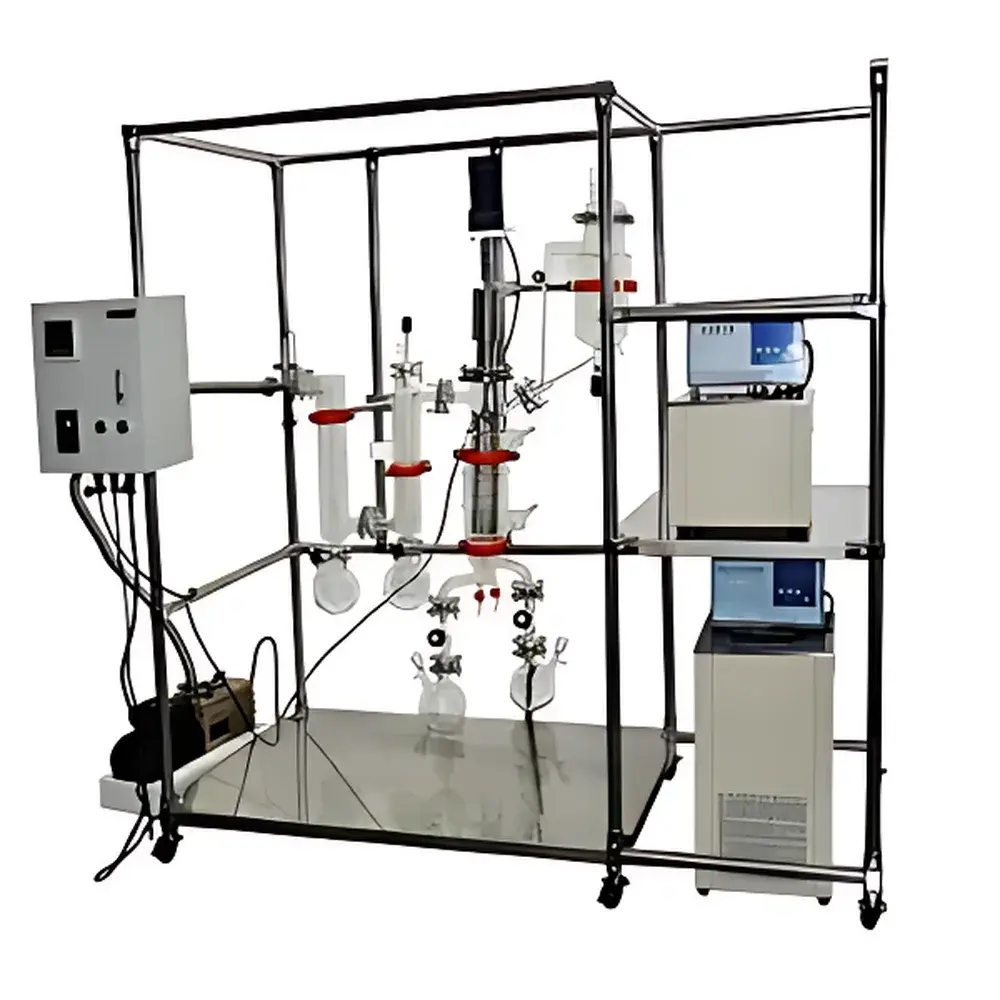
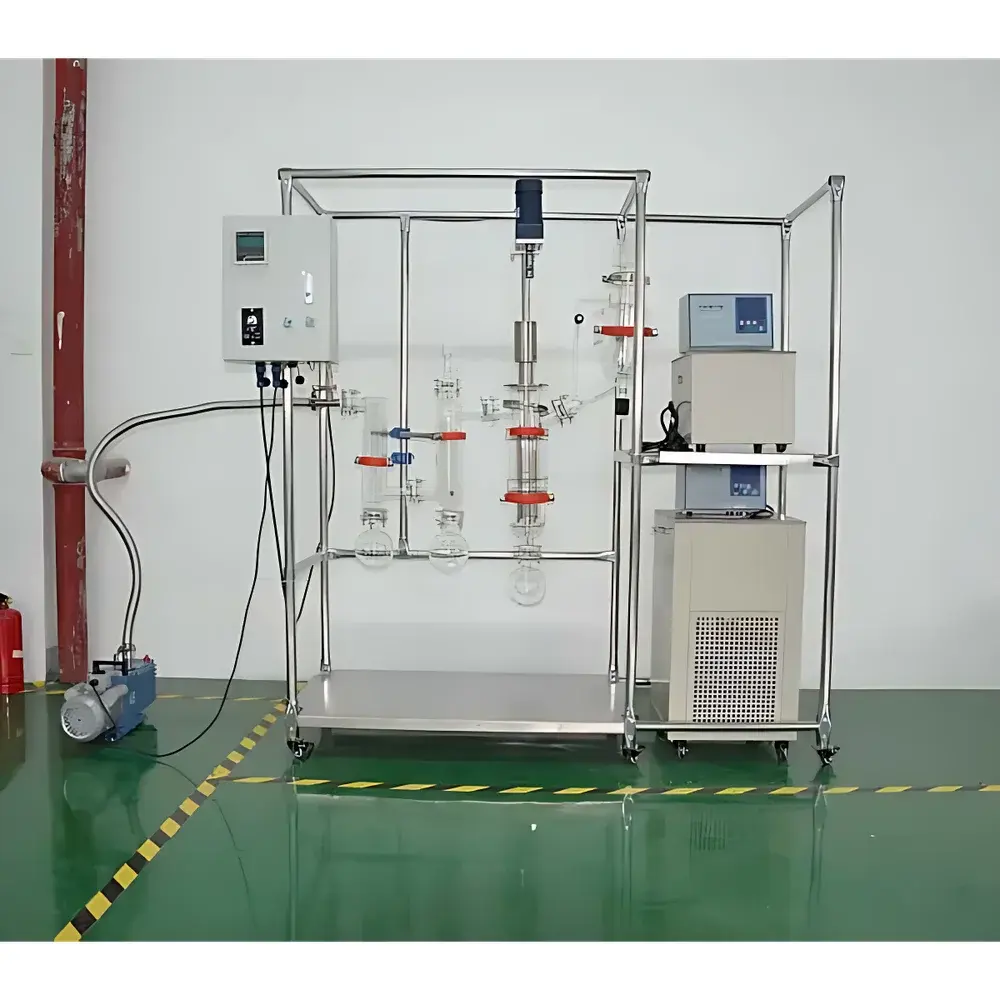
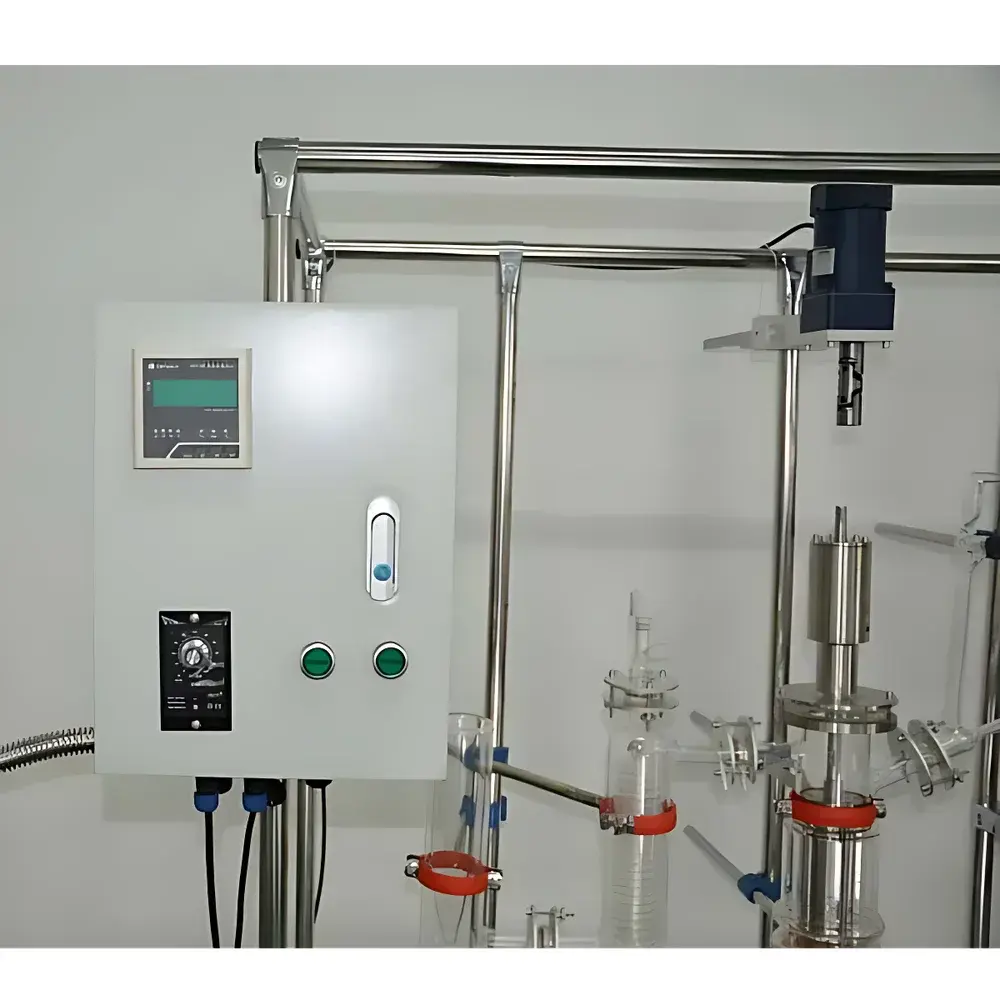
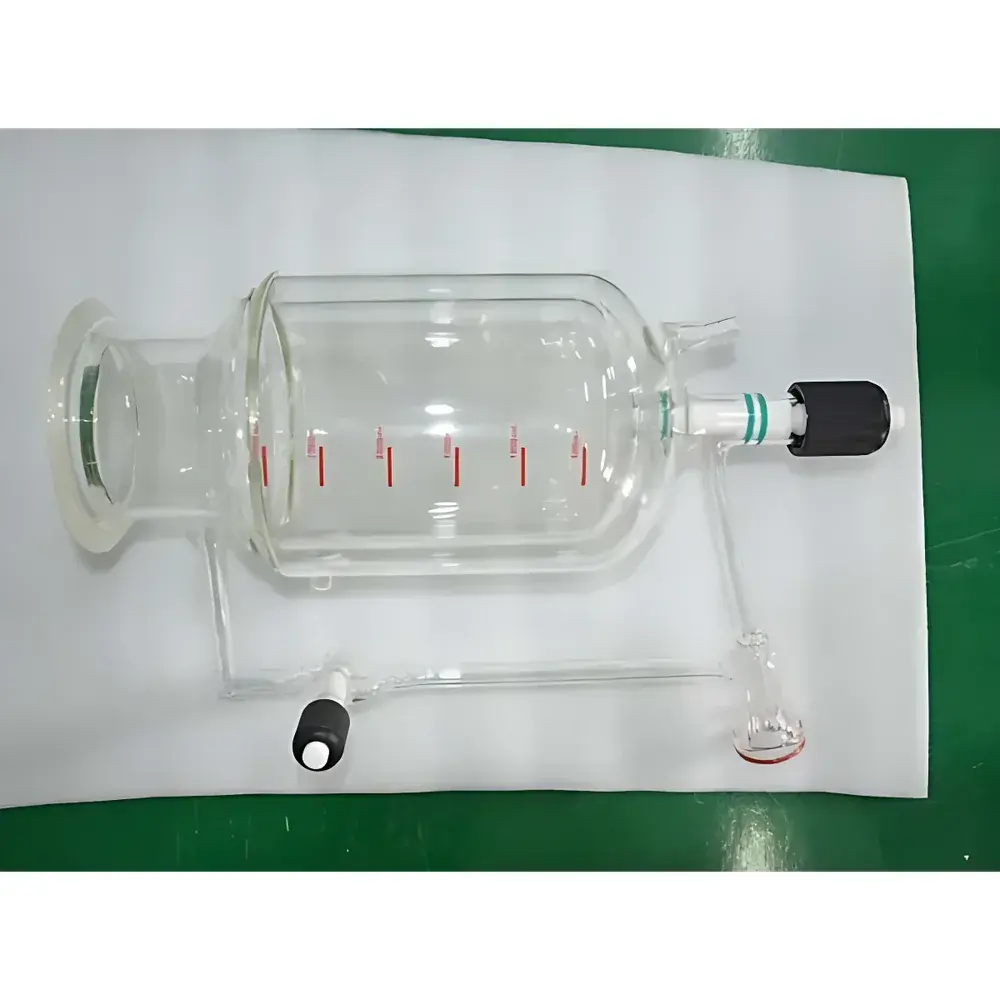
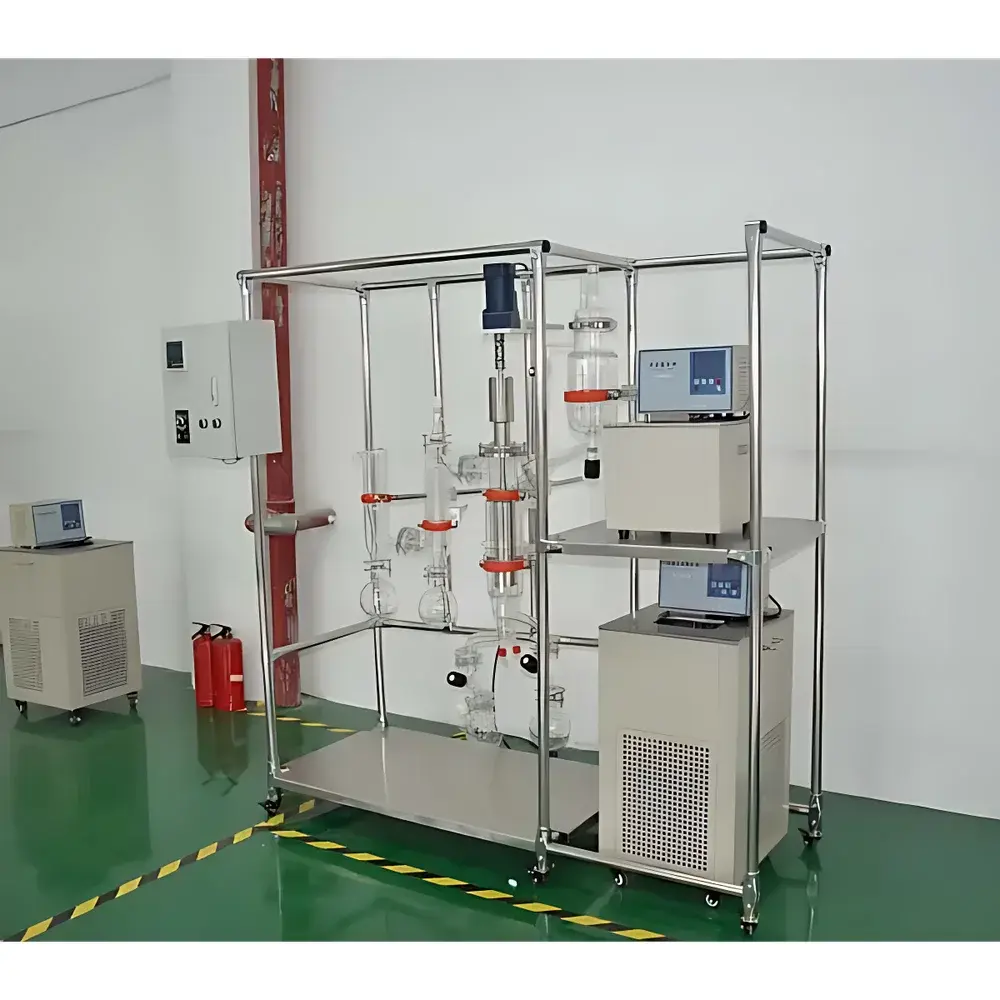
Anyan AYAN-B100 Vacuum Wiped-Film Evaporator
| Brand | Anyan Instruments |
|---|---|
| Origin | Zhejiang, China |
| Manufacturer Type | Authorized Distributor |
| Model | AYAN-B100 |
| Feed Capacity | 2 L |
| Effective Evaporation Area | 0.16 m² |
| Evaporator Internal Diameter | 100 mm |
| Condensation Area | 0.25 m² |
| Collection Vessels | 2 units |
| Operating Vacuum | ≤5 mmHg (≤667 Pa) |
| Film Thickness | <0.5 mm |
| Heating Temperature Range | Ambient to 300 °C |
| Cooling Temperature | −20 °C |
| Motor Power | 240 W |
| Rotational Speed | 300 rpm |
| 刮板材质 | PTFE + SS316L |
| Sealing | Silicone gaskets (optional PTFE) |
Overview
The Anyan AYAN-B100 Vacuum Wiped-Film Evaporator is a precision-engineered molecular distillation system designed for gentle, high-efficiency separation of thermally labile, high-boiling-point, and oxidation-sensitive compounds under controlled high-vacuum conditions (≤5 mmHg). Operating on the principle of short-path molecular distillation, the unit utilizes a rotating wiper mechanism to generate a thin, turbulent liquid film (<0.5 mm) on a heated cylindrical evaporation surface. This configuration minimizes residence time—typically under 30 seconds—and enables phase separation at significantly reduced temperatures relative to conventional boiling points. The evaporator’s geometry ensures minimal thermal degradation while maximizing mass transfer efficiency, making it particularly suitable for applications in pharmaceutical purification, natural product isolation (e.g., vitamins, polyphenols, omega-3 fatty acids), fine chemical synthesis, and solvent recovery from extractive processes.
Key Features
- Stainless steel 316L construction with PTFE-coated wiper blades for superior corrosion resistance and compatibility with aggressive solvents and acidic/basic feedstocks.
- Dual-layer jacketed evaporation cylinder (100 mm internal diameter) with uniform thermal distribution and precise temperature control (ambient to 300 °C).
- High-vacuum capability supported by integrated vacuum pump interface and leak-tight sealing via silicone gaskets (upgradeable to perfluoroelastomer or PTFE for halogenated or highly corrosive media).
- Optimized condenser design with 0.25 m² active cooling surface, maintained at −20 °C via external chiller coupling, ensuring rapid vapor quenching and high condensate recovery yield.
- Modular feed system with calibrated peristaltic or diaphragm metering pump (optional), enabling reproducible flow rates from 0–5 L/h under vacuum-assisted aspiration.
- Integrated dual-collection configuration with two independently valved receivers, facilitating sequential fraction collection without process interruption.
- Robust drive assembly featuring a 240 W gearmotor delivering stable 300 rpm rotation, engineered for continuous operation and low mechanical vibration.
- Comprehensive thermal management architecture including insulated heating zones, condenser coolant routing, and vacuum-jacketed transfer lines to prevent recondensation or thermal loss.
Sample Compatibility & Compliance
The AYAN-B100 accommodates viscous liquids, suspensions, and heat-sensitive solutions with viscosities up to 50,000 cP. It is routinely employed for de-solventizing post-extraction crude oils, purifying cannabinoids and terpenes, concentrating enzyme solutions, and recovering ethyl acetate or dichloromethane from reaction mixtures. The system complies with general laboratory safety standards (IEC 61010-1) and supports GLP-compliant operation when paired with validated data logging systems. While not pre-certified to ISO 21789 or ASTM D5236, its mechanical design and vacuum integrity meet the functional requirements for molecular distillation as defined in USP for residual solvent analysis and FDA-recommended practices for thermal processing of pharmaceutical intermediates. All wetted surfaces are electropolished SS316L or chemically inert PTFE, eliminating leachables and supporting cleaning validation protocols.
Software & Data Management
The AYAN-B100 operates as a standalone benchtop instrument with analog/manual controls for temperature, rotation speed, and vacuum regulation. Optional digital upgrades include PID-controlled heating modules with RS485/Modbus RTU output, enabling integration into centralized LabVantage or DeltaV environments. When configured with third-party data acquisition hardware (e.g., Omega iSeries loggers), the system supports full audit trails—including timestamped setpoints, actual temperatures, vacuum readings, and motor status—for 21 CFR Part 11 compliance. Raw process parameters can be exported in CSV format for trend analysis, batch reconciliation, and regulatory submission packages.
Applications
- Purification of thermolabile actives: vitamin E acetate, coenzyme Q10, astaxanthin, and retinol derivatives.
- De-solventization of botanical extracts following supercritical CO₂ or ethanol extraction.
- Concentration and fractionation of polymer precursors and monomers prior to catalytic polymerization.
- Recovery and reuse of high-purity solvents (e.g., THF, toluene, chloroform) from spent reaction streams.
- Isolation of fragrance compounds and essential oil fractions without thermal artifact formation.
- Preparative-scale removal of residual catalysts or heavy metals from fine chemical intermediates.
FAQ
What vacuum level is required for optimal performance?
The AYAN-B100 achieves highest separation efficiency at ≤5 mmHg (≤667 Pa); a two-stage vacuum pump with ≥4 L/s pumping speed is recommended to maintain this range during continuous feed operation.
Can the unit handle solid-containing feeds?
Yes—feed suspensions with ≤5 wt% non-volatile solids are compatible provided the wiper geometry is adjusted and periodic inspection of blade wear is performed.
Is the system suitable for GMP manufacturing environments?
As supplied, it meets laboratory-scale GMP readiness criteria; full qualification (IQ/OQ/PQ) requires user-defined protocols, calibration against NIST-traceable standards, and documentation of maintenance history.
What materials contact the sample path?
All primary contact surfaces are electropolished SS316L or virgin PTFE; no elastomers or adhesives are exposed to the process stream.
How is temperature uniformity verified across the evaporation surface?
Uniformity is ensured via circumferential heating jacket design and factory-calibrated PT100 sensors embedded at three axial positions; users may perform verification using calibrated infrared thermography or contact probes per ASTM E2847.



