
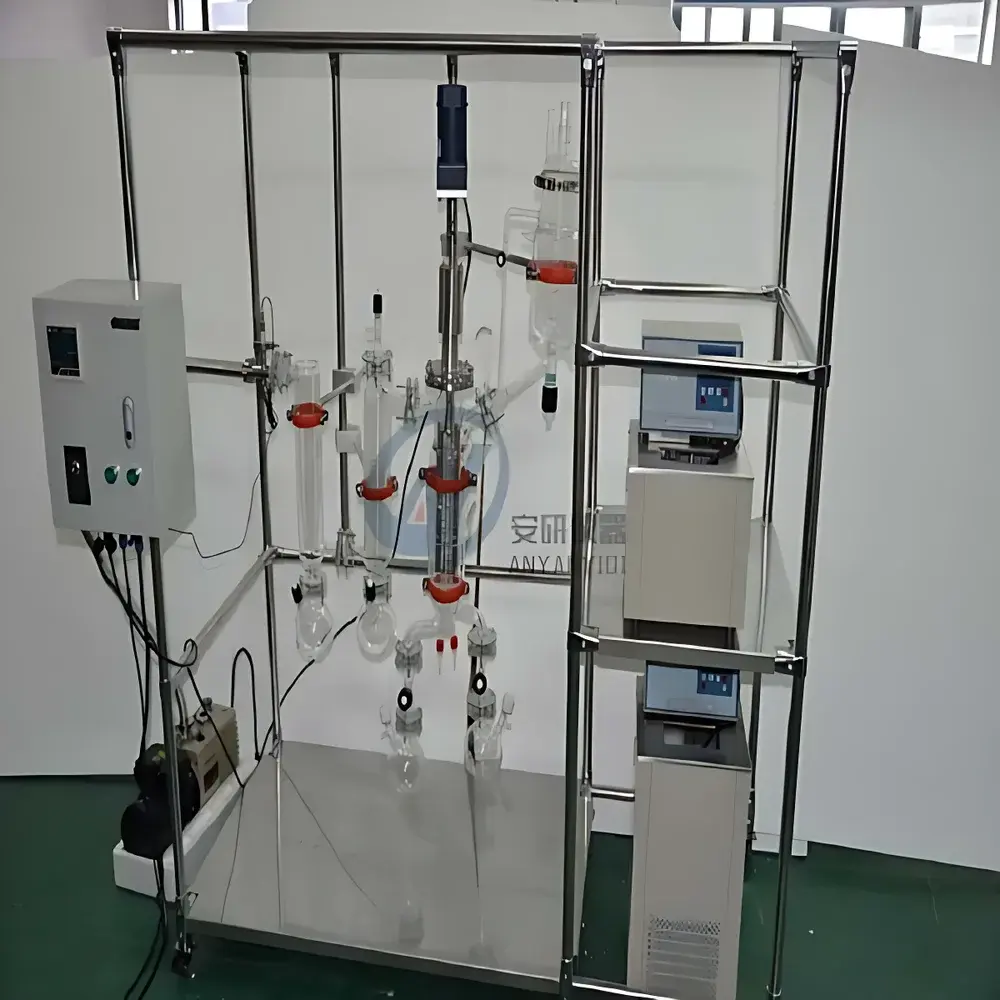
ANYAN AYAN-B80 Electrically Heated Wiped-Film Molecular Distillation System
| [Brand | ANYAN (Hangzhou Anyan Instrument Co., Ltd.) |
|---|---|
| Origin | Zhejiang, China |
| Model | AYAN-B80 |
| Effective Evaporation Area | 0.1 m² |
| Evaporator Internal Diameter | 80 mm |
| Condenser Area | 0.15 m² |
| Feed Rate | 0.5–4.0 L/h |
| Vacuum Capability | < 0.1 Pa |
| Heating Temperature Range | Ambient to 200 °C |
| Wiper Material | PTFE + SS316L |
| Sealing | Fluoroelastomer (FKM) gaskets, optional PTFE |
| Motor Power | 120 W |
| Max. Wiper Speed | ≤ 450 rpm |
| Light Fraction Collection Bottle | 1 L |
| Heavy Fraction Collection Bottle | 1 L |
| Integrated Cold Trap | Yes |
| External Condensation Unit | Yes |
| Cooling System | Integrated] |
Overview
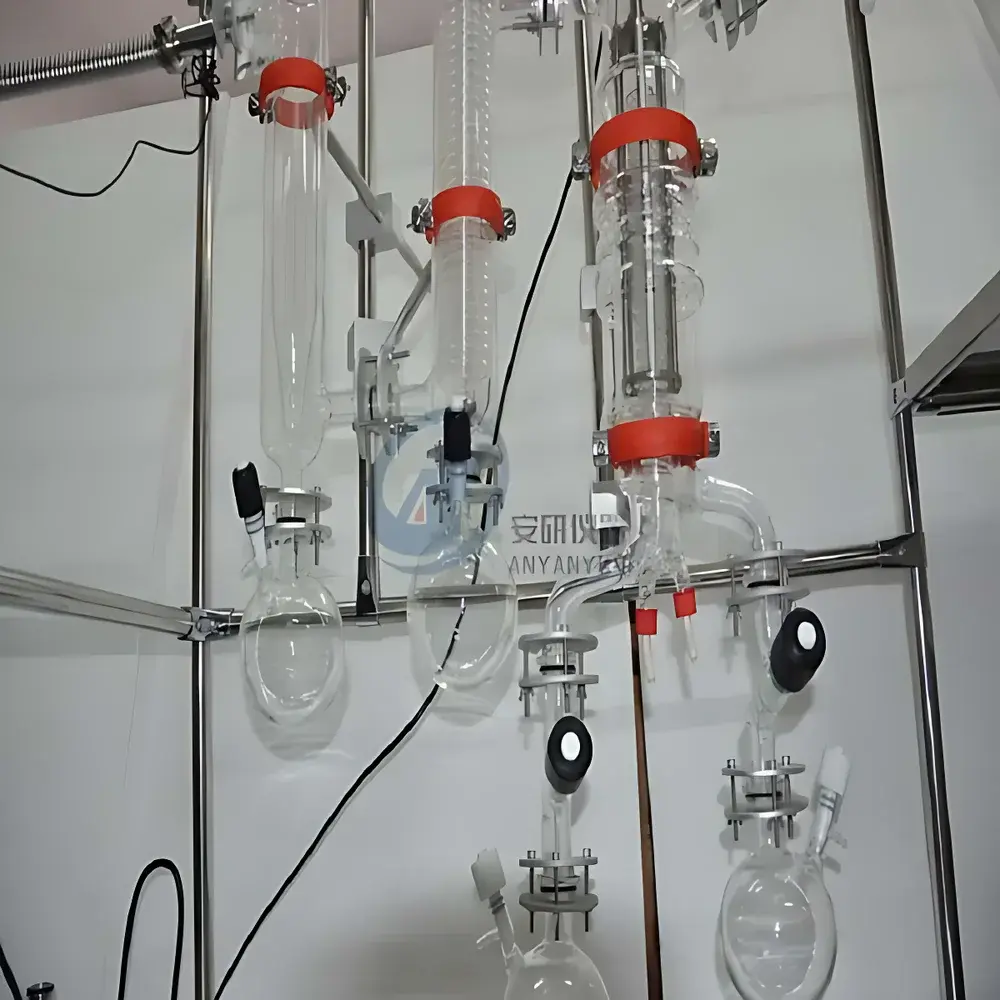
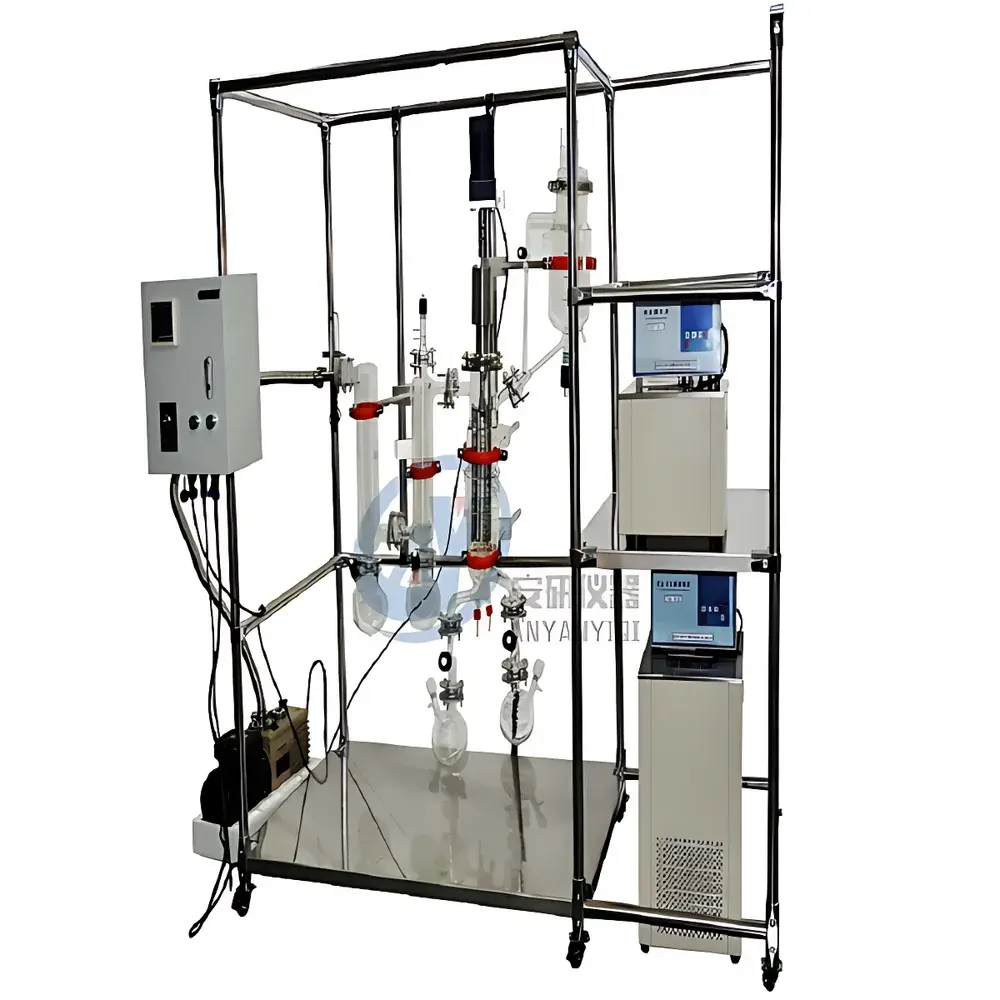
The ANYAN AYAN-B80 Electrically Heated Wiped-Film Molecular Distillation System is a precision-engineered laboratory-scale molecular distillation instrument designed for high-efficiency separation of thermally labile, high-boiling, and oxidation-sensitive compounds under ultra-high vacuum conditions. Operating on the principle of short-path molecular distillation—where evaporation occurs from a thin, continuously renewed liquid film under pressures below 0.1 Pa—the system enables separation based on differences in mean free path rather than boiling point alone. This physical separation mechanism eliminates bulk boiling, avoids thermal degradation, and ensures exceptional fidelity in isolating volatile actives (e.g., cannabinoids, vitamins, phospholipids, essential oils) from complex matrices such as botanical extracts, fish oil concentrates, or synthetic reaction mixtures. Its compact footprint and modular architecture make it suitable for R&D laboratories conducting feasibility studies, process optimization, and small-batch purification under GLP-aligned workflows.
Key Features
- Electrically heated vertical cylindrical evaporator with precise PID-controlled temperature regulation (ambient to 200 °C), ensuring uniform thermal distribution across the 80 mm internal diameter surface.
- PTFE- and SS316L-coated rotor assembly generating a sub-0.5 mm wiped film—maximizing heat transfer coefficient and minimizing residence time (typically < 30 seconds).
- Integrated cold trap and external condensation unit maintain stable base pressure < 0.1 Pa, verified via calibrated Pirani + capacitance manometer vacuum monitoring.
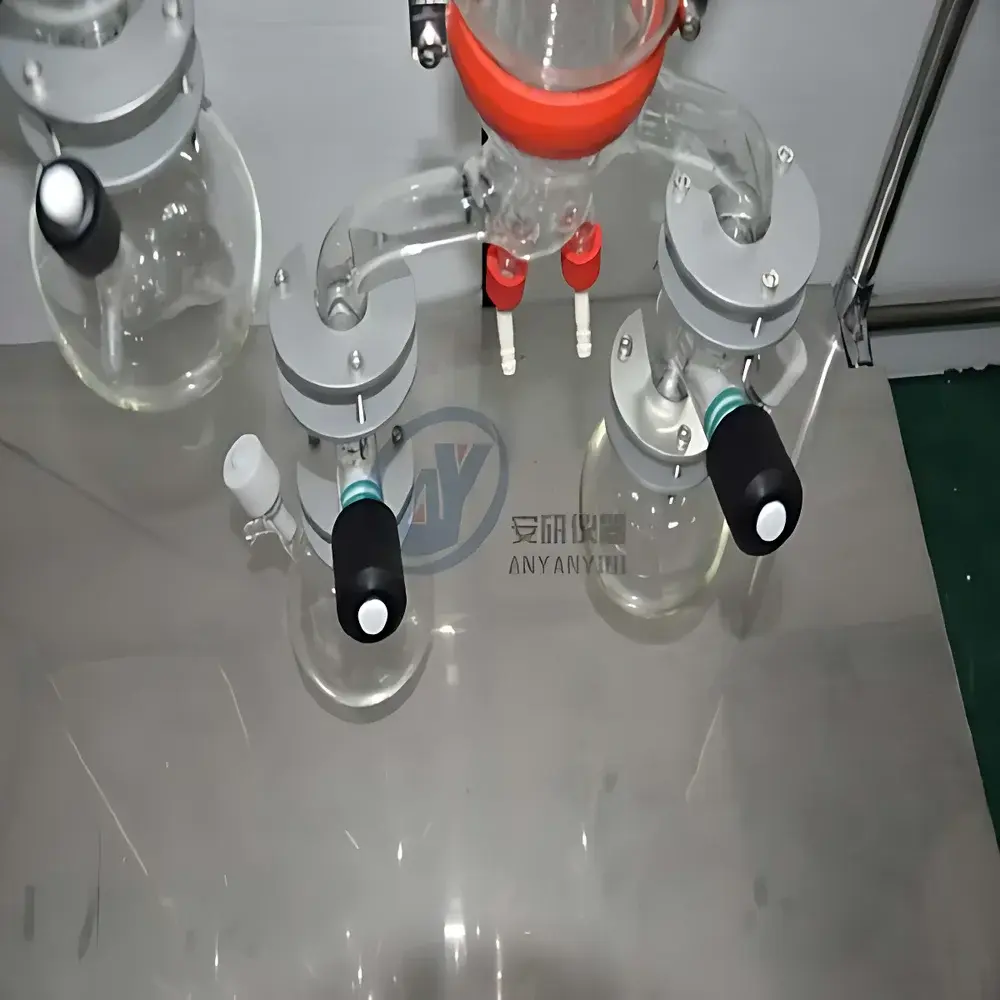
- Dual-collection configuration with separate 1 L light-fraction and heavy-fraction receivers, both equipped with ground-glass joints and KF quick-connect ports for inert-atmosphere handling.
- FKM fluoroelastomer sealing throughout; optional perfluoroalkoxy (PFA) or molded PTFE gaskets available for aggressive solvent compatibility (e.g., chlorinated or fluorinated media).
- Modular feed system supports optional pre-heating capability, allowing controlled inlet temperature adjustment prior to film formation—critical for viscosity management in high-molecular-weight feeds.
- Brushless DC motor drive (120 W) delivering smooth, low-vibration rotation up to 450 rpm, with adjustable speed control optimized for film stability across varying feed viscosities.
Sample Compatibility & Compliance
The AYAN-B80 accommodates feedstocks ranging from low-viscosity solvents (e.g., ethanol, hexane) to highly viscous materials (e.g., triglyceride-rich oils, polymer solutions) within the specified 0.5–4.0 L/h throughput range. Its all-SS316L wetted path—combined with chemically inert PTFE components—ensures compatibility with acidic, alkaline, and halogenated media. The system meets fundamental design requirements for ISO 9001-certified manufacturing environments and supports audit-ready documentation practices. While not certified to FDA 21 CFR Part 11 out-of-the-box, its operational parameters (temperature logs, vacuum traces, runtime stamps) are exportable in CSV format for integration into validated electronic lab notebook (ELN) or LIMS platforms compliant with GMP/GLP data integrity principles.
Software & Data Management
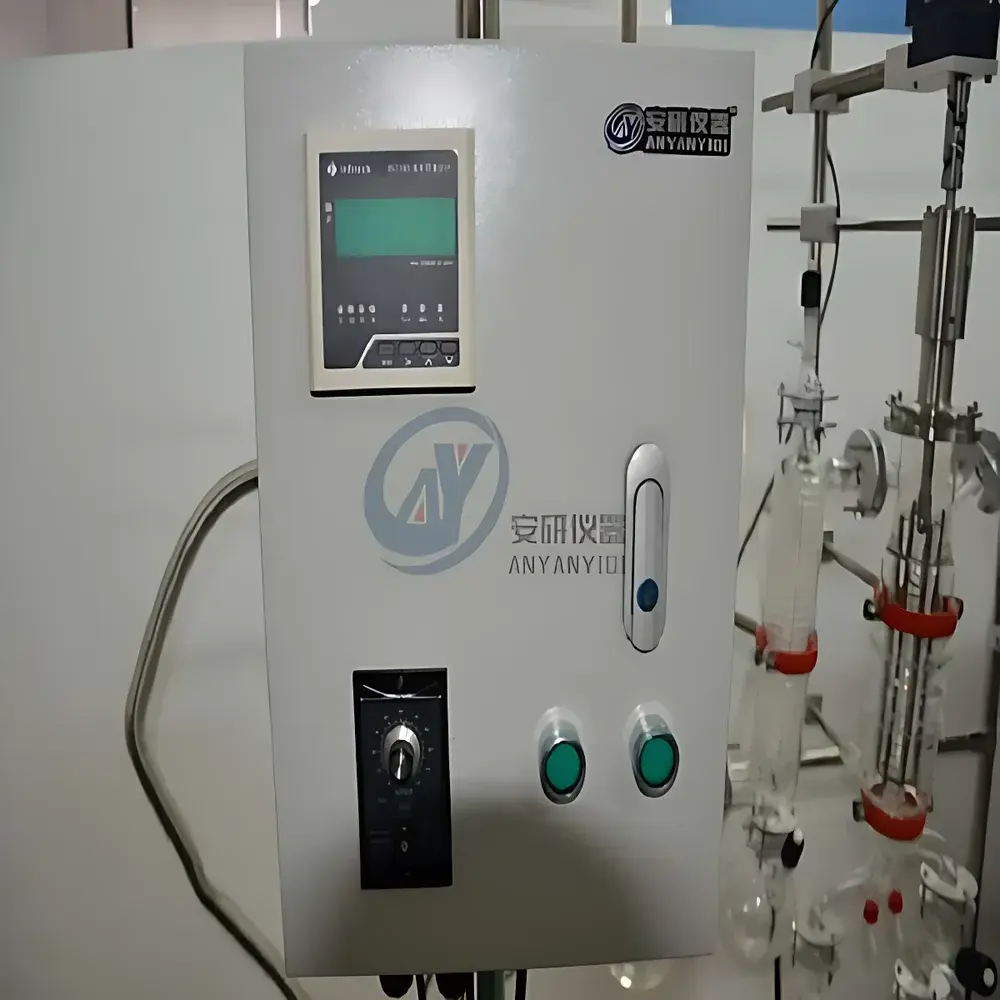
The AYAN-B80 operates via an integrated digital controller with real-time display of evaporator temperature, vacuum level, wiper speed, and operating duration. All parameters are manually set and monitored—no proprietary software or cloud connectivity is included, preserving full user control over data sovereignty and cybersecurity. Process records can be manually logged or captured externally using third-party DAQ systems interfaced via analog outputs (0–10 V or 4–20 mA). For regulated environments, users may implement supplementary validation protocols—including IQ/OQ documentation templates, sensor calibration certificates (NIST-traceable), and preventive maintenance logs—to satisfy internal quality system requirements.
Applications
- Purification of heat-sensitive nutraceuticals: removal of residual solvents from CBD/THC distillates while preserving terpene profiles.
- Concentration and fractionation of polyunsaturated fatty acids (PUFA) from marine oils without cis-trans isomerization.
- Deodorization and decolorization of natural extracts (e.g., rosemary, green tea) by selective volatilization of off-note compounds.
- Recovery of catalyst residues or unreacted monomers from polymer synthesis streams.
- Preparative isolation of fragrance compounds where molecular weight differentials exceed 50 Da and conventional distillation fails.
- Small-scale decontamination of pharmaceutical intermediates per ICH Q3C guidelines for Class 2 solvent clearance.
FAQ
What vacuum level is achievable with the standard configuration?
The system achieves and maintains < 0.1 Pa with the integrated cold trap and dual-stage vacuum pump (oil-sealed or dry scroll, user-supplied). Performance depends on pump selection, ambient humidity, and feed volatility.
Is the evaporator temperature calibrated and traceable?
Yes—each unit ships with a factory calibration certificate for the main evaporator RTD sensor, traceable to national standards. Users may perform field verification using a calibrated reference thermometer inserted via the auxiliary port.
Can this system be used for continuous operation?
It is engineered for semi-continuous batch processing. With consistent feed rate control and temperature stabilization, uninterrupted runs of 4–8 hours are routinely achieved in method development studies.
What maintenance intervals are recommended for the wiper assembly?
Visual inspection every 50 operating hours; replacement of PTFE scraper elements every 500 hours or upon observed wear-induced film instability.
Does the system support automation interfaces (e.g., RS-485, Modbus)?
No native industrial protocol support is provided. Analog signal outputs (temperature, vacuum) allow basic integration with PLC-based supervisory systems when configured externally.
Related Products



