
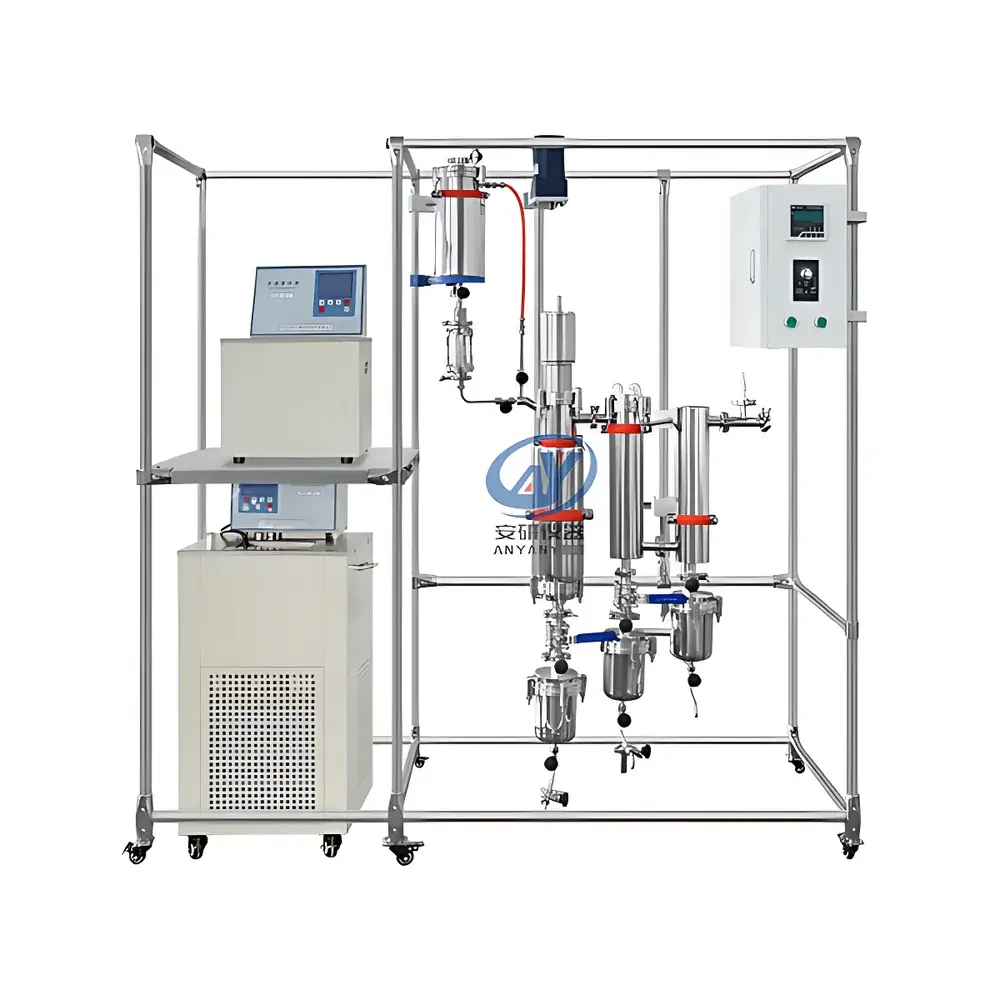
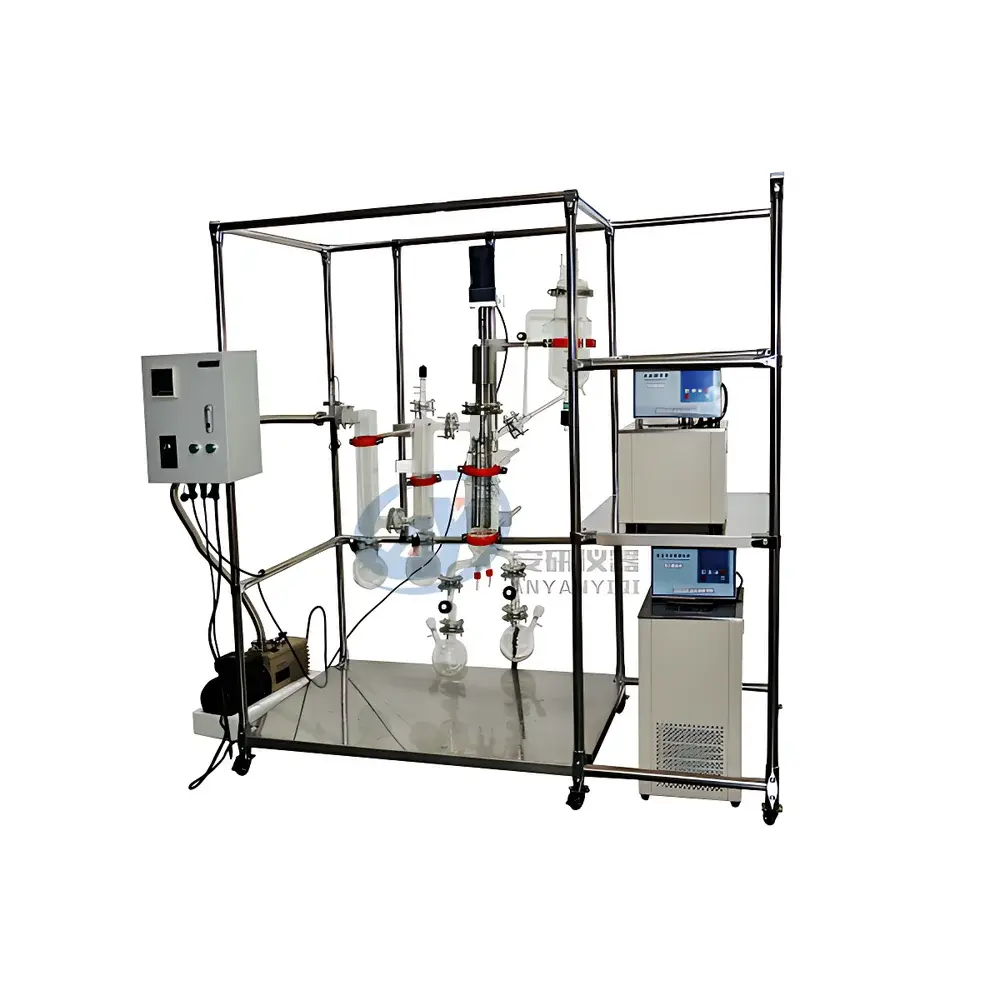
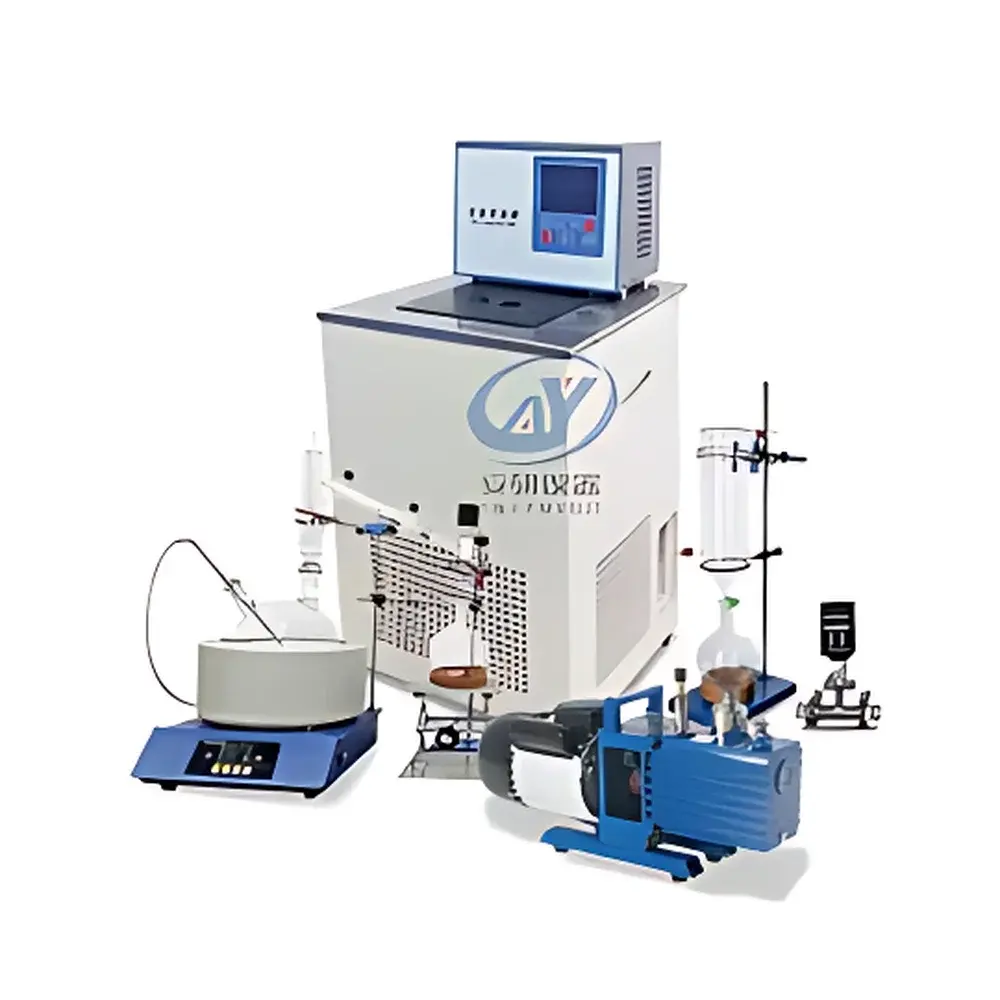
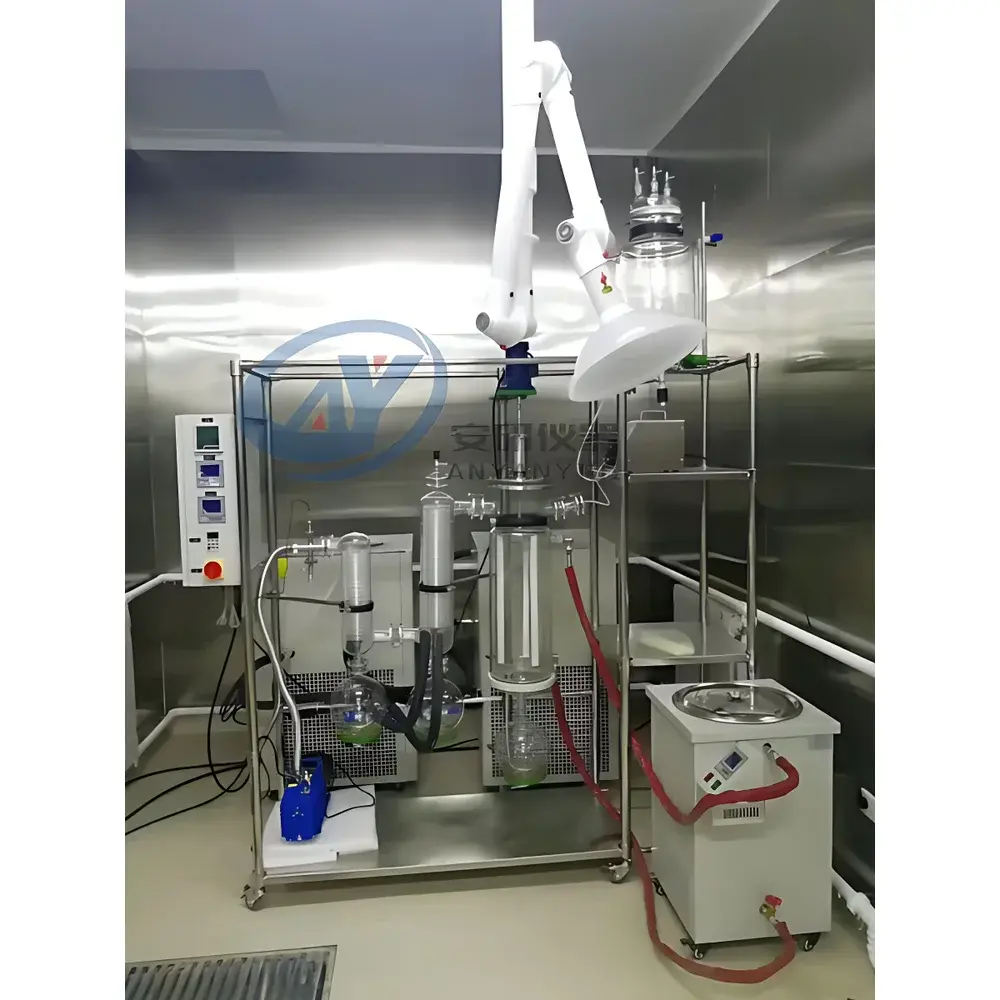
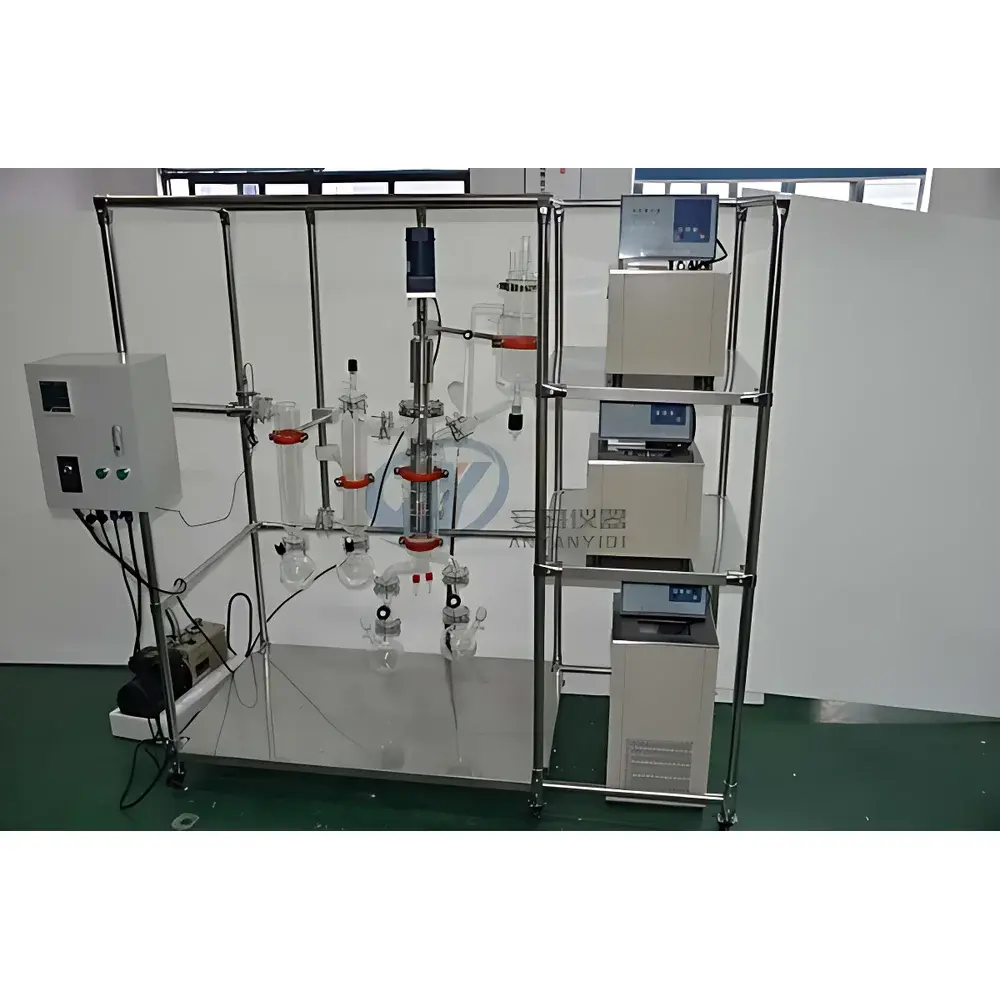
Anyan AYAN-B80 Glass Molecular Distillation Unit
| Brand | Anyan Instruments |
|---|---|
| Origin | Zhejiang, China |
| Manufacturer Type | Authorized Distributor |
| Country of Origin | China |
| Model | AYAN-B80 |
| Feed Capacity | 2 L |
| Effective Evaporation Area | 0.1 m² |
| Evaporator Internal Diameter | 80 mm |
| Condensation Area | 0.15 m² |
| Dual Collection Flasks | Yes |
| Operating Vacuum | < 5 mmHg (< 667 Pa) |
| Film Thickness | < 0.5 mm |
| Max Heating Temperature | 200 °C |
| Motor Power | 120 W |
| Max Rotational Speed | 450 rpm |
| 刮板材质 | PTFE + SS316L |
| Sealing | Silicone Gaskets (PTFE optional) |
| Cooling | Integrated Water-Cooled Condenser + External Cold Trap |
Overview
The Anyan AYAN-B80 Glass Molecular Distillation Unit is a laboratory-scale short-path distillation system engineered for high-efficiency separation of thermally labile, high-boiling, and oxidation-sensitive compounds under high vacuum conditions. Operating on the principle of molecular distillation—where separation occurs via differential mean free path of vapor molecules at pressures below 1 Pa—the AYAN-B80 enables selective volatilization and condensation without bulk boiling. Its all-glass construction (borosilicate 3.3) ensures full process visibility, chemical inertness, and compliance with visual inspection requirements in R&D and pilot-scale purification workflows. Designed for operation at absolute pressures down to < 5 mmHg (≈ 667 Pa), the unit supports gentle thermal processing with residence times typically under 30 seconds, minimizing thermal degradation while achieving high-purity fractionation of complex liquid mixtures.
Key Features
- Transparent borosilicate glass body for real-time observation of film formation, vapor flow, and condensate collection—critical for method development and troubleshooting.
- PTFE-coated SS316L wiper blades ensure uniform thin-film distribution (< 0.5 mm thickness) across the 80 mm internal diameter evaporator surface, maximizing heat transfer efficiency and reproducibility.
- Dual independent collection flasks (1 L each, configurable) allow simultaneous recovery of light and heavy fractions during multi-stage separations.
- Integrated water-cooled condenser (0.15 m² active area) paired with an external cold trap ensures efficient vapor capture and minimizes backstreaming, even for low-volatility components.
- Precise temperature control (ambient to 200 °C) via electrically heated jacket with PID regulation; optional pre-heating feed tank available for viscosity management.
- Vacuum-tight assembly using food-grade silicone gaskets (upgradable to perfluoroelastomer or PTFE for aggressive solvents); all ground-glass joints conform to ISO 3809 standards.
- Brushless DC motor (120 W, 0–450 rpm) delivers stable rotational speed control essential for consistent film morphology and mass transfer performance.
Sample Compatibility & Compliance
The AYAN-B80 accommodates a broad range of organic and inorganic feedstocks—including natural extracts (e.g., fish oil, CBD distillates), polymer precursors, pharmaceutical intermediates, and solvent residues from extraction processes. Its glass-wetted path eliminates metal leaching risks and supports cleaning validation per GLP and ISO/IEC 17025 guidelines. While not certified to UL or CE for standalone safety compliance, the system meets functional requirements for use in ISO Class 7–8 laboratories when integrated into validated vacuum and cooling infrastructure. Vacuum integrity has been verified per ASTM E471 for leak rates < 1 × 10⁻³ mbar·L/s, supporting applications requiring strict oxygen exclusion (e.g., vitamin E acetate purification, tocopherol enrichment).
Software & Data Management
The AYAN-B80 operates as a manually controlled benchtop instrument with analog instrumentation (digital temperature display, mechanical vacuum gauge, tachometer). No embedded software or data logging is included; however, all critical parameters—including jacket temperature, rotational speed, vacuum level (via optional digital Pirani gauge), and feed rate—are externally monitorable and recordable using third-party DAQ systems compliant with FDA 21 CFR Part 11 when configured with audit-trail-capable hardware and SOP-defined procedures. Process documentation aligns with ICH Q5A and USP analytical instrument qualification frameworks.
Applications
- Purification of heat-sensitive nutraceuticals: removal of residual solvents (e.g., hexane, ethanol) from botanical extracts while preserving terpenes and polyphenols.
- Concentration and fractionation of omega-3 fatty acid ethyl esters (EPA/DHA) from fish oil hydrolysates.
- Isolation of monoglycerides and diglycerides from glycerolysis reaction mixtures.
- Deodorization and decolorization of edible oils without stripping natural antioxidants.
- Recovery of catalysts and unreacted monomers from high-viscosity polymer synthesis streams.
- Preparative-scale isolation of fragrance compounds (e.g., linalool, citral) from essential oil distillates.
FAQ
What vacuum level is required for optimal molecular distillation performance?
Molecular distillation requires operating pressures ≤ 0.1 Pa (≤ 7.5 × 10⁻⁴ mmHg) to ensure mean free path exceeds the evaporator-to-condenser distance (~50–80 mm in the AYAN-B80). A two-stage vacuum system (rotary vane pump + diffusion or turbomolecular pump) is recommended.
Can the AYAN-B80 handle viscous feeds such as crude squalene or polymer melts?
Yes—when paired with the optional pre-heating feed tank (up to 300 °C), feed viscosity can be reduced to < 500 cP, enabling stable film formation. Pre-filtration through 5 µm filters is advised to prevent wiper blade jamming.
Is the glass assembly resistant to hydrofluoric acid or anhydrous trifluoroacetic acid?
Standard borosilicate 3.3 glass is not resistant to HF or TFA. For such applications, custom quartz components and Kalrez® O-rings must be specified at time of order.
How often should wiper blades be replaced during continuous operation?
Under typical use with non-abrasive feeds, PTFE/SS316L blades maintain dimensional stability for ≥ 500 operational hours. Visual inspection after every 100 hours is recommended per maintenance SOP.
Does the unit comply with GMP documentation requirements for pharmaceutical manufacturing?
As a Class II laboratory instrument, it supports GMP-aligned operation when integrated into a qualified environment with documented calibration (temperature, pressure, rotation), preventive maintenance logs, and change control records—but is not supplied with IQ/OQ protocols by default.



