
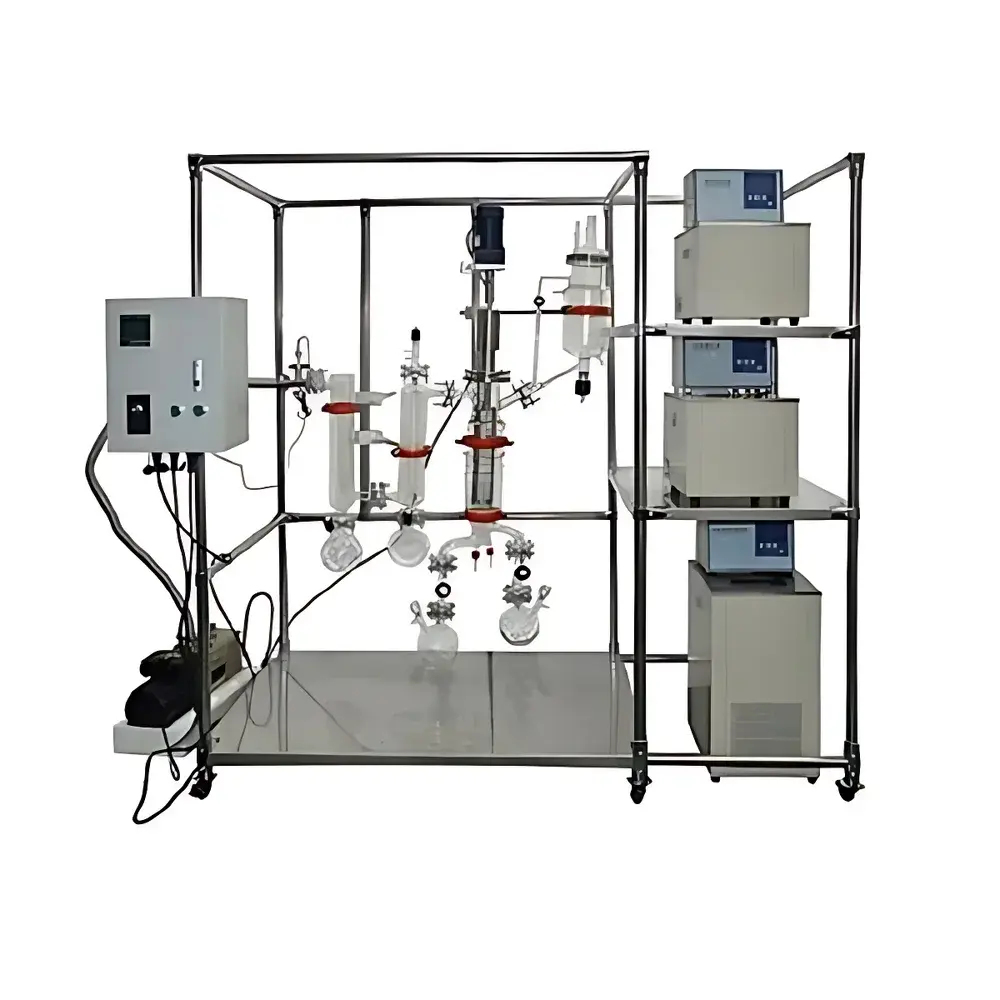
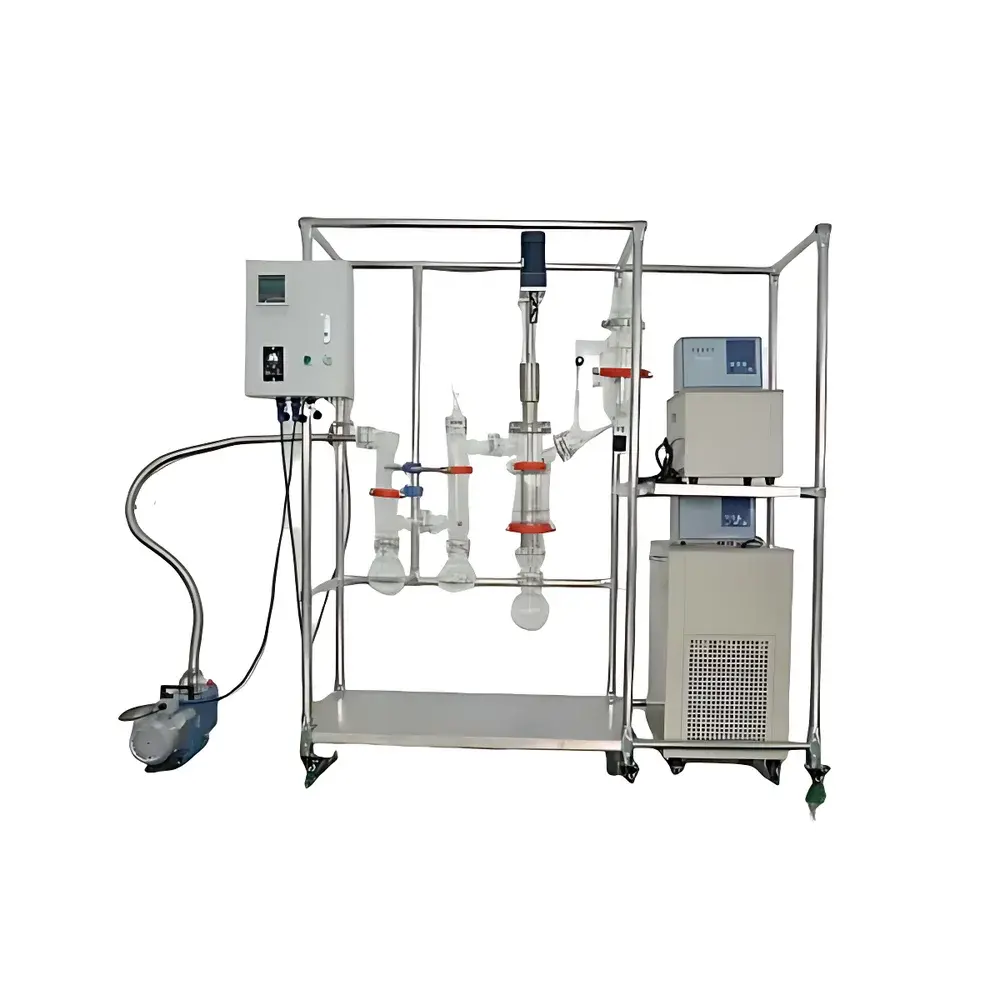
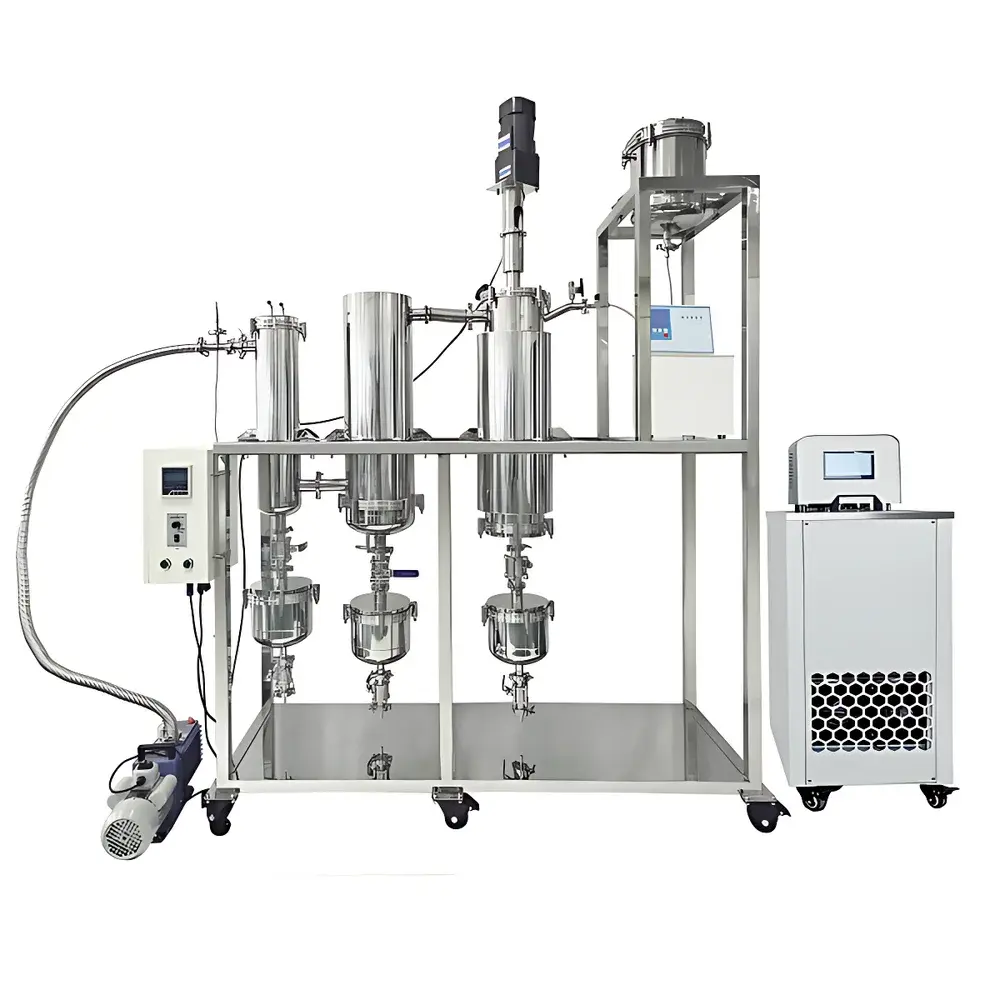
Anyan AYAN-B80 Lab-Scale Wiped-Film Evaporator
| Brand | Anyan Instruments |
|---|---|
| Origin | Shanghai, China |
| Model | AYAN-B80 |
| Internal Diameter | 80 mm |
| Evaporation Area | 0.1 m² |
| Condensation Area | 0.15 m² |
| Feed Volume | 2 L |
| Processing Flow Rate | 0.5–4.0 L/h |
| Motor Power | 120 W |
| Max Rotational Speed | ≤450 rpm |
| Light Fraction Collection Bottle | 1 L |
| Heavy Fraction Collection Bottle | 1 L |
| Cold Trap | Integrated |
| External Condenser | Equipped |
| Cooling System | Built-in |
| Ultimate Vacuum | <100 Pa |
| Heating Temperature Range | Ambient to 200 °C |
Overview
The Anyan AYAN-B80 is a precision-engineered, benchtop wiped-film evaporator designed for high-efficiency, low-thermal-load molecular distillation and solvent removal under high vacuum. It operates on the principle of thin-film evaporation: feed material is distributed as a uniform, continuously renewed film across a heated cylindrical surface by a rotating wiper system; volatile components rapidly vaporize under controlled vacuum and are condensed on an adjacent, cooled surface. This architecture enables operation at significantly reduced boiling points—typically 20–80 °C below atmospheric values—making it suitable for thermally labile compounds such as pharmaceutical intermediates, natural extracts, polymer precursors, and spent acid streams from carbonylation processes. The AYAN-B80 is not a simple rotary evaporator; its mechanical wiper design ensures consistent film thickness, minimizes residence time (typically <30 seconds), and prevents thermal degradation or polymerization—critical for processing viscous, heat-sensitive, or fouling-prone feeds like methanol-low-pressure carbonylation waste acid after dilution with deionized water (0.5–2 wt%).
Key Features
- Stainless steel 316L construction throughout wetted parts for corrosion resistance against acidic and organic media.
- High-precision PTFE-coated wiper blades ensuring uniform film distribution and minimal shear-induced degradation.
- Integrated cold trap and external condenser assembly maintaining vacuum integrity down to 90% purity) from higher-boiling residues (e.g., propionic acid).
- Adjustable rotational speed (0–450 rpm) with digital feedback control for precise residence time modulation across viscosity ranges—from low-viscosity solvents to feeds whose viscosity increases sharply with concentration.
- Heated jacket with PID-controlled temperature regulation (ambient to 200 °C), calibrated traceable to NIST standards.
- Modular collection system with dual independent receivers (1 L light fraction / 1 L heavy fraction) and sight-glass monitoring ports for real-time process observation.
Sample Compatibility & Compliance
The AYAN-B80 accommodates feedstocks with dynamic viscosities up to 50,000 cP and solids content ≤15 wt%, including but not limited to: spent catalyst liquors, fatty acid methyl ester (FAME) distillates, terpene isolates, CBD/terpenoid concentrates, and hydrolyzed polymeric waste streams. Its design conforms to fundamental principles outlined in ASTM D2879 (Standard Test Method for Distillation of Organic Liquids Under Reduced Pressure) and supports GLP-compliant workflows when integrated with validated data logging systems. All mechanical seals meet ISO 21049 (API 682) Type A criteria for low-leakage service; cooling water circuits comply with ASME B31.9 requirements for low-pressure piping. While not certified to CE or UL standards out-of-box, the unit meets essential safety requirements for laboratory-scale vacuum thermal processing per IEC 61010-1:2010.
Software & Data Management
The AYAN-B80 operates via a local HMI panel with password-protected parameter setting, real-time display of jacket temperature, motor RPM, and vacuum level (via integrated Pirani gauge). For traceability in regulated environments, optional RS485 Modbus RTU interface enables integration with SCADA or LIMS platforms. When paired with third-party compliant software (e.g., LabVIEW or DeltaV), full audit trails—including operator ID, timestamped setpoint changes, and raw sensor logs—can be generated to satisfy FDA 21 CFR Part 11 requirements for electronic records and signatures. No proprietary cloud connectivity or remote firmware updates are implemented—ensuring data sovereignty and network isolation in secure lab networks.
Applications
- Recovery and purification of acetic acid (>90%) and high-purity propionic acid (>99.5%) from low-pressure methanol carbonylation waste acid streams, following controlled dilution with deionized water.
- Deacidification and decolorization of edible oils and fish oil concentrates without oxidative damage.
- Molecular distillation of vitamin E acetate, phospholipids, and squalene from botanical extracts.
- Removal of residual solvents (e.g., chloroform, THF, DMF) from API synthesis batches prior to crystallization.
- Concentration of heat-sensitive enzyme solutions or protein-containing broths where conventional evaporation induces denaturation.
FAQ
What vacuum level is achievable with the integrated cold trap and external condenser?
The system achieves and maintains <100 Pa (<0.75 mmHg) under steady-state operation with clean, dry feed and properly chilled coolant (≤5 °C). Actual performance depends on feed volatility, coolant temperature, and pump capacity.
Can the AYAN-B80 handle feeds containing suspended solids or particulates?
Feeds must be pre-filtered to ≤50 µm to prevent wiper blade jamming or seal abrasion. For slurries, inline filtration or centrifugal pretreatment is mandatory.
Is the heating jacket compatible with thermal oil or only steam?
The jacket accepts both saturated steam (max 0.15 MPa) and silicone oil (max 200 °C); steam connections include a built-in air vent and condensate trap port.
How is residence time controlled and verified?
Residence time is primarily governed by rotational speed, feed flow rate, and film thickness—calibrated empirically using tracer dye studies. Typical range: 15–45 seconds at 300 rpm and 2.5 L/h flow.
Does the unit support GMP documentation packages?
Yes—upon request, Anyan provides Factory Acceptance Test (FAT) reports, material certificates (EN 10204 3.1), and calibration records for temperature and vacuum sensors, supporting IQ/OQ protocols.



