
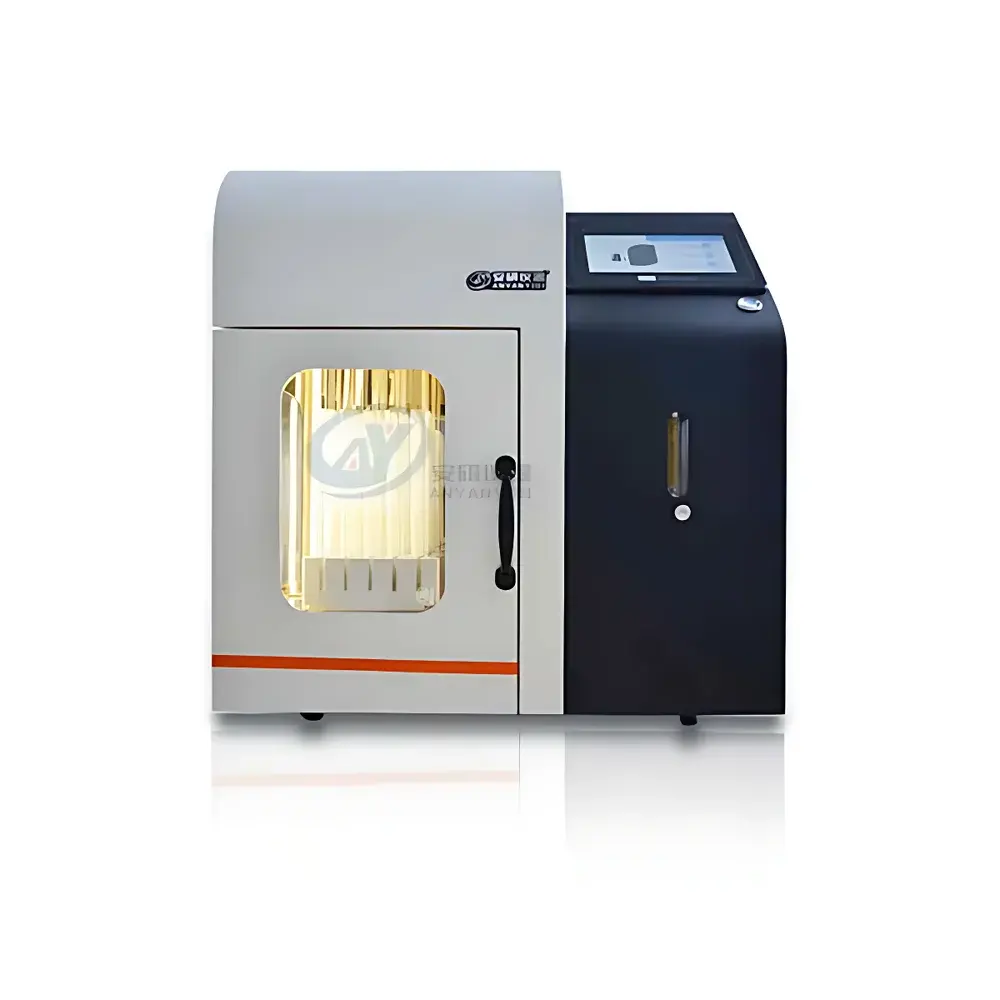
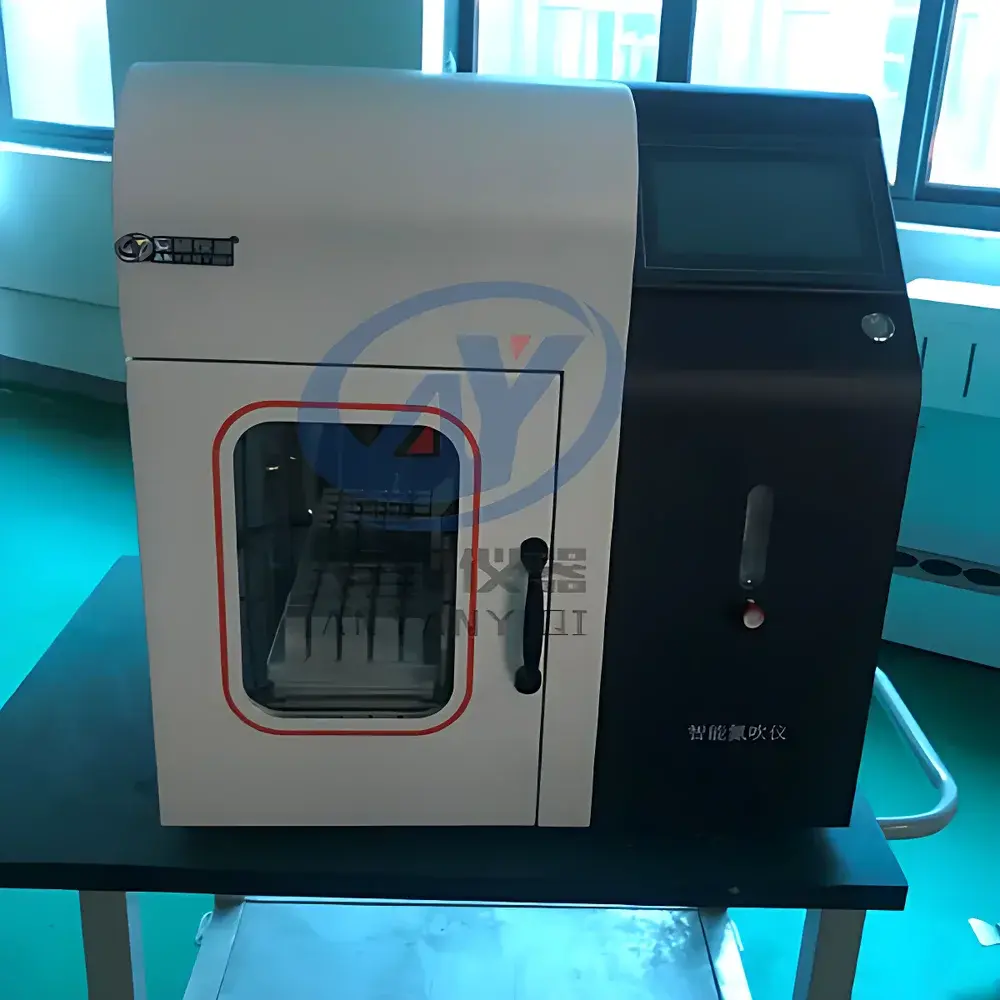
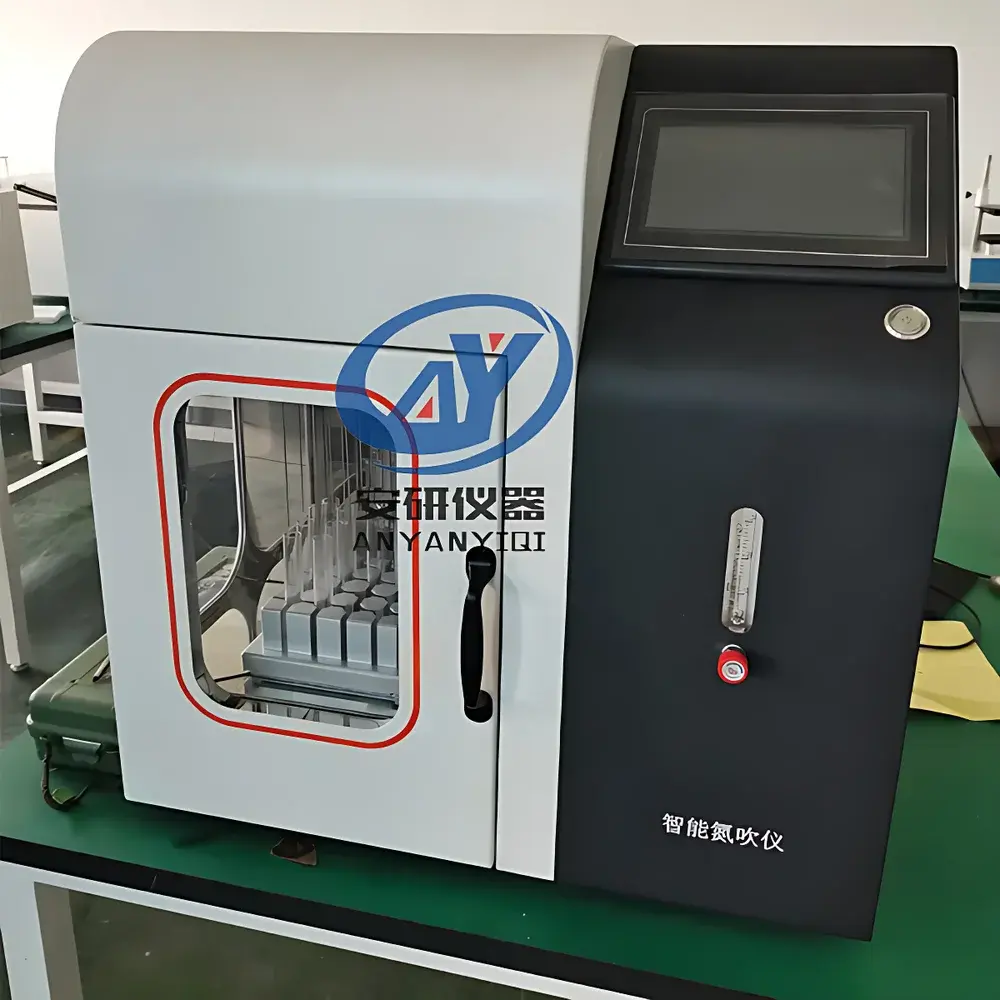
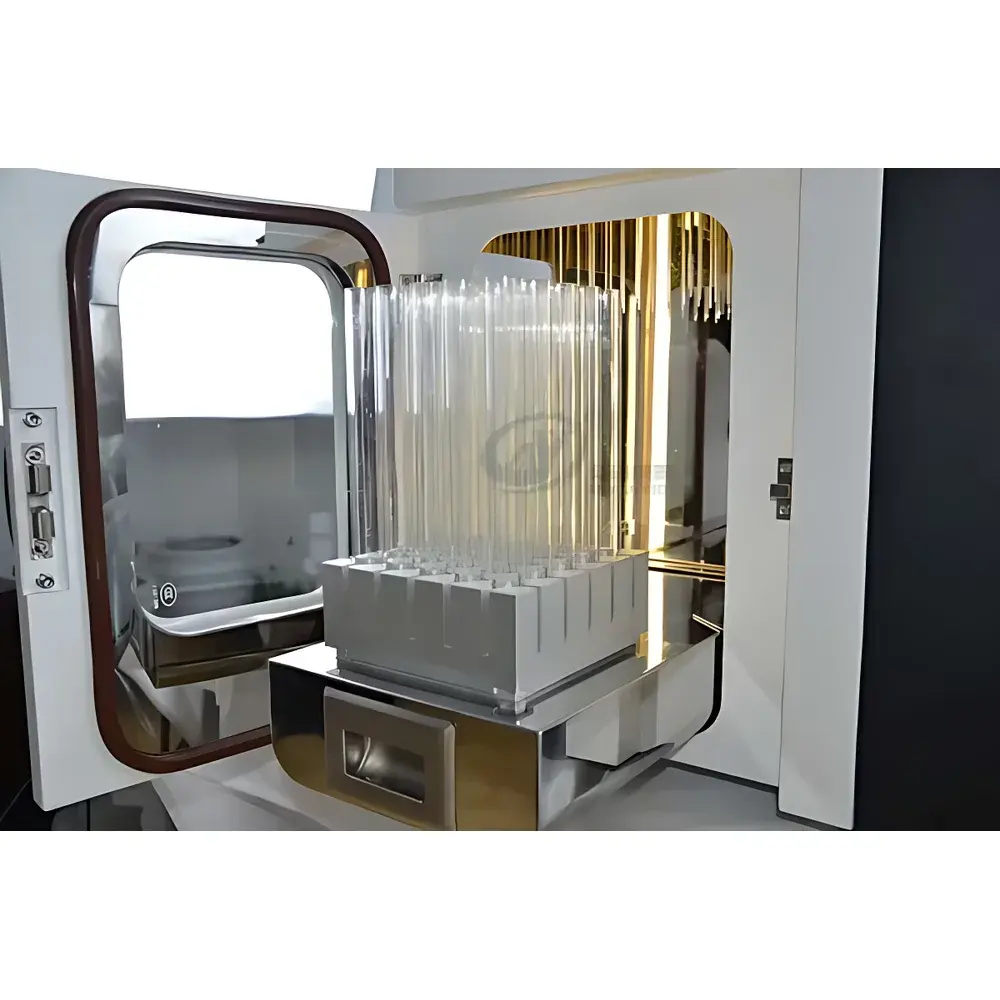
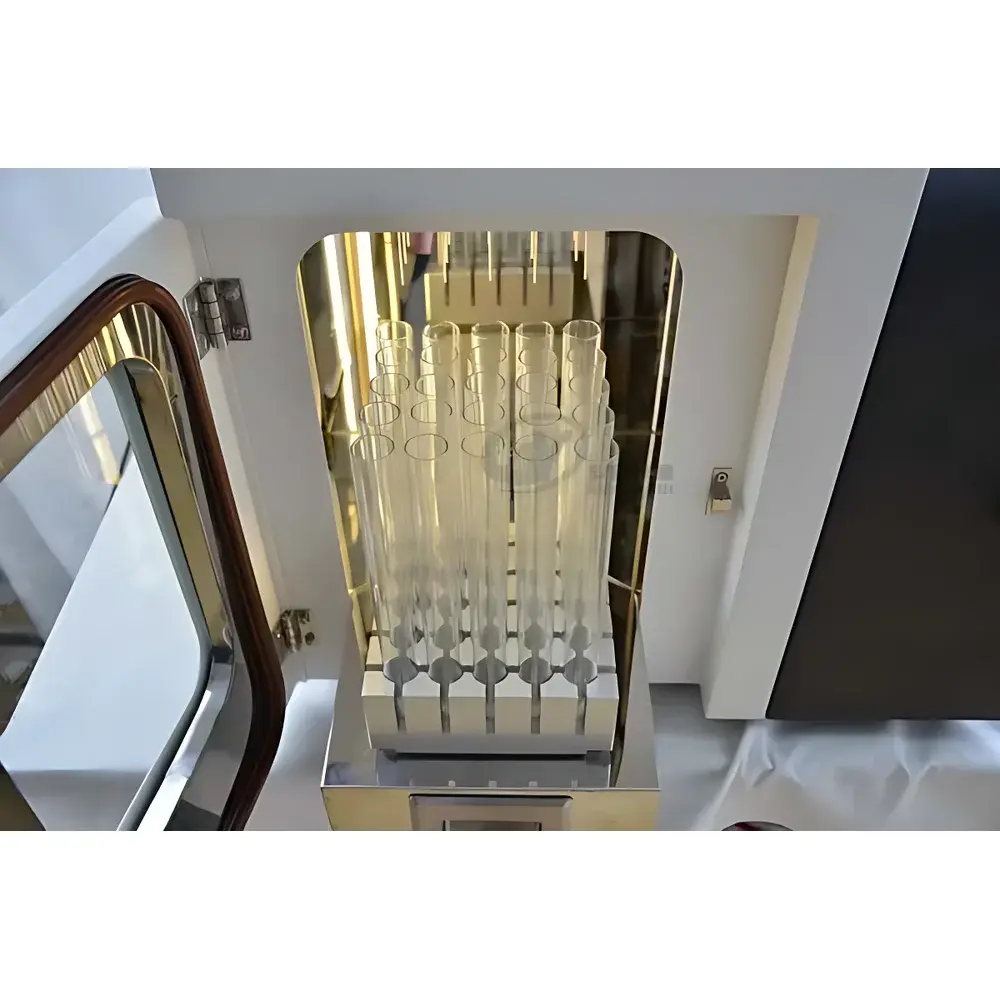
Anyan AYAN-DC12G 12-Position Sealed Dry-Block Nitrogen Evaporator with Drawer-Type Sample Access
| Brand | Anyan Instruments |
|---|---|
| Origin | Zhejiang, China |
| Model | AYAN-DC12G |
| Heating Method | Dry-Block Heating |
| Temperature Range | Ambient +5°C to 150°C |
| Temperature Uniformity | ±1°C |
| Sample Capacity | 12 positions |
| Tube Diameter Compatibility | Up to 16 mm (interchangeable modules) |
| Gas Flow Control Range | 0–999 mL/min (digital mass flow control) |
| Programmable Stages | 50-step temperature ramping |
| Display | 7-inch capacitive touchscreen interface |
| Gas Preheating | Yes (≈45°C) |
| Sealing System | Dual-gasket sealed door with internal recirculating fan |
| Data Logging | Built-in multi-session storage with timestamped operational records |
| Power Supply | Standard 220 VAC, 50 Hz |
| Safety Features | Overtemperature protection, gas leak detection alarm, automatic shutdown on door opening |
Overview
The Anyan AYAN-DC12G is a fully enclosed, drawer-access dry-block nitrogen evaporator engineered for high-throughput, contamination-sensitive sample concentration in regulated and research laboratory environments. Unlike open-bay or water-bath nitrogen blowdown systems, this instrument employs a hermetically sealed chamber architecture combined with precision dry-block heating and digitally controlled nitrogen delivery. It operates on the principle of gentle inert-gas displacement—where preheated, mass-flow-regulated nitrogen sweeps volatile solvents from sample surfaces under precisely maintained thermal conditions—enabling reproducible solvent removal without oxidation, hydrolysis, or cross-contamination. Designed in collaboration with Zhejiang University of Technology, the AYAN-DC12G meets the procedural rigor required for residue analysis, pharmaceutical QC, and environmental monitoring workflows where trace-level integrity and process traceability are critical.
Key Features
- 7-inch high-resolution capacitive touchscreen interface supporting intuitive navigation, real-time parameter monitoring, and multi-user access control
- 50-segment programmable temperature ramping with independent setpoint control per segment—enabling complex evaporation profiles for thermally labile analytes
- Dry-block heating system using aerospace-grade aluminum alloy blocks, ensuring rapid thermal response (<3 min to 100°C), uniformity (±0.8°C across block surface), and corrosion resistance
- Drawer-style sample tray mechanism allowing full frontal access without opening the main chamber—preserving internal atmosphere and minimizing operator exposure to vapors
- Four-sided transparent viewing windows with dual-seal tempered glass doors and integrated recirculating air filtration—eliminating need for external fume hood integration while maintaining Class II containment
- Motorized dual-mode needle positioning: fine-adjustment (0.1 mm resolution) and rapid vertical travel (≤2 s full stroke)—reducing manual handling and positional variability
- Preheated nitrogen delivery (≈45°C) minimizes condensation at the needle tip and accelerates solvent removal kinetics—particularly beneficial for high-boiling-point solvents such as DMSO or ethylene glycol
- Independent electromagnetic flow valves per channel ensure consistent gas distribution across all 12 positions—even during partial loading—reducing nitrogen consumption by up to 35% versus fixed-orifice systems
- Built-in data logger stores ≥100 complete run histories including timestamps, temperature profiles, flow rates, and door-open events—supporting GLP-compliant audit trails
Sample Compatibility & Compliance
The AYAN-DC12G accommodates standard 12 × 16 mm test tubes, with optional interchangeable aluminum blocks available for 10 mm, 13 mm, and 20 mm diameters. Its sealed design conforms to ISO 17025 requirements for environmental control during sample preparation and supports method validation under EPA Method 508.3, AOAC 2007.01, and USP . The absence of water bath media eliminates microbial growth risk and waterborne interference—making it suitable for sterility-critical applications in biopharmaceutical sample prep. All internal surfaces are electropolished stainless steel or anodized aluminum, compliant with FDA 21 CFR Part 11 when paired with validated software extensions.
Software & Data Management
The embedded firmware supports CSV export of run logs via USB port and enables remote status polling via RS-485 Modbus RTU protocol. Optional PC-based AnyanLab Suite (v3.2+) provides enhanced functionality including electronic signature support, user permission tiers, deviation alerting, and integration with LIMS via HL7 or ASTM E1384 interfaces. Audit trail generation includes operator ID, parameter changes, and system event timestamps—all immutable and time-stamped with NTP-synchronized clock.
Applications
- Pesticide residue analysis in fruits, vegetables, cereals, and plant matrices per EN 15662 and SANTE/11813/2017 guidelines
- Residual solvent quantification in pharmaceutical intermediates (ICH Q3C) and herbal extracts (Chinese Pharmacopoeia Vol. IV)
- Volatile organic compound (VOC) preconcentration from drinking water and wastewater per EPA 524.2 and ISO 15681-2
- Metabolite enrichment prior to LC-MS/MS analysis in clinical toxicology and endocrinology assays
- Concentration of flavor compounds and contaminants in dairy, beer, wine, and juice matrices for GC-O and GC-MS profiling
FAQ
Is the AYAN-DC12G compatible with GMP/GLP documentation requirements?
Yes—the instrument’s built-in logging, user authentication support, and electronic record capabilities align with ALCOA+ principles when used with validated software configurations.
Can I use non-standard tube formats?
Interchangeable heating blocks support 10 mm, 13 mm, 16 mm, and 20 mm OD tubes; custom blocks can be fabricated upon request with lead-time confirmation.
Does the system require external ventilation or exhaust ducting?
No—the internal recirculating filtration and dual-gasket door seal achieve >99.97% retention of volatile organics, eliminating need for external venting.
What maintenance intervals are recommended?
Quarterly inspection of O-rings, annual calibration of temperature sensors and mass flow controllers, and biannual verification of door seal integrity using helium leak testing per ASTM E499.
How is nitrogen consumption optimized during operation?
Through synchronized preheating, independent electromagnetic valve control per channel, and dynamic flow modulation based on real-time chamber pressure feedback.



