
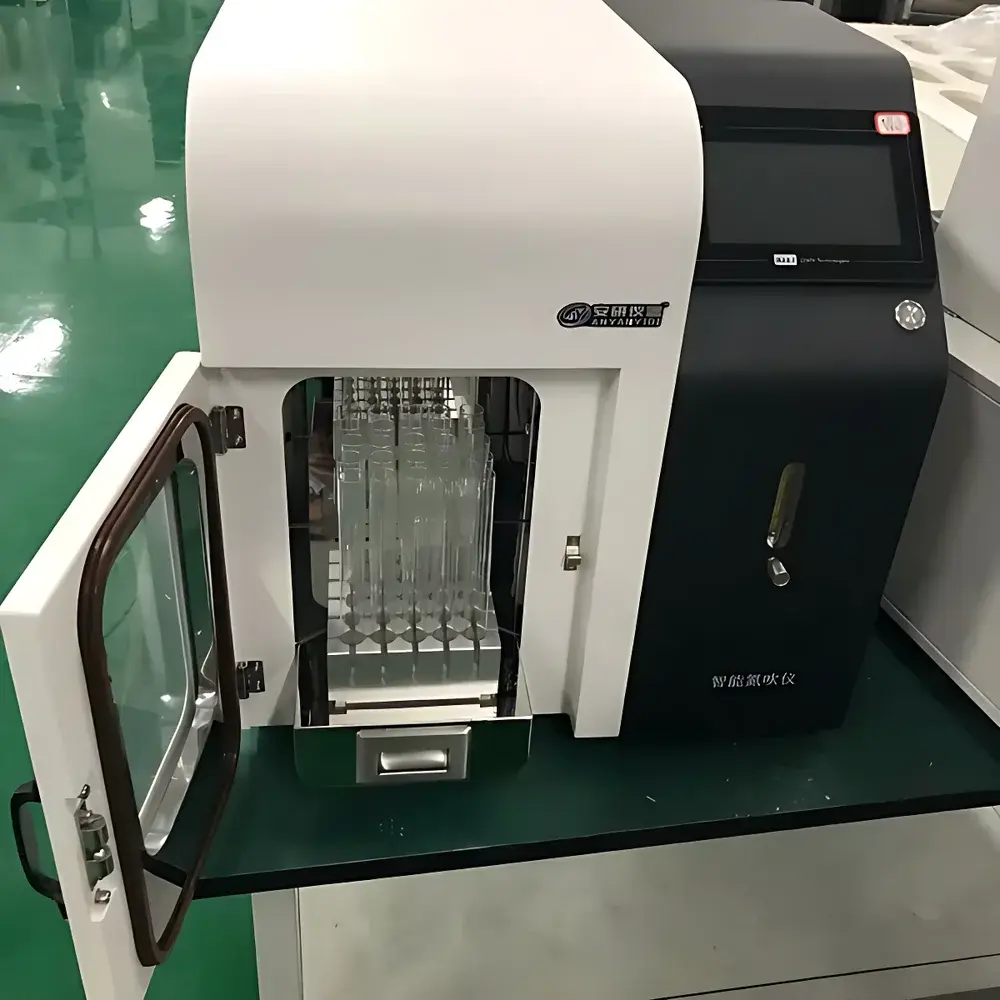
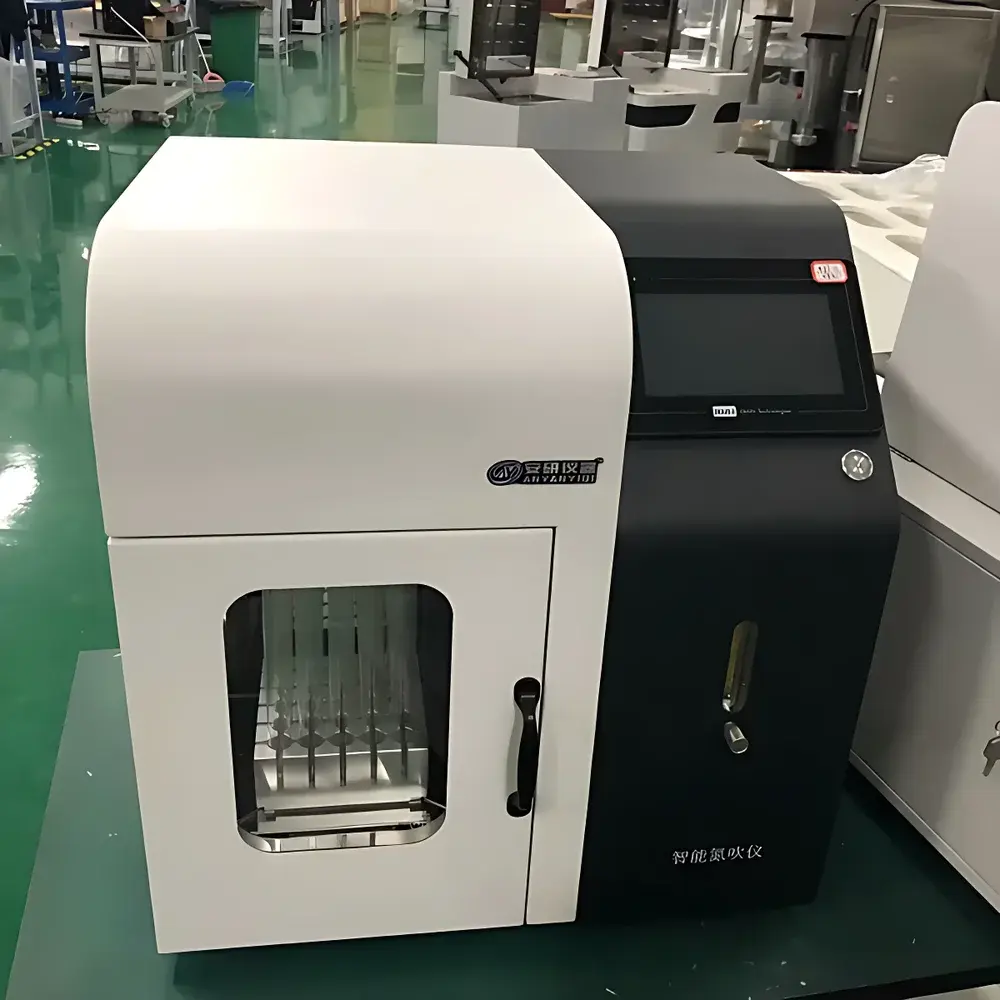
ANYAN AYAN-DC16G Fully Enclosed Dry-Block Nitrogen Evaporator
| Brand | ANYAN |
|---|---|
| Origin | Zhejiang, China |
| Model | AYAN-DC16G |
| Heating Method | Dry-block heating |
| Temperature Range | Ambient to 100 °C |
| Temperature Stability | ±1 °C |
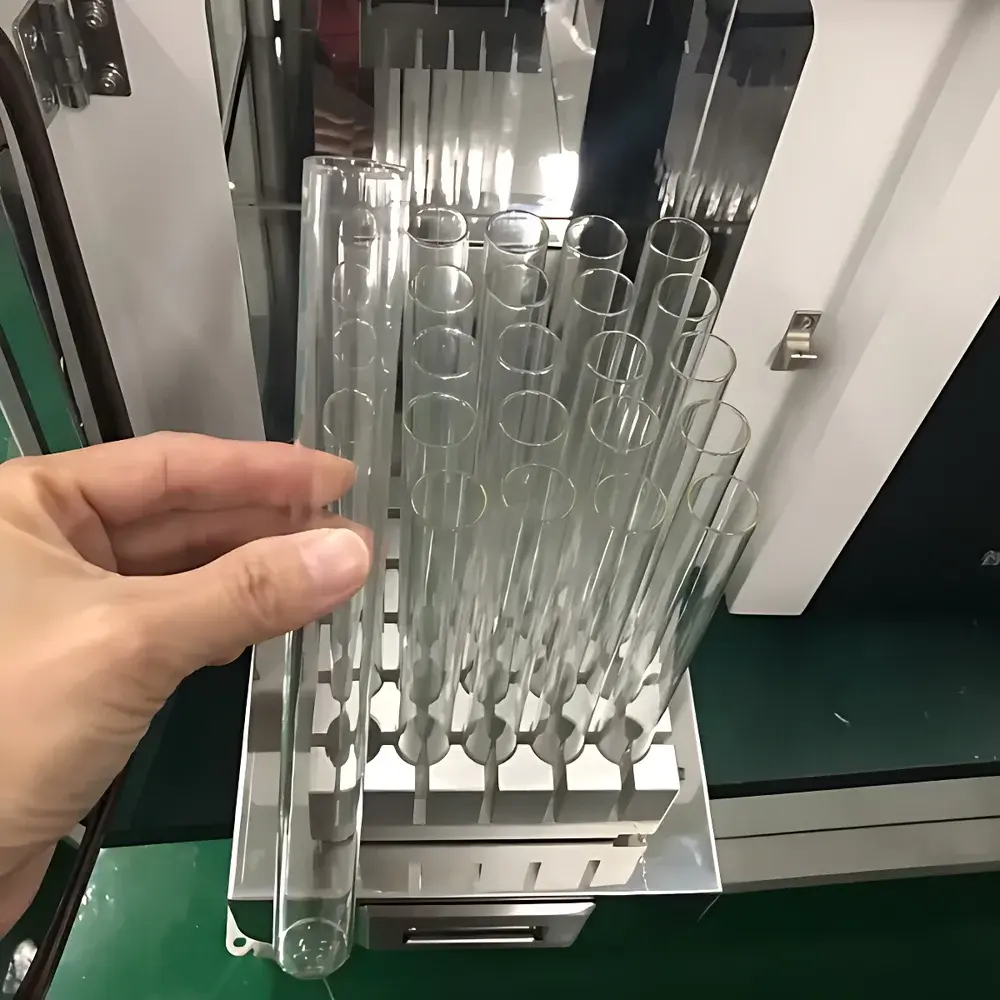
| Sample Capacity | 16 positions |
| Tube Diameter Compatibility | 16 mm (interchangeable modules available) |
| Nitrogen Flow Rate | 0–15 L/min (adjustable per channel) |
| Heating Power | 300 W |
| Display | 7-inch LCD touchscreen |
| Programmable Temperature Profiles | Up to 50 segments |
| Timing Range | 0–999 min |
| Pressure Regulation Range | 0–0.8 MPa |
| Independent Gas Control | 16-channel precision regulation |
| Sealing System | Dual-seal insulated door with 4-sided transparent viewing window |
| Integrated Exhaust Fan | Yes |
| Motorized Vertical Adjustment | Yes |
| Sample Access | Drawer-type sliding tray |
| Over-Temperature Protection | Yes |
Overview
The ANYAN AYAN-DC16G Fully Enclosed Dry-Block Nitrogen Evaporator is an engineered solution for reproducible, low-contamination solvent removal in analytical laboratories. Unlike water-bath nitrogen evaporators, this system employs a precisely regulated dry-block heating module—eliminating cross-contamination risks, condensation artifacts, and temperature lag associated with liquid media. It operates on the principle of gentle, inert gas sweeping: high-purity nitrogen is delivered through individually adjustable nozzles positioned just above sample surfaces, accelerating solvent volatilization while minimizing analyte degradation or oxidation. The fully enclosed chamber—featuring dual-seal insulated doors and a 4-sided tempered glass viewport—maintains consistent internal atmosphere, suppresses ambient drafts, and contains volatile organic compounds (VOCs) within a controlled environment. Designed for compliance-critical workflows, the unit supports GLP/GMP-aligned documentation requirements through traceable parameter logging and programmable method recall.
Key Features
- Dry-block heating architecture ensures rapid thermal response, uniform heat distribution across all 16 positions, and zero risk of water ingress or bath contamination.
- 7-inch high-resolution LCD touchscreen interface with intuitive navigation, supporting up to 50-segment temperature ramp/soak programs and user-defined method storage.
- Independent 16-channel nitrogen flow control via precision pressure regulators (0–0.8 MPa range), enabling differential evaporation rates across heterogeneous sample sets.
- Motorized vertical adjustment system allows precise nozzle-to-surface positioning (±1 mm resolution) without manual re-alignment—critical for maintaining optimal gas shear force and preventing splashing.
- Integrated exhaust fan with activated carbon filtration provides continuous vapor management, reducing operator exposure and meeting OSHA-recommended ventilation thresholds for VOC handling.
- Drawer-style sample tray enables rapid, ergonomic loading/unloading; interchangeable 16 mm diameter heating blocks accommodate standard GC/MS vials, centrifuge tubes, and custom vessels.
- Real-time over-temperature cutoff, door-open interlock, and automatic shutdown upon timer completion ensure operational safety and protocol integrity.
Sample Compatibility & Compliance
The AYAN-DC16G accommodates standard 16 mm OD sample containers—including 2 mL, 4 mL, and 15 mL conical-bottom vials—without adapter modification. Its sealed chamber design conforms to ISO 17025 clause 5.4.2 (environmental condition control) and supports laboratory adherence to EPA Method 525.3, AOAC 991.22, and USP chromatographic sample preparation guidelines. The absence of water-based heating eliminates microbial growth concerns, making it suitable for microbiology-adjacent applications where sterility maintenance is secondary but moisture exclusion remains essential. All electrical components meet IEC 61010-1 safety standards for laboratory equipment; CE marking is applied per EU Directive 2014/30/EU (EMC) and 2014/35/EU (LVD).
Software & Data Management
While the AYAN-DC16G operates as a standalone instrument, its embedded firmware logs timestamped records of setpoints (temperature, flow, duration), actual measured values, and alarm events (e.g., over-temperature, door open, pressure deviation). Data export is supported via USB flash drive in CSV format—structured to align with LIMS ingestion protocols. Though not natively 21 CFR Part 11 compliant, the system’s audit trail capability (user ID tagging optional via external login proxy), electronic signature readiness, and immutable parameter history facilitate integration into validated environments when deployed alongside validated IT infrastructure and procedural controls.
Applications
This evaporator is routinely deployed in environmental testing labs for concentration of pesticide residues from aqueous extracts prior to GC-MS analysis; in clinical toxicology for preparing urine and plasma samples for LC-MS/MS quantification of opioids and benzodiazepines; in food safety labs for multi-residue analysis of mycotoxins and veterinary drug residues; and in pharmaceutical R&D for parallel concentration of reaction intermediates during synthetic route scouting. Its dry-heating modality is particularly advantageous for thermally labile compounds (e.g., prostaglandins, certain nucleotides) where bath-based systems induce localized overheating at the air–liquid interface.
FAQ
What is the maximum recommended nitrogen inlet pressure?
The system is rated for continuous operation at ≤0.8 MPa (116 psi); exceeding this may compromise seal integrity and void warranty.
Can the unit be used with gases other than nitrogen?
Yes—argon and helium are compatible; however, oxygen or reactive gases must be avoided due to combustion and oxidation risks.
Is calibration certificate included with shipment?
A factory-issued temperature verification report (traceable to NIST-certified reference probes) is provided; full ISO/IEC 17025 calibration requires third-party service.
How often should the exhaust filter be replaced?
Under typical usage (8 hrs/day, moderate VOC load), replace the activated carbon filter every 6 months or after 1,000 operating hours—whichever occurs first.
Does the instrument support remote monitoring or Ethernet connectivity?
No native network interface is integrated; however, RS-232 output is available for basic serial command interrogation (e.g., status polling) using external controllers.



