
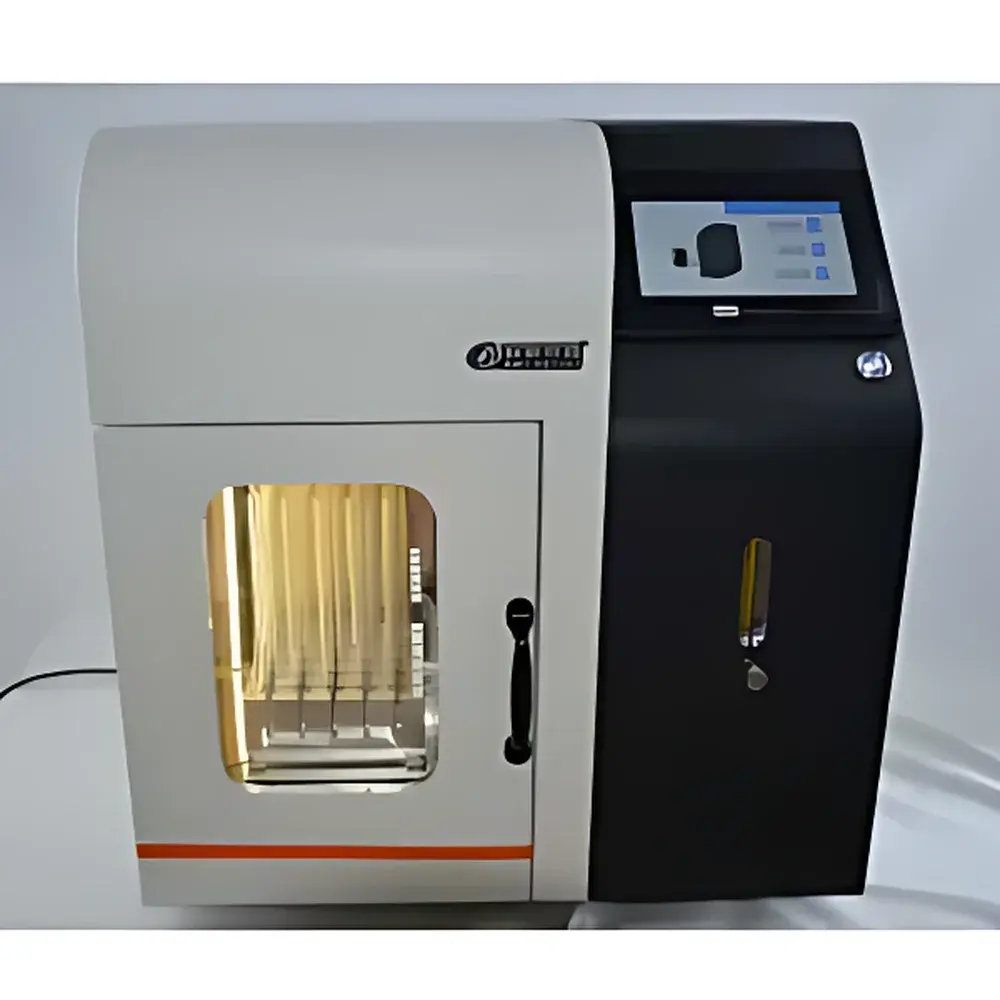
Anyan AYAN-DC16G Intelligent Dry-Block Nitrogen Evaporator
| Brand | Anyan Instruments |
|---|---|
| Origin | Zhejiang, China |
| Manufacturer Type | Authorized Distributor |
| Country of Origin | China |
| Model | AYAN-DC16G |
| Heating Method | Dry-block (aluminum block) |
| Temperature Range | Ambient to 99 °C |
| Temperature Stability | ±0.5 °C |
| Sample Capacity | 16 positions |
| Gas Flow Rate | 0–15 L/min |
| Tube Diameter Compatibility | Customizable (standard: 16 mm) |
| Heating Power | 150 W |
Overview
The Anyan AYAN-DC16G Intelligent Dry-Block Nitrogen Evaporator is an engineered solution for precise, contamination-free solvent removal and sample concentration in analytical laboratories. It operates on the principle of controlled nitrogen gas flow directed onto liquid surfaces within sample vessels—accelerating evaporation while minimizing thermal degradation, oxidation, or cross-contamination. Unlike water-bath evaporators, the AYAN-DC16G employs a dry-block heating architecture using high-purity aerospace-grade aluminum modules. This design eliminates moisture-related risks (e.g., condensation, microbial growth, or water ingress), making it especially suitable for moisture-sensitive analytes—including organometallic compounds, anhydrous reagents, and hydrolysis-prone pharmaceutical intermediates. Its programmable temperature control (ambient to 99 °C, ±0.5 °C stability) and integrated nitrogen pre-heating system (maintained at ~45 °C) ensure consistent vapor pressure gradients across all 16 sample positions—critical for reproducible recovery in quantitative workflows aligned with ISO/IEC 17025 and USP <711> dissolution methodology requirements.
Key Features
- 7-inch capacitive touchscreen interface with intuitive navigation and real-time parameter monitoring
- 5 operational modes and up to 50-segment programmable temperature ramping for method flexibility
- Modular dry-block heating system fabricated from anodized aerospace aluminum—ensuring rapid thermal response (<3 min to 80 °C) and uniform spatial temperature distribution (±0.8 °C across block surface)
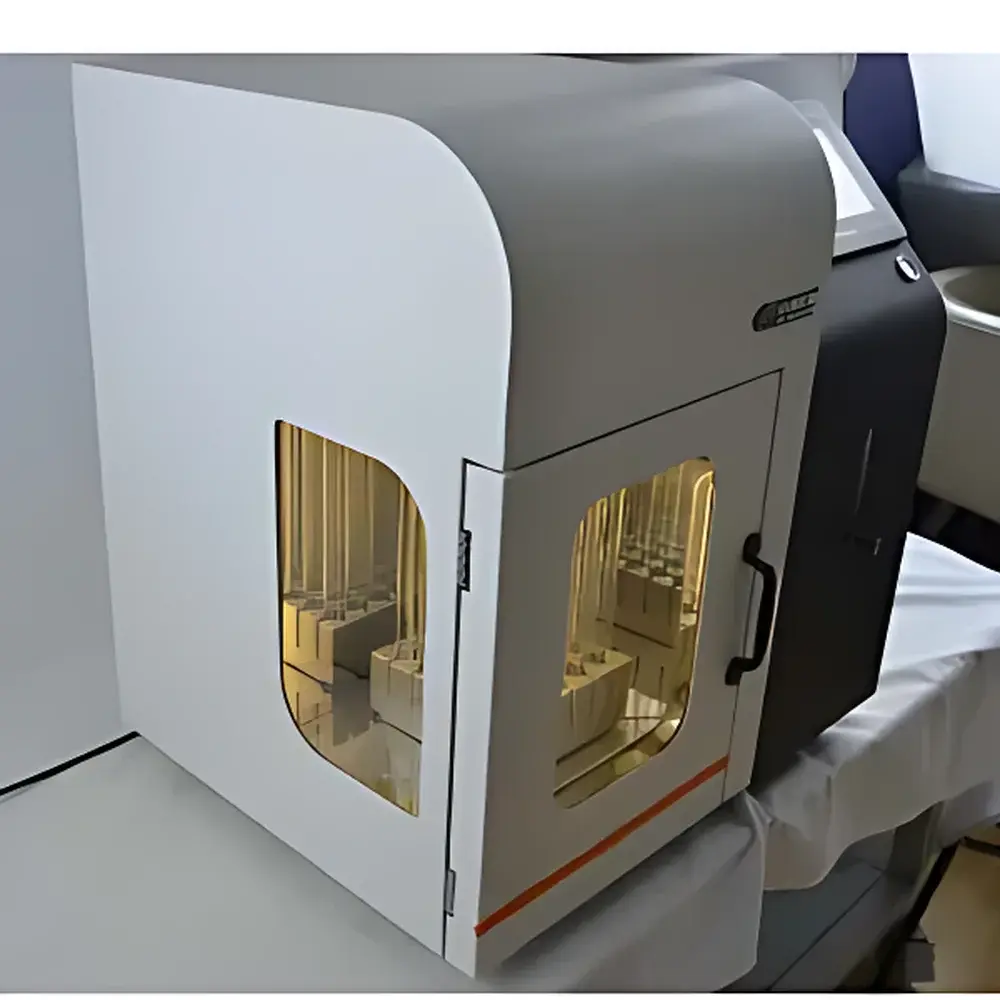
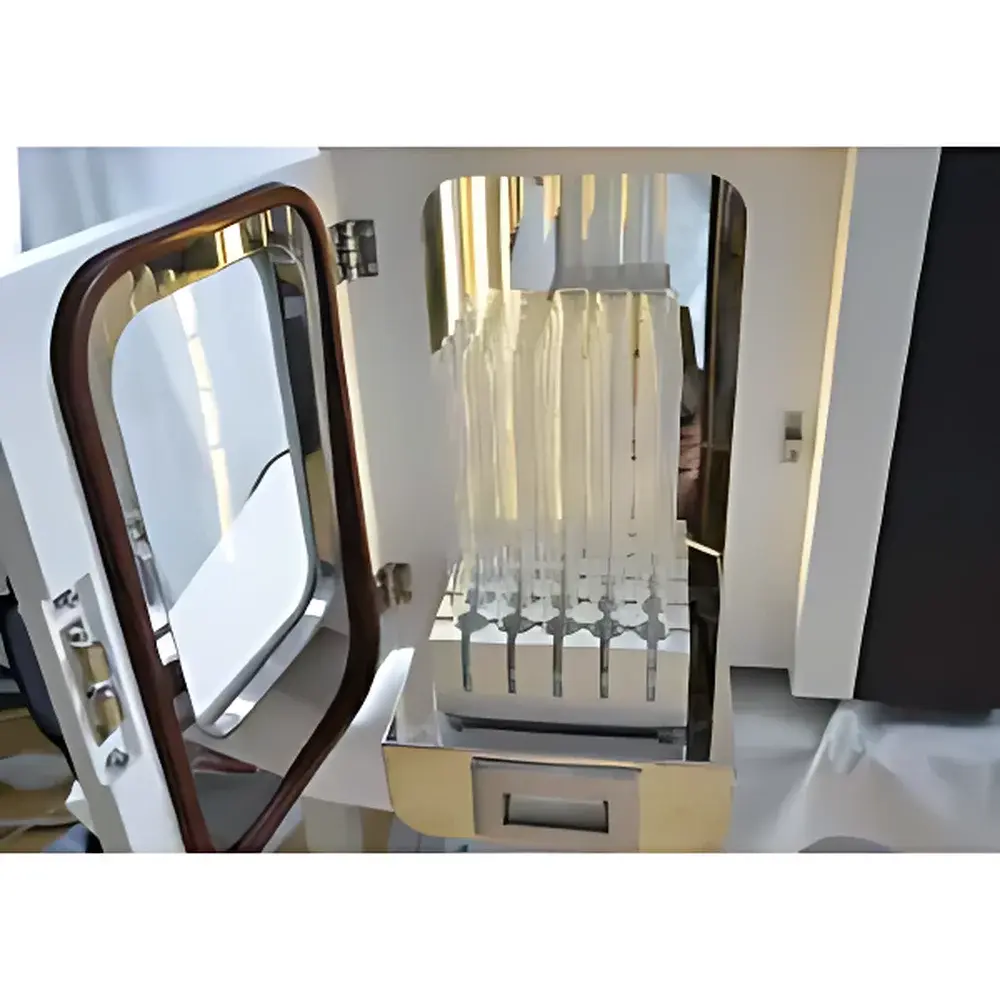
- Four-sided transparent viewing chamber with dual observation windows (front and side) and drawer-style sample tray for unobstructed liquid-level monitoring without instrument interruption
- Dual-mode needle height adjustment: motorized coarse positioning (0–120 mm travel) plus fine-tuning micrometer control (0.1 mm resolution) for optimal gas jet alignment over diverse vessel geometries
- Independent electromagnetic flow control per channel (16 channels), enabling differential gas delivery rates and dynamic pressure balancing via built-in auto-regulation circuitry
- Integrated recirculating exhaust fan and dual-seal door system—eliminating need for external fume hood integration while maintaining Class II containment integrity per ANSI/ASHRAE 110 standards
- Onboard data logging (≥10,000 records) with timestamped temperature, pressure, timer, and error-event history—supporting GLP-compliant audit trails
Sample Compatibility & Compliance
The AYAN-DC16G accommodates standard 16-mm OD test tubes, centrifuge tubes, and custom-insert vials (with optional adapter plates). Its dry-heating architecture avoids aqueous interference—making it compatible with moisture-reactive samples such as Grignard reagents, lithium aluminum hydride solutions, and anhydrous catalysts. The system complies with general laboratory safety standards including IEC 61010-1 (Electrical Safety for Laboratory Equipment) and meets electromagnetic compatibility (EMC) requirements per EN 61326-1. While not certified for hazardous location use (e.g., Class I Div 1), its sealed gas manifold and leak-tested pneumatic architecture support routine operation in ISO Class 7 cleanrooms when paired with externally filtered nitrogen supply (≤0.01 µm particulate, dew point ≤−40 °C).
Software & Data Management
All operational parameters—including setpoints, ramp profiles, gas flow values, and runtime logs—are stored internally and exportable via USB interface in CSV format. The device supports time-stamped event logging (e.g., overtemperature alerts, door-open detection, power interruptions) required for FDA 21 CFR Part 11–aligned environments when used with validated third-party LIMS integration. No proprietary software installation is required; configuration and diagnostics are fully managed through the embedded HMI. Audit trail functionality includes user ID tagging (via optional password-protected access levels) and immutable record retention—facilitating internal QA reviews and regulatory inspections under GMP Annex 11 and ISO 13485 frameworks.
Applications
- Concentration of environmental extracts (e.g., PAHs, PCBs, pesticides) prior to GC-MS analysis per EPA Method 8270D
- Preparative cleanup of biological matrices—including plasma, urine, and tissue homogenates—in clinical toxicology workflows
- High-throughput sample prep for LC-MS/MS bioanalysis in pharmaceutical development (ICH M10 compliant)
- Residue testing in food safety labs (EU Regulation 396/2005) where low-level solvent carryover must be excluded
- Stabilization of air-sensitive catalysts during synthetic chemistry scale-up
FAQ
Is the AYAN-DC16G suitable for volatile organic compounds with low boiling points?
Yes—the pre-heated nitrogen stream (~45 °C) reduces thermal shock and prevents cold-condensation artifacts, preserving analyte integrity during gentle concentration.
Can the heating block be replaced with alternative configurations?
Yes—modular blocks supporting 12-, 16-, or 24-position layouts (with diameters ranging from 10 mm to 29 mm) are available as field-replaceable accessories.
Does the unit meet regulatory requirements for electronic records?
It provides essential audit-trail capabilities (time-stamped logs, user actions, system events); full 21 CFR Part 11 compliance requires supplementary validation documentation and procedural controls implemented by the end user.
What maintenance is required for long-term reliability?
Annual verification of temperature uniformity (using NIST-traceable probe), visual inspection of O-rings and needle seals, and cleaning of the aluminum block surface with isopropanol—no lubrication or calibration service contracts are mandatory.
Is external ventilation necessary?
No—the integrated recirculating exhaust and dual-seal door system contains vapors effectively; however, connection to a central lab exhaust is recommended when processing highly toxic or malodorous solvents.



