
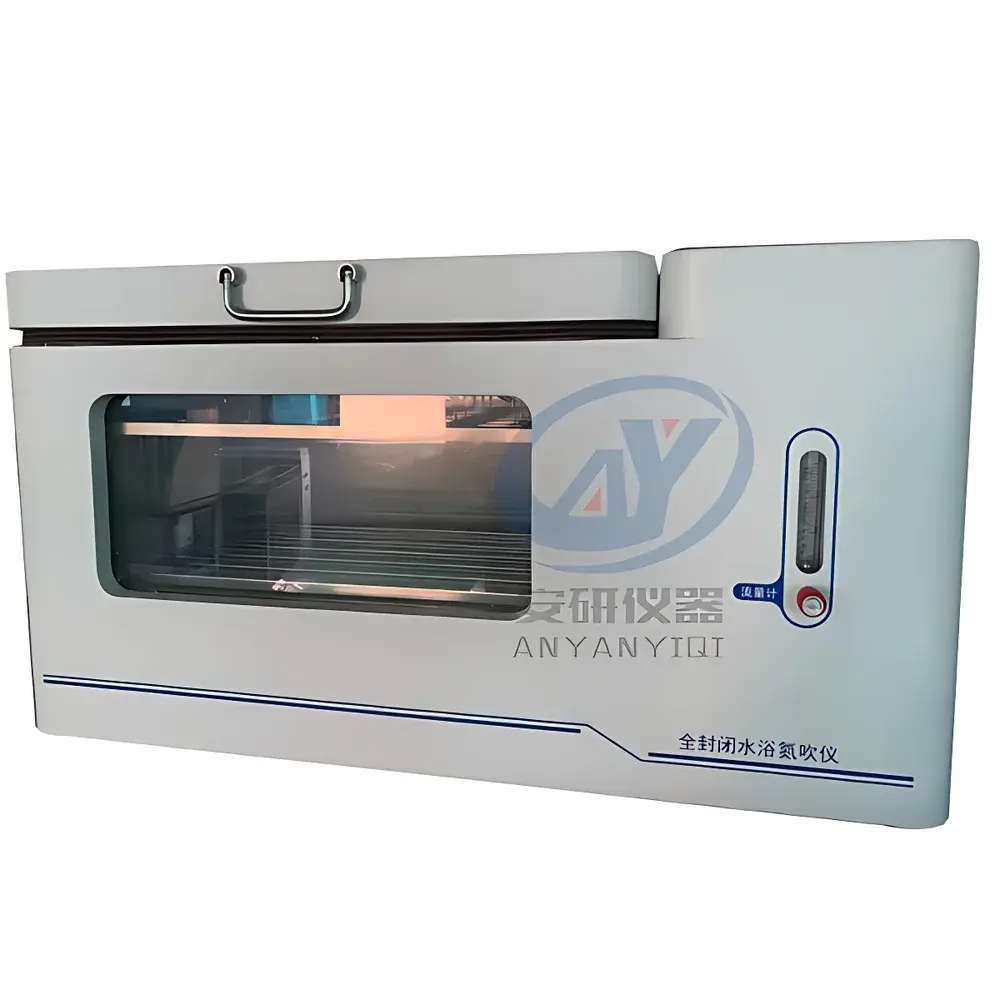
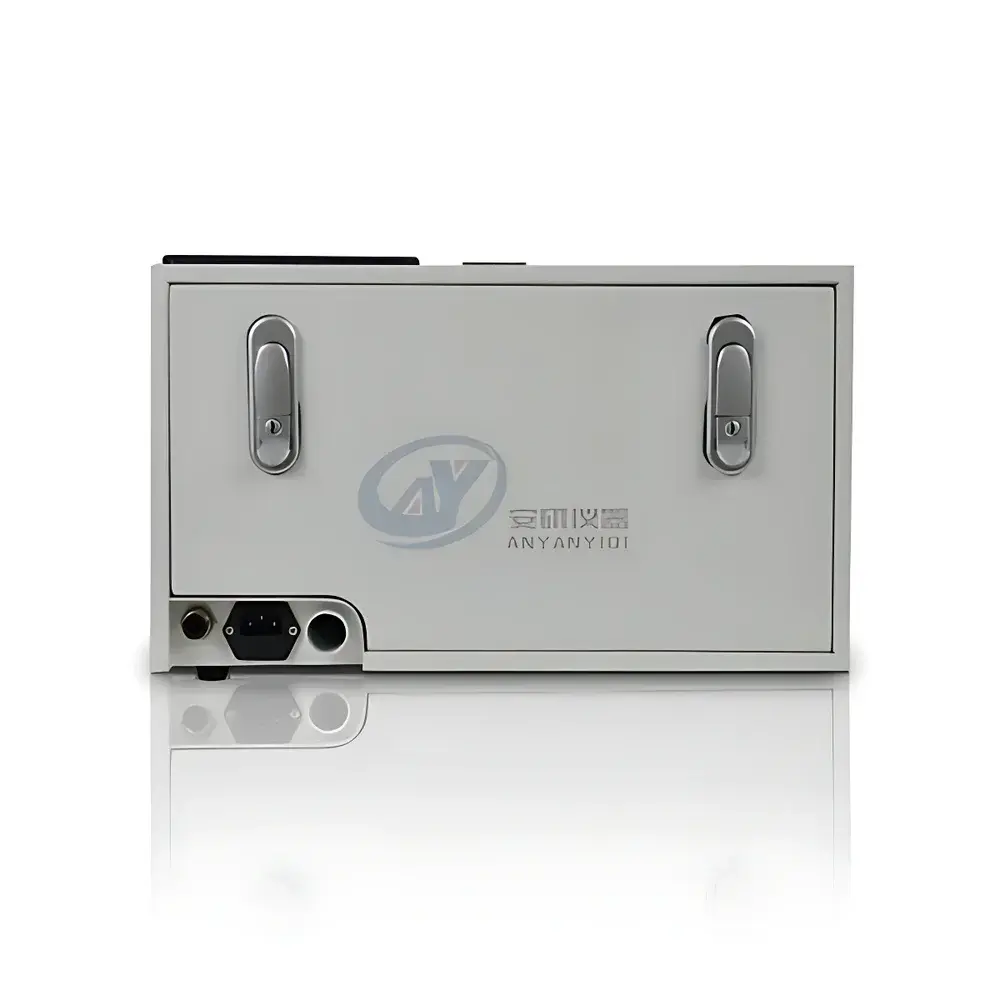
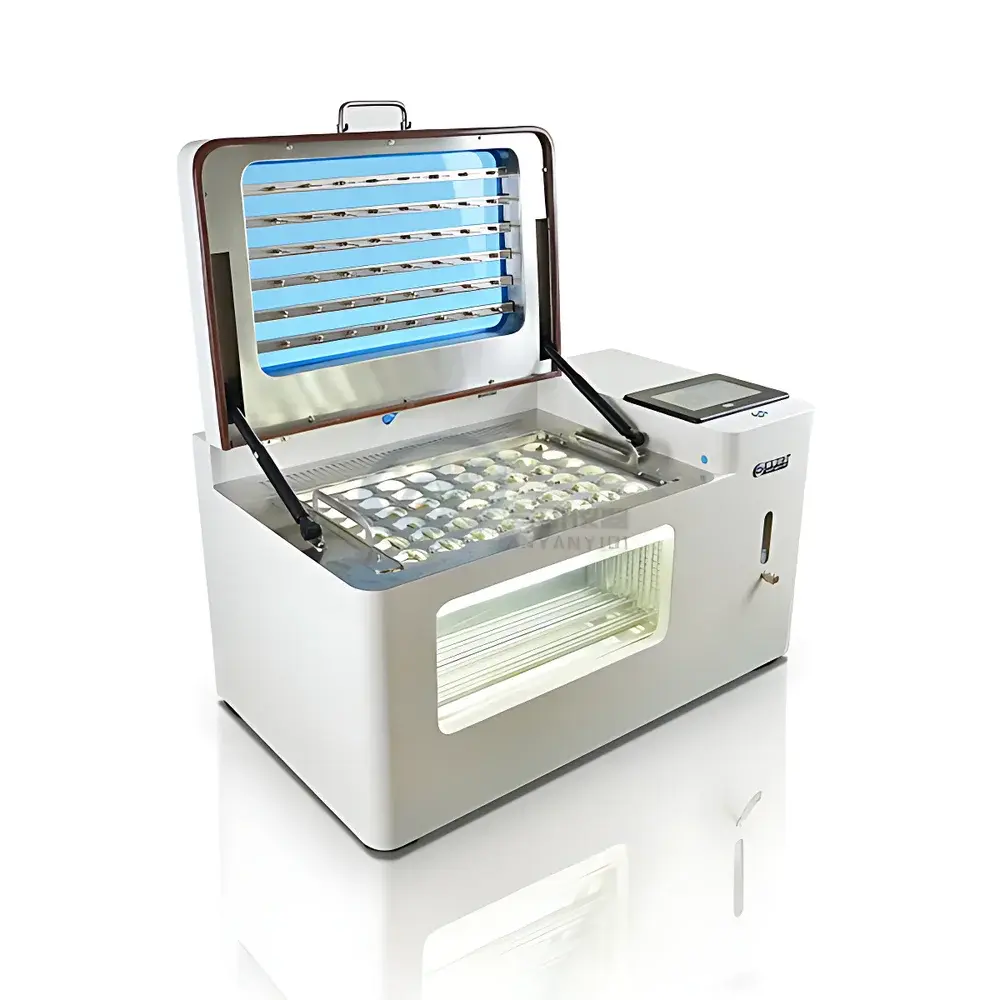
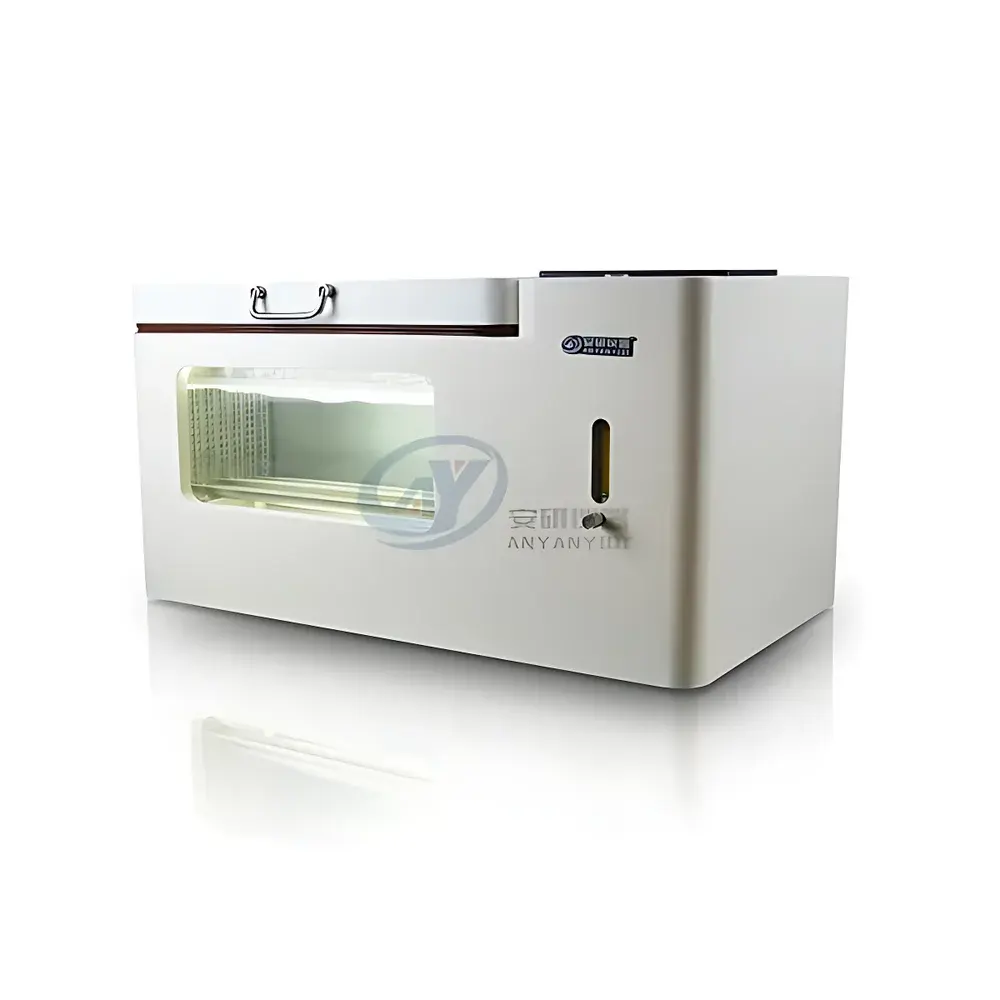
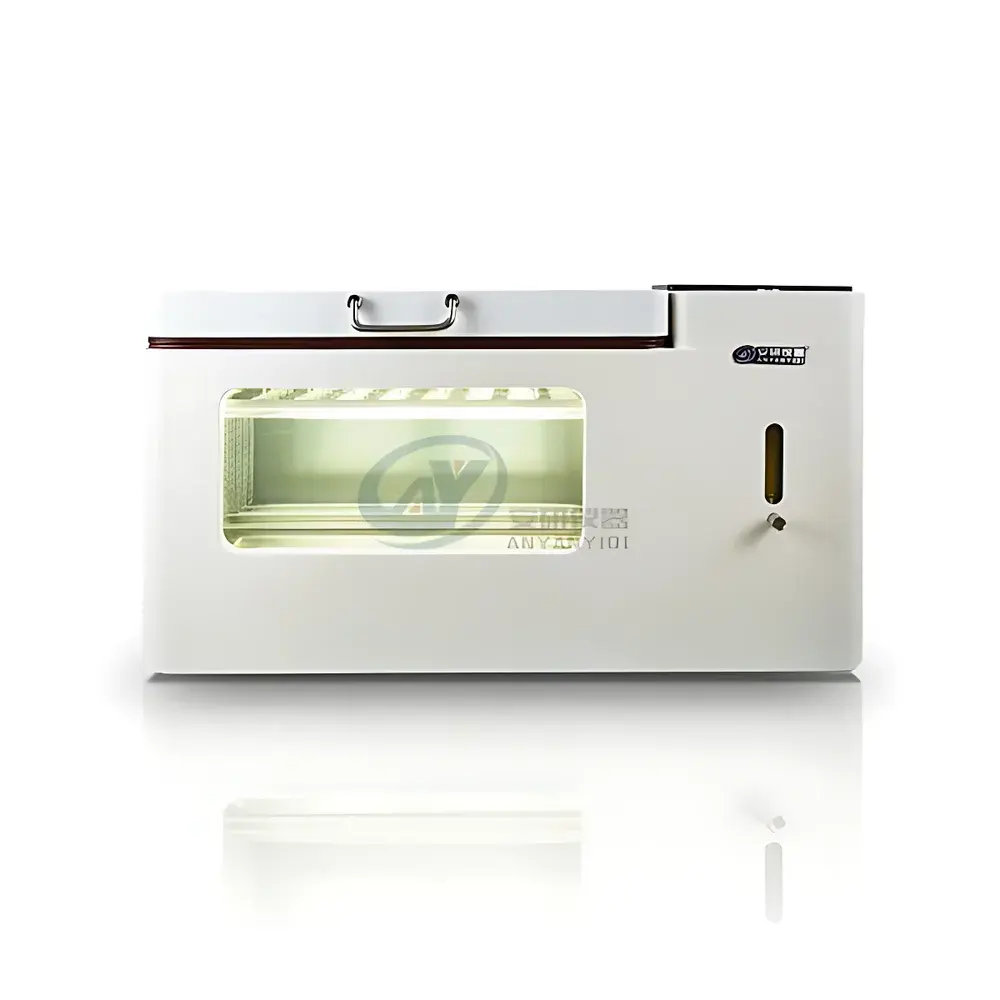
Anyan AYAN-DC20S Fully Enclosed Water Bath Nitrogen Evaporator
| Brand | Anyan Instruments |
|---|---|
| Origin | Zhejiang, China |
| Manufacturer Type | Authorized Distributor |
| Country of Origin | China |
| Model | AYAN-DC20S |
| Heating Method | Water Bath |
| Temperature Range | Ambient to 100 °C |
| Temperature Stability | ±0.5 °C |
| Sample Tube Diameter Compatibility | 10–30 mm |
| Gas Flow Control Range | 0–999 mL/min (adjustable per channel) |
| Sample Capacity | 20 positions |
| Heating Power | 800 W (typical for 20-position water bath configuration) |
Overview
The Anyan AYAN-DC20S Fully Enclosed Water Bath Nitrogen Evaporator is an engineered solution for controlled, reproducible solvent removal in analytical laboratories. Designed in collaboration with Zhejiang University of Technology, it implements a closed-loop water bath heating system combined with precisely regulated nitrogen gas delivery to accelerate evaporation while minimizing analyte loss, oxidation, and cross-contamination. Unlike open-bath or dry-block alternatives, the AYAN-DC20S features a fully sealed chamber with dual transparent observation windows and integrated thermal management—ensuring consistent temperature distribution across all 20 sample positions and eliminating ambient interference. Its operational principle relies on gentle convective heat transfer from the water bath to sample tubes, coupled with laminar, pre-heated nitrogen flow directed tangentially above the liquid surface. This configuration maintains low thermal stress on thermolabile compounds and prevents condensation at the needle tip—a known source of carryover and sample dilution in conventional systems.
Key Features
- 7-inch high-resolution capacitive touchscreen interface with intuitive navigation and real-time parameter monitoring
- Fully enclosed evaporator chamber with front and side optical-grade acrylic viewing windows—enabling continuous visual inspection without compromising seal integrity
- Dual-sealed door mechanism with internal recirculating fan system, eliminating need for external fume hood integration and preventing volatile organic compound (VOC) leakage
- Pre-heated nitrogen delivery: gas is warmed to ~45 °C prior to entry, reducing thermal shock, inhibiting condensate formation on吹针 (blow needles), and enhancing evaporation kinetics
- Independent electromagnetic flow control per channel, enabling precise, programmable gas distribution across all 20 positions
- Automatic pressure equalization system ensuring uniform gas flux across all channels—even with variable tube geometry or solvent viscosity
- 50-step programmable temperature ramping with five preset operating modes (e.g., constant temperature, gradient, hold-and-ramp) for method flexibility
- Onboard data logging capability storing up to 100 runtime sessions—including setpoints, actual temperatures, flow rates, and elapsed time—with timestamped export via USB
Sample Compatibility & Compliance
The AYAN-DC20S accommodates standard round-bottom and conical test tubes with outer diameters ranging from 10 mm to 30 mm, including common formats such as 13 × 100 mm, 16 × 150 mm, and 20 × 150 mm. Its modular sample holder supports both fixed-depth and adjustable-height configurations, allowing users to maintain optimal distance (6 mm) between the nitrogen outlet and solvent surface—critical for maximizing mass transfer efficiency while avoiding splashing or foaming. The system complies with general laboratory safety standards for enclosed heating equipment (IEC 61010-1) and meets material compatibility requirements for routine use with aqueous, methanolic, acetonitrile, and ethyl acetate-based extracts. While not certified for GMP or GLP environments out-of-the-box, its audit-ready data logging, user-accessible calibration logs, and password-protected method storage support alignment with ISO/IEC 17025 documentation practices and FDA 21 CFR Part 11 principles when deployed with validated SOPs.
Software & Data Management
The embedded firmware supports full local operation without PC dependency. All methods—including temperature profiles, gas flow sequences, and dwell times—are stored internally with unique identifiers and timestamps. Data export is performed via standard USB-A port to FAT32-formatted drives; exported files are CSV-formatted and compatible with LIMS ingestion pipelines and statistical analysis platforms (e.g., JMP, Minitab). No proprietary software installation is required. Audit trail functionality records operator ID (if enabled), parameter changes, start/stop events, and system alarms—providing traceability for QA/QC review. Firmware updates are delivered via signed binary packages distributed through Anyan’s authorized technical support portal.
Applications
This evaporator is routinely deployed in environmental testing labs for EPA Method 508/525 sample preparation, clinical toxicology workflows requiring quantitation of benzodiazepines or opioids in serum, food safety labs performing pesticide residue analysis (e.g., QuEChERS extracts), and pharmaceutical R&D settings conducting stability-indicating assays. Its closed architecture and thermal pre-conditioning make it especially suitable for concentrating volatile analytes (e.g., BTEX, chlorinated solvents), labile metabolites (e.g., prostaglandins, catecholamines), and low-boiling-point terpenes in natural product isolation. It is also used in forensic toxicology for blood alcohol confirmation workflows where ethanol volatility demands minimized headspace exposure.
FAQ
What is the maximum recommended operating temperature for aqueous samples?
The system is rated for continuous operation up to 100 °C; however, for aqueous matrices, sustained temperatures above 85 °C may increase risk of bumping or aerosol generation—users are advised to employ gradual ramping and confirm tube stability under load.
Can the AYAN-DC20S be integrated into automated sample preparation lines?
It does not feature RS-232, Ethernet, or PLC-compatible I/O ports; integration requires external relay-based triggering and manual method synchronization.
Is calibration traceable to national standards?
Temperature sensors are factory-calibrated against NIST-traceable references; users may perform field verification using a calibrated PT100 probe inserted into the water bath medium.
How often should the nitrogen pre-heater filter be replaced?
Under typical lab air conditions, replacement is recommended every 6 months or after 1,000 hours of cumulative operation—whichever occurs first—to maintain thermal consistency and prevent particulate ingress.
Does the unit support inert gas substitution other than nitrogen?
Yes—argon and helium are compatible provided inlet pressure remains within 0.2–0.6 MPa and gas purity exceeds 99.995% to avoid sensor drift or heater fouling.



