
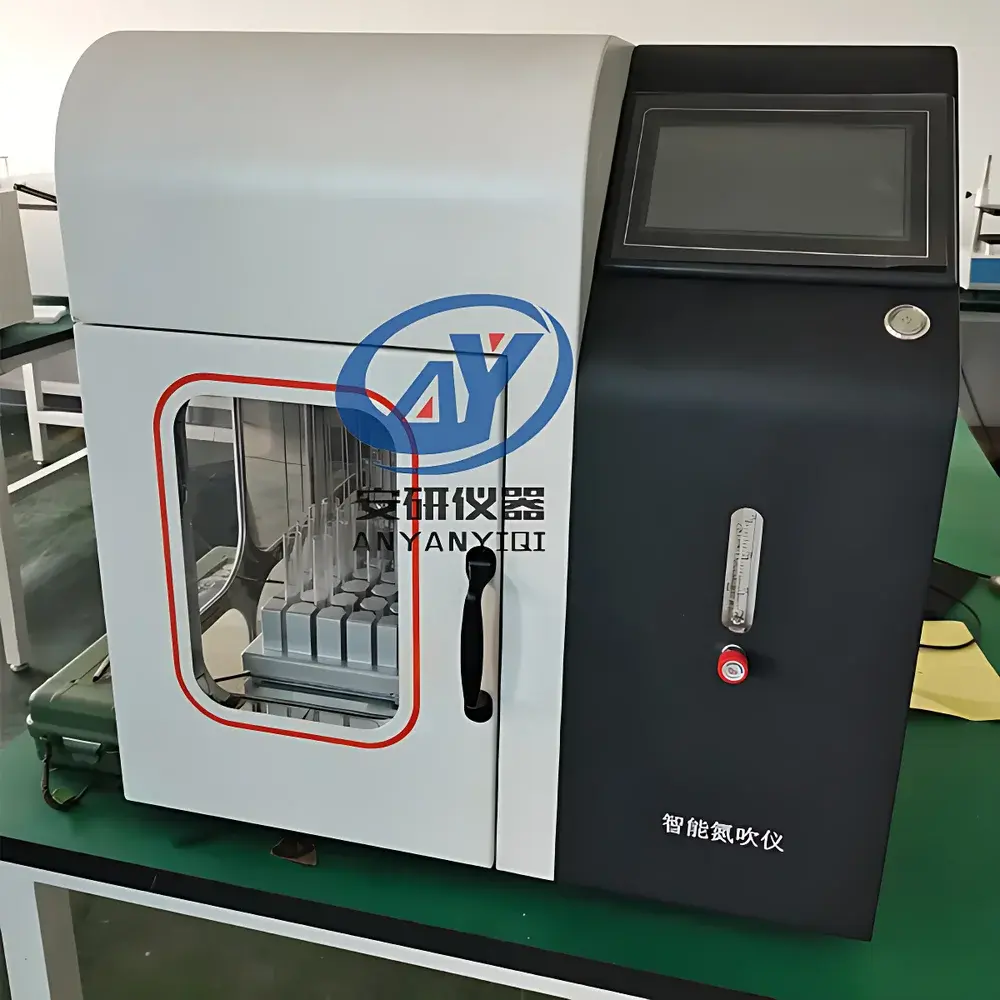
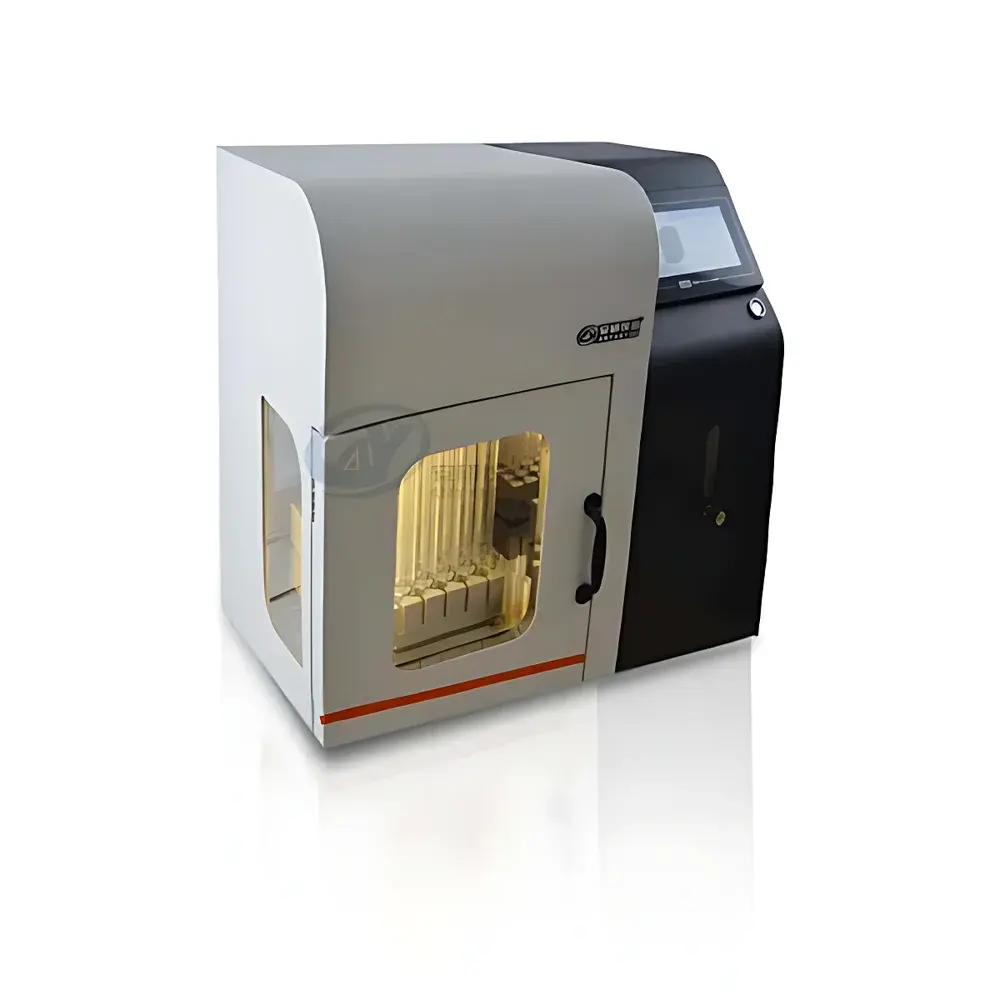
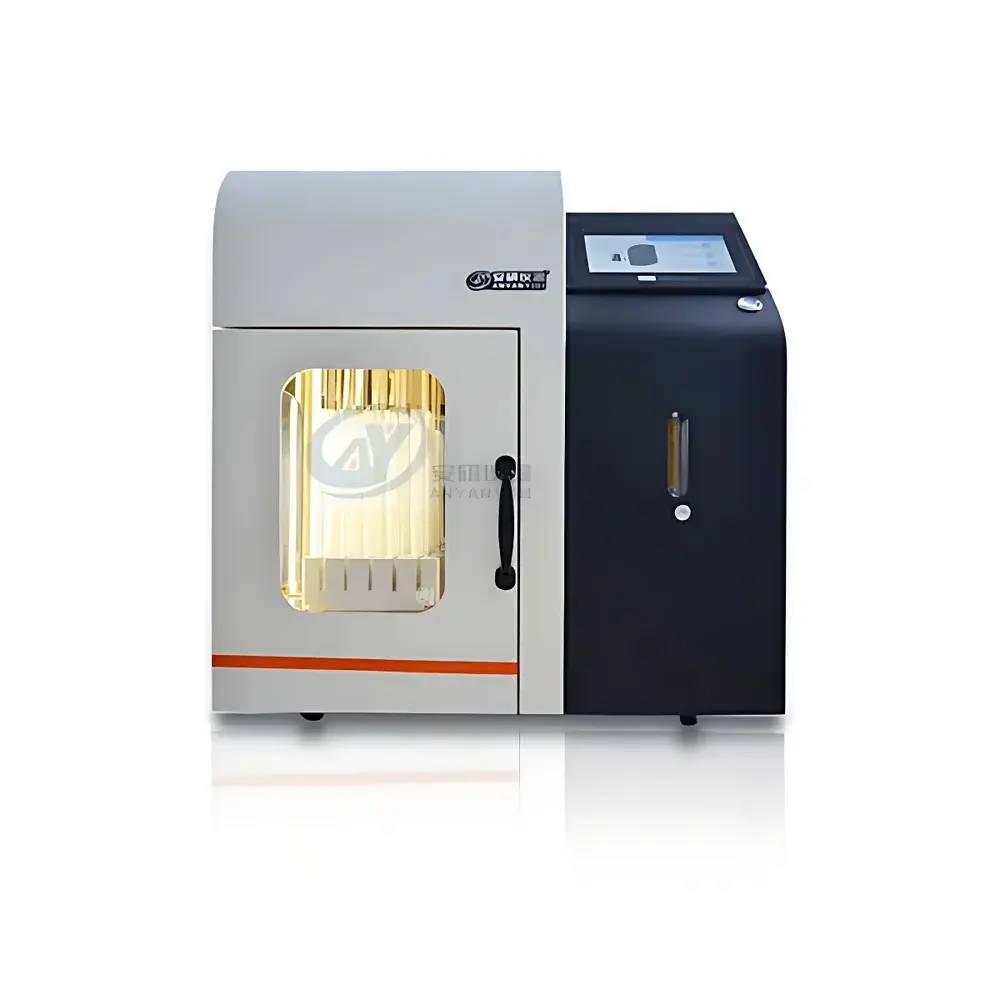
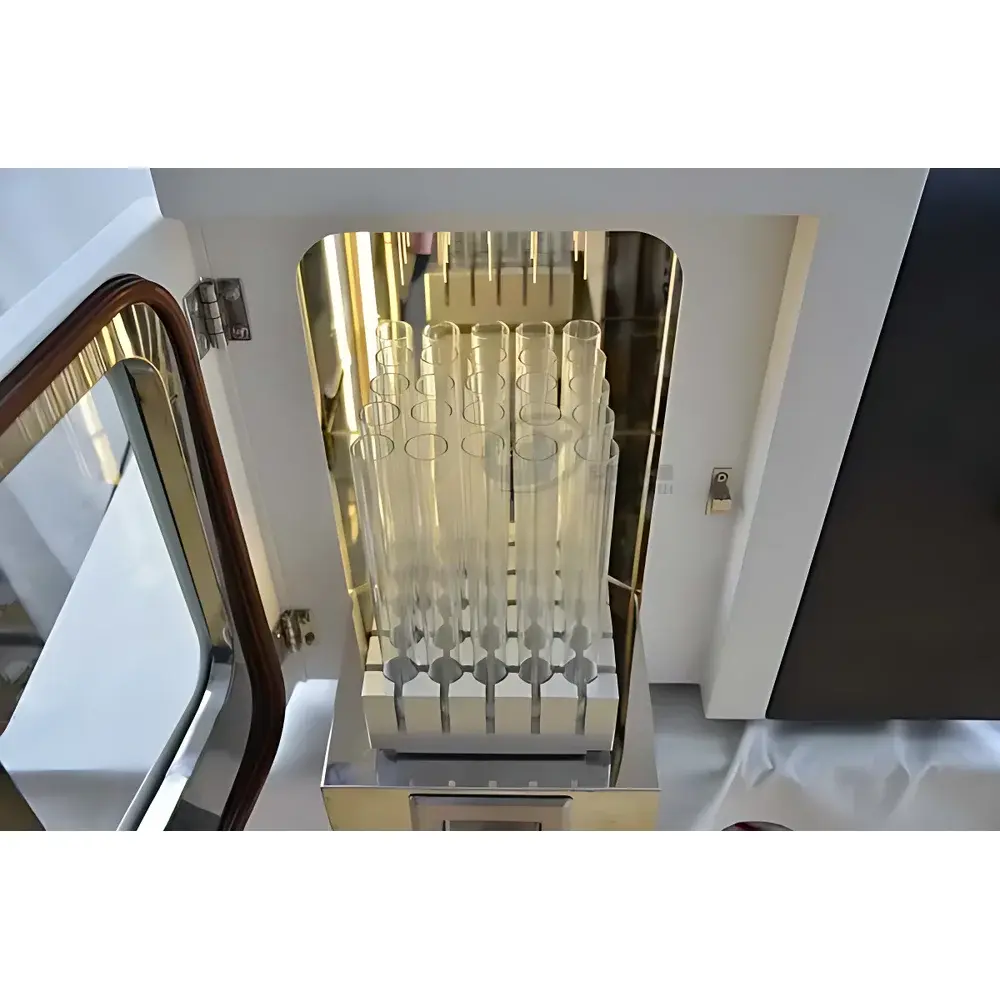
Anyan AYAN-DC25G Fully Enclosed Dry-Block Nitrogen Evaporator
| Brand | Anyan Instruments |
|---|---|
| Origin | Zhejiang, China |
| Manufacturer Type | Authorized Distributor |
| Product Category | Domestic |
| Model | AYAN-DC25G |
| Price Range | USD 5,600 – 8,400 (FOB) |
| Heating Method | Dry-block (aluminum alloy heating module) |
| Temperature Range | Ambient to 150 °C |
| Temperature Stability | ±0.5 °C |
| Sample Capacity | 25 positions |
| Tube Diameter Compatibility | Up to 16 mm (interchangeable modules available) |
| Gas Flow Control Range | 0–999 mL/min (digital mass flow regulation per channel) |
| Control Interface | 7-inch capacitive touchscreen |
| Programmability | 50-step temperature ramping profiles across 5 operating modes |
| Gas Preheating | Yes (to ~45 °C) |
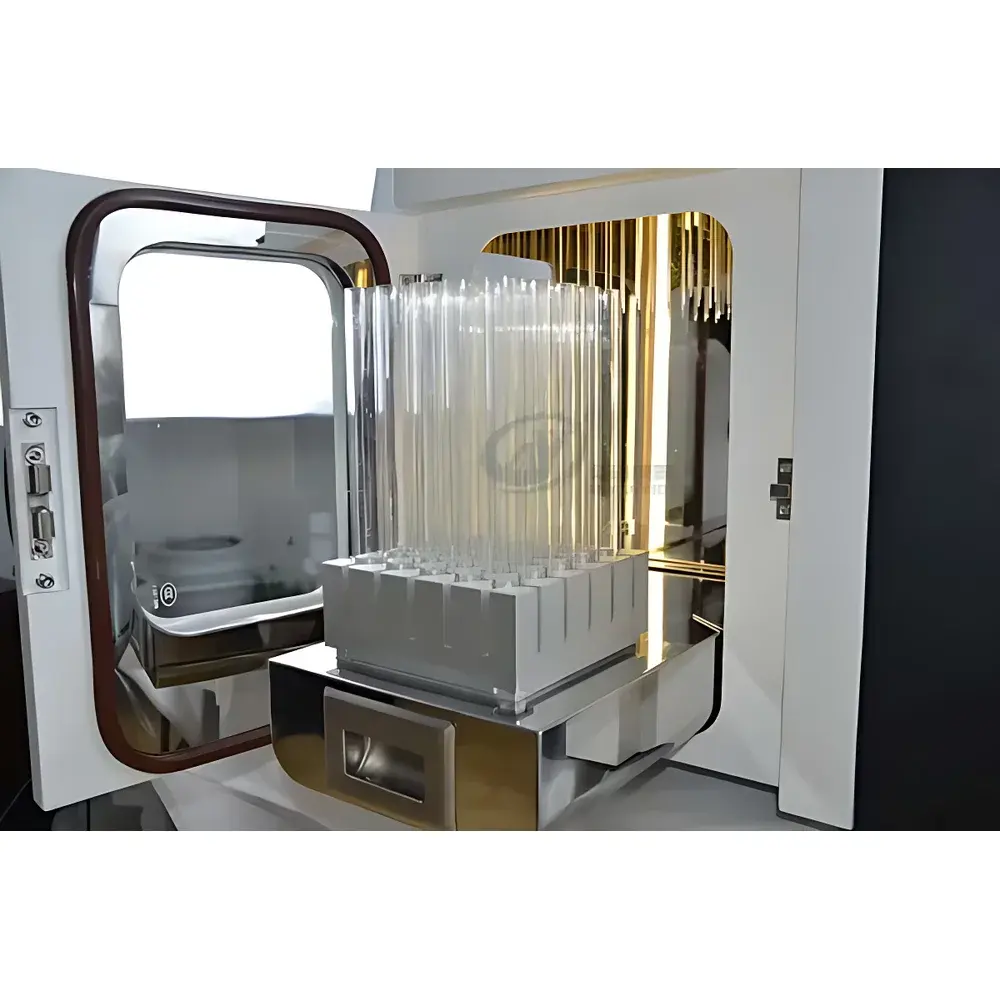
| Sealing System | Dual-glass door with silicone gasket and internal recirculating blower |
| Data Logging | Internal storage for ≥100 run logs with timestamped temperature/flow/position data |
| Power Rating | 1.2 kW |
Overview
The Anyan AYAN-DC25G Fully Enclosed Dry-Block Nitrogen Evaporator is an engineered solution for high-throughput, contamination-sensitive sample concentration in regulated analytical laboratories. Designed in collaboration with Zhejiang University of Technology, it employs dry-block heating—using a precision-machined, high-purity aerospace-grade aluminum heating block—to eliminate water vapor introduction during evaporation. Unlike water bath systems, this architecture ensures zero risk of cross-contamination from bath fluid ingress, microbial growth, or temperature gradient-induced condensation on vial walls. The instrument operates on the principle of gentle, controlled nitrogen gas sweeping across sample surfaces under programmable thermal conditions, accelerating solvent removal while preserving thermolabile analytes. Its fully enclosed chamber—equipped with dual tempered glass observation windows, positive-pressure sealing, and an integrated recirculating air system—meets containment requirements for volatile organic compounds (VOCs), ensuring operator safety and compliance with OSHA 29 CFR 1910.1200 and EU Directive 2004/37/EC (Carcinogens and Mutagens).
Key Features
- 7-inch capacitive touchscreen interface supporting intuitive navigation, real-time parameter monitoring, and multi-user access control
- Dry-block heating system with rapid thermal response (<6 min to reach 100 °C) and exceptional spatial uniformity (±0.3 °C across all 25 positions)
- 50-segment programmable temperature profiling across five operational modes: Ramp-Hold, Step, Linear, Isothermal, and Custom Sequence
- Motorized vertical needle positioning with dual-speed actuation—precision micro-adjustment (0.1 mm resolution) and rapid coarse movement (full stroke in <2 s)
- Independent electromagnetic flow control per channel (25 channels), enabling differential gas delivery to accommodate varying solvent volatilities and vial geometries
- Integrated nitrogen preheating module maintaining consistent inlet gas temperature at ~45 °C—reducing cold condensation on needle tips and minimizing analyte loss via re-deposition
- Modular aluminum heating blocks (16 mm diameter standard; optional 10/12/18/20 mm configurations) designed for tool-free exchange and long-term thermal stability
- Dual-sealed observation doors with silicone compression gaskets and forced-air recirculation, eliminating external venting requirements and meeting ANSI Z9.5 laboratory ventilation guidelines
Sample Compatibility & Compliance
The AYAN-DC25G accommodates standard 16 mm OD round-bottom and flat-bottom tubes (e.g., 15–50 mL conical centrifuge tubes, culture tubes, and GC vials). Its drawer-style sample tray enables unobstructed visual inspection of liquid meniscus levels without opening the chamber—critical for endpoint determination in EPA Method 525.3, ISO 17025-accredited residue analysis, and pharmacopeial testing (USP , EP 2.4.24). The unit complies with IEC 61010-1:2010 for laboratory electrical equipment safety and incorporates hardware-level safeguards: overtemperature cutoff (155 °C mechanical limiter), gas-flow failure detection, and door-open interlock shutdown. All firmware operations support audit trail generation aligned with FDA 21 CFR Part 11 requirements when connected to compliant LIMS environments.
Software & Data Management
Onboard firmware supports local storage of ≥100 complete run records—including setpoint history, actual temperature/flow traces per position, start/stop timestamps, user ID, and alarm events. Data export is available via USB 2.0 port in CSV format for integration into ELN systems (e.g., LabArchives, Benchling) or statistical process control platforms. No proprietary software installation is required; exported logs are natively readable in Excel or Python/Pandas for trend analysis. Optional RS-485 Modbus RTU interface enables centralized monitoring in multi-instrument lab networks adhering to ISA-88 batch control standards.
Applications
This evaporator is routinely deployed in environmental labs for concentrating pesticide residues from aqueous extracts (EPA 8081B, 8270D), clinical toxicology workflows involving plasma/urine drug screening (LC-MS/MS sample prep), food safety testing for mycotoxins (AOAC 2005.02), and pharmaceutical impurity profiling per ICH Q3A(R2). Its dry-block architecture makes it especially suitable for moisture-sensitive matrices—such as lipid extracts, essential oils, and organometallic standards—where trace water introduces hydrolysis artifacts or instrument contamination.
FAQ
What is the maximum recommended operating temperature for routine use?
The optimal sustained operating range is 40–120 °C; prolonged exposure above 130 °C may accelerate thermal aging of O-rings and reduce long-term sealing integrity.
Can the instrument be integrated into a nitrogen generator supply line?
Yes—provided the generator delivers oil-free, particle-filtered N₂ at ≥5 bar inlet pressure and ≤−40 °C dew point; the built-in pressure regulator accepts 3–8 bar input.
Is method validation support documentation available?
Instrument qualification documents (IQ/OQ templates), calibration certificates traceable to NIST standards, and temperature uniformity mapping reports are provided with each unit.
How often does the heating block require recalibration?
Annual verification using a calibrated PT100 probe inserted into designated block ports is recommended per ISO/IEC 17025 clause 6.5.2.
Does the system support remote monitoring via Ethernet or Wi-Fi?
Not natively; however, third-party IoT gateways with Modbus TCP translation can enable cloud-based status polling and alerting.



