
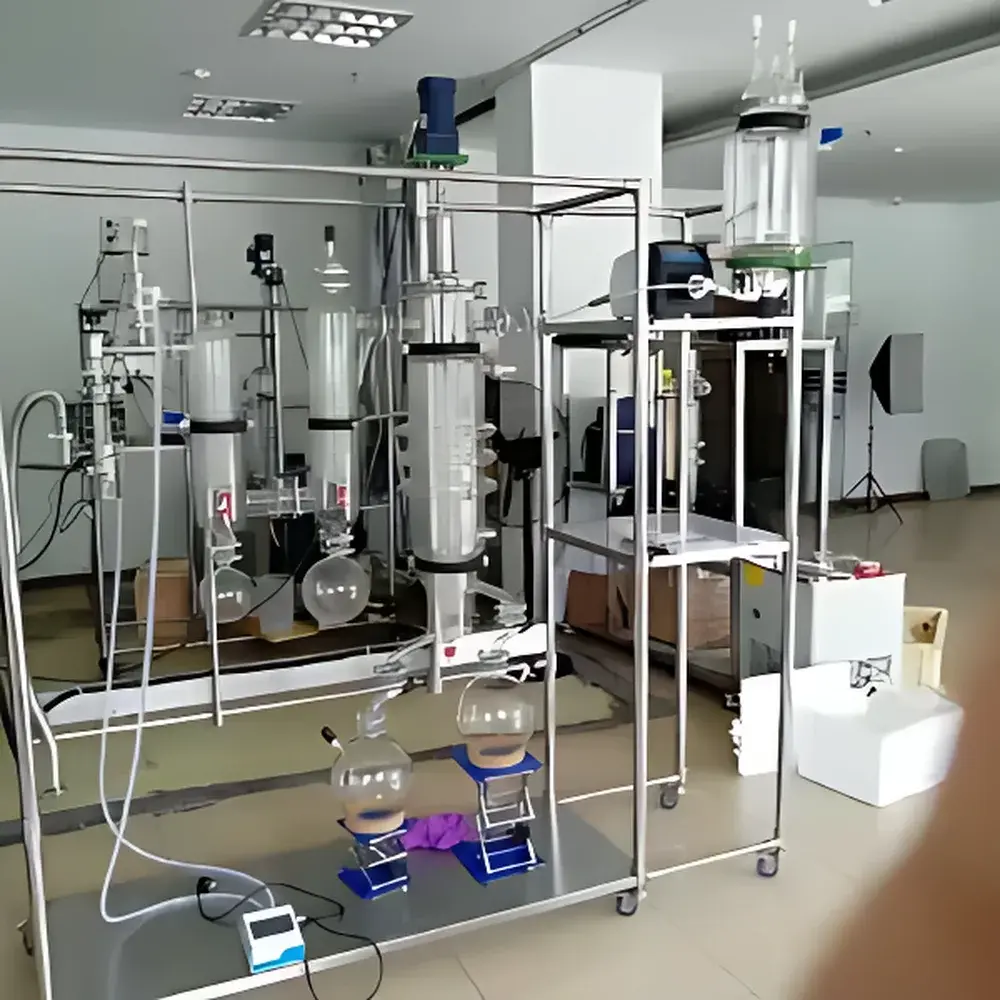
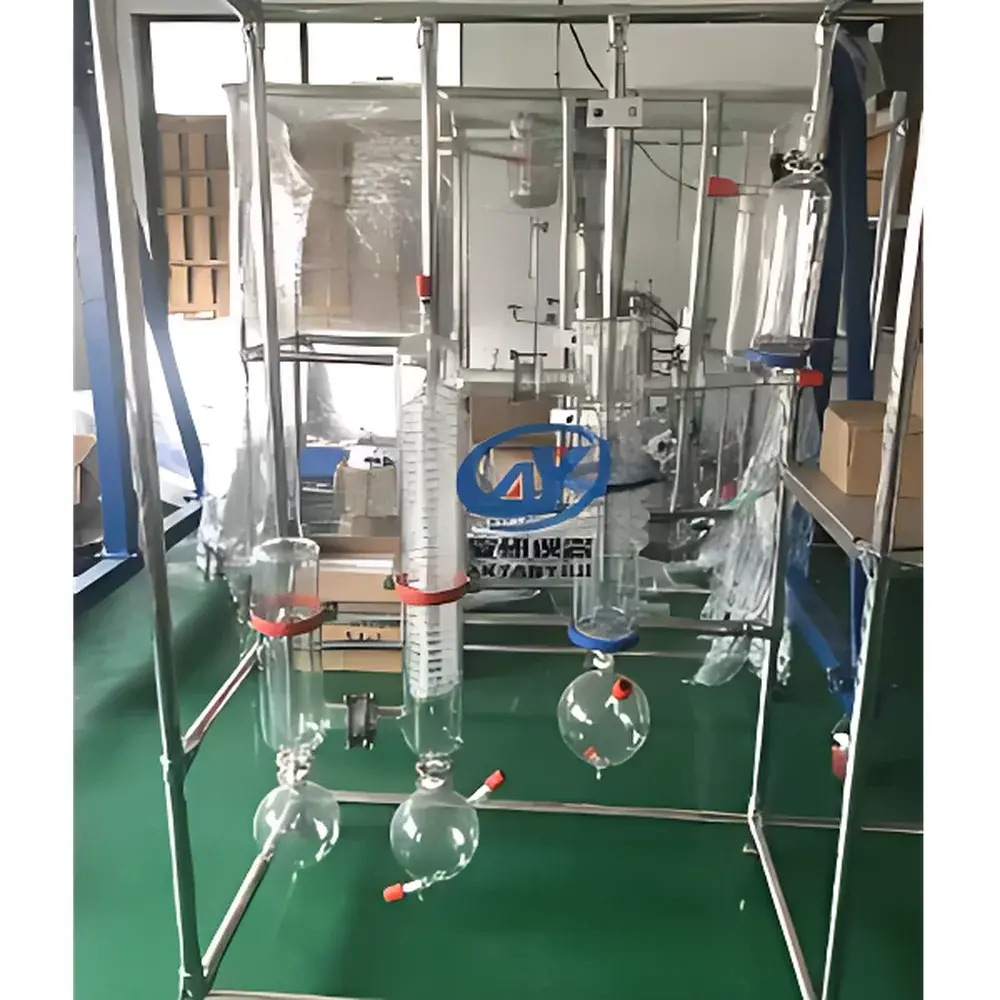
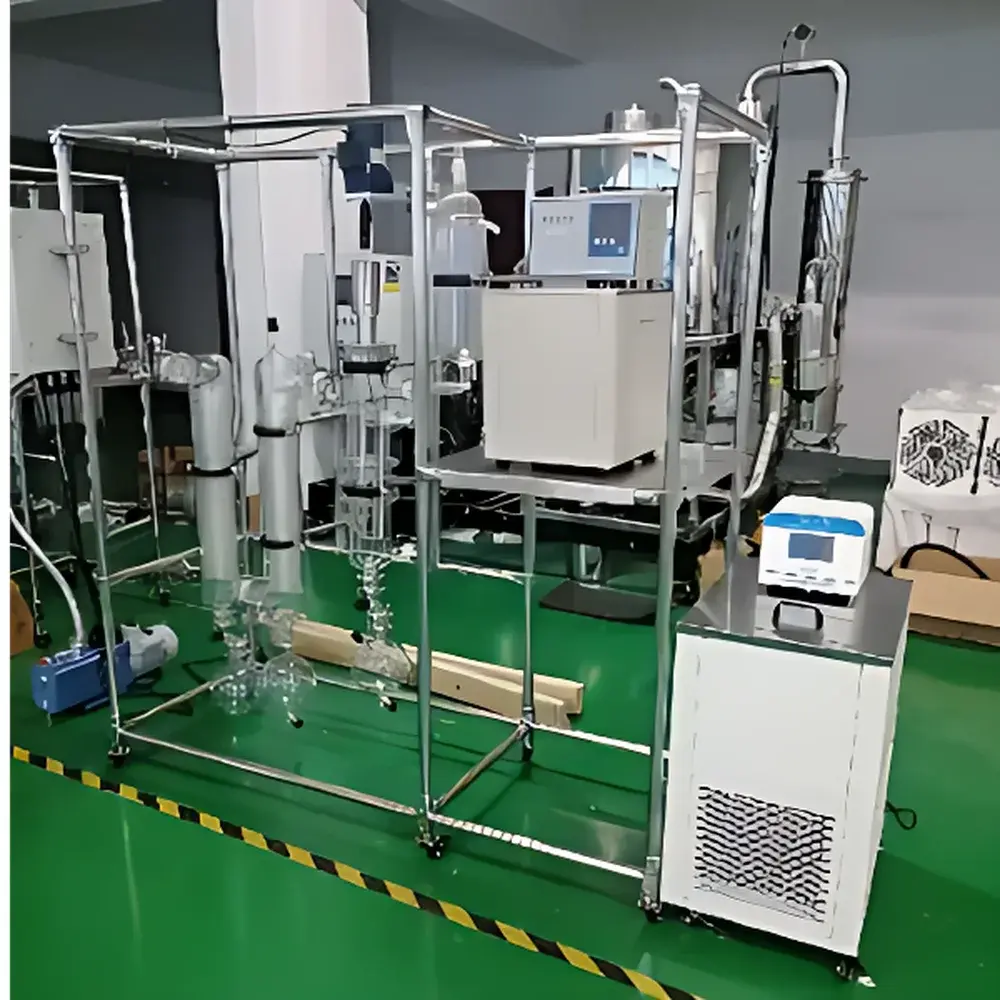
ANYAN AYAN-F100 Short-Path Molecular Distillation System
| Key Specifications | Brand: ANYAN |
|---|---|
| Origin | Zhejiang, China |
| Model | AYAN-F100 |
| Feed Capacity | 2 L |
| Effective Evaporation Area | 0.16 m² |
| Evaporator Internal Diameter | 100 mm |
| Condenser Area | 0.25 m² |
| Dual Collection Flasks | 2 × 2 L |
| Vacuum Level | ≤1 Pa |
| Heating Temperature Range | Ambient to 300 °C |
| Condenser Temperature | −20 °C (primary), −5 °C (secondary) |
| Wiper Speed | 300 rpm |
| Motor Power | 240 W |
| Film Thickness | <0.5 mm |
| Construction Material | Borosilicate Glass 3.3 (DIN ISO 3585), SS316L + PTFE wipers, FKM or PTFE-coated seals |
Overview
The ANYAN AYAN-F100 Short-Path Molecular Distillation System is an engineered laboratory-scale purification platform designed for high-vacuum, low-temperature separation of thermally labile, high-boiling-point, and oxidation-sensitive compounds. Operating on the principle of molecular distillation—where separation is governed by differences in molecular mean free path rather than relative volatility—the system enables selective vaporization of light molecules under ultra-high vacuum (≤1 Pa), ensuring minimal thermal exposure and no bulk boiling. Unlike conventional fractional or vacuum distillation, this process occurs at the liquid surface as free evaporation, with evaporated molecules traveling a short, unimpeded path (<50 mm) from the heated evaporator surface to the integrated condenser. This architecture eliminates frothing, foaming, and prolonged residence time, making it ideal for isolating bioactive lipids (e.g., fish oil omega-3 concentrates), natural antioxidants (e.g., tocopherols, astaxanthin), fragrance isolates, polymer additives, and pharmaceutical intermediates where structural integrity and chemical purity are critical.
Key Features
- Borosilicate glass 3.3 (DIN ISO 3585) construction throughout the main evaporator, condenser, and feed/receiving vessels—offering exceptional optical clarity, chemical resistance to organic solvents and mild acids/bases, and zero dead-volume geometry for complete cleanability.
- Integrated dual-stage condensation system with primary cooling at −20 °C and secondary at −5 °C, ensuring near-quantitative recovery of volatile fractions even under sub-1 Pa operating pressure.
- Precision-engineered wiper assembly fabricated from electropolished SS316L stainless steel and virgin PTFE, providing uniform thin-film formation (<0.5 mm thickness), consistent heat transfer, and corrosion resistance across diverse feedstock chemistries.
- Magnetic coupling drive system eliminates dynamic seal leakage points, maintaining stable vacuum integrity >10−2 Pa during extended operation—critical for reproducible molecular mean free path control.
- Full-jacketed evaporator body with independent temperature regulation (ambient to 300 °C), enabling precise thermal management of viscous or high-melting-point feeds without localized degradation.
- Digital Pirani vacuum gauge with real-time digital readout (range: 10−3–103 Pa), calibrated traceably to NIST standards, supporting GLP-compliant vacuum documentation.
- Modular interface design with FKM elastomer or PTFE-encapsulated gaskets; optional perfluoroelastomer (FFKM) upgrades available for aggressive halogenated or strongly oxidizing media.
Sample Compatibility & Compliance
The AYAN-F100 accommodates feedstocks ranging from low-viscosity extracts (e.g., ethanol-decaffeinated coffee oil) to highly viscous materials (e.g., crude lanolin, polymer oligomers) via adjustable wiper speed (300 rpm) and programmable pre-heating of the feed vessel (up to 300 °C). Its all-glass fluid path complies with USP for extractables/leachables in pharmaceutical development and meets ISO 9001 manufacturing traceability requirements. The system supports audit-ready operation under GLP and GMP frameworks when paired with validated data logging software (see Software & Data Management). It is routinely deployed in R&D workflows aligned with ASTM D6304 (moisture in petroleum products), ISO 11024 (lipid oxidation stability), and ICH Q5C (protein stability assessment), where physical separation—free of solvents, catalysts, or residues—is mandated.
Software & Data Management
While the base AYAN-F100 operates via analog front-panel controls, it is compatible with optional PC-based control modules featuring USB/RS485 interfaces and compliant with FDA 21 CFR Part 11 requirements when configured with electronic signatures, audit trails, and role-based access control. Logged parameters—including vacuum pressure, evaporator/condenser temperatures, wiper speed, and run duration—are timestamped and exportable in CSV or PDF formats. All calibration records for the Pirani gauge and PT100 sensors are stored internally with user-editable metadata, facilitating regulatory submissions and internal quality reviews.
Applications
- Purification of polyunsaturated fatty acids (PUFA) from fish, krill, or algal oils—removing PCBs, dioxins, and saturated triglycerides while preserving cis-double bonds.
- Isolation of natural vitamin E isomers (α-, γ-, δ-tocopherol) from soybean or sunflower distillates without racemization or epimerization.
- Deodorization and solvent removal from botanical CO2 extracts—eliminating residual butane, ethanol, or supercritical CO2 carryover without thermal decomposition.
- Recovery and concentration of heat-labile fragrances (e.g., linalool oxide, ionones) from hydrosols or enfleurage matrices.
- Preparative-scale fractionation of silicone oligomers, epoxy diluents, and monomeric acrylates for polymer synthesis R&D.
- Removal of per- and polyfluoroalkyl substances (PFAS) surrogates from environmental water extracts prior to LC-MS/MS analysis.
FAQ
What vacuum level is required for effective molecular distillation on the AYAN-F100?
Optimal operation requires a base pressure ≤1 Pa (≈7.5 × 10⁻³ Torr), achievable using the included 2 L/s dual-stage rotary vane pump and cold trap. A dedicated turbomolecular pumping option is available for sub-0.1 Pa applications.
Can the system handle highly viscous or solid-at-room-temperature feedstocks?
Yes—pre-heating of the feed vessel up to 300 °C, combined with the SS316L/PTFE wiper and full-jacketed evaporator, ensures homogeneous film formation for materials with viscosities up to 5,000 cP at processing temperature.
Is the glass assembly autoclavable or suitable for sterilization?
Borosilicate 3.3 glass is resistant to steam sterilization (121 °C, 20 min), though thermal cycling must be limited to avoid stress fracture; dry-heat sterilization (160 °C, 2 h) is preferred for repeated validation cycles.
How is leak integrity verified prior to operation?
A helium leak test protocol is recommended using a residual gas analyzer (RGA); the magnetic drive and PTFE-sealed joints achieve ≤5 × 10⁻⁷ mbar·L/s helium leak rate when assembled per torque specifications.
Does the system comply with CE or UL safety directives?
The AYAN-F100 conforms to IEC 61010-1:2010 for laboratory electrical equipment and carries CE marking for EMC and Low Voltage Directive compliance; UL certification is available upon request for North American installations.



