
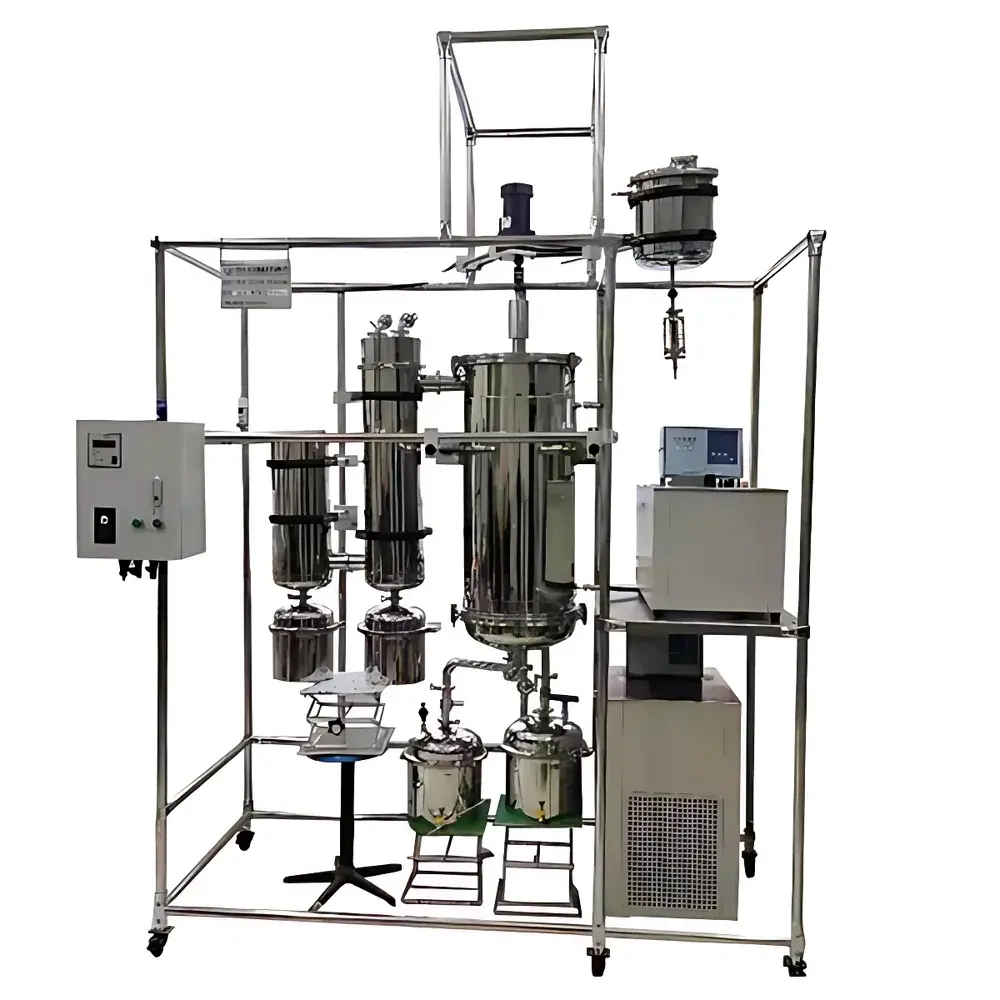
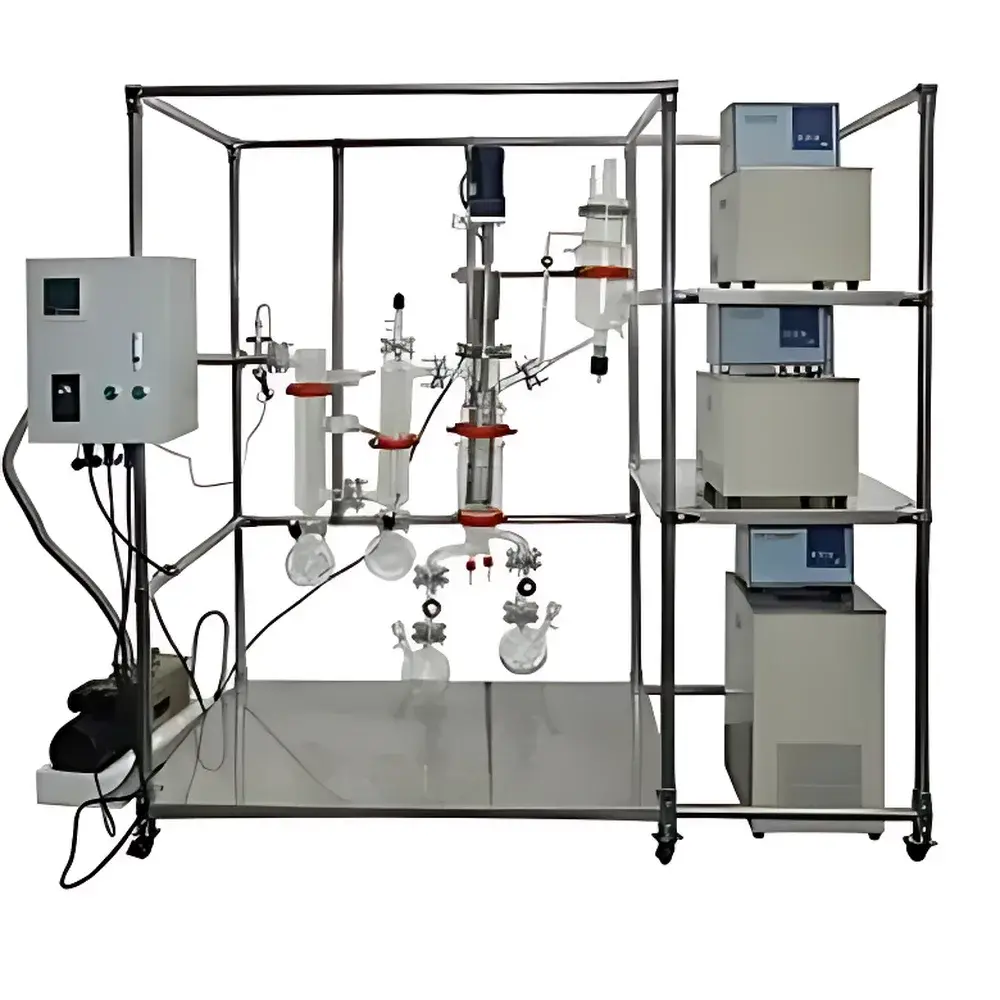
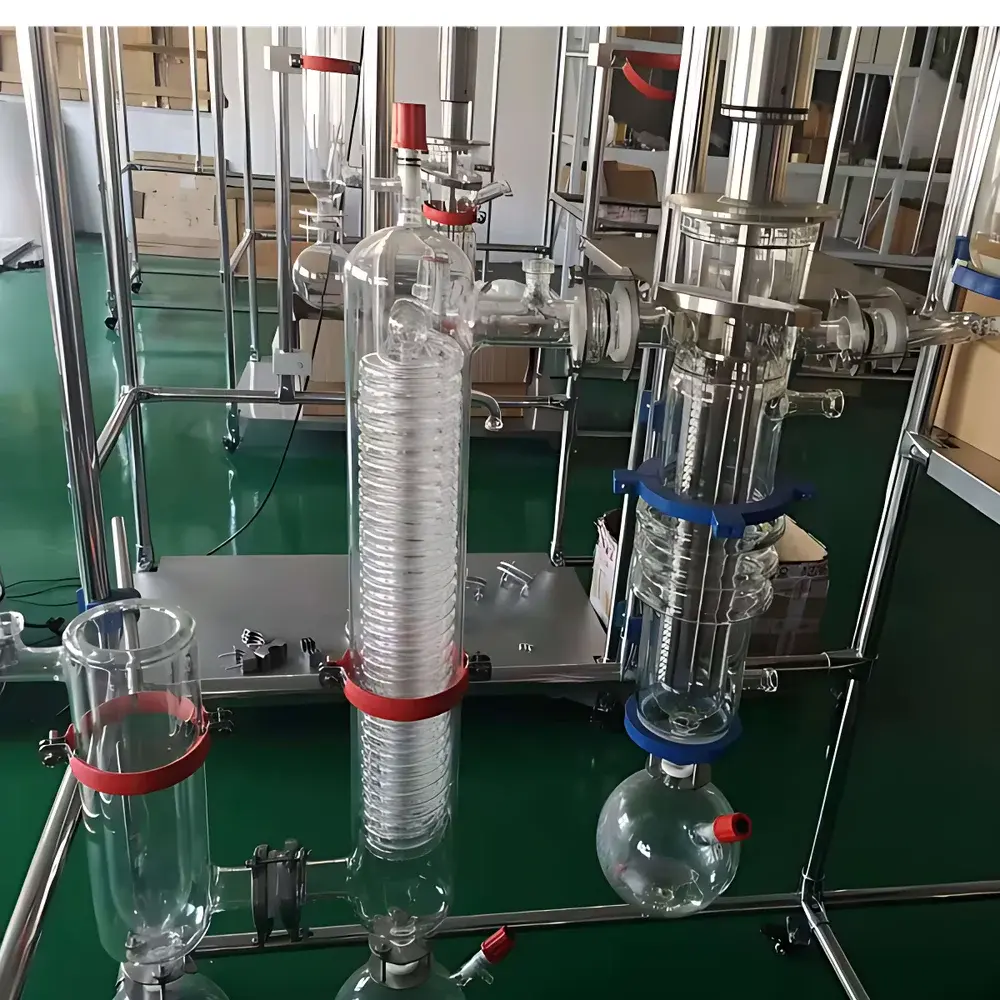
Anyan AYAN-F200 Short-Path Molecular Distillation System
| Brand | Anyan Instruments |
|---|---|
| Origin | Zhejiang, China |
| Model | AYAN-F200 |
| Feed Capacity | 5 L |
| Effective Evaporation Area | 0.35 m² |
| Evaporator Inner Diameter | 200 mm |
| Condenser Area | 0.55 m² |
| Collecting Flask Capacity | 5 L |
| Ultimate Vacuum | <10 Pa |
| Heating Temperature Range | Ambient to 200 °C |
| Motor Power | 120 W |
| Max Rotational Speed | ≤450 rpm |
| Cooling System | Integrated |
| Cold Trap | Built-in |
| External Condensation Unit | Optional |
Overview
The Anyan AYAN-F200 Short-Path Molecular Distillation System is an engineered vacuum purification platform designed for high-efficiency separation of thermally labile, high-boiling-point, and highly viscous liquid mixtures under ultra-high vacuum conditions (≤10 Pa). Operating on the principle of molecular distillation—where the mean free path of vapor molecules exceeds the physical distance between the evaporating surface and the condensing surface—the system enables separation based on differences in molecular weight and vapor pressure, rather than boiling point alone. This allows for selective fractionation at significantly reduced temperatures (often well below conventional boiling points), minimizing thermal degradation, polymerization, or oxidative decomposition. The AYAN-F200 features a vertical cylindrical evaporator with a 200 mm inner diameter, a precisely machined rotating wiper assembly (sliding-type刮膜 mechanism), and coaxial condensation geometry ensuring minimal vapor path length (~20–50 mm) and maximal condensation efficiency. Its robust stainless-steel construction (316L contact surfaces), PID-controlled heating mantle, and integrated cold trap meet material compatibility requirements for pharmaceutical intermediates, natural product isolates, and specialty chemicals.
Key Features
- Effective evaporation area of 0.35 m² and condenser area of 0.55 m²—optimized for balanced throughput and separation resolution in laboratory-to-pilot scale operations
- Rotating wiper system with adjustable speed (0–450 rpm) and precision-machined PTFE-coated blades for uniform thin-film formation across high-viscosity feeds (up to 50,000 cP)
- Heating zone temperature control from ambient to 200 °C with ±0.5 °C stability; independent condenser cooling via recirculating chiller interface (−20 °C to +10 °C range)
- Integrated cold trap with liquid nitrogen or dry ice compatibility to prevent backstreaming of volatile contaminants into the vacuum line
- Modular design supporting optional external condensation units for extended fraction collection or cryogenic trapping of low-boiling volatiles
- Compliant with ISO 27427 (vacuum equipment safety) and compatible with vacuum systems meeting ASTM E2910 standards for residual gas analysis in high-vacuum applications
Sample Compatibility & Compliance
The AYAN-F200 accommodates feed volumes up to 5 L per batch and supports continuous or semi-continuous operation within a flow range of 1.5–10 L/h—suitable for both discrete batch purification and iterative fractional recovery. It handles thermosensitive compounds including unsaturated fatty acids (e.g., EPA/DHA concentrates), sterols (e.g., lanolin-derived cholesterol), polyphenolic extracts, vitamin esters (e.g., tocopheryl acetate), and synthetic monomers (e.g., diisocyanates, epoxidized soybean oil). All wetted parts conform to USP Class VI and FDA 21 CFR 177.2600 specifications for food-contact polymers. Vacuum integrity is verified per ISO 2859-1 sampling plans; system leak rate is certified ≤5×10⁻⁸ mbar·L/s with helium mass spectrometry. Documentation packages support GLP-compliant validation (IQ/OQ/PQ protocols available upon request).
Software & Data Management
While the base AYAN-F200 operates via analog PID controllers and mechanical gauges, it integrates seamlessly with third-party vacuum monitoring systems (e.g., Pfeiffer TPG300, Edwards iCOM) and digital data loggers compliant with FDA 21 CFR Part 11 requirements. Optional RS485/Modbus RTU output enables real-time acquisition of temperature gradients, vacuum level, rotational speed, and coolant inlet/outlet temperatures into LIMS or ELN platforms. Audit trails, user access levels, and electronic signature capability are implemented at the host SCADA layer—not embedded in the instrument firmware—ensuring regulatory flexibility without proprietary lock-in.
Applications
- Fine Chemicals: Purification of fragrance aldehydes (e.g., lilial, helional), silicone oligomers, and catalyst residues from polycondensation reactions
- Pharmaceuticals: Isolation of natural vitamin A/E precursors, removal of genotoxic solvents from API intermediates, and depolymerization by-product separation
- Food & Nutraceuticals: Deacidification of crude fish oil (FFA reduction from >15% to <0.1%), concentration of omega-3 ethyl esters, and separation of phytosterol esters from vegetable oil deodorizer distillates
- Materials Science: Refining of bio-based lubricant base stocks, purification of monoglyceride emulsifiers, and recovery of unreacted monomers from UV-curable acrylate formulations
- Environmental Analysis: Preparative isolation of PAHs and PCB congeners from sediment extracts prior to GC-MS quantification
FAQ
What vacuum level is required for optimal molecular distillation performance?
Consistent operation below 10 Pa (1×10⁻² mbar) is essential to ensure the mean free path exceeds the evaporator-to-condenser gap. The AYAN-F200 achieves this using dual-stage rotary vane pumps paired with optional diffusion or turbomolecular backing.
Can the system handle feedstocks with suspended solids or particulates?
No—feed solutions must be pre-filtered to ≤5 µm. Solid particles risk wiper blade jamming and localized overheating; inline filtration (e.g., heated cartridge filters) is recommended upstream.
Is the AYAN-F200 suitable for GMP manufacturing environments?
It meets core equipment qualification criteria (e.g., material traceability, surface finish Ra ≤0.8 µm, weld certification); however, full GMP compliance requires site-specific validation, environmental monitoring integration, and documented change control procedures.
How is residence time controlled during operation?
Residence time is governed by wiper rotational speed, feed rate, and film thickness—typically ranging from 15 to 90 seconds. Precise control is achieved via synchronized adjustment of pump rate and rotor RPM, validated using tracer dye studies per ASTM D6300.



