
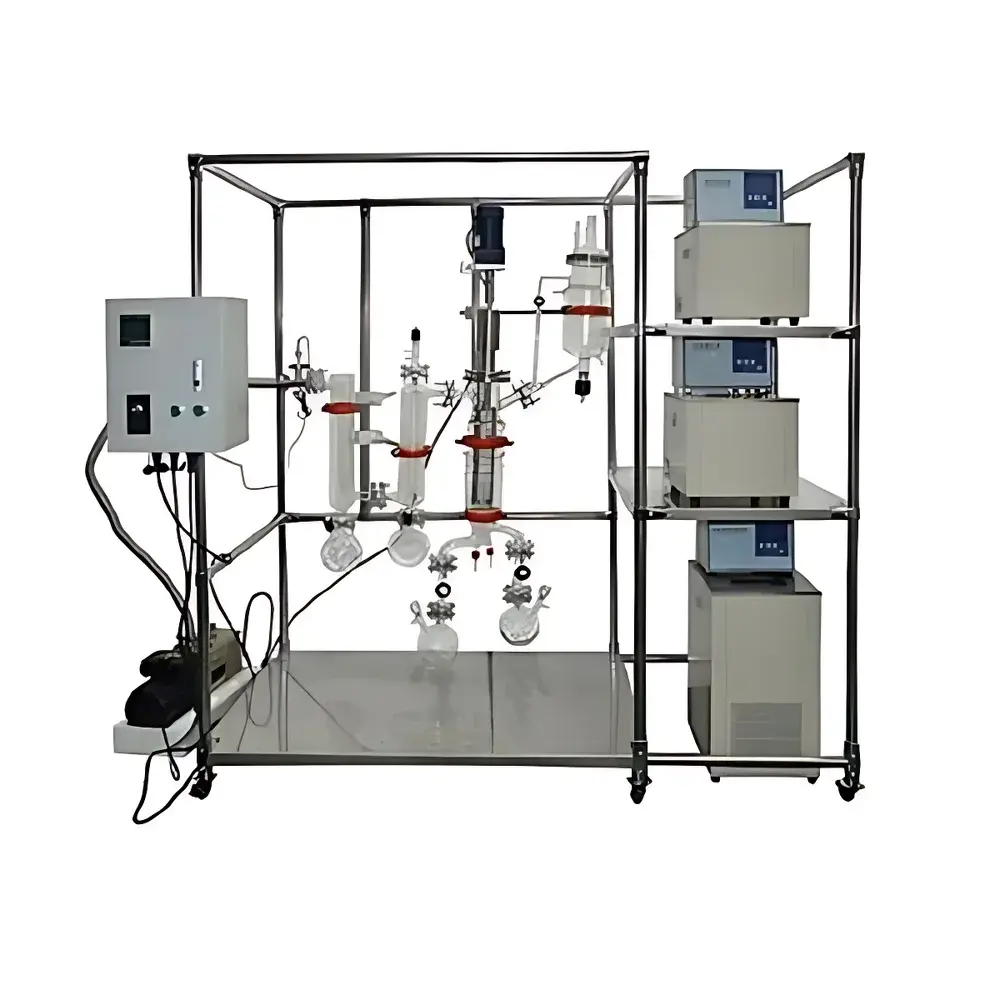
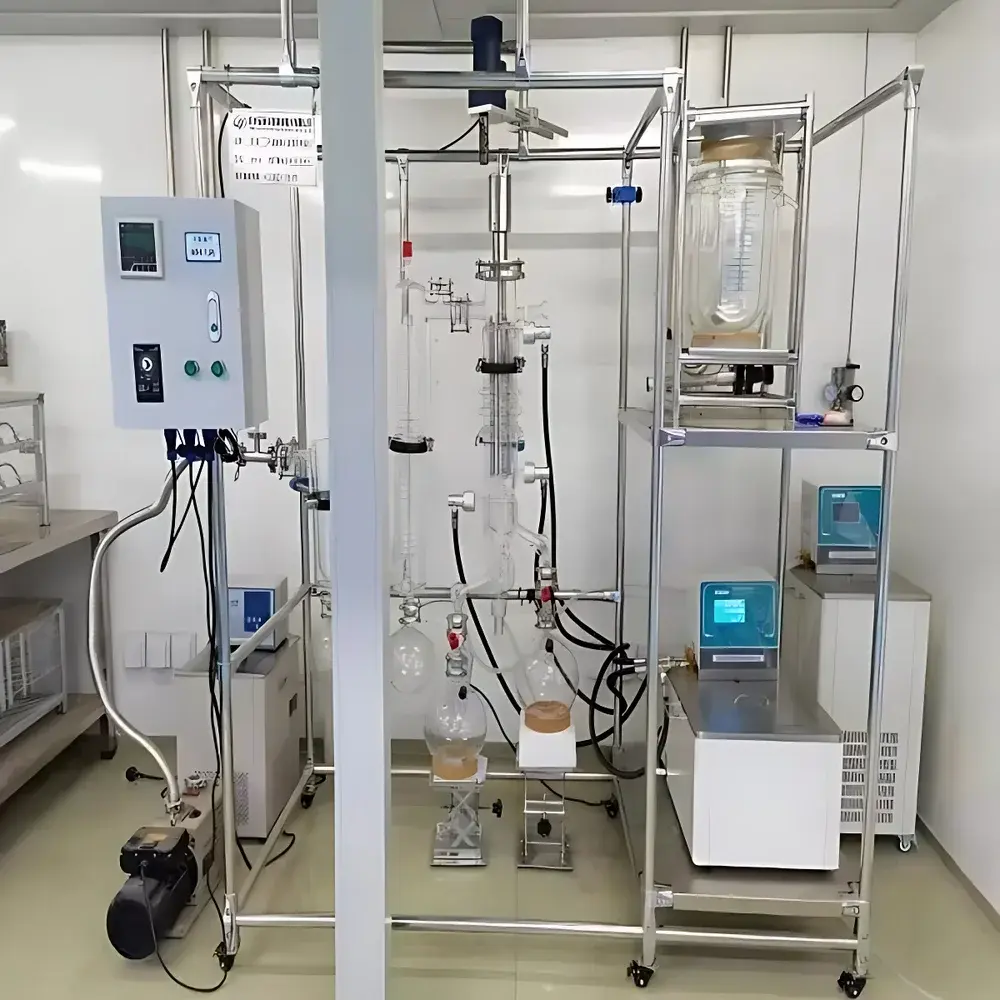
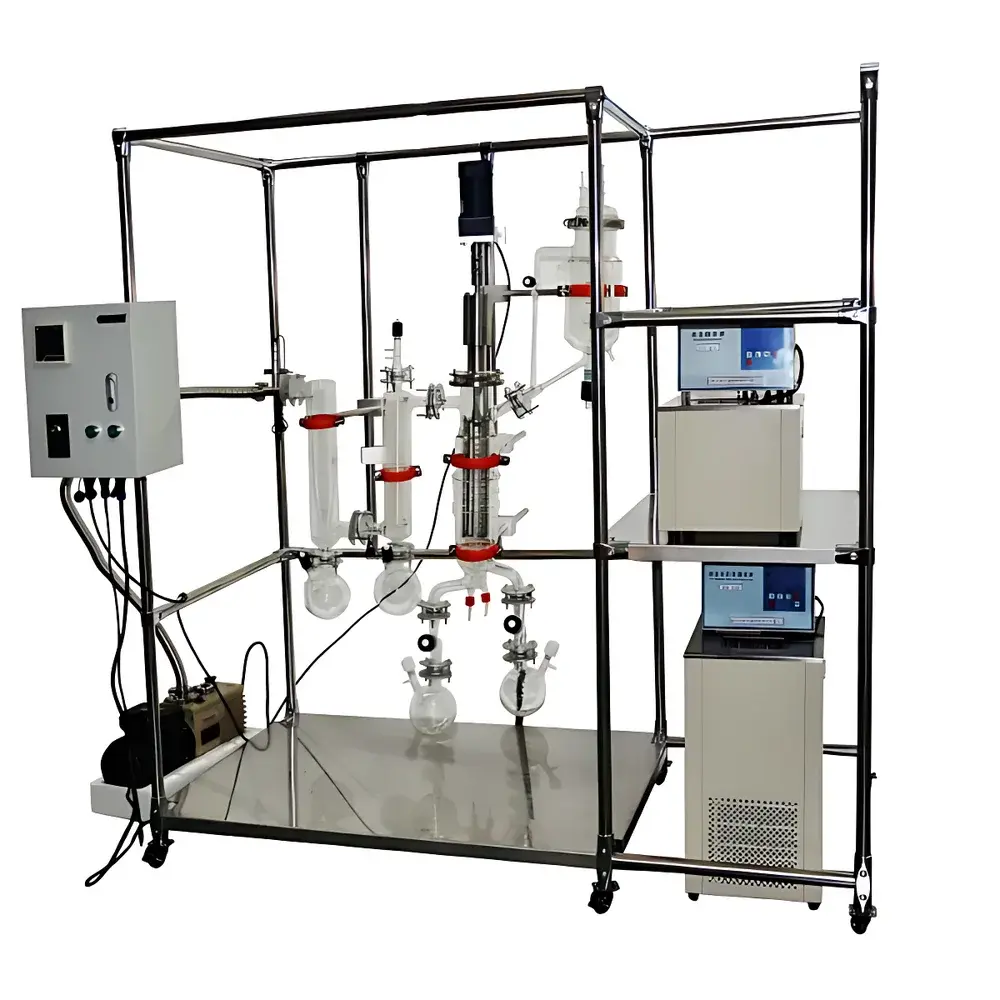
ANYAN AYAN-F220 Short-Path Molecular Distillation System
| Brand | ANYAN |
|---|---|
| Origin | Zhejiang, China |
| Model | AYAN-F220 |
| Feed Capacity | 2.0–15.0 L/h |
| Effective Evaporation Area | 0.5 m² |
| Evaporator Inner Diameter | 220 mm |
| Condensation Area | 0.65 m² |
| Collecting Flask Ports | 5 |
| Ultimate Vacuum | <10 Pa |
| Heating Temperature Range | Ambient to 200 °C |
| Motor Power | 200 W |
| Rotational Speed | ≤450 rpm |
| Cooling System | Integrated Cryogenic Trap (with Optional External Chiller) |
Overview
The ANYAN AYAN-F220 Short-Path Molecular Distillation System is an engineered vacuum-based liquid–liquid separation platform designed for thermally sensitive, high-boiling-point, and high-molecular-weight compounds. Unlike conventional distillation—governed by vapor pressure differentials at boiling points—molecular distillation operates under ultra-high vacuum (≤10 Pa), where separation is driven by differences in molecular mean free path. In this regime, evaporated light molecules travel unimpeded across the short distance (typically <50 mm) between the heated evaporation surface and the internally mounted condenser, minimizing residence time and thermal degradation. The system employs a vertical cylindrical evaporator with a precision-engineered rotating wiper assembly that forms a uniform, thin, turbulent liquid film on the heated wall—ensuring high mass transfer efficiency, consistent heat distribution, and reduced fouling. This architecture enables continuous, scalable purification of lab-scale feed streams (2.0–15.0 L/h) without phase inversion or foaming, making it suitable for applications demanding strict thermal control and compositional fidelity.
Key Features
- Vertical cylindrical evaporator with 220 mm inner diameter and 0.5 m² effective heating area, optimized for laminar-to-turbulent film transition under rotation
- Integrated concentric condenser (0.65 m² surface area) positioned coaxially within the evaporator chamber to minimize molecular travel distance and maximize condensation efficiency
- High-torque, low-vibration motor (200 W) driving a balanced wiper rotor at ≤450 rpm, ensuring stable film formation across variable feed viscosities
- Dual-collection configuration with five independently accessible flask ports—supporting parallel light-fraction recovery and heavy-fraction withdrawal under inert atmosphere
- Integrated cryogenic cold trap capable of sustaining <10 Pa base pressure; compatible with optional external chiller for sub-0 °C condensation surfaces
- Heating jacket with PID-controlled temperature regulation (ambient to 200 °C), calibrated traceable to NIST-traceable standards
- Full stainless-steel 316L wetted path construction, electropolished to Ra ≤0.4 µm, compliant with ASME BPE and FDA-recommended surface finish guidelines
Sample Compatibility & Compliance
The AYAN-F220 accommodates viscous, non-Newtonian, and thermolabile feedstocks—including polymeric intermediates, unsaturated fatty acid esters, sterols, squalene, and fragrance isolates—without thermal decomposition or oxidative side reactions. Its design conforms to fundamental principles outlined in ASTM D2892 (standard test method for atmospheric distillation of petroleum products) and ISO 661 (animal and vegetable fats and oils—preparation of test sample), though molecular distillation itself falls outside the scope of these methods due to its non-equilibrium, kinetic separation mechanism. For regulated environments, the system supports GLP-compliant operation when paired with external data loggers (e.g., certified temperature/pressure/vacuum recorders). While not intrinsically 21 CFR Part 11–compliant, its mechanical architecture allows integration with validated electronic batch records via analog I/O or Modbus RTU interfaces.
Software & Data Management
The AYAN-F220 operates as a standalone hardware platform with analog instrumentation (digital vacuum gauge, PT100 temperature sensors, flow-indicating rotameters) and manual setpoint control. No proprietary software is embedded; however, all critical process variables—evaporator temperature, condenser temperature, vacuum level, rotational speed, and feed rate—are accessible via 4–20 mA or 0–10 V analog outputs. These signals may be interfaced with third-party SCADA systems (e.g., Ignition, Siemens Desigo, or LabVIEW) for real-time monitoring, trend logging, and audit-trail generation. Users implementing GMP workflows commonly pair the unit with calibrated external data acquisition systems meeting IEC 62304 and IEEE 1003.1 compliance for long-term validation.
Applications
- Fine chemical purification: isolation of tocopherols from soybean distillates, refinement of caprylic/capric triglycerides, and separation of polymerization inhibitors from acrylic monomers
- Food-grade lipid processing: deacidification of fish oil (reduction of free fatty acids to <0.1%), concentration of omega-3 ethyl esters (EPA/DHA), and fractionation of cocoa butter equivalents
- Pharmaceutical intermediates: removal of residual solvents from API synthons, purification of vitamin A palmitate, and isolation of phytosterol fractions from tall oil rosin
- Renewable chemistry: upgrading bio-based lubricants, recovering catalyst residues from transesterified biodiesel, and purifying lignin-derived phenolics
- Materials science: solvent-free preparation of graphene oxide dispersions and purification of perfluoropolyether precursors
FAQ
What vacuum level is required for effective short-path molecular distillation?
A base pressure of ≤10 Pa is essential to ensure the mean free path exceeds the evaporator-to-condenser gap (~30–45 mm). For higher-boiling components (>300 °C at atm), pressures down to 0.1–1 Pa are recommended.
Can the AYAN-F220 handle highly viscous feeds such as crude lanolin or polymer melts?
Yes—provided pre-heating and feed pre-filtration are implemented. Viscosities up to 5,000 cP at operating temperature are manageable with optimized wiper geometry and controlled feed rate.
Is the system suitable for GMP manufacturing environments?
It is intended for R&D and pilot-scale development. Full GMP deployment requires supplementary qualification (IQ/OQ/PQ), documented maintenance logs, and integration with validated environmental monitoring systems.
How often does the wiper blade require replacement?
Under normal operation with non-abrasive feeds, PTFE- or SiC-coated wipers last 6–12 months. Replacement intervals should be recorded in equipment history logs per ISO 9001 clause 7.5.3.
Does the system include pressure relief or overtemperature safeguards?
No automatic safety interlocks are built-in. Users must install external vacuum relief valves and high-limit thermal cutouts per local occupational safety regulations (e.g., OSHA 1910.119 or EU Machinery Directive 2006/42/EC).



