
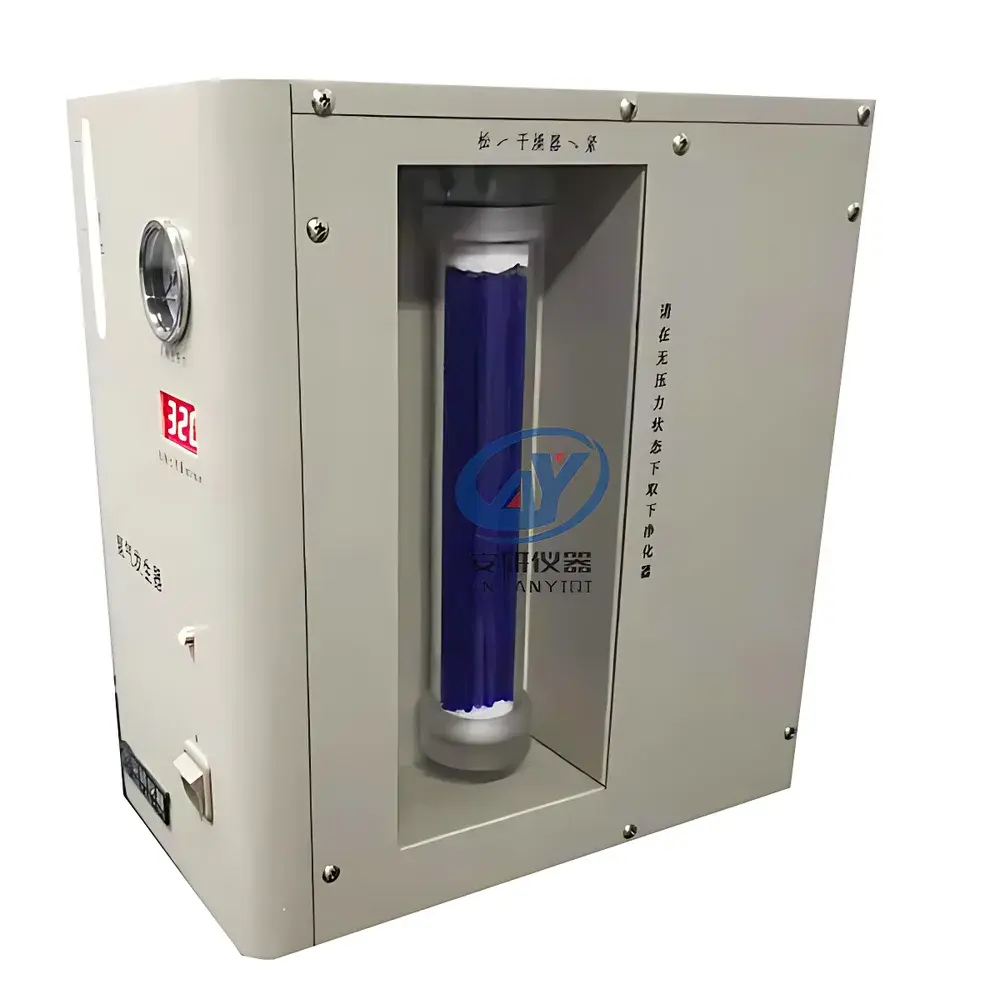
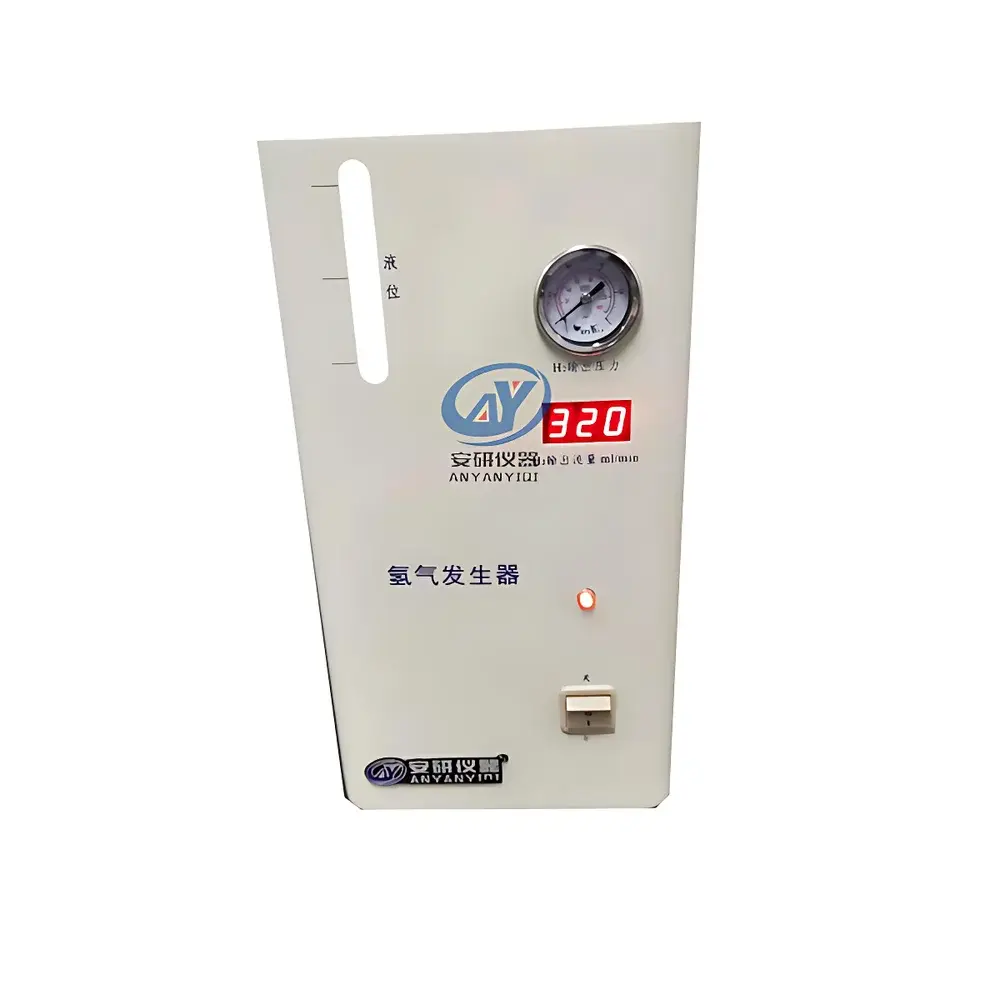
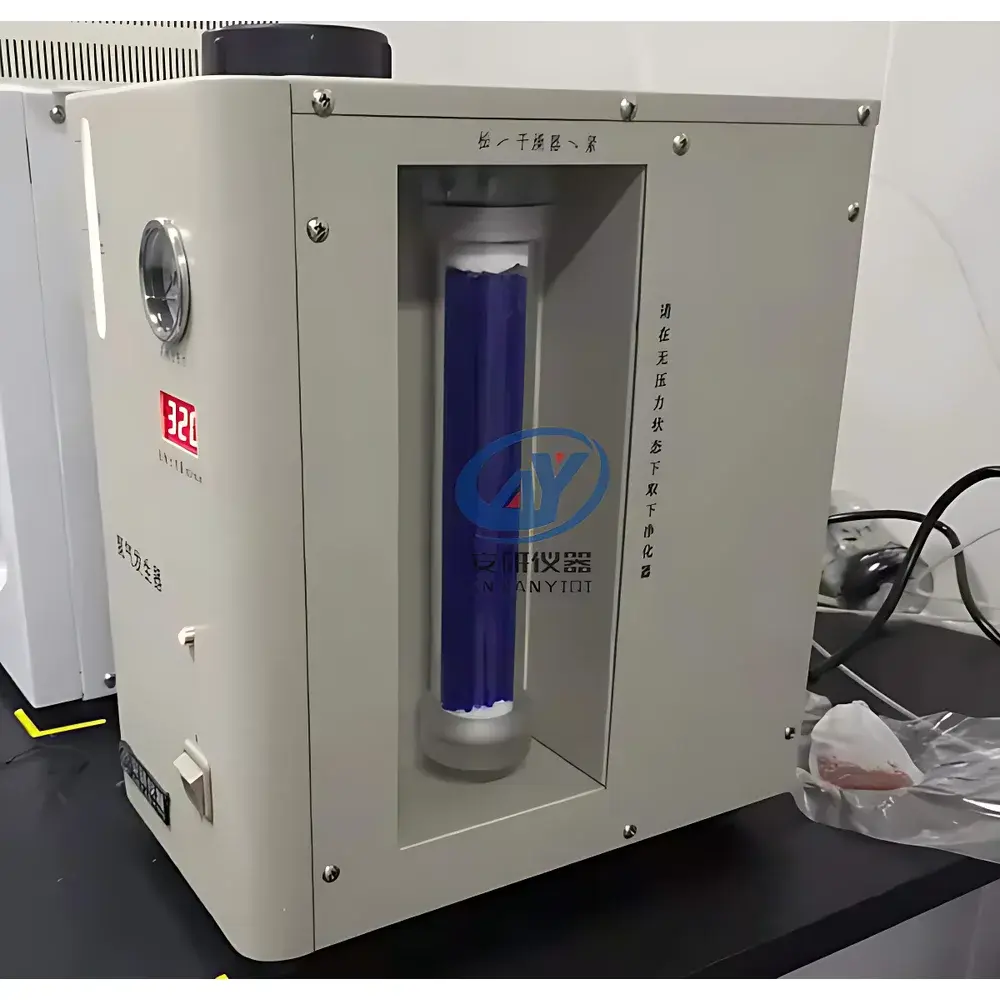
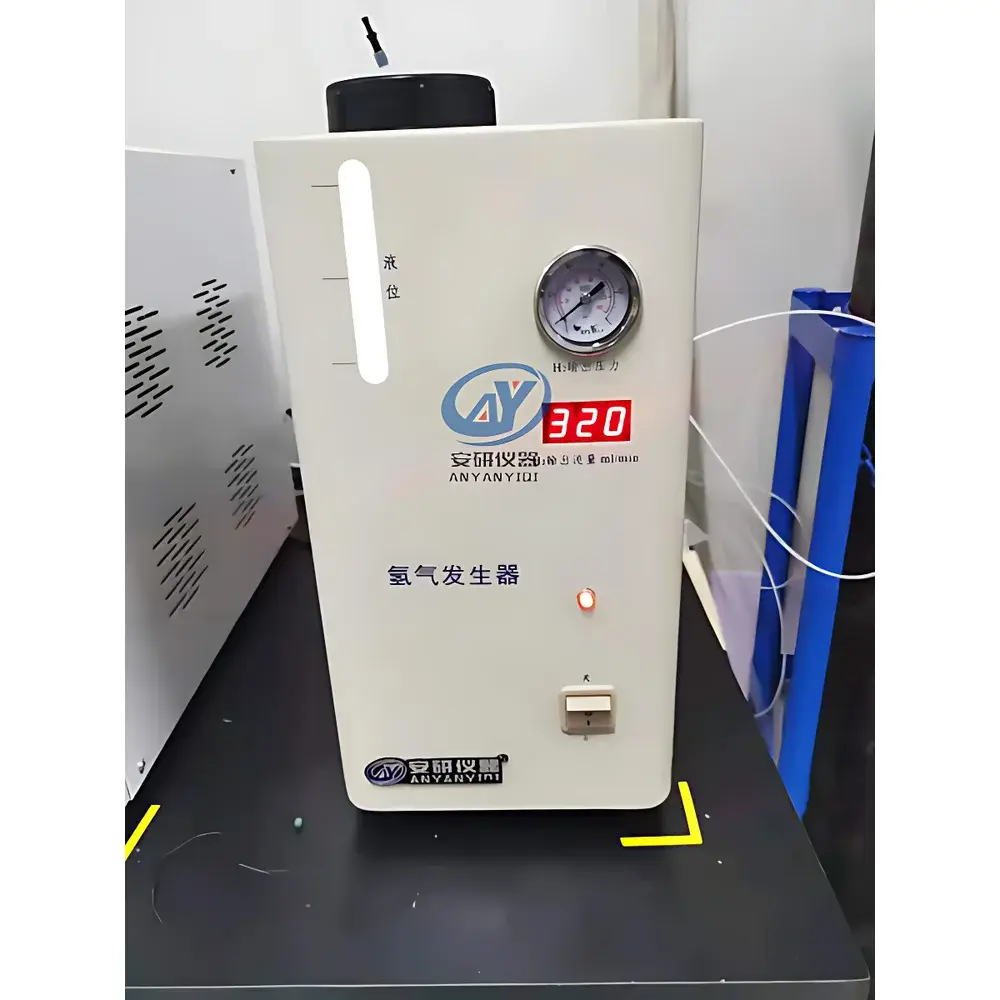
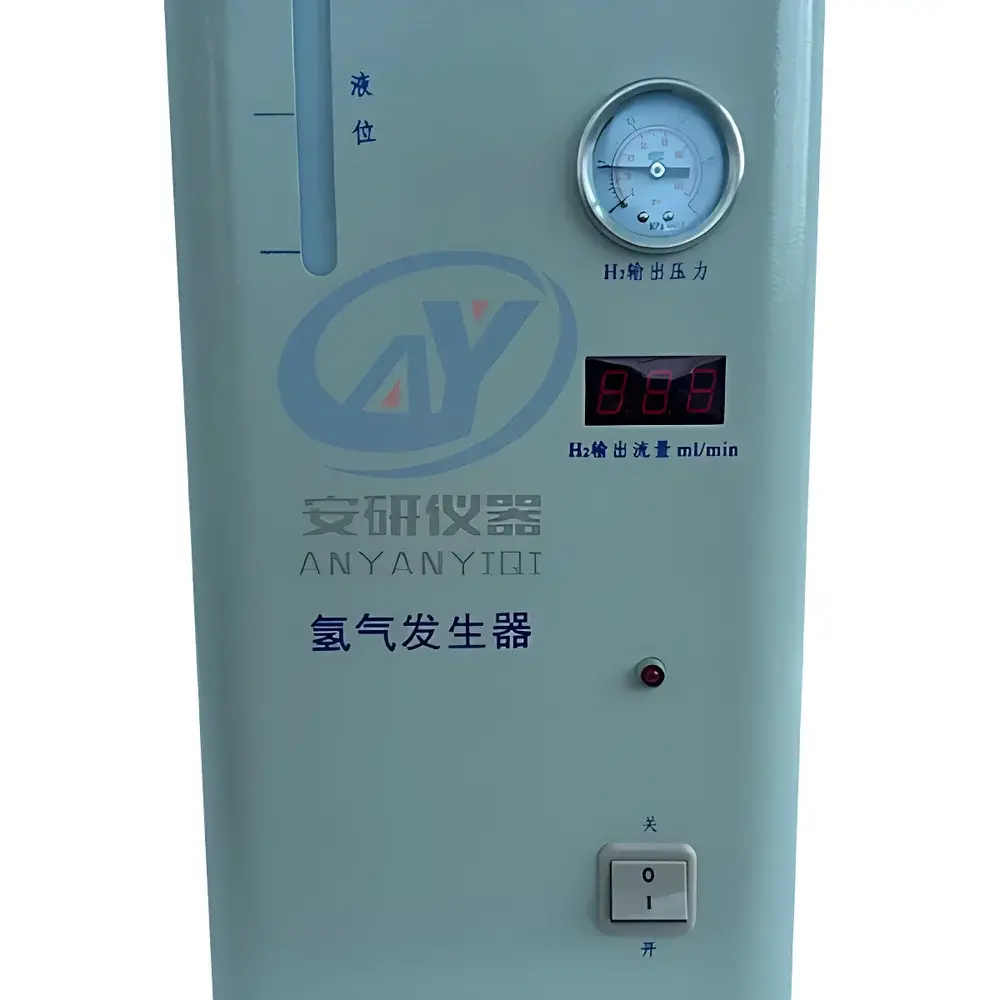
Anyan AYAN-H300ml Laboratory-Grade Hydrogen Generator (PEM Electrolysis)
| Brand | Anyan Instruments |
|---|---|
| Origin | Zhejiang, China |
| Manufacturer Type | Authorized Distributor |
| Country of Origin | China |
| Model | AYAN-H300ml |
| Output Flow Rate | 0–300 mL/min |
| Output Pressure | 0–0.4 MPa (adjustable) |
| Hydrogen Purity | ≥99.999% |
| Power Consumption | 80 W |
| Electrolysis Method | Proton Exchange Membrane (PEM) / Pure Water Electrolysis |
| Input Water Resistivity | ≥1 MΩ·cm (deionized or double-distilled water) |
Overview
The Anyan AYAN-H300ml Laboratory-Grade Hydrogen Generator is a compact, on-demand hydrogen source engineered for analytical laboratories requiring high-purity, low-risk, and maintenance-optimized gas supply. It employs proton exchange membrane (PEM) electrolysis technology—distinct from traditional alkaline electrolysis—to split ultra-pure water (≥1 MΩ·cm resistivity) into high-purity hydrogen and oxygen without caustic electrolytes. In this process, water is fed into the anode chamber, where oxidation yields oxygen gas and protons. Protons migrate across the solid polymer electrolyte (SPE) membrane under applied DC voltage, then recombine with electrons at the cathode to form molecular hydrogen (H₂). Oxygen is vented safely to ambient air; hydrogen passes through integrated gas–water separation and dual-stage desiccant drying to achieve ≥99.999% purity—meeting stringent requirements for gas chromatography (GC), Fourier-transform infrared (FTIR) spectroscopy, and fuel cell testing applications.
Key Features
- Zero-gap, high-activity SPE catalytic electrodes ensure rapid proton conduction and minimal overpotential, enhancing energy efficiency and system longevity.
- Multi-cell bipolar electrolyzer architecture optimizes heat and mass transfer while maintaining structural integrity under repeated thermal cycling.
- Corrosion-resistant, passivation-resistant electrode and flow-field materials selected per ASTM G151 and ISO 12944 standards for sustained electrochemical performance in continuous operation.
- Electrolysis exclusively uses deionized or double-distilled water—no KOH or NaOH additives—eliminating risk of electrolyte carryover, corrosion, or column contamination in GC systems.
- Dynamic pressure and flow regulation: output pressure (0–0.4 MPa) and flow (0–300 mL/min) adjust automatically to match real-time demand from connected instruments, minimizing idle gas generation.
- Integrated safety controls include dry-run protection, overpressure cutoff (mechanical + electronic), anti-backflow valves, and automatic shutdown upon water level depletion or membrane temperature anomaly.
- Acoustically optimized thermal management: fan activation only during extended high-load operation (<45 dB(A) typical noise emission during standard use).
Sample Compatibility & Compliance
The AYAN-H300ml is compatible with all laboratory-grade deionized water systems delivering ≥1 MΩ·cm resistivity (e.g., Milli-Q®, ELGA PURELAB®, or equivalent). It does not support tap water, distilled water without post-treatment, or water containing >50 ppb total organic carbon (TOC). The generator complies with IEC 61000-6-3 (EMC emissions) and IEC 61000-6-2 (immunity). Its design supports GLP and GMP environments through traceable operational logs (via optional RS232/USB interface), and meets essential safety provisions of EN 61010-1 for electrical equipment used in laboratory settings. While not certified to ISO 8573-1 Class 1 for compressed air, its H₂ output satisfies ISO 8573-1:2010 Class 2 (solid particles), Class 2 (water), and Class 1 (oil) equivalency when operated with compliant feed water and maintained per schedule.
Software & Data Management
The unit operates autonomously without external software but includes a digital front-panel interface displaying real-time pressure, flow, operating hours, and system status codes. Optional USB or RS232 connectivity enables integration with laboratory information management systems (LIMS) or instrument control platforms (e.g., Agilent OpenLab, Thermo Fisher Chromeleon) for remote monitoring and audit-trail generation. Firmware supports configurable alarm thresholds and event logging—including start/stop cycles, pressure deviations, and maintenance reminders—aligned with FDA 21 CFR Part 11 principles for electronic records where local validation protocols are implemented.
Applications
- Carrier and fuel gas for capillary gas chromatography (GC-FID, GC-TCD, GC-MS) requiring consistent ≤0.1 psi pressure ripple and <1 ppm O₂/H₂O residual.
- Reducing atmosphere generation in thermal analysis (TGA-DSC) and catalyst characterization (TPR/TPD).
- Calibration gas blending systems requiring stable, metered H₂ introduction.
- Hydrogenation reaction monitoring in benchtop flow chemistry reactors.
- Reference gas supply for hydrogen sensors, leak detectors, and electrochemical hydrogen analyzers.
FAQ
What type of water must be used?
Deionized or double-distilled water with resistivity ≥1 MΩ·cm and TOC <50 ppb. Tap water, standard distilled water, or water from non-certified purification systems will damage the PEM stack and void warranty.
Is routine maintenance required?
Yes: desiccant cartridges require replacement every 6–12 months depending on ambient humidity and daily runtime; water reservoir cleaning recommended quarterly; annual inspection of seals and pressure relief valve advised.
Can this generator supply multiple GCs simultaneously?
It is rated for single-instrument duty. For multi-GC deployment, parallel units or a higher-capacity model (e.g., AYAN-H1000ml) is recommended to maintain pressure stability and avoid premature membrane fatigue.
Does it meet USP or EP 2.5.27 requirements for pharmaceutical-grade hydrogen?
While output purity meets or exceeds stated limits (≥99.999%), formal compliance with pharmacopoeial monographs requires full system validation—including feed water qualification, installation/operational qualification (IQ/OQ), and periodic performance verification per internal SOPs.
What is the expected service life of the PEM stack?
Under specified operating conditions and proper water quality, the electrolyzer stack maintains ≥90% nominal output after 10,000 operating hours (≈3 years at 10 hrs/day), per accelerated life testing per IEC 62282-6-1 Annex B.



