
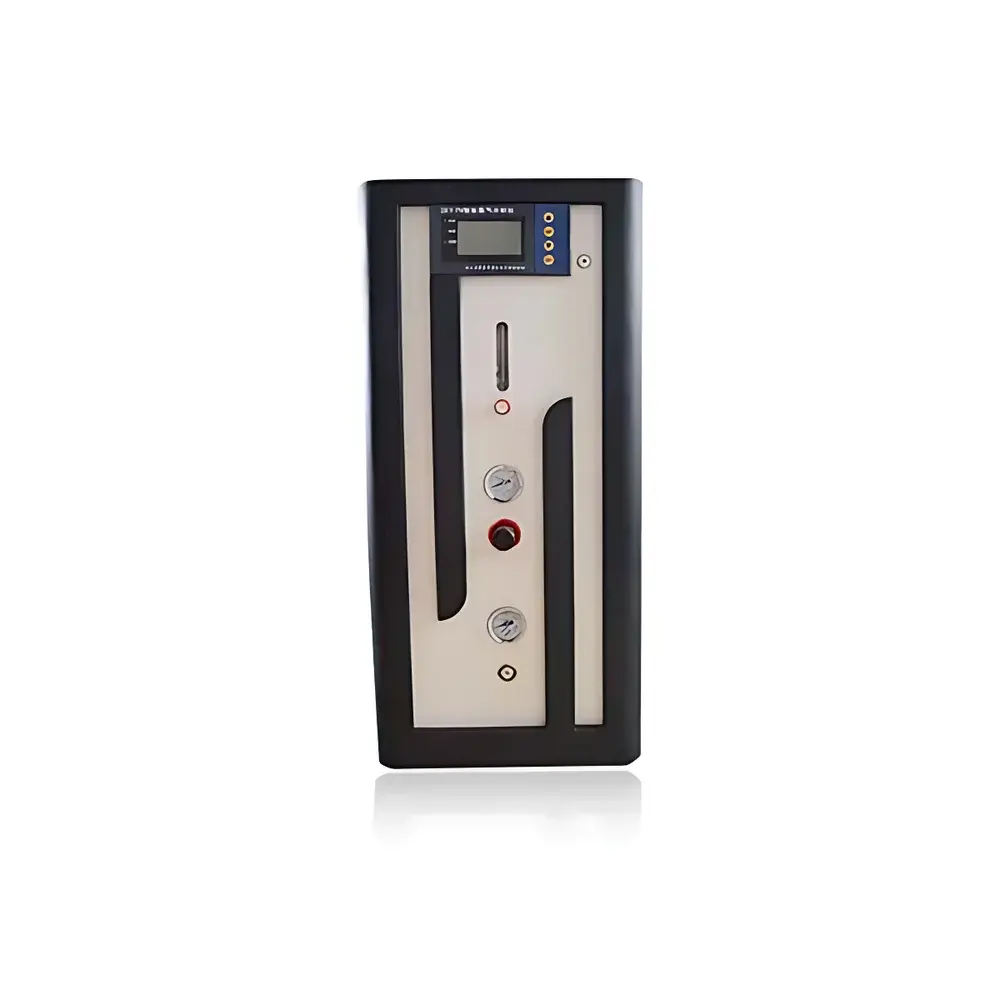
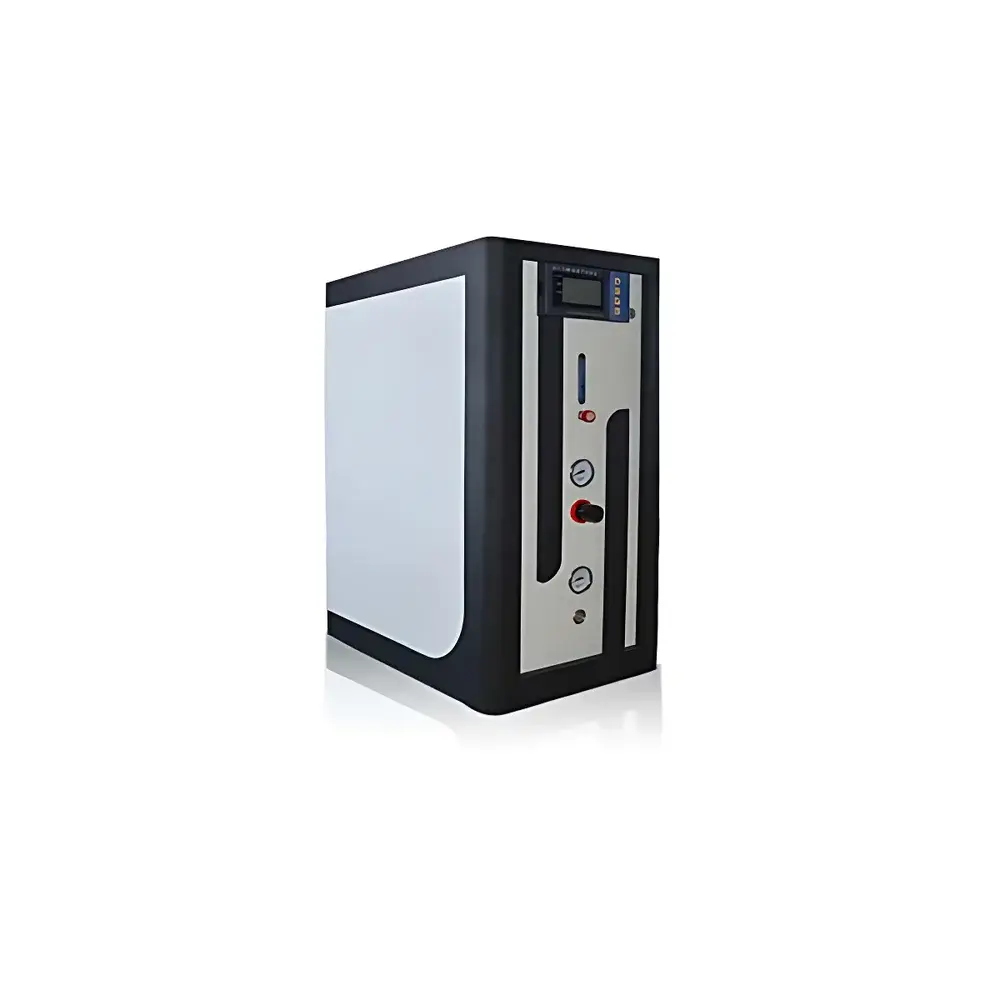
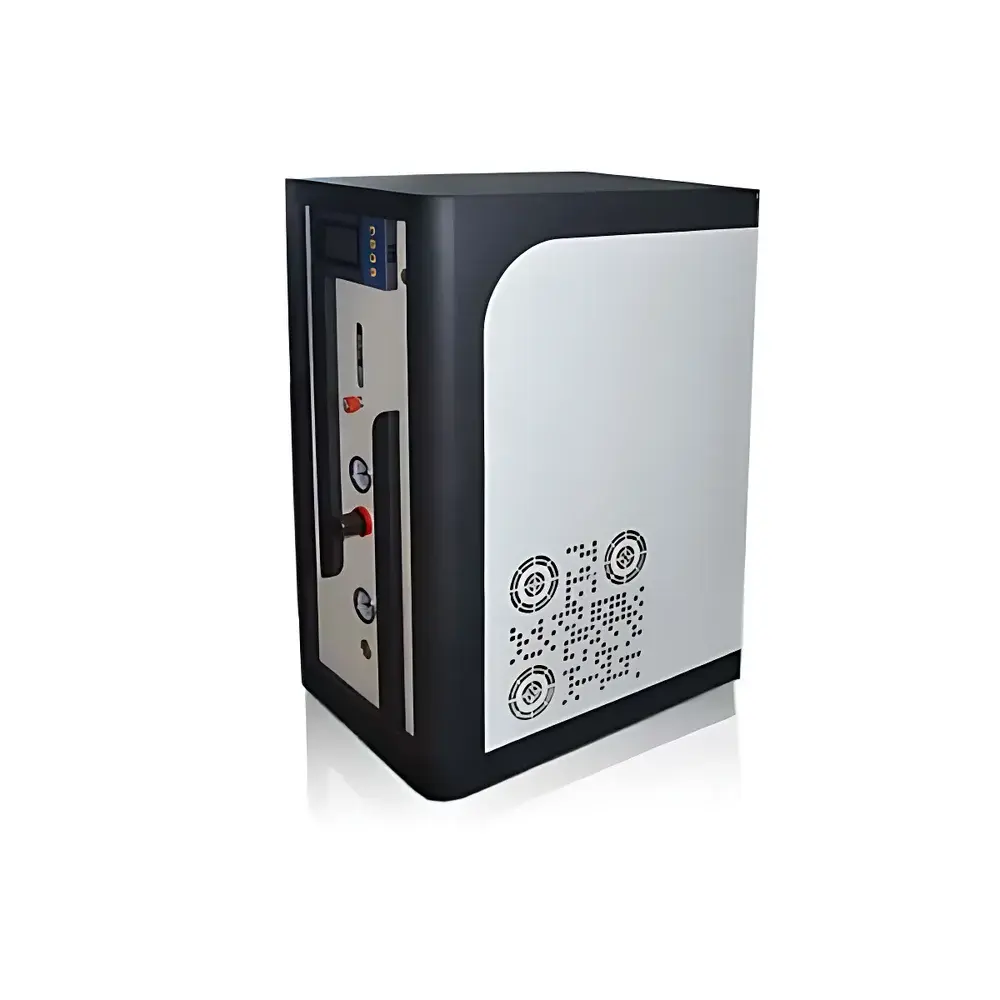
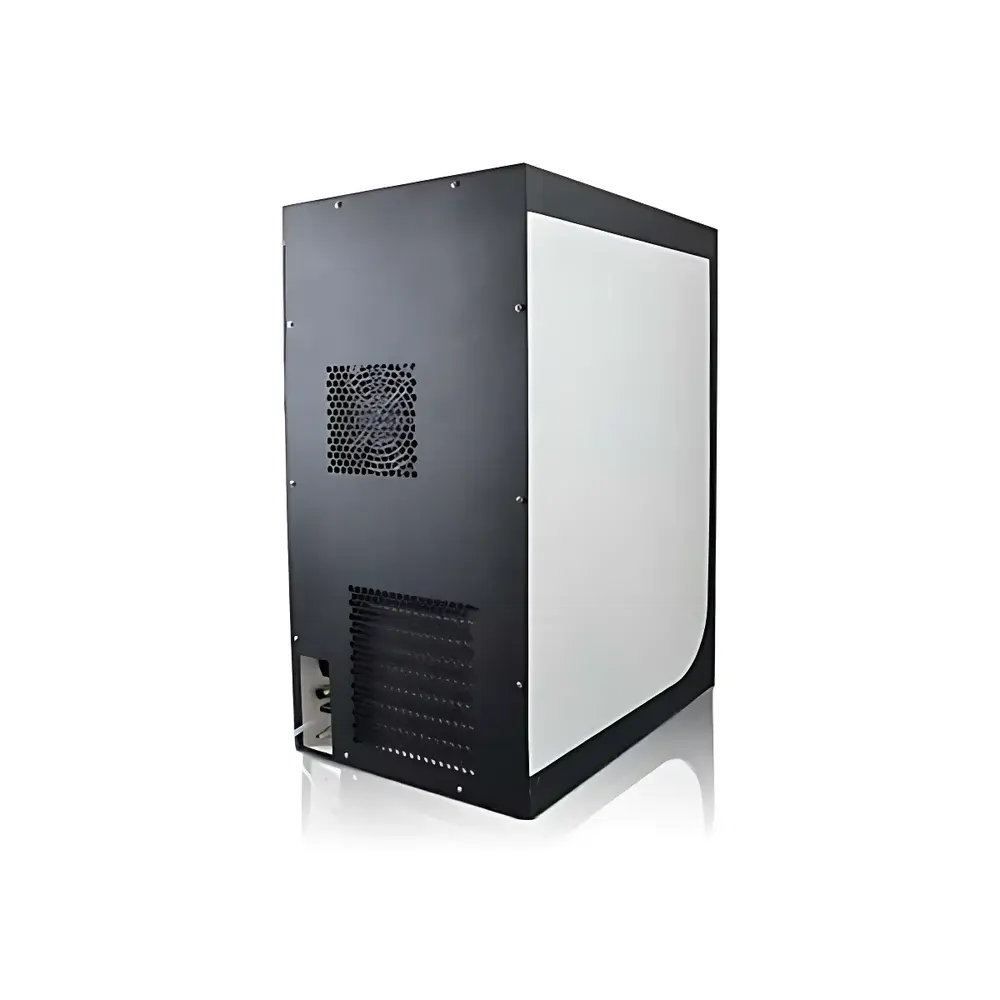
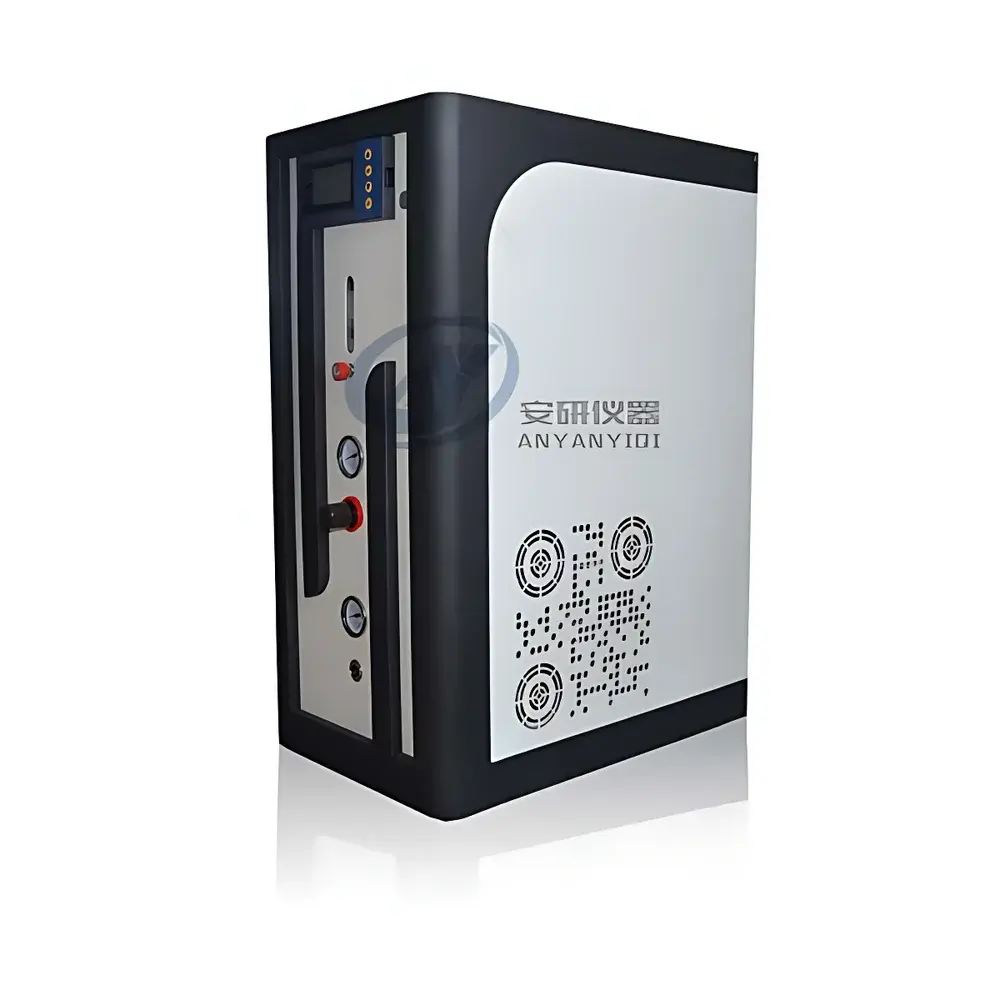
ANYAN AYAN-H500ml Laboratory Alkaline Electrolytic Hydrogen Generator
| Brand | ANYAN (Hangzhou Anyan Instrument Co., Ltd.) |
|---|---|
| Origin | Zhejiang, China |
| Model | AYAN-H500ml |
| Hydrogen Purity | ≥99.999% |
| Output Flow Rate | 0–500 mL/min |
| Output Pressure | 0–0.4 MPa (factory-set at 0.3 MPa) |
| Power Supply | 220 V ±10%, 50 Hz ±5% |
| Power Consumption | 120 W |
| Operating Temperature | 0–50 °C |
| Relative Humidity | ≤85% RH |
| Dimensions (W×D×H) | 310 × 190 × 360 mm |
| Weight | 12 kg |
| Gas Outlet | 1/8" NPT or Φ3 mm stainless steel tube |
| Electrolyte | KOH aqueous solution (analytical grade) |
| Construction | Electropolished stainless steel gas path |
| Safety Features | Dual-stage pressure relief, anti-backflow valve, overpressure cutoff |
Overview
The ANYAN AYAN-H500ml Laboratory Alkaline Electrolytic Hydrogen Generator is a compact, benchtop hydrogen source engineered for continuous, on-demand supply of high-purity hydrogen gas (≥99.999%) in analytical and research laboratories. It operates on the principle of alkaline water electrolysis—using a potassium hydroxide (KOH) electrolyte to dissociate deionized water into hydrogen and oxygen gases at nickel-based electrodes. The system employs a sealed, pressurized PEM-free electrolytic cell with imported noble-metal-coated cathodes, ensuring stable current efficiency and thermal equilibrium across extended operation cycles. Unlike membrane-based systems, this generator utilizes a robust liquid-electrolyte architecture optimized for reliability under variable load conditions—ideal for GC carrier gas, fuel cell testing, catalytic reduction setups, and inert atmosphere purging where consistent flow and purity are critical. All wetted components—including tubing, valves, and the electrolytic chamber—are constructed from electropolished 316 stainless steel and subjected to ultrasonic cleaning prior to assembly, minimizing metallic leaching and particulate generation.
Key Features
- Stable & Self-Regulating Output: Automatic flow tracking maintains constant delivery between 0–500 mL/min; output pressure is digitally adjustable up to 0.4 MPa (default setpoint: 0.3 MPa), with real-time digital display of flow and pressure status.
- Integrated Dual-Stage Purification: Hydrogen passes sequentially through a desiccant cartridge and a palladium-doped molecular sieve trap, removing residual moisture, oxygen, and trace alkali aerosols to achieve ≥99.999% purity (verified by GC-TCD analysis per ISO 8573-1 Class 1).
- Fail-Safe Fluid Management: Patented anti-backflow design prevents electrolyte migration into downstream instruments; automatic补水 module enables uninterrupted operation with optional external reservoir integration (not included).
- Thermally Optimized Electrolysis Cell: Precision-engineered electrode geometry and high-conductivity KOH concentration (20–25% w/w) minimize ohmic losses and maintain uniform cell temperature during sustained operation—extending service life beyond 5,000 hours under standard duty cycle.
- Comprehensive Safety Architecture: Built-in pressure relief valve, electronic overpressure cutoff (>0.42 MPa), ambient temperature monitoring, and leak-tight gas path certified to EN 61010-1:2019 for laboratory electrical equipment safety.
Sample Compatibility & Compliance
This generator is compatible with all standard laboratory hydrogen-consuming instruments requiring ultra-high-purity feed gas—including gas chromatographs (GC-FID, GC-TCD, GC-MS), hydrogenation reactors, electrochemical cells, and semiconductor process tools. Its output meets ASTM D7217–22 specifications for hydrogen used in analytical instrumentation and complies with ISO 8573-1:2010 Class 1 requirements for compressed air/gas quality (adapted for H₂). While not intrinsically rated for hazardous area use, it conforms to GLP-aligned operational documentation practices and supports audit-ready log entries when paired with external data acquisition systems. Note: KOH handling requires adherence to GHS hazard communication standards (UN1382, Corrosive, Skin Category 1A); operators must wear chemical-resistant gloves, goggles, and lab coats during electrolyte preparation and maintenance.
Software & Data Management
The AYAN-H500ml operates as a standalone analog-controlled unit without embedded firmware or network connectivity. All operational parameters—including runtime hours, cumulative gas volume (calculated via flow integration), and fault codes—are displayed via front-panel LED indicators. For regulatory traceability in GMP or ISO/IEC 17025 environments, users may integrate third-party USB/RS232 data loggers to capture pressure, flow, and power-on duration. The device supports 21 CFR Part 11-compliant electronic records when connected to validated LIMS or ELN platforms via analog signal conversion (0–5 VDC proportional to flow rate). No proprietary software or cloud services are required or provided.
Applications
- Carrier and fuel gas for capillary and packed-column gas chromatography
- Reducing atmosphere generation in thermal gravimetric analyzers (TGA) and differential scanning calorimeters (DSC)
- Hydrogen feedstock for benchtop catalytic hydrogenation reactors and flow chemistry systems
- Calibration gas source for hydrogen sensors and explosion-proof detectors
- Blank gas in Fourier-transform infrared (FTIR) spectrometers and cavity ring-down spectroscopy (CRDS) platforms
- On-site hydrogen supply for proton exchange membrane (PEM) fuel cell characterization under controlled load profiles
FAQ
What type of water must be used for electrolyte preparation and replenishment?
Deionized or distilled water (resistivity ≥18.2 MΩ·cm) is mandatory. Tap water or purified water containing >1 ppm total dissolved solids will cause rapid electrode fouling and irreversible performance degradation.
Can the unit operate continuously for 24/7 applications?
Yes—designed for unattended operation up to 72 hours with proper electrolyte level monitoring and ambient cooling. Recommended duty cycle: ≤85% max flow for >1000-hour mean time between maintenance intervals.
Is the oxygen byproduct vented safely?
Oxygen is released through a dedicated passive vent port located on the rear panel; ensure adequate room ventilation (≥6 air changes/hour) when operating in enclosed spaces per OSHA 1910.103(b)(2) guidelines.
How often does the electrolyte require replacement?
Under typical usage (≤400 mL/min, 8 h/day), replace KOH solution every 6 months or after 1,500 operating hours—whichever occurs first—to maintain optimal conductivity and purity.
Does the generator support remote start/stop or analog control signals?
No. It features only manual front-panel power switching. External 24 VDC trigger control or 4–20 mA flow modulation is not supported in this model variant.



