
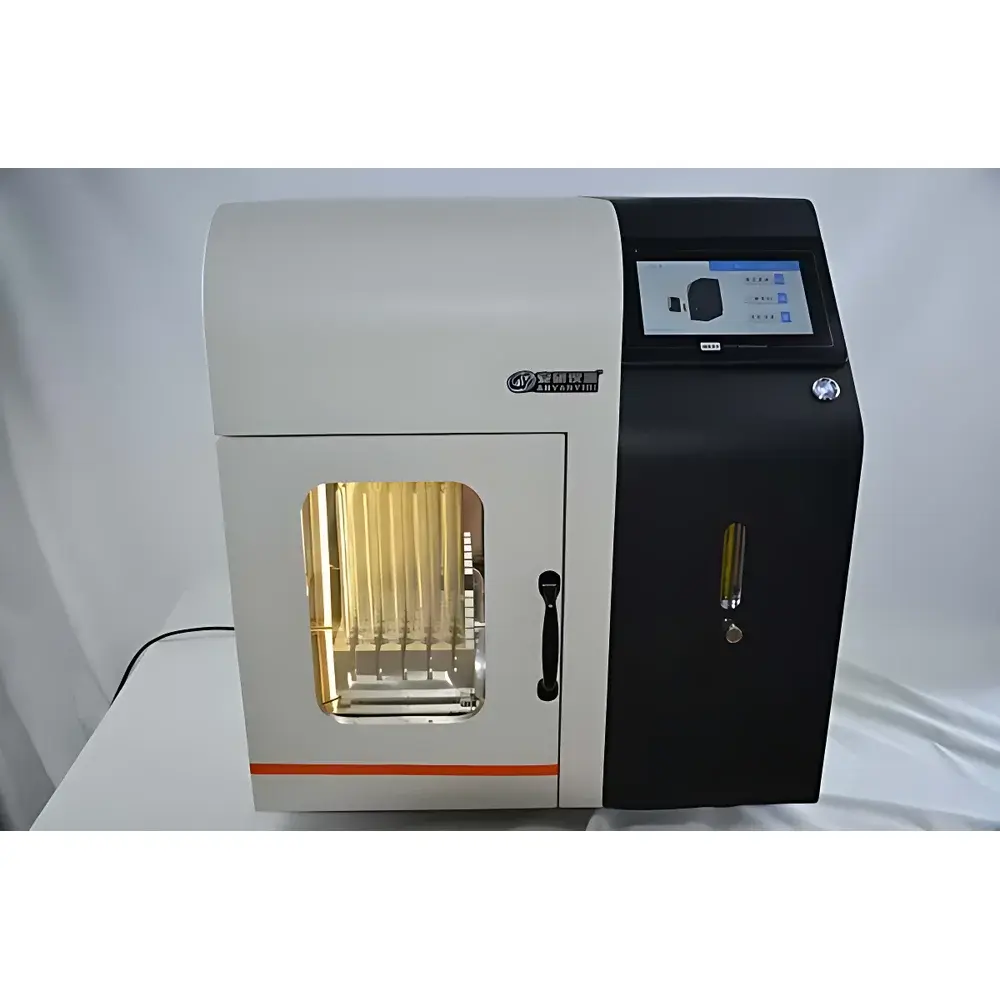
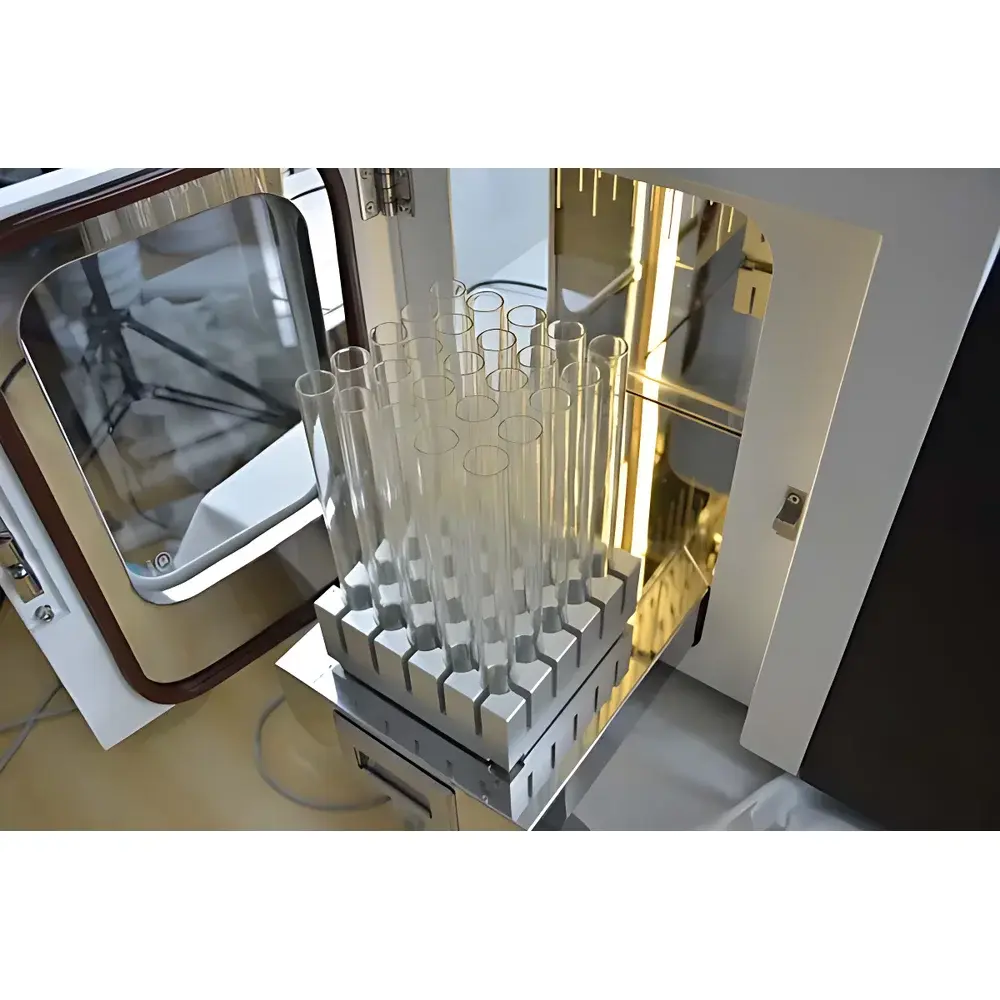
ANYAN DC16G Fully Enclosed Visual Dry-Block Nitrogen Evaporator for Pesticide Residue Analysis
| Brand | ANYAN (Hangzhou Anyan Instrument Co., Ltd.) |
|---|---|
| Origin | Zhejiang, China |
| Model | DC16G |
| Heating Method | Dry-block heating |
| Temperature Control Range | ±1 °C |
| Sample Capacity | 16 positions |
| Heating Power | 220 W |
| Heating Block Material | High-purity aluminum alloy |
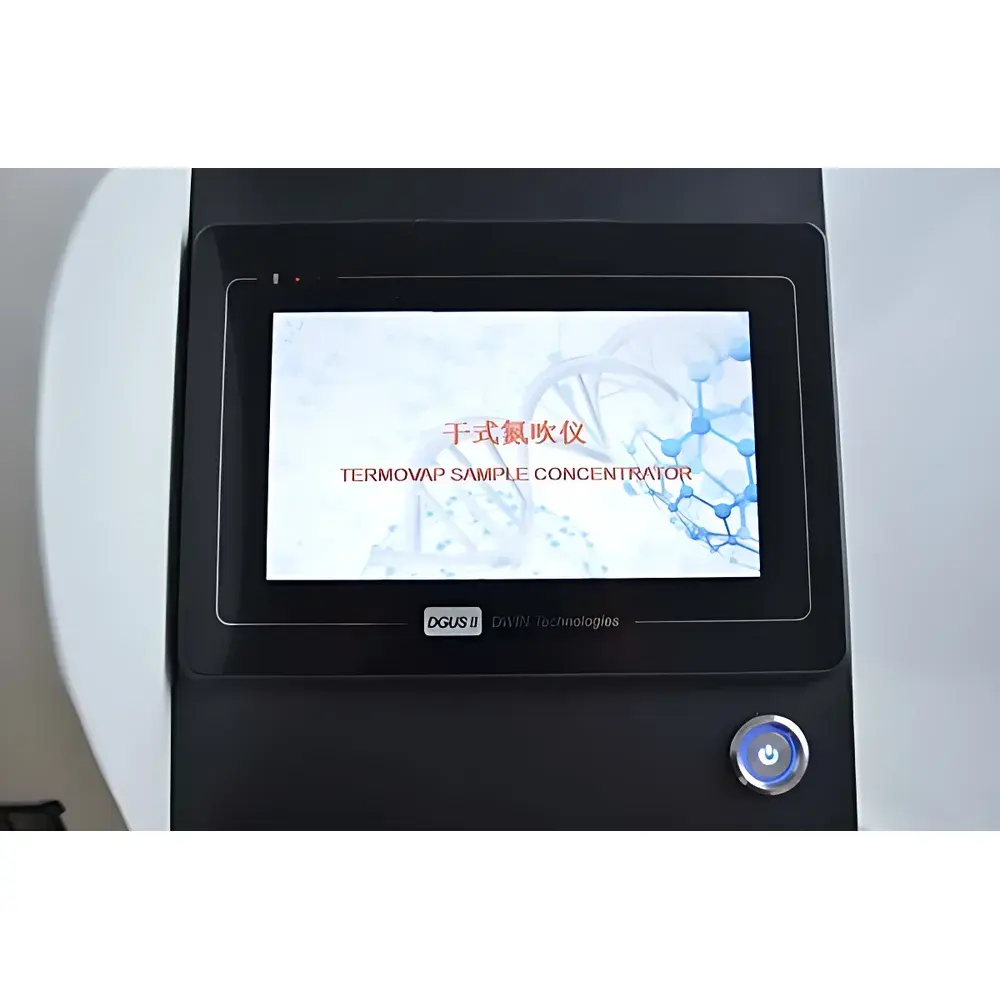
| Display | 7-inch capacitive touch LCD |
| Temperature Range | Ambient to 100 °C |
| Timer Range | 0–999 min |
| Gas Pressure Regulation | 0–0.8 MPa |
| Independent Gas Flow Control | 4-channel electromagnetic valve array |
| Pre-heated N₂ Inlet | ~45 °C |
| Filtration | 0.01 µm nitrogen particulate filter |
| Safety Features | Over-temperature cutoff, real-time pressure monitoring, automatic fault detection and alarm |
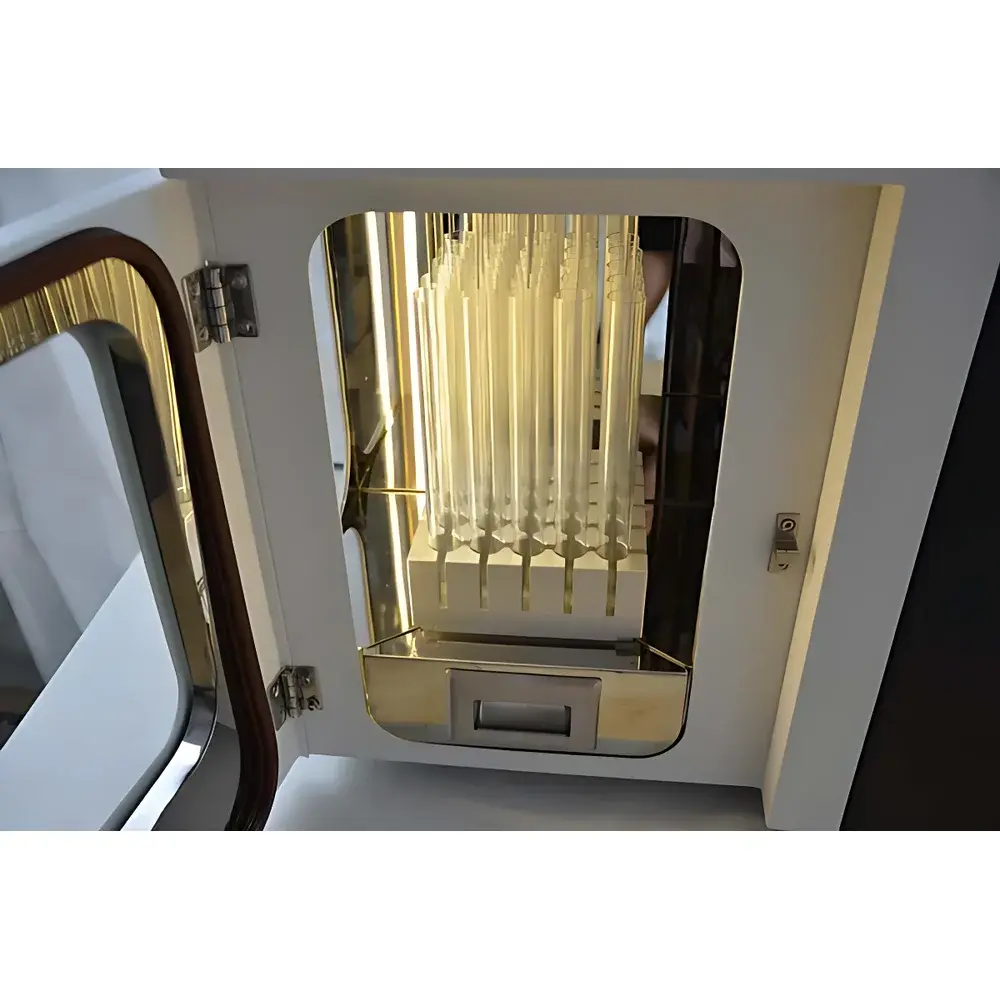
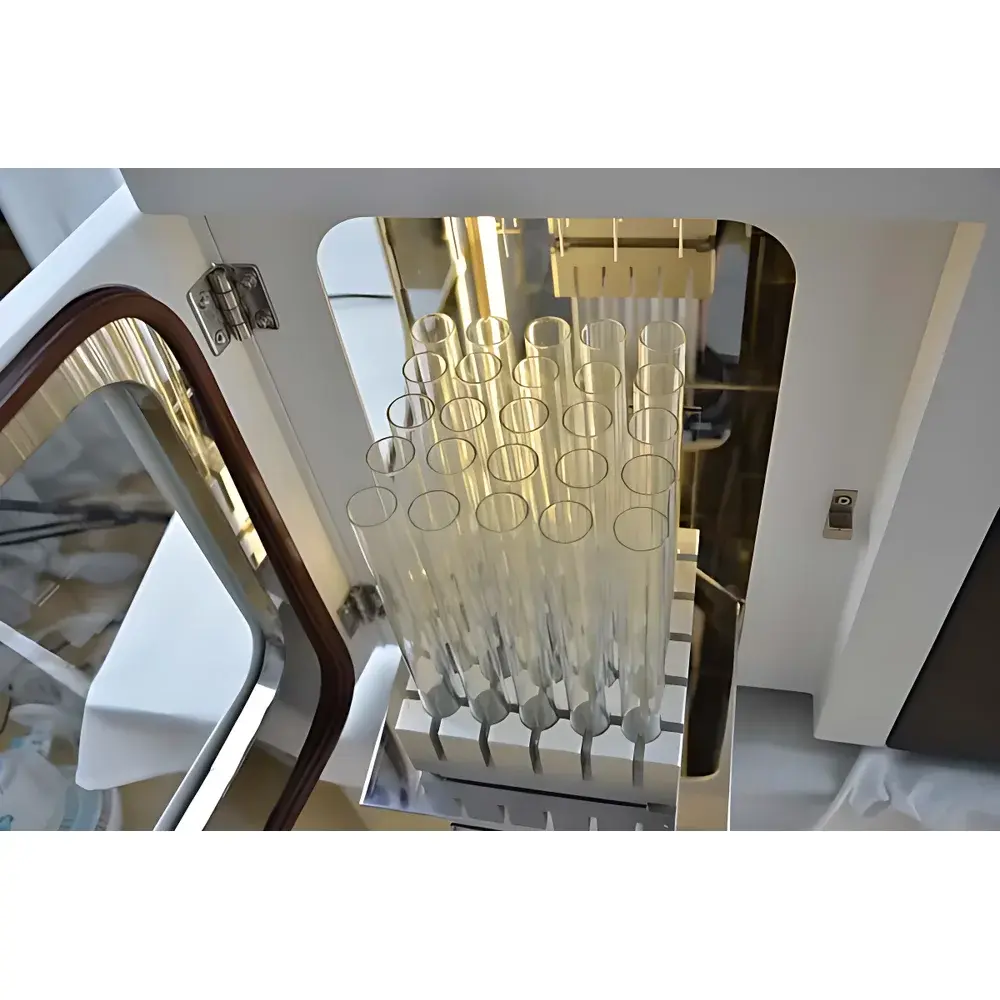
| Viewing System | Four-sided transparent chamber with dual observation windows and drawer-type sample tray |
| Gas Delivery | Integrated pre-heating module + sealed gas distribution manifold |
| Data Logging | Onboard storage for runtime parameters (temperature, pressure, time) |
| Compliance Support | Designed for GLP-compliant workflows |
Overview
The ANYAN DC16G is a fully enclosed, visual dry-block nitrogen evaporator engineered specifically for pesticide residue analysis in food safety, environmental, and agricultural testing laboratories. It operates on the principle of inert gas-assisted solvent evaporation—using precisely heated, filtered nitrogen to displace saturated vapor above liquid samples, thereby accelerating concentration without thermal degradation or oxidation. Unlike water-bath nitrogen blow-down systems, its dry-block architecture eliminates cross-contamination risks from water ingress, microbial growth, or inconsistent thermal coupling. The integrated nitrogen pre-heating module (maintained at ~45 °C) ensures rapid and uniform solvent removal while preventing condensation on the吹针 (blow needles), which is critical for volatile analytes such as organophosphates and pyrethroids. Its sealed optical chamber with four-side transparency and drawer-style sample access enables real-time, non-invasive monitoring of meniscus recession across all 16 positions—supporting method validation, endpoint determination, and regulatory traceability.
Key Features
- 7-inch high-resolution capacitive touch display with intuitive GUI, supporting both linear and ramped temperature profiles across up to 50 programmable segments
- Dry-block heating system constructed from aerospace-grade aluminum alloy—delivering rapid thermal response (<30 s to reach setpoint) and spatial uniformity (<±0.5 °C across block surface)
- Four independent electromagnetic flow control valves enable per-channel gas regulation, minimizing nitrogen consumption by >40% compared to fixed-flow systems
- Integrated 0.01 µm particulate filtration and pre-heated nitrogen delivery path ensure gas purity and eliminate cold-trap formation on delivery nozzles
- Motorized dual-mode needle height adjustment: coarse positioning for initial setup and fine-tuning (0.1 mm resolution) for optimal distance-to-meniscus alignment
- Double-sealed observation door with laminar airflow recirculation—eliminates need for external fume hood integration while containing VOC emissions
- Onboard data logger records timestamped values for temperature, pressure, elapsed time, and valve status—exportable via USB for 21 CFR Part 11–compliant documentation
- Over-temperature protection circuitry with automatic shutdown and audible/visual alert, plus continuous pressure monitoring with dynamic fault classification
Sample Compatibility & Compliance
The DC16G accommodates standard 16-mm OD test tubes, GC vials, and conical-bottom centrifuge tubes (1–25 mL volume range). Its modular aluminum heating block accepts interchangeable inserts for alternative tube geometries (e.g., 10-mm, 13-mm, or 20-mm diameters), ensuring flexibility across multi-analyte workflows. The instrument meets mechanical safety requirements per IEC 61010-1 and electromagnetic compatibility standards (EN 61326-1). While not certified for intrinsic safety in hazardous locations, its sealed gas path and low-energy heating design align with ISO/IEC 17025 clause 5.4.2 for equipment suitability verification. For regulated pesticide testing, the system supports method validation per AOAC Official Method 2007.01 and EPA Method 525.3—particularly where nitrogen purity, temperature stability, and visual endpoint confirmation are critical for recovery accuracy.
Software & Data Management
The embedded firmware provides local control without dependency on external PCs. All operational parameters—including temperature setpoints, ramp rates, hold times, gas pressure setpoints, and valve activation sequences—are stored in non-volatile memory with version-stamped timestamps. Data export is supported via USB 2.0 port in CSV format, enabling direct import into LIMS or statistical process control (SPC) platforms. Audit trail functionality logs user actions (e.g., parameter changes, start/stop commands, alarm acknowledgments) with operator ID and timestamp—meeting minimum requirements for GLP and GMP environments under FDA 21 CFR Part 11 when paired with appropriate electronic signature controls. No cloud connectivity or remote access capabilities are implemented, preserving data sovereignty and network security.
Applications
- Concentration of extractants following QuEChERS preparation for GC-MS/MS and LC-MS/MS analysis of pesticides in fruits, vegetables, and cereals
- Post-extraction cleanup of soil and water samples prior to analysis per ISO 17025-accredited environmental testing protocols
- Routine QC/QA in contract testing laboratories performing multi-residue pesticide screening under SANTE/2021/11 guidance
- Method development studies requiring precise control over evaporation kinetics, including comparative assessment of nitrogen temperature and flow effects on analyte stability
- Stability-indicating assays where oxidative degradation must be minimized—leveraging inert atmosphere and absence of aqueous media
FAQ
Does the DC16G support method transfer from water-bath nitrogen evaporators?
Yes—its dry-block thermal profile and pre-heated gas delivery replicate typical water-bath performance while improving reproducibility and reducing maintenance overhead. Validation should include recovery studies using matrix-matched standards.
Can the heating block be calibrated independently?
Yes—the unit includes a dedicated PT100 sensor port for third-party calibration against NIST-traceable reference thermometers, per ISO/IEC 17025 section 6.5.2.
Is the nitrogen pre-heating temperature adjustable?
No—the pre-heater is fixed at ~45 °C to optimize solvent removal kinetics without risking thermolabile analyte degradation; this setting is validated for common acetonitrile, ethyl acetate, and dichloromethane extracts.
What maintenance intervals are recommended?
Filter replacement every 6 months or after 500 operating hours; visual inspection of O-rings and needle tips before each batch; annual verification of temperature uniformity and pressure regulation accuracy.
How does the system prevent cross-contamination between samples?
Through physical separation of gas channels via independent solenoid valves, combined with laminar recirculation within the viewing chamber and zero shared air pathways between positions.



