
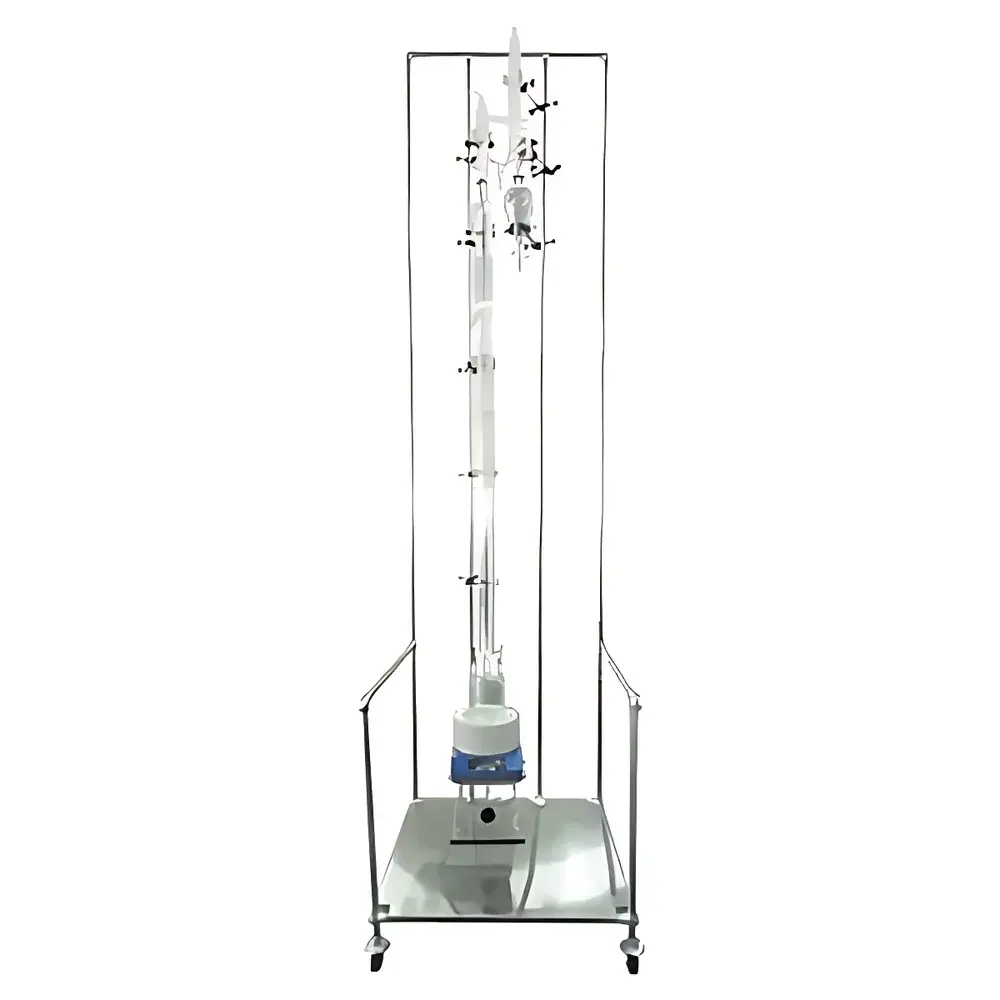
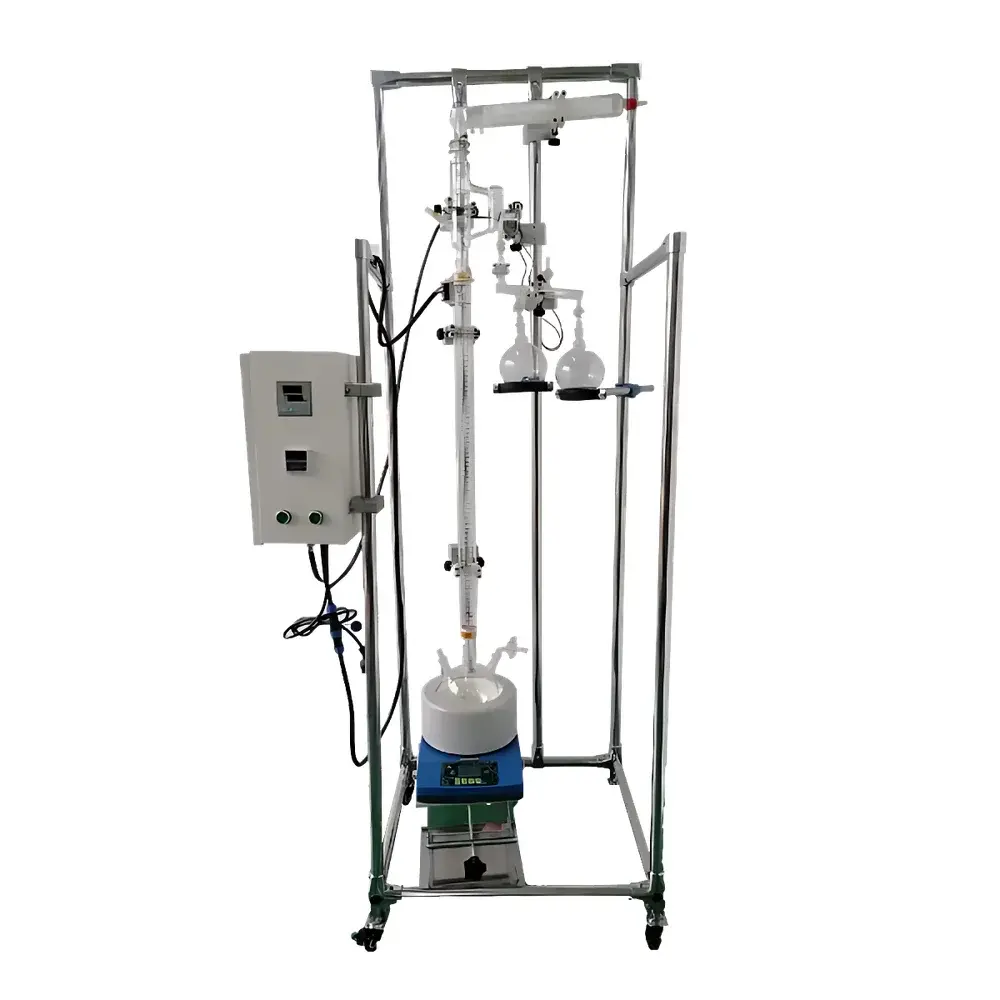
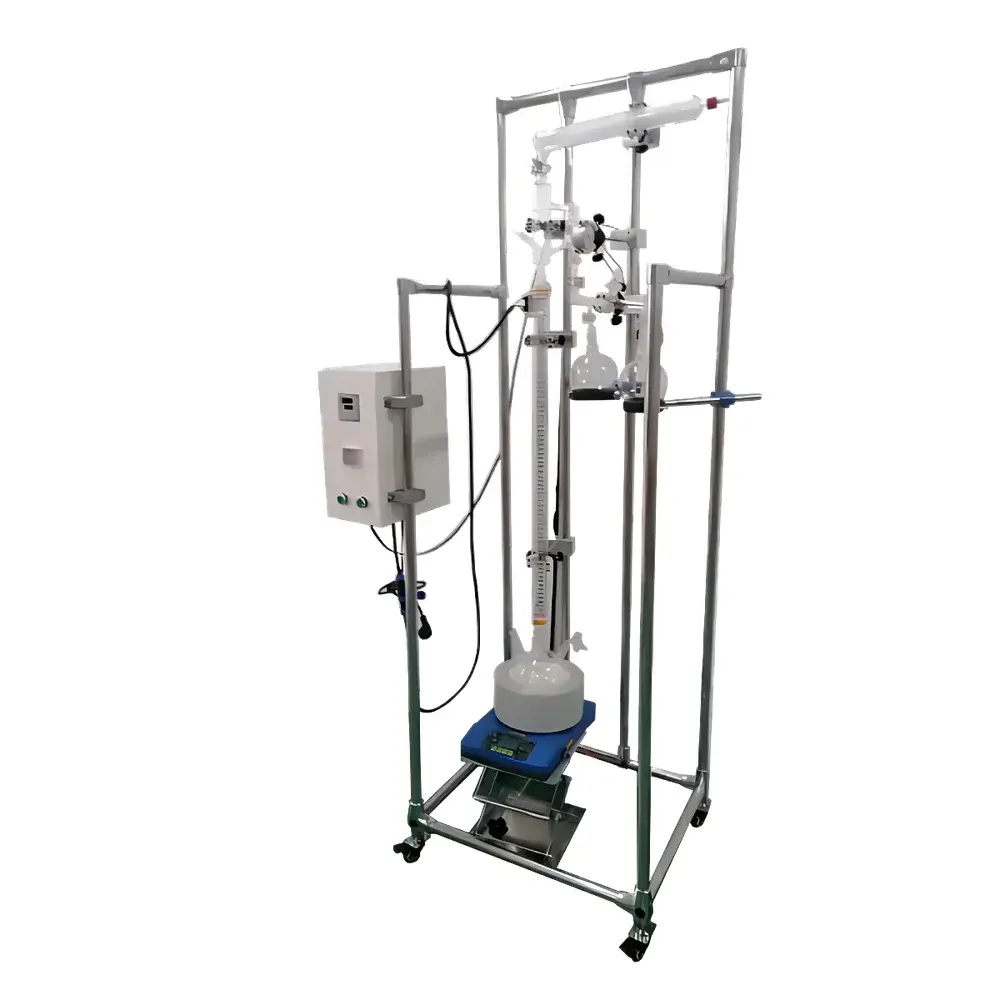
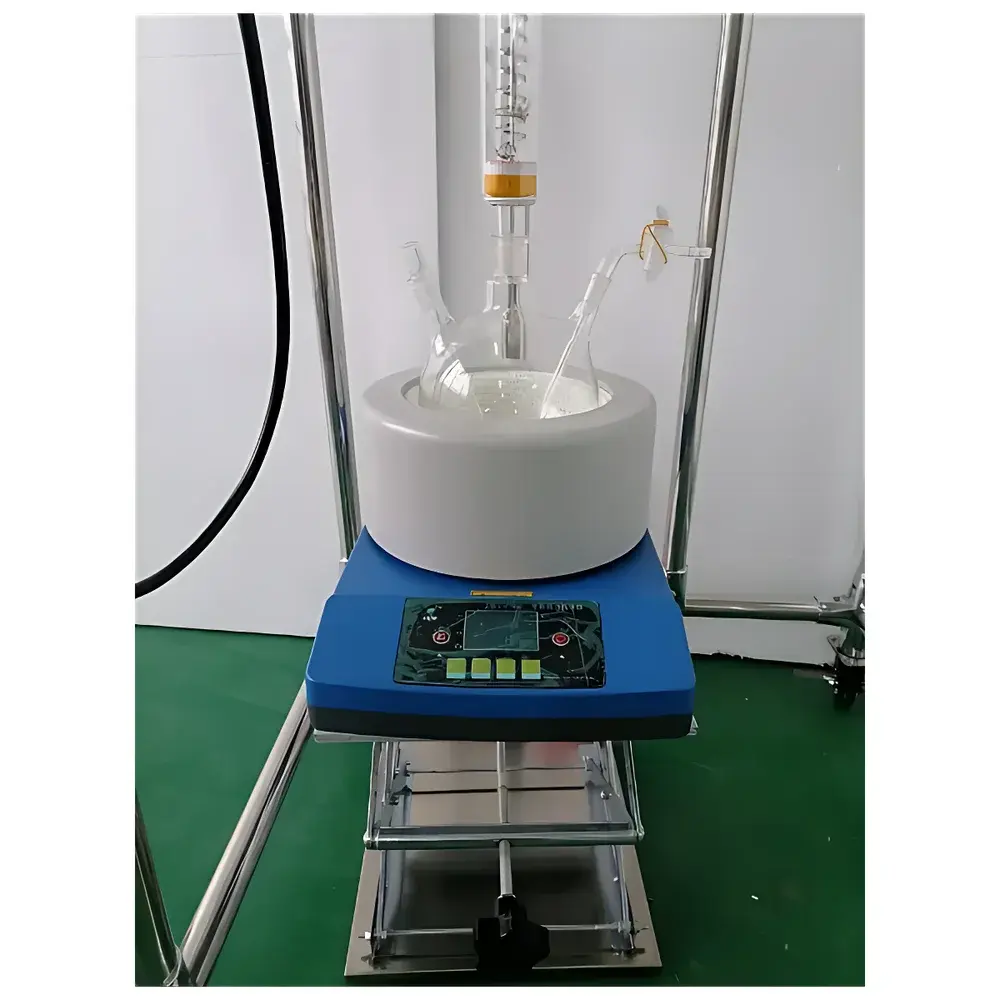
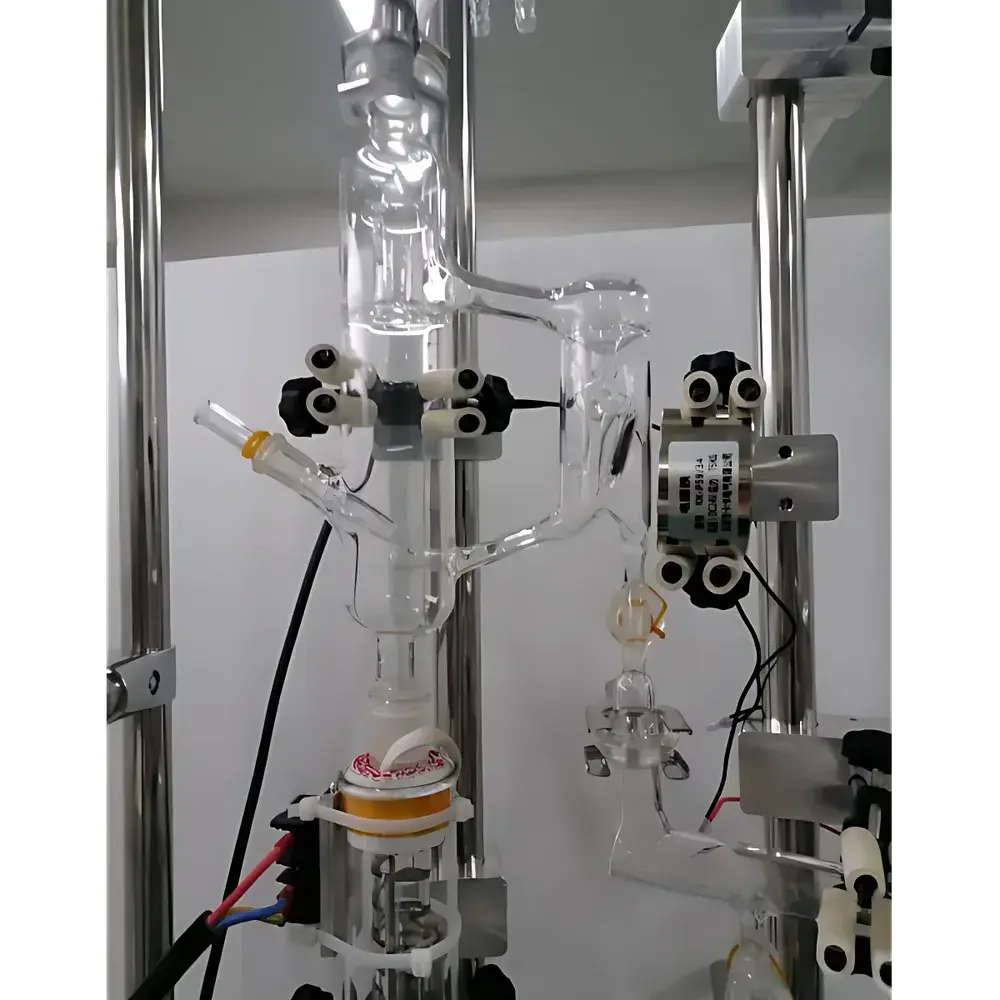
Anyan Instrument AYJ-5 Benchtop Packed Distillation Column for Mass & Heat Transfer Studies
| Brand | Anyan Instrument |
|---|---|
| Origin | Zhejiang, China |
| Manufacturer Type | Authorized Distributor |
| Country of Origin | China |
| Model | AYJ-5 |
| Price Range | USD 8,400 – 9,100 (FOB China) |
| Tower Material | Borosilicate Glass 3.3 |
| Tower Volume | 5 L |
| Tower ID | 25 mm |
| Packing Height | 1 m |
| Total Height | ≈2800 mm |
| Heating Method | Electric Heating Jacket |
| Max Temp | 300 °C |
| Min Operating Vacuum | ≤0.1 mbar |
| Condenser Type | Vertical Shell-and-Tube |
| Heat Exchange Area | 0.2 m² |
| Reflux Ratio Control | Yes |
| Temperature Monitoring | Integrated Digital Display |
| Continuous Sampling Valve | Yes |
| Power Supply | 220 V, 50/60 Hz, Single Phase |
| Vacuum Pump | Optional (Rotary Vane or Water Aspirator) |
| Pressure Port & Pre-Pump Cold Trap | Optional |
| Insulation | Removable Glass Wool Wrap |
| Packing Options | Raschig Rings, Helices, or Structured Mesh (Customizable) |
Overview
The Anyan Instrument AYJ-5 Benchtop Packed Distillation Column is a precision-engineered laboratory-scale unit designed for fundamental and applied research in vapor–liquid equilibrium (VLE), mass transfer efficiency, and heat transfer dynamics. Based on the principles of fractional distillation—leveraging differential volatility and counter-current contact between ascending vapor and descending liquid—the AYJ-5 enables rigorous investigation of separation performance under controlled thermal, hydrodynamic, and vacuum conditions. Its all-borosilicate glass 3.3 construction ensures chemical inertness, optical transparency for process observation, and compatibility with aggressive solvents and high-boiling organics. The column operates across a wide thermal range (ambient +10 °C to 300 °C) and deep vacuum (≤0.1 mbar), supporting both atmospheric and reduced-pressure distillations essential for thermally sensitive compounds or high-boiling mixtures.
Key Features
- Optically transparent borosilicate glass 3.3 tower and reboiler (5 L capacity) for real-time visualization of flooding, weeping, entrainment, and phase distribution.
- Precision-machined 25 mm internal diameter column with 1 m effective packing height—optimized for HETP (Height Equivalent to a Theoretical Plate) determination and Murphree efficiency evaluation.
- Integrated electric heating jacket with PID-controlled temperature regulation (±1 °C accuracy) and over-temperature cutoff protection.
- Vertical shell-and-tube condenser (0.2 m² active heat exchange area) with adjustable coolant flow rate for precise reflux ratio control (0–100% programmable via manual or optional automated valve).
- Dual collection vessels (2 L and 3 L) with ground-glass joints and PTFE stopcocks for sequential fraction collection under inert or vacuum conditions.
- Modular auxiliary interfaces: standard 12 mm OD temperature probe port at column head; optional pressure transducer port; pre-pump cold trap mounting flange; and removable glass wool insulation wrap for thermal stability.
Sample Compatibility & Compliance
The AYJ-5 accommodates a broad spectrum of organic, aqueous, and mixed-solvent systems—including alcohols, esters, hydrocarbons, pharmaceutical intermediates, and natural product extracts—without risk of corrosion or leaching. All wetted parts conform to ASTM E438 Type I, Class A specifications for borosilicate glass. Vacuum integrity meets ISO 2859-1 sampling standards for leak testing at ≤0.1 mbar. When configured with optional data logging and electronic reflux control, the system supports GLP-compliant operation per 21 CFR Part 11 requirements (audit trail, user authentication, and electronic signature readiness). Documentation includes CE-marked electrical components, RoHS-compliant wiring, and material traceability certificates for glass and PTFE components.
Software & Data Management
While the base AYJ-5 operates via analog instrumentation (digital temperature display, mechanical reflux valve), it is fully compatible with third-party DAQ systems (e.g., LabVIEW, MATLAB, or Siemens Desigo CC) via 4–20 mA or 0–10 V analog outputs from temperature and pressure sensors. Optional digital upgrade kits provide USB/RS485 connectivity, real-time reflux ratio logging, and CSV-exportable time-series datasets (temperature profiles, condensate mass vs. time, vacuum decay curves). All collected data adhere to FAIR principles (Findable, Accessible, Interoperable, Reusable) when stored in institutional LIMS or ELN environments.
Applications
- Determination of relative volatility, activity coefficients, and binary VLE data for thermodynamic modeling (e.g., NRTL, UNIQUAC parameter regression).
- Experimental validation of tray/packing efficiency models (O’Connell correlation, Eckert generalized pressure drop correlation).
- Process development for API purification, solvent recovery, and chiral resolution under reduced pressure.
- Teaching unit operations laboratories: illustrating minimum reflux ratio (Rmin), total reflux, and pinch point behavior.
- Feasibility studies for scale-up to pilot-plant packed columns (geometric and dynamic similarity analysis using Reynolds, Froude, and Weber numbers).
FAQ
What packing materials are supplied as standard with the AYJ-5?
Standard packing is 6×6 mm ceramic Raschig rings. Stainless steel helices and structured stainless steel gauze packings are available as configurable options.
Can the column be operated under positive pressure?
Yes—the glass vessel is rated for up to 0.3 MPa gauge pressure when equipped with reinforced flanges and pressure-relief valves (optional add-on kit).
Is the heating jacket compatible with silicone oil or glycol circulation?
No—the standard configuration uses resistive electric heating only. For precise thermal ramping or low-ΔT operation, external circulatory baths can be connected to the reboiler jacket inlet/outlet ports (requires custom adapter kit).
Does the system include calibration documentation?
Each unit ships with factory calibration certificates for the main temperature sensor (traceable to NIST standards) and pressure transducer (if installed), valid for 12 months.
What maintenance intervals are recommended for long-term reliability?
Glass components require visual inspection before each use; O-rings and PTFE seals should be replaced every 6 months under continuous operation; heating jacket insulation integrity should be verified quarterly.



