
ANYAN PSA High-Purity Nitrogen Generator
| Key | Brand: ANYAN |
|---|---|
| Origin | Fujian, China |
| Model | PSA Nitrogen Generator |
| Nitrogen Production Principle | Pressure Swing Adsorption (PSA) |
| Output Flow Rate | 30 L/min (1.8 m³/h) |
| Output Pressure | 0–0.6 MPa (factory-set at 0.5 MPa) |
| Nitrogen Purity | 99.9% (v/v) |
| Oxygen Content | ≤1000 ppm |
| Dew Point | −40 °C |
| Power Supply | 220 V ±10%, 50 Hz ±5% |
| Power Consumption | 600 W |
| Ambient Operating Temperature | 0–40 °C |
| Relative Humidity | ≤85% RH (non-condensing) |
| Noise Level | ≤65 dB(A) |
| Construction Material | Food-grade 304 stainless steel |
| Dimensions (L×W×H) | 2600 × 950 × 2400 mm |
| Weight | 2400 kg |
| Compliance | Designed for GLP-compliant lab environments |
Overview
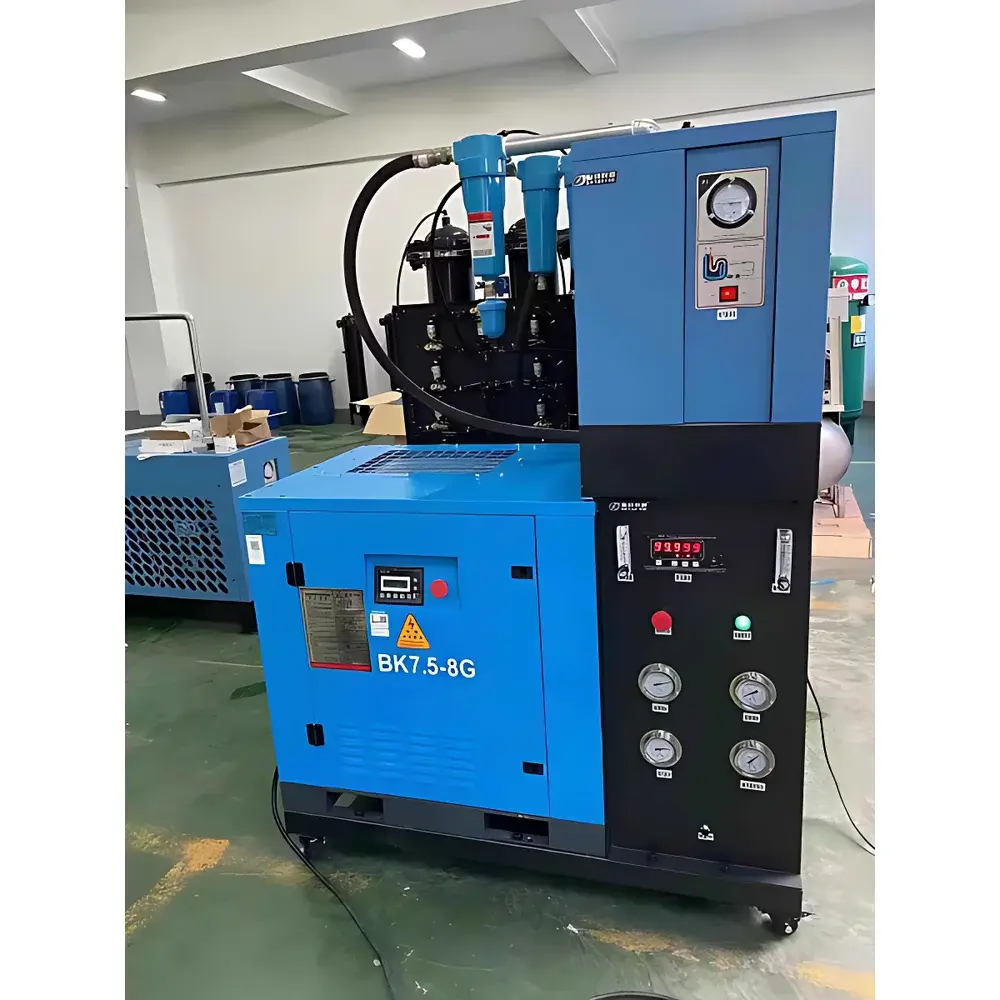
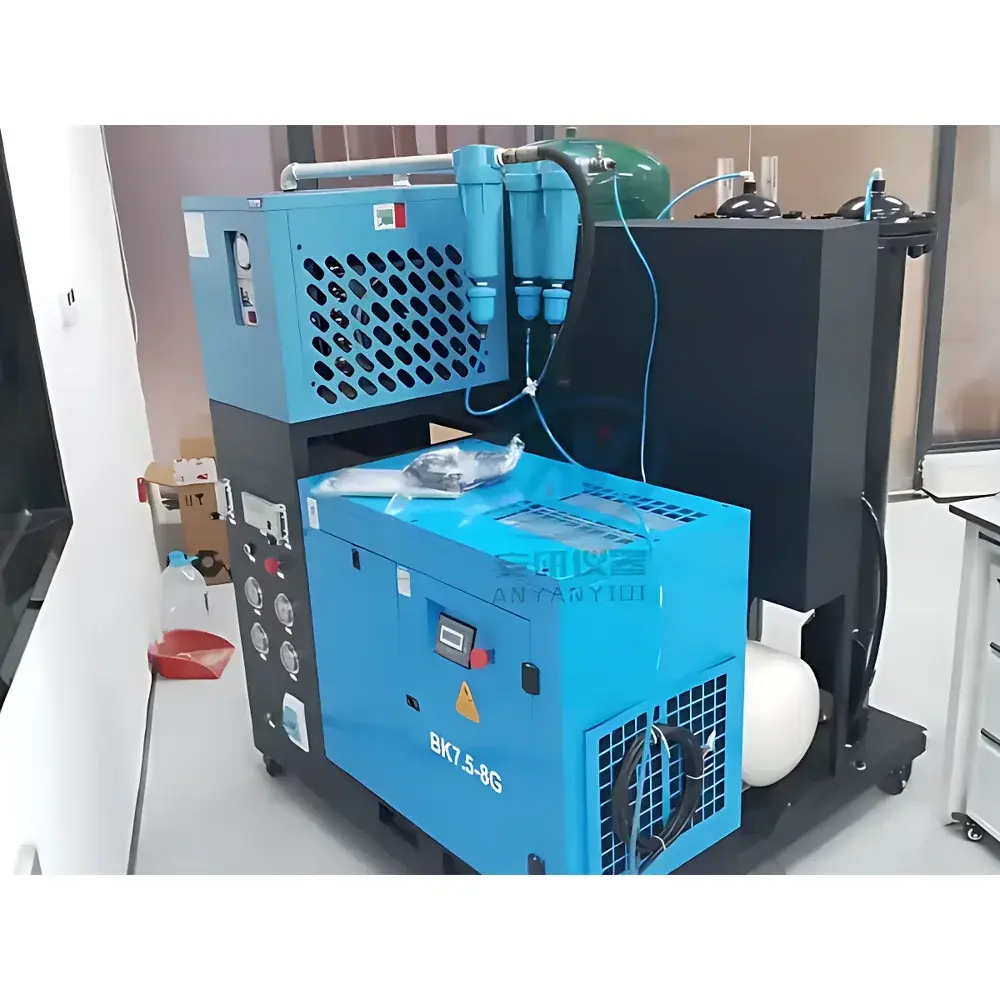
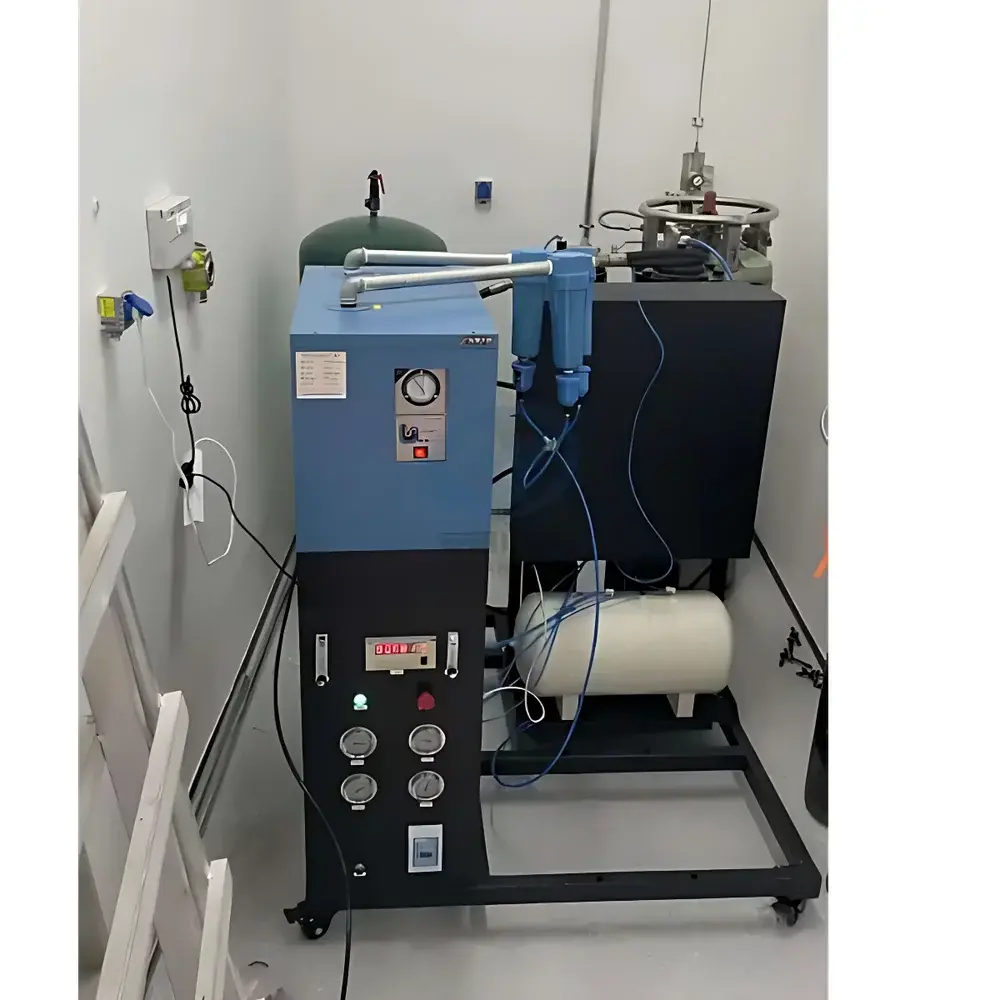
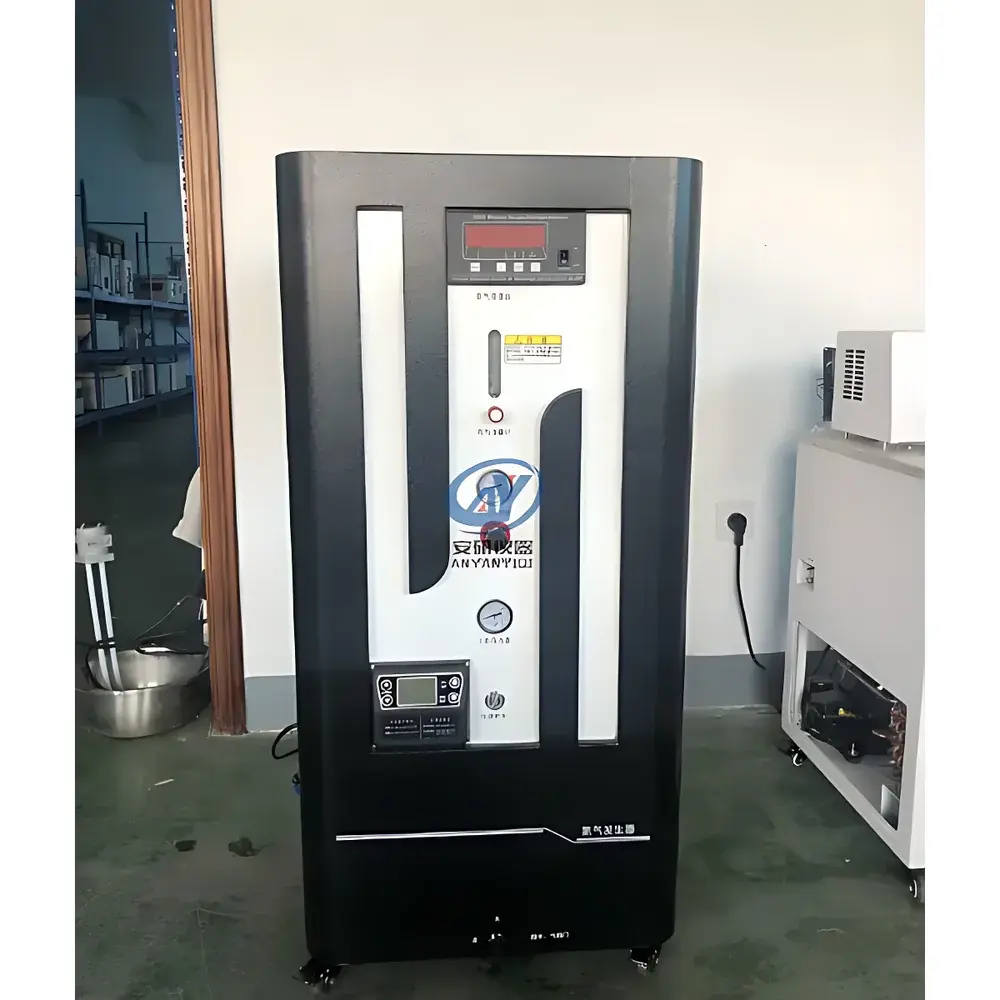
The ANYAN PSA High-Purity Nitrogen Generator is an on-demand, laboratory-scale nitrogen supply system engineered for continuous, reliable operation in analytical and research settings. It employs pressure swing adsorption (PSA) technology—leveraging the differential adsorption kinetics of oxygen, moisture, and carbon dioxide on carbon molecular sieve (CMS) media—to separate high-purity nitrogen from compressed ambient air. Unlike electrolytic or membrane-based generators, PSA systems deliver stable 99.9% v/v nitrogen purity with low oxygen residual (<1000 ppm), a dew point of −40 °C, and zero reliance on consumable electrolytes or fragile polymer membranes. The unit integrates a pre-filtered compressed air feed (requiring external oil-free air source), dual CMS adsorption towers with automatic valve sequencing, and real-time process monitoring. Its design prioritizes operational continuity, minimal maintenance intervention, and compatibility with sensitive instrumentation—including gas chromatographs requiring carrier and makeup gas, LC-MS nitrogen curtain gas, and inert blanketing applications.
Key Features
- Stainless steel construction: All wetted parts—including adsorption towers, piping, and manifold—are fabricated from food-grade 304 stainless steel to ensure corrosion resistance, long-term integrity, and compliance with ISO 8573-1 air quality standards.
- Integrated process instrumentation: Front-panel mounted digital displays provide continuous readouts of nitrogen purity (via built-in paramagnetic or electrochemical O₂ sensor), volumetric flow rate (thermal mass flow meter), and output pressure (precision gauge).
- PLC-based control architecture: Programmable logic controller manages tower cycling, pressure equalization, regeneration timing, and fault diagnostics—including low inlet pressure, high dew point, or purity deviation alerts.
- Modular and skid-mounted design: Heavy-duty structural base allows direct floor placement without anchoring; optimized footprint (2600 × 950 × 2400 mm) accommodates standard laboratory utility corridors.
- Energy-efficient operation: Rated at only 600 W under nominal load, the generator achieves rapid start-up (≤30 min to full-spec purity) and maintains stable output across variable demand profiles without throttling losses.
Sample Compatibility & Compliance
The ANYAN PSA Nitrogen Generator is designed for use with instruments demanding consistent, contaminant-free nitrogen—particularly GC carrier gas (per ASTM D3612 and USP ), GC-MS interface gases, and sample preparation purge environments. Its −40 °C dew point meets ISO 8573-1 Class 2 specifications for compressed gases, ensuring no condensation-induced column damage or detector interference. Oxygen content ≤1000 ppm satisfies ICH Q5C stability testing requirements for nitrogen-blanketed biopharmaceutical storage. While not certified to FDA 21 CFR Part 11 out-of-the-box, the PLC control system supports audit-trail-ready data logging when integrated with compliant SCADA platforms. The unit complies with CE electromagnetic compatibility (EMC) directives and conforms to IEC 61000-4 series immunity standards.
Software & Data Management
The generator includes a local HMI interface with password-protected configuration access, event log history (≥10,000 entries), and timestamped alarm records. Optional RS-485 Modbus RTU or Ethernet TCP/IP communication enables integration into centralized lab infrastructure management systems. Raw sensor outputs (O₂ %, flow L/min, pressure MPa) are available as analog 4–20 mA signals for third-party DAQ or LIMS synchronization. Firmware updates are performed via secure USB interface; all calibration parameters are stored in non-volatile memory with write-protection. No cloud connectivity or proprietary software installation is required—operation remains fully functional in air-gapped environments.
Applications
- Gas chromatography: Stable carrier gas supply for packed and capillary columns, eliminating cylinder changeover downtime and pressure fluctuations.
- Mass spectrometry: High-purity nitrogen for LC-MS curtain gas, collision cell gas (in selected triple-quads), and ESI source drying.
- Elemental analyzers: Inert purge and combustion support gas for CHNS/O instruments per ASTM D5373.
- Sample preparation: Blanketing of solvent-sensitive standards, nitrogen purging of vials prior to headspace analysis, and inert atmosphere glove boxes.
- Pharmaceutical QA/QC: Controlled nitrogen environments for stability chambers, dissolution testing apparatus, and lyophilizer backfilling.
FAQ
What compressed air quality is required for optimal PSA performance?
The generator requires oil-free, desiccated compressed air meeting ISO 8573-1 Class 2 (solid particulates ≤0.1 µm, dew point ≤−40 °C, oil content ≤0.1 mg/m³). A coalescing filter + refrigerated dryer + optional desiccant dryer is strongly recommended upstream.
Can output purity be adjusted below 99.9% for cost-sensitive applications?
Yes—purity is inversely proportional to flow rate. At reduced flow (e.g., 15 L/min), purity may exceed 99.99%; at maximum rated flow (30 L/min), it is guaranteed ≥99.9%. Custom calibration for intermediate setpoints is supported via service firmware update.
Is routine CMS replacement required?
Carbon molecular sieve life exceeds 8 years under continuous operation with proper inlet air conditioning. Replacement is only necessary if purity degrades despite verified air quality and correct pressure cycling—typically indicated by persistent O₂ >1500 ppm after regeneration.
Does the unit support 24/7 unattended operation?
Yes—designed for continuous duty cycle with thermal overload protection, auto-restart after power interruption, and configurable shutdown on critical alarms (e.g., sustained low purity or high temperature).
What maintenance intervals are recommended?
Pre-filters require replacement every 6 months (or per manufacturer’s air quality assessment); drain valves should be actuated weekly; annual verification of O₂ sensor calibration and pressure relief valve function is advised per ISO/IEC 17025 internal audit protocols.



