
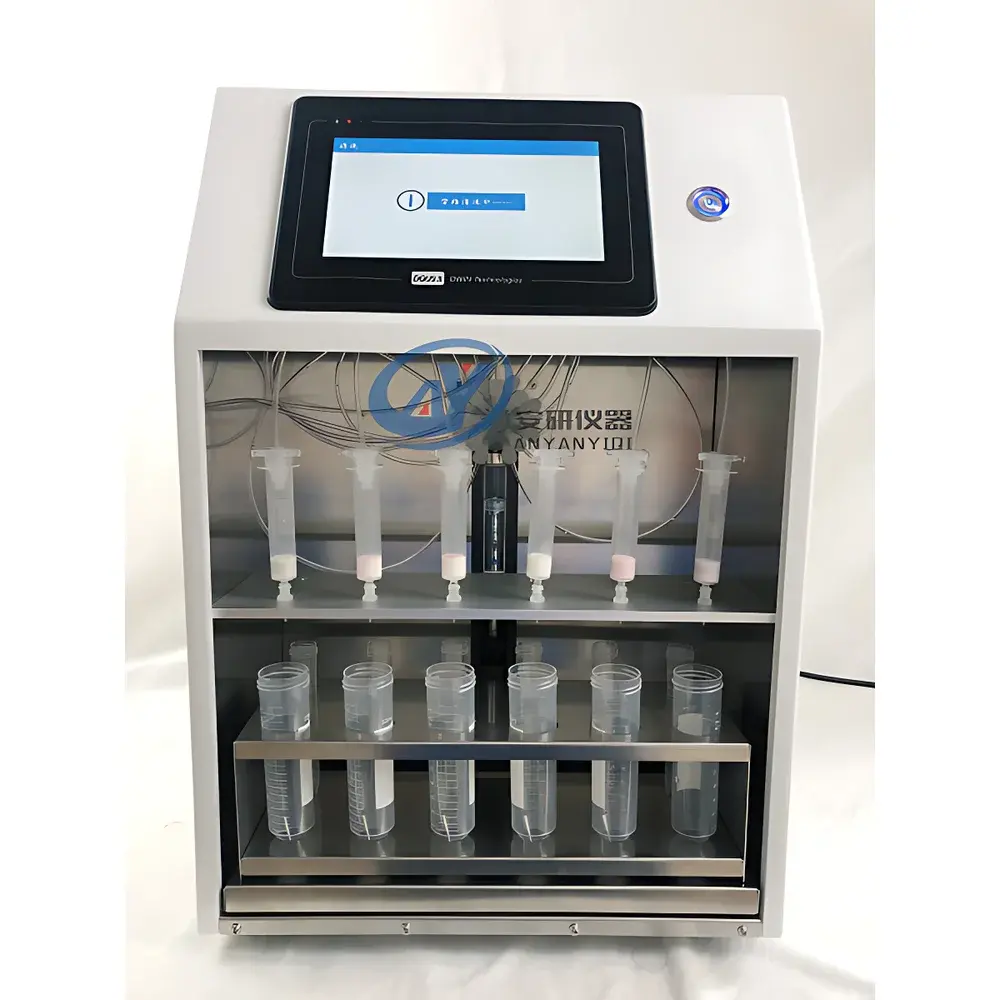
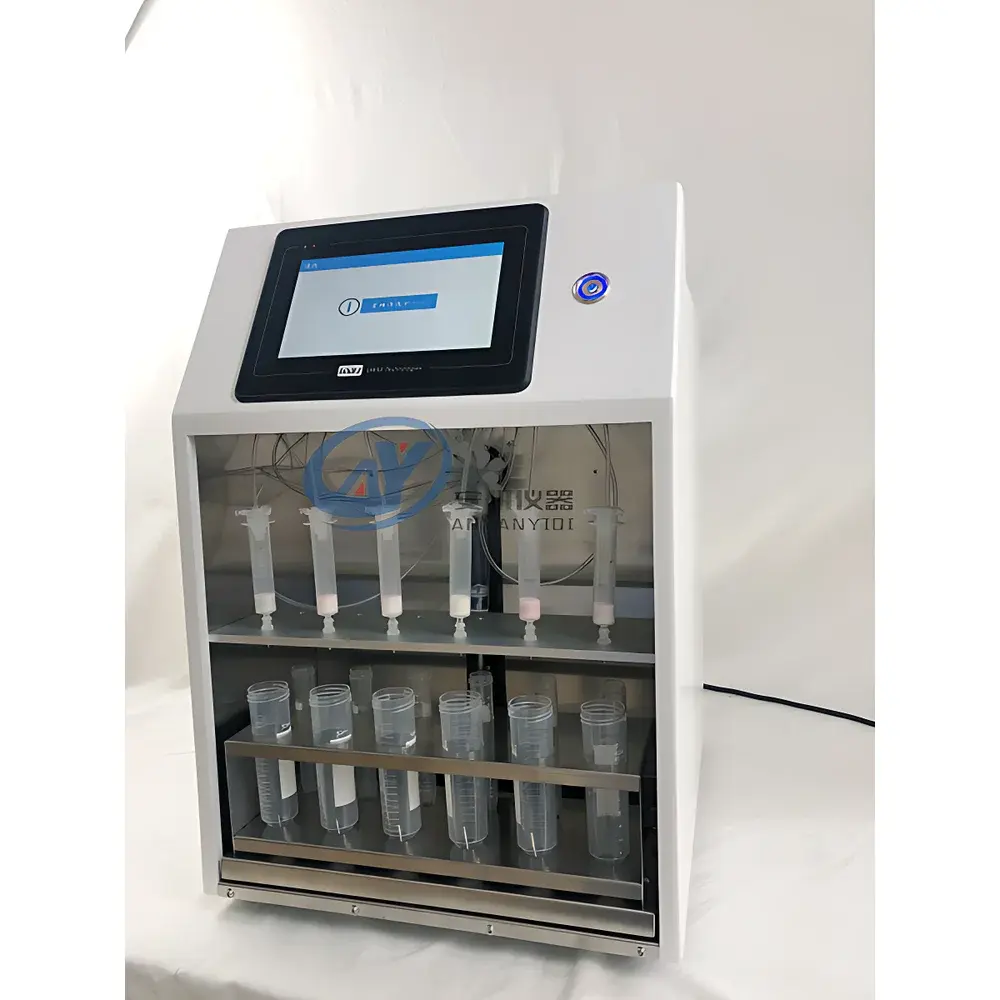
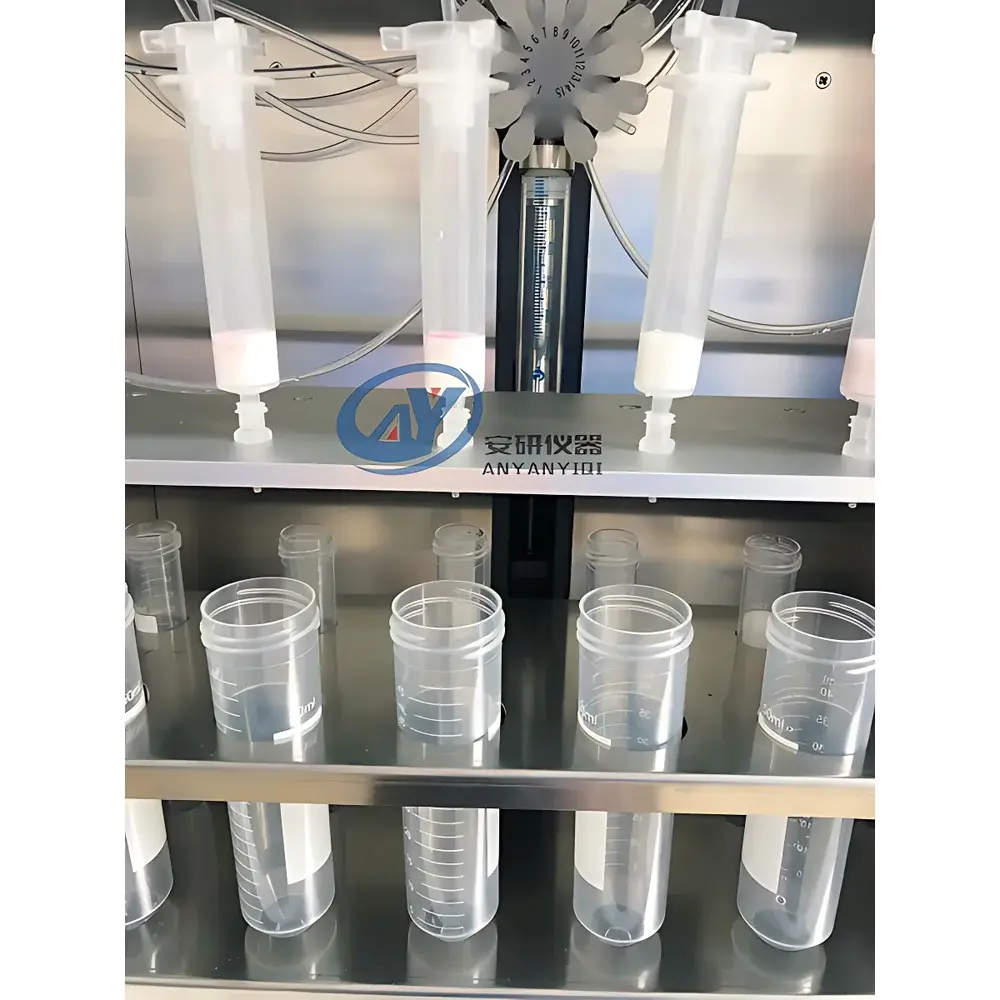
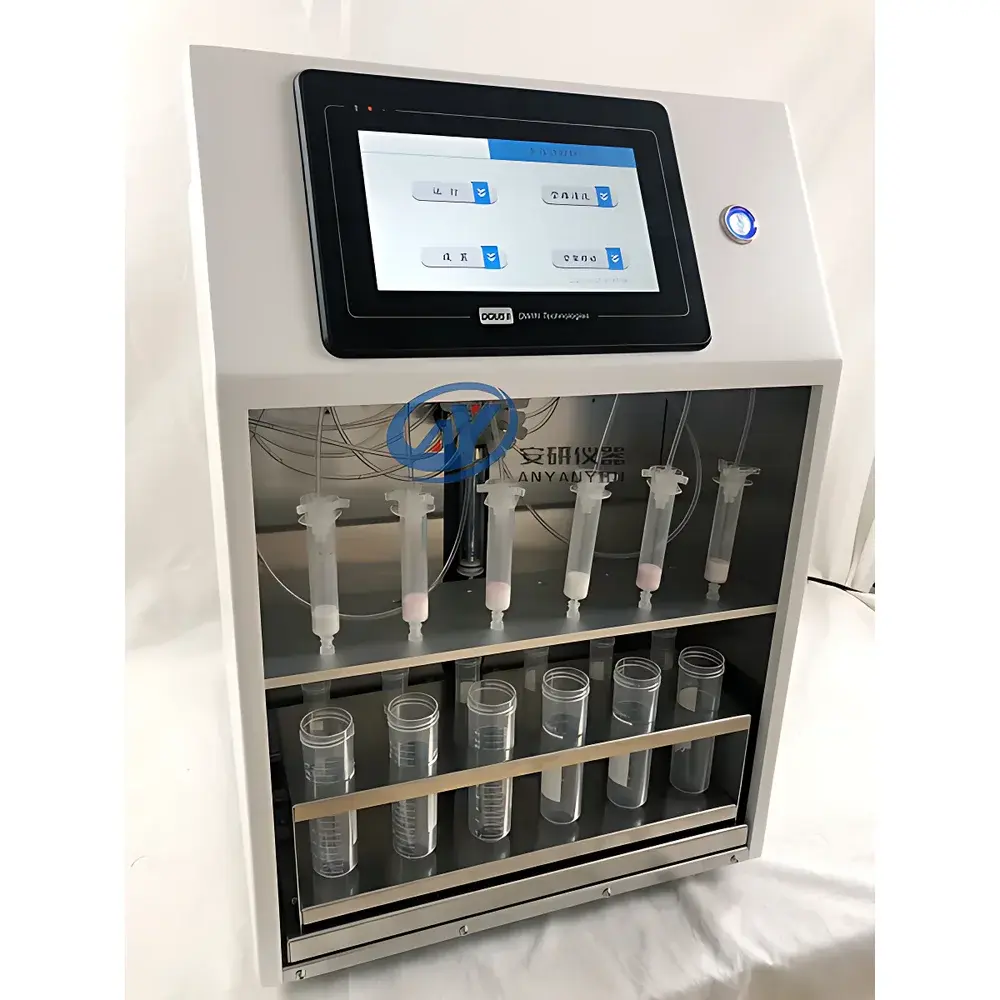
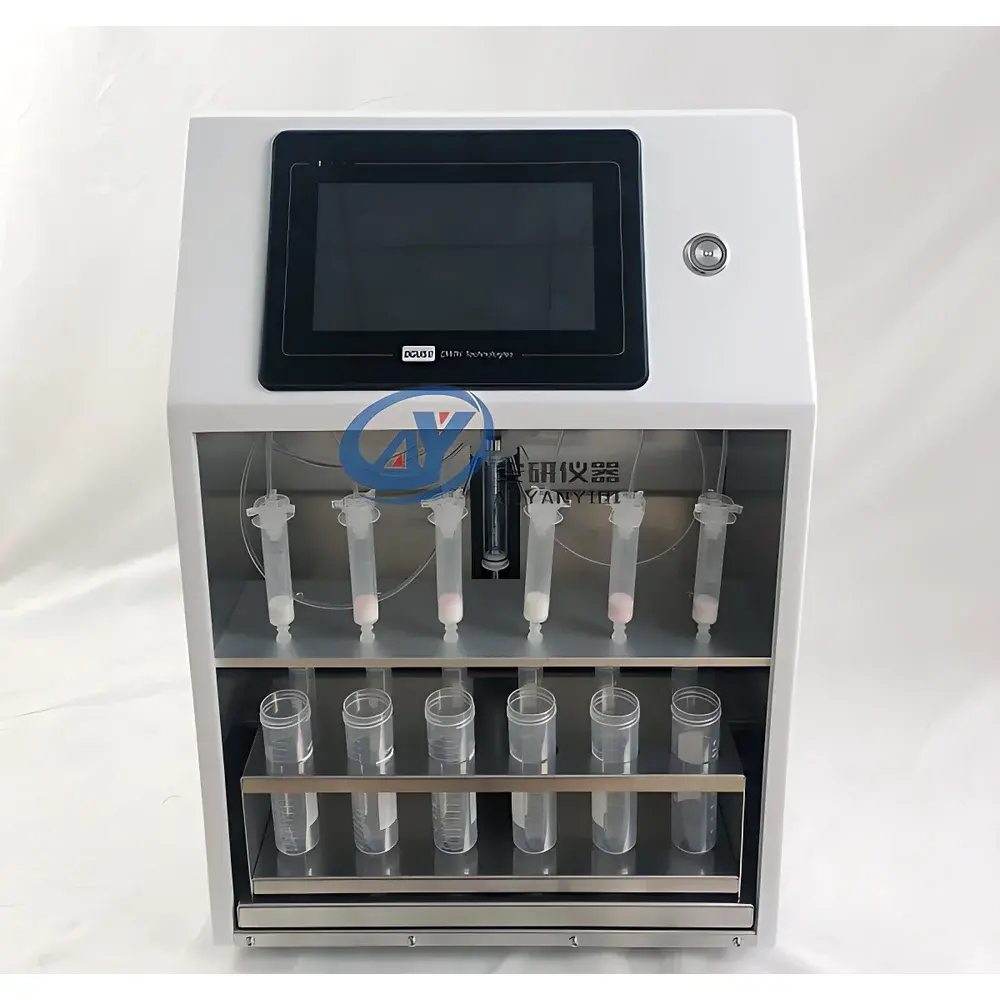
Anyan SPE600 Six-Channel Automated Solid-Phase Extraction System
| Brand | Anyan Instruments |
|---|---|
| Origin | Zhejiang, China |
| Model | SPE600 |
| Channels | 6 |
| Display | 7-inch capacitive touchscreen |
| Fluid Control | CNC-controlled peristaltic pumps |
| Flow Rate Control | Digital, stepless adjustment with real-time display |
| Pressure Mode | Positive-pressure driven |
| Column Compatibility | 1 mL, 3 mL, 6 mL, and 12 mL SPE cartridges (universal fit) |
| Valve Technology | Multi-port rotary valve manifold (no robotic arm) |
| Sample Throughput | 1–6 independent samples simultaneously |
| Safety Features | Over-pressure and over-temperature monitoring with auto-shutdown |
| Software | Graphical user interface with preloaded method library, timed operation, customizable wash protocols, audit-ready event logging |
| Construction | Corrosion-resistant fluidic path (acid/alkali/organic solvent/oxidizer compatible) |
| Dimensions & Serviceability | Modular chassis design for easy access, maintenance, and lab mobility |
| Compliance Support | GLP-compliant operation log, method traceability, user-level access control |
Overview
The Anyan SPE600 Six-Channel Automated Solid-Phase Extraction System is an engineered solution for high-throughput, reproducible sample preparation in regulated and research laboratories. Built upon positive-pressure-driven fluidics and a multi-port rotary valve architecture—eliminating reliance on robotic arms—the system delivers precise, low-dead-volume solvent delivery across six independent channels. Unlike gravity- or vacuum-based SPE platforms, the SPE600 ensures consistent flow dynamics regardless of cartridge packing density or matrix viscosity, enabling robust recovery of trace analytes from complex biological, environmental, and food matrices. Its core function is the automated execution of standardized SPE protocols—including conditioning, loading, washing, and elution—while integrating post-extraction solvent concentration capability to streamline downstream analysis by LC-MS, GC-MS, or HPLC.
Key Features
- Six fully independent extraction channels with synchronized or asynchronous operation—each channel supports discrete method parameters and timing profiles.
- 7-inch high-resolution capacitive touchscreen interface with intuitive graphical workflow navigation and real-time status visualization.
- CNC-controlled peristaltic pump system delivering digitally adjustable, stepless flow rates (0.1–10 mL/min range typical); flow velocity displayed continuously during method execution.
- Positive-pressure manifold architecture ensures stable, pulse-free flow and superior inter-run reproducibility—critical for quantitative bioanalysis and regulatory submissions.
- Universal cartridge compatibility: accommodates 1 mL, 3 mL, 6 mL, and 12 mL SPE columns from leading vendors (e.g., Waters, Thermo Fisher, Agilent, Phenomenex), including polymeric and silica-based sorbents.
- Corrosion-resistant fluid path constructed from chemically inert, long-life tubing and fittings—validated for continuous use with 1 M HCl, 1 M NaOH, acetonitrile, methanol, dichloromethane, and 30% hydrogen peroxide.
- Integrated safety logic: real-time pressure sensing triggers automatic pump stop and alarm if column blockage or system overpressure (>1.2 MPa) occurs; thermal cutoff prevents heater-related incidents during optional evaporation mode.
- Modular mechanical design allows rapid access to pumps, valves, and waste lines—minimizing service downtime and supporting in-house preventive maintenance.
Sample Compatibility & Compliance
The SPE600 processes diverse sample types without modification: aqueous extracts (drinking water, wastewater, soil leachates), protein-rich biological fluids (plasma, urine, homogenized tissue), viscous food digests (juices, dairy, infant formula), and semi-solid environmental matrices (sediment supernatants, sludge extracts). It supports EPA Methods 508.1, 525.3, and 8270D; ISO 17993:2021 for pesticide residue analysis; and USP <621> chromatographic system suitability prerequisites. While not certified to FDA 21 CFR Part 11 out-of-the-box, its software architecture supports electronic signature implementation, audit trail export (CSV/Excel), and role-based user authentication—enabling qualification under GLP and GMP environments when deployed with documented validation protocols.
Software & Data Management
The embedded firmware features a method-centric operating system with drag-and-drop sequence builder, timer-based step activation, and dynamic pause/resume functionality. Preconfigured methods cover common applications: QuEChERS cleanup, PFAS enrichment, mycotoxin isolation, and opiate screening in urine. All method executions generate timestamped logs containing operator ID, start/stop times, pump speed history, pressure traces, and error codes. Raw log files are exportable via USB or Ethernet for integration into LIMS or ELN systems. Optional PC-based desktop software provides advanced scheduling, remote monitoring, and compliance reporting templates aligned with ISO/IEC 17025 internal audit requirements.
Applications
- Environmental labs: extraction of PAHs, PCBs, organochlorine pesticides, and microplastic-associated additives from surface water and sediment extracts.
- Clinical toxicology: high-recovery isolation of benzodiazepines, amphetamines, and synthetic cannabinoids from acidic hydrolyzed urine prior to LC-MS/MS quantification.
- Food safety: clean-up of acrylamide, ochratoxin A, and deoxynivalenol in cereal-based products following AOAC 2007.01 and EN 15662 workflows.
- Pharmaceutical QC: removal of phospholipids and endogenous interferences from plasma samples in bioequivalence studies per ICH M10 guidance.
- Academic research: parallel processing of metabolomics serum cohorts (n = 6) with identical SPE conditions to minimize batch effects in untargeted profiling.
FAQ
Does the SPE600 support method validation per ICH Q2(R2)?
Yes—the system enables full parameter documentation (flow rate, pressure, dwell time), method version control, and raw data archiving required for analytical procedure validation.
Can it be integrated with autosamplers from major HPLC vendors?
Direct hardware integration is not supported, but fraction collection tubes are ANSI/SLAS standard footprint-compatible for robotic arm pickup; CSV method exports facilitate synchronization via external scheduling software.
What maintenance intervals are recommended for the peristaltic pump tubing?
Under typical usage (8 hrs/day, aqueous/organic solvents), tubing replacement is advised every 3 months; extended life observed with low-flow, non-aggressive solvents.
Is third-party column certification required for regulatory submissions?
No—column performance qualification remains the user’s responsibility per ICH Q5C; the SPE600 provides the platform consistency necessary to demonstrate method robustness.
How is cross-contamination minimized between runs?
Programmable post-run wash cycles (up to 3 solvents, variable volume/timing) combined with dedicated waste routing and pressure-pulsed line flushing reduce carryover to <0.1% for high-sensitivity assays.



