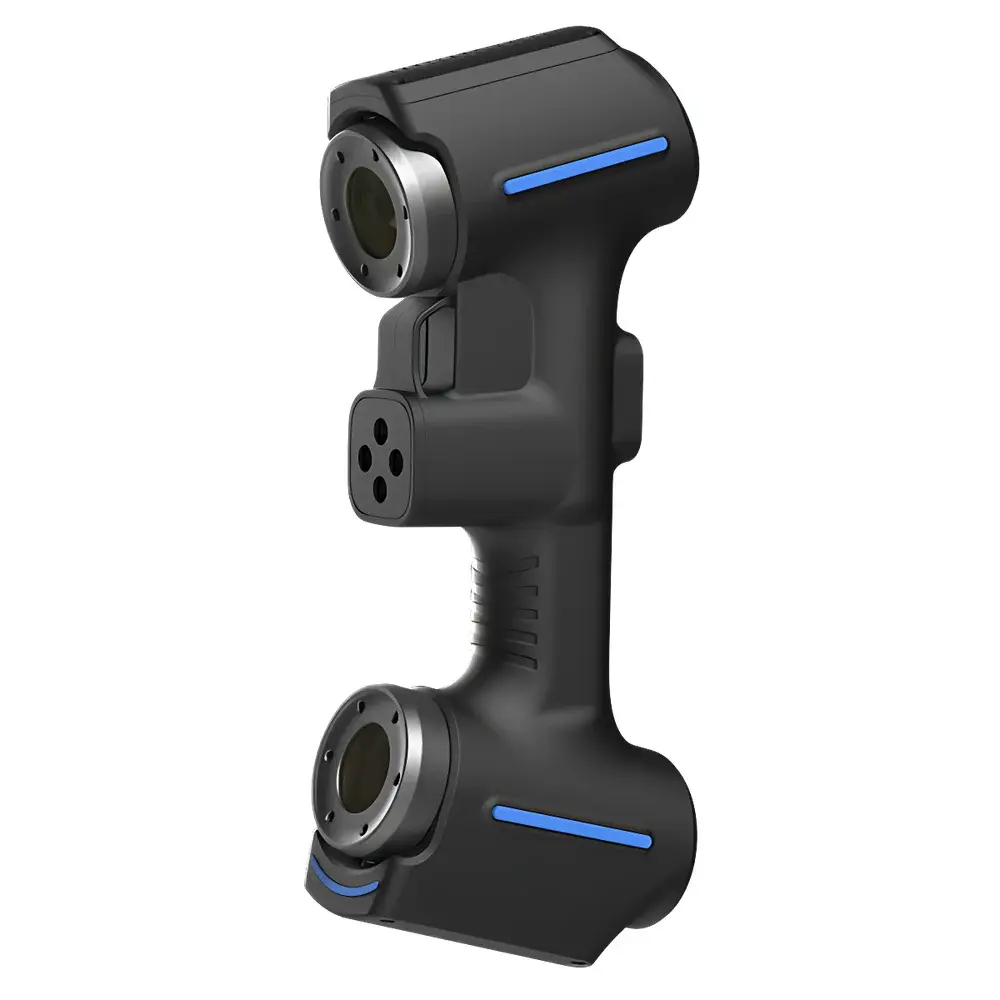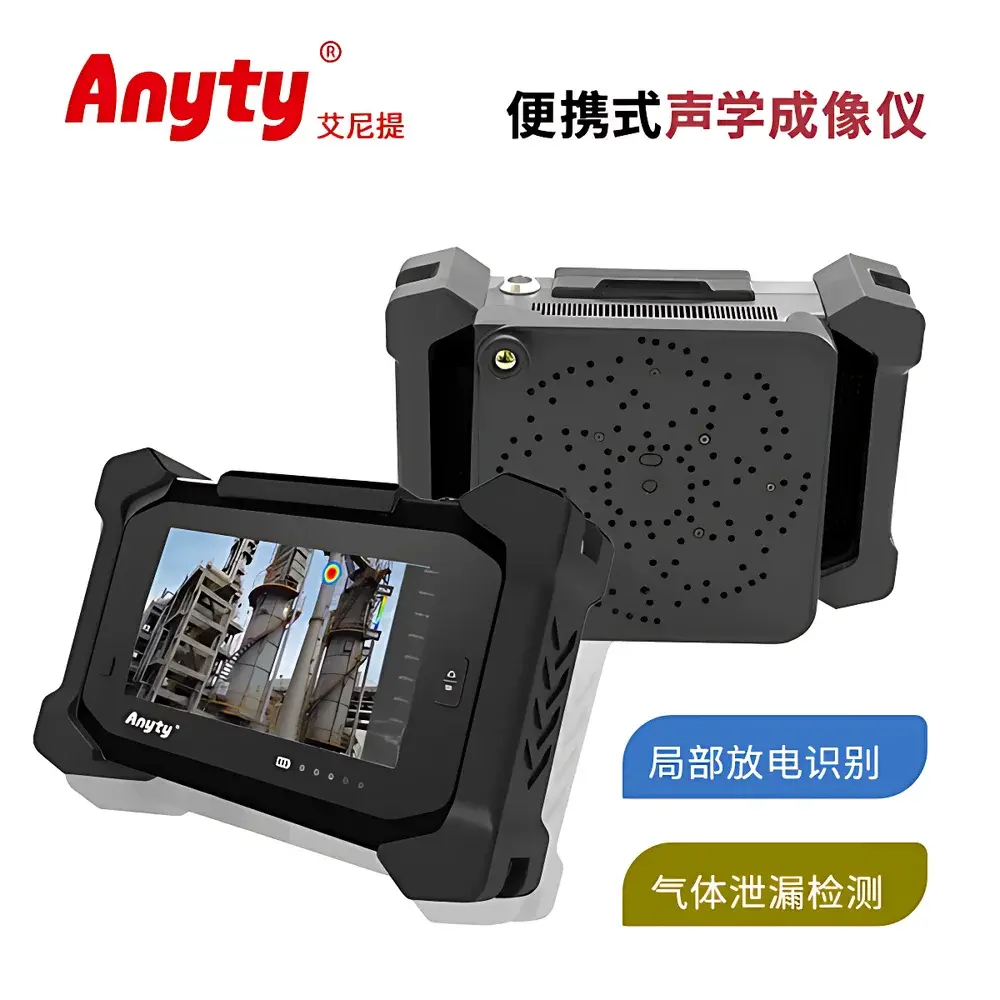
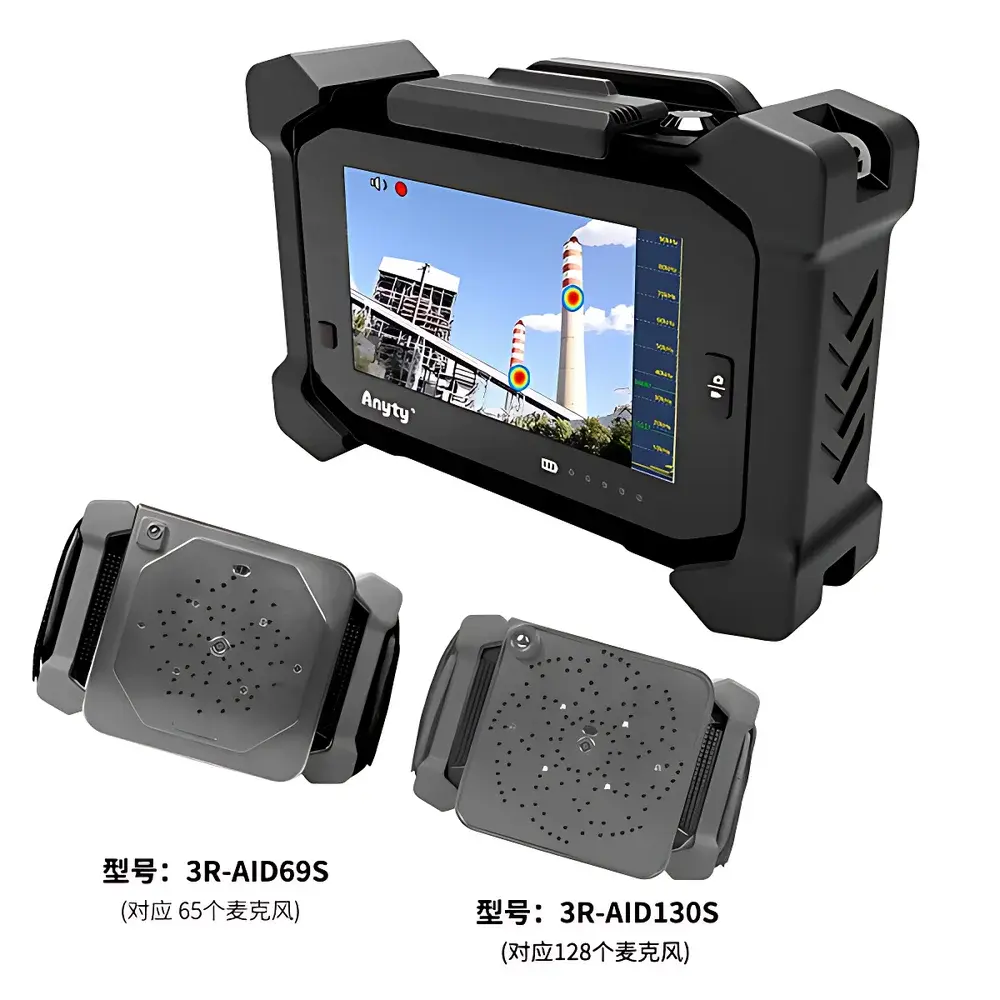
Anyty 3R-AID-S Portable Acoustic Imaging Camera for Partial Discharge Detection, Gas Leak Localization, and Seal Integrity Assessment
| Brand | Anyty |
|---|---|
| Model | 3R-AID-S |
| Origin | Beijing, China |
| Manufacturer Type | Original Equipment Manufacturer (OEM) |
| Country of Origin | China |
| Pricing | Available upon Request |
Overview
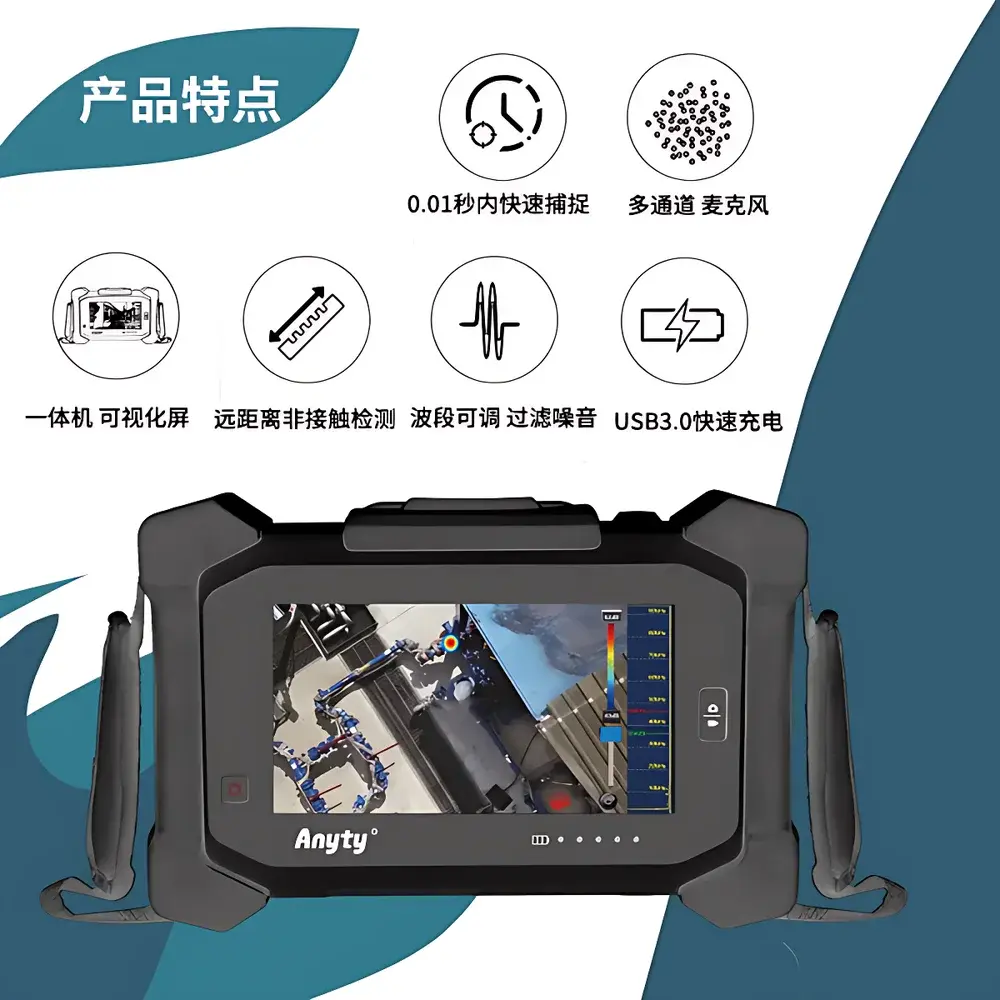
The Anyty 3R-AID-S is a handheld acoustic imaging camera engineered for non-contact, real-time localization of ultrasonic emissions associated with partial discharge (PD), pressurized gas leakage, and mechanical seal integrity failures. It operates on the principle of phased-array beamforming—capturing airborne ultrasound (typically 20–100 kHz) via a 128-element microphone array and synthesizing spatially resolved acoustic intensity maps overlaid onto visible-light imagery. Unlike traditional point-measurement ultrasonic detectors, the 3R-AID-S delivers intuitive, video-based visualization of sound sources at distances up to 50 meters—enabling rapid scanning of large industrial assets without physical contact or system shutdown. Its core application domain spans predictive maintenance in power transmission infrastructure, compressed air systems, refrigeration circuits, and process piping networks where early detection of sub-millimeter orifices (<0.1 mm) is critical to safety, regulatory compliance, and energy efficiency.
Key Features
- Real-time acoustic video output with false-color thermal-style intensity mapping (dB scale) synchronized to optical feed
- Integrated 128-channel digital microphone array with adaptive noise suppression and directional sensitivity calibration
- On-device spectral analysis (FFT-based frequency band selection) for distinguishing PD signatures (e.g., 40–60 kHz corona, 70–90 kHz surface tracking) from mechanical leak harmonics
- Ruggedized IP54-rated enclosure with ergonomic handheld form factor (weight: <1.2 kg), designed for extended field use in ambient temperatures from –10°C to +50°C
- Internal rechargeable Li-ion battery supporting ≥3.5 hours of continuous operation; hot-swappable battery option available
- USB-C and Wi-Fi 5 (802.11ac) connectivity for live streaming, remote control, and firmware updates
Sample Compatibility & Compliance
The 3R-AID-S detects airborne ultrasonic energy generated by turbulent gas flow through orifices, electrical discharges across insulation gaps, and micro-vibrations from failing gaskets or flange joints. It is compatible with pressurized systems operating from 1 bar(g) to 200 bar(g), including but not limited to SF₆ switchgear, natural gas distribution lines, nitrogen purge loops, HVAC refrigerant circuits, and pneumatic control panels. The instrument complies with IEC 60270:2015 for partial discharge measurement methodology and aligns with ISO 5801 (air leakage testing) and ASTM E2613-20 (acoustic emission leak detection standards). Data acquisition workflows support GLP/GMP audit trails when used with optional cloud-hosted reporting modules configured for FDA 21 CFR Part 11 electronic signature and record retention requirements.
Software & Data Management
The bundled AcousticView Pro software (Windows/macOS) enables post-capture analysis including time-synchronized audio waveform playback, frequency-domain filtering, annotated report generation (PDF/CSV), and geotagged image export. All recordings store embedded metadata: GPS coordinates (when enabled), timestamp (UTC), ambient temperature/humidity, microphone gain setting, and operator ID. Cloud synchronization via secure TLS 1.2 channels allows centralized fleet management for multi-site maintenance teams. Export formats are compatible with CMMS platforms (e.g., IBM Maximo, SAP PM) and support automated KPI dashboards—such as leak rate estimation (g/hr), PD severity classification (Class A–C per IEC 60270), and trend-based failure probability modeling.
Applications
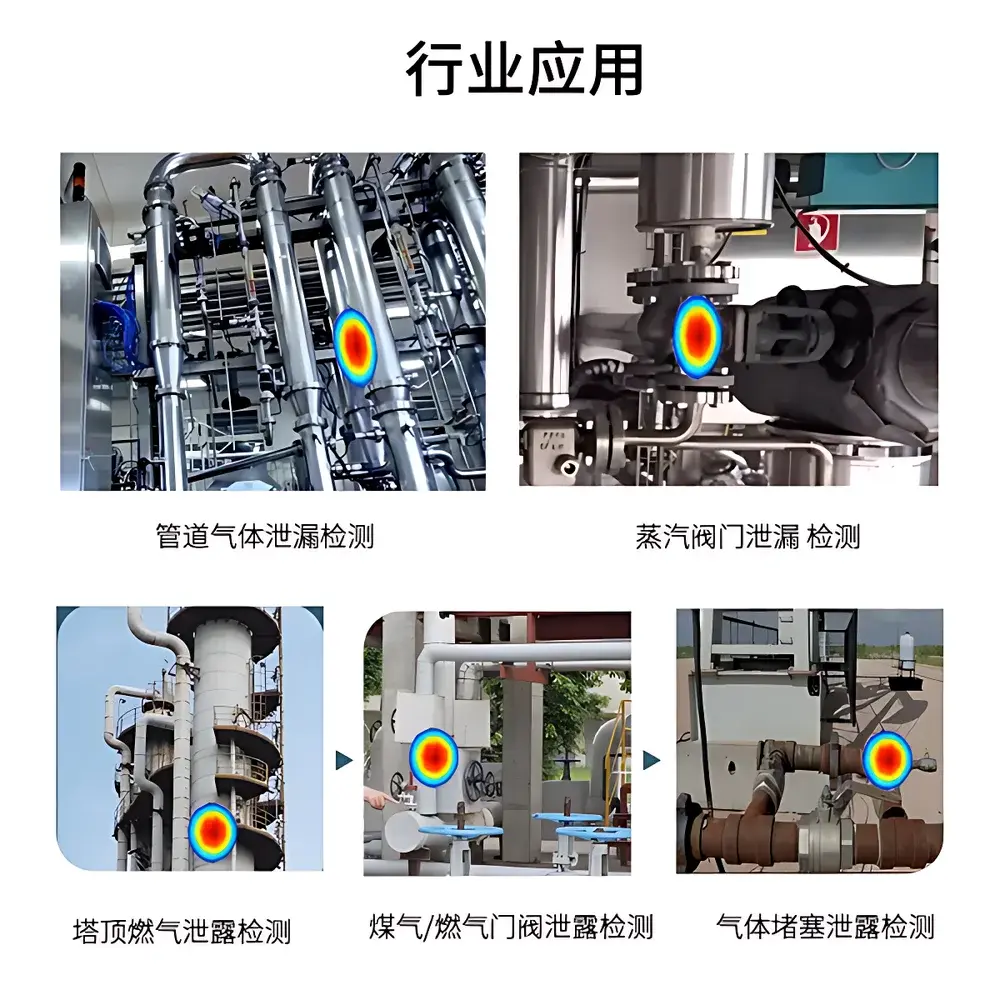
- Preventive inspection of GIS substations for corona, floating potential, and internal void discharges
- Rapid survey of compressed air networks to quantify leakage volume and prioritize repair ROI
- Verification of vacuum chamber integrity during semiconductor tool qualification
- Steam trap and valve seat integrity assessment in pharmaceutical clean steam systems (compliant with ASME BPE)
- Leak localization in LNG transfer arms, cryogenic storage tanks, and hydrogen refueling infrastructure
- Non-invasive validation of weld seam quality and gasket compression uniformity in ASME Section VIII pressure vessels
FAQ
What is the minimum detectable leak size under standard conditions?
Under typical ambient conditions (23°C, 50% RH) and 7 bar(g) nitrogen pressure, the system reliably localizes leaks ≥0.05 mm diameter at 10 m distance—corresponding to mass flow rates ≥0.5 g/hr. Sensitivity varies with gas type, pressure differential, and background noise floor.
Can the 3R-AID-S distinguish between electrical partial discharge and mechanical gas leakage?
Yes. Spectral signature analysis (via built-in FFT and user-definable bandpass filters) enables separation of PD-related broadband impulses (short-duration, high-kurtosis waveforms) from laminar/turbulent gas jet harmonics (narrowband, amplitude-modulated spectra).
Is calibration traceable to national standards?
Factory calibration is performed using NIST-traceable ultrasonic reference sources (ANSI S1.40). Annual recalibration services include full array sensitivity mapping and beam pattern verification per ISO 18436-2 Category IV requirements.
Does the device require external power or signal processing hardware?
No. All signal acquisition, beamforming, and image synthesis occur onboard. No external PC, DAQ unit, or auxiliary amplifier is required for basic operation.