
Anyty 3R-GXYG18 Industrial Borescope for Forensic Lock Examination (Smartphone-Connected)
| Brand | Anyty |
|---|---|
| Origin | Beijing, China |
| Manufacturer Type | Direct Manufacturer |
| Regional Classification | Domestic (China) |
| Model | 3R-GXYG18 |
| Imaging Method | Electronic Imaging |
| Endoscope Type | Rigid |
| Primary Application Domain | Law Enforcement & Fire Rescue |
| Camera Resolution | 160 K pixels (approx. 400 × 400 effective resolution) |
| Probe IP Rating | IP67 |
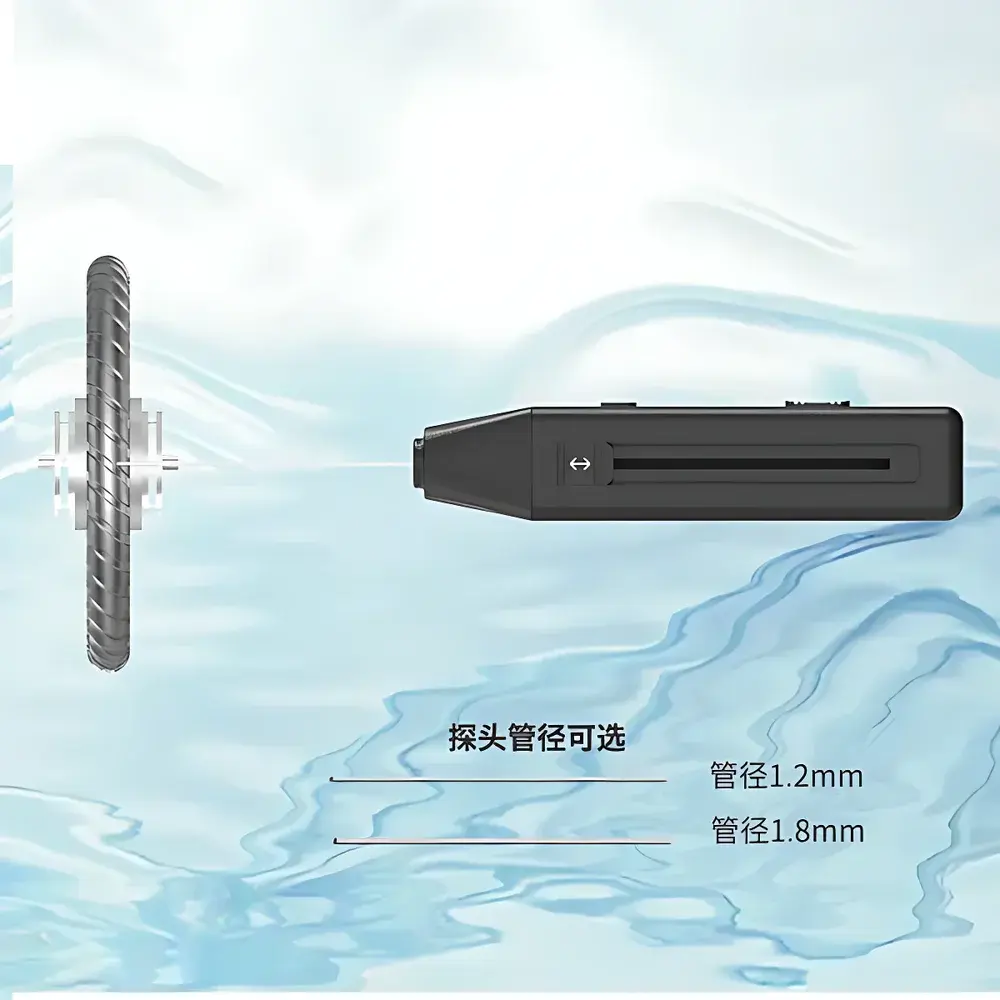
| Probe Diameter Options | 1.2 mm or 1.8 mm |
| Main Unit Dimensions | 28.5 × 8.7 × 20.5 cm |
| Main Unit Weight | 105 g |
| System Dimensions (incl. probe & housing) | 153 × 36 × 36 mm |
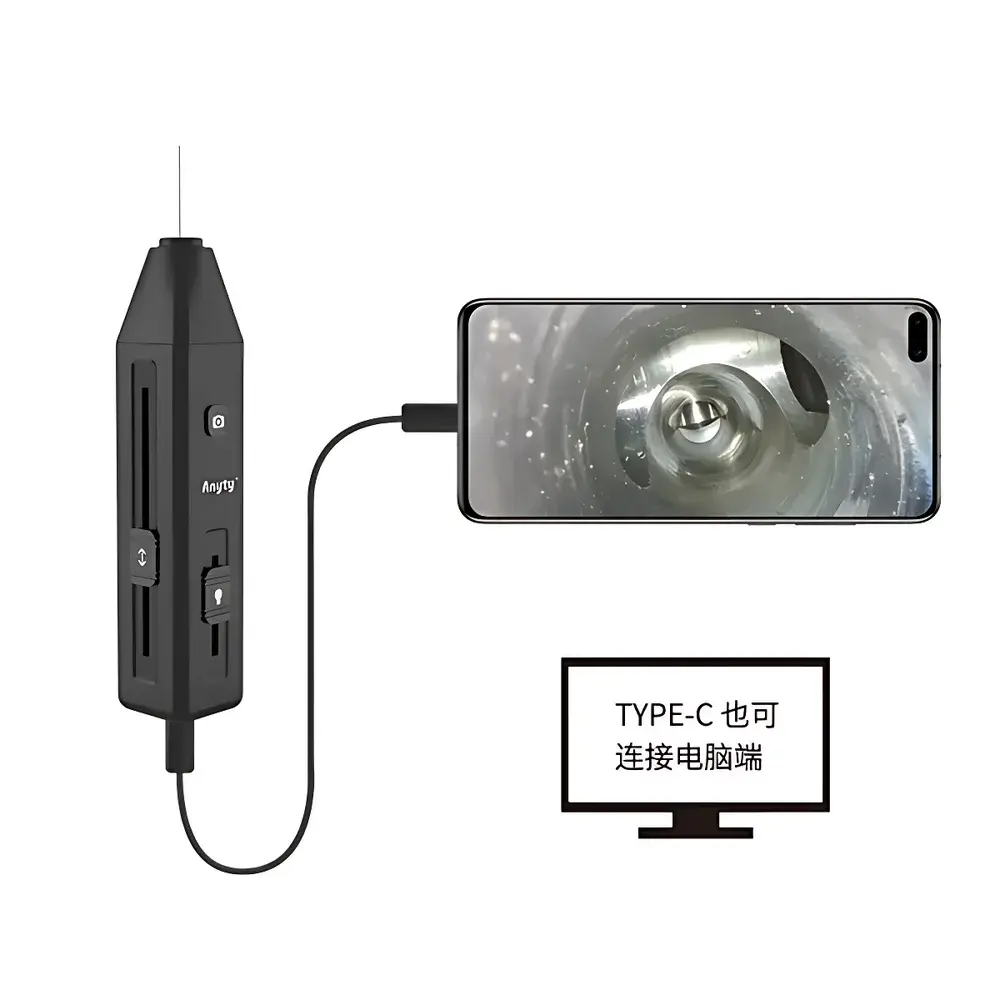
| Display Interface | Smartphone via USB-C or Lightning adapter (no built-in screen) |
Overview
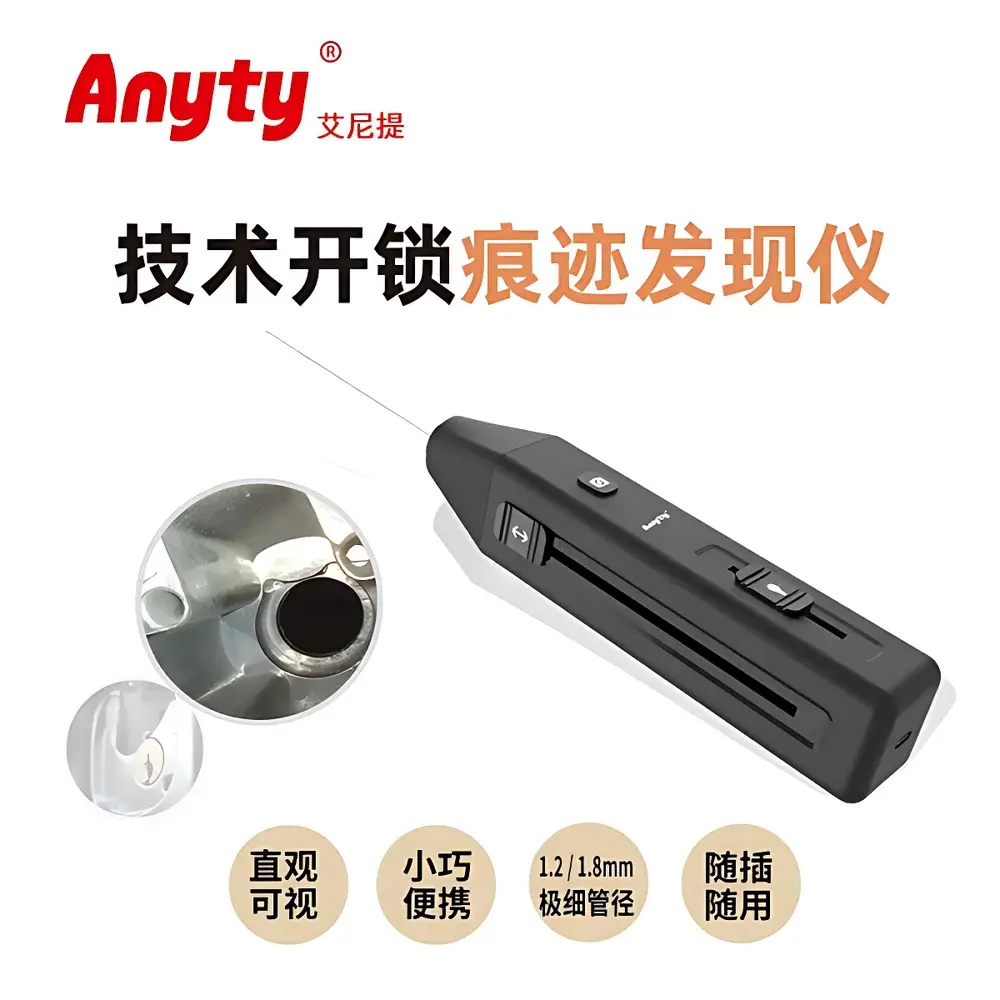
The Anyty 3R-GXYG18 is a purpose-engineered rigid industrial borescope designed specifically for forensic examination of mechanical lock mechanisms in law enforcement and fire rescue operations. Unlike general-purpose inspection tools, this device integrates optical precision with field-deployable ruggedness to visualize subtle tool marks, pin alignment anomalies, shear line distortions, and tamper-induced wear patterns within lock cylinders, deadbolts, and high-security cam assemblies. Its measurement principle relies on high-fidelity electronic imaging through a fixed-focus, wide-angle lens system mounted at the distal tip of a corrosion-resistant alloy probe. The absence of moving optical components ensures consistent depth-of-field performance across repeated insertions—critical when comparing sequential impressions from suspected lock-picking attempts. Engineered for rapid deployment in uncontrolled environments, the 3R-GXYG18 delivers real-time visual data directly to iOS or Android smartphones, eliminating reliance on proprietary displays and enabling immediate annotation, timestamped capture, and secure cloud upload via certified forensic applications.
Key Features
- Ruggedized probe construction using aerospace-grade stainless alloy with seamless hermetic sealing, rated IP67 for full immersion up to 1 m for 30 minutes—validated under IEC 60529 test conditions.
- Two interchangeable probe diameters (1.2 mm and 1.8 mm) optimized for access through narrow keyways, drill holes, or bypass channels without compromising structural integrity or image stability.
- High-sensitivity CMOS sensor delivering 160 K effective pixels with low-noise analog signal processing, supporting grayscale and enhanced contrast modes suitable for identifying micro-scratches (<5 µm width) and surface oxidation gradients on brass, nickel-plated, or hardened steel components.
- Zero-latency video streaming over USB-C (Android) or Lightning-to-USB 3.0 (iOS), compliant with UVC 1.5 protocol—ensuring plug-and-play compatibility without driver installation.
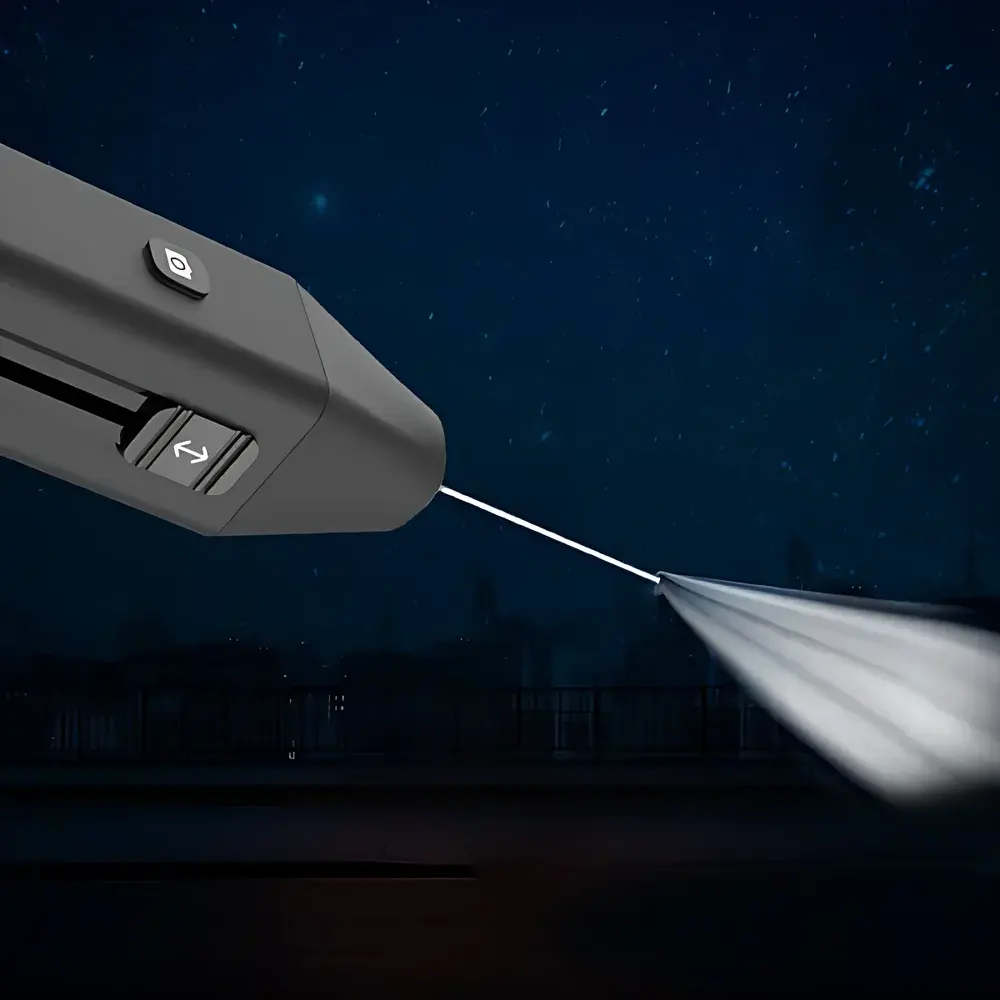
- Integrated LED illumination with adjustable intensity (3-level dimming) and cold-white color temperature (6500 K), minimizing thermal drift and glare-induced artifact generation during prolonged close-range observation.
- Modular main unit housing with MIL-STD-810G-compliant shock absorption, allowing operation under vibration (e.g., vehicle-mounted deployment) and impact (1.2 m drop onto concrete).
Sample Compatibility & Compliance
The 3R-GXYG18 is validated for non-destructive internal inspection of ferrous and non-ferrous lock assemblies including pin-tumbler, wafer, disc-detainer, and magnetic key systems. It complies with EN 13823 (fire-rescue equipment environmental resilience), ISO/IEC 17025:2017 clause 6.4.6 (equipment suitability for forensic evidence collection), and supports GLP-aligned documentation workflows. While not a certified evidentiary instrument per se, its output meets the foundational technical requirements for admissible imagery under Daubert standards when used with calibrated reference targets and chain-of-custody logging software. Probe materials are RoHS 2011/65/EU and REACH SVHC-compliant.
Software & Data Management
The device operates natively with third-party forensic imaging platforms such as Cellebrite UFED Field, MSAB XRY Mobile Forensics, and open-source tools like OBS Studio (with UVC capture plugin). All captured frames and video streams retain embedded EXIF metadata—including device serial number, UTC timestamp, probe diameter selection, and illumination setting—enabling traceability in audit-ready reports. Optional SDK integration supports automated frame extraction, hash-based integrity verification (SHA-256), and direct ingestion into case management systems compliant with NIST SP 800-86 and FBI CJIS Security Policy v5.10.
Applications
- Forensic locksmithing: Identification of bump key, rake, or impression tool marks on cylinder plugs and driver pins.
- Post-breach analysis: Documentation of forced entry indicators—such as spring deformation, sidebar misalignment, or anti-drill plate fracture patterns—in residential and commercial security hardware.
- Fire origin investigation: Visual confirmation of lock status (locked/unlocked) prior to thermal degradation, aiding determination of occupant egress capability.
- Tactical breaching validation: Real-time verification of bolt retraction completeness before door ram deployment, reducing collateral damage risk.
- Training and proficiency assessment: Standardized recording of trainee manipulation techniques for competency benchmarking against established NISTIR 7903 guidelines.
FAQ
Does the 3R-GXYG18 support digital zoom or focus adjustment?
No—this is a fixed-focus rigid borescope optimized for consistent working distance (10–25 mm) inside standard lock mechanisms. Optical magnification is achieved solely through probe proximity and sensor pixel density.
Is calibration required before evidentiary use?
While no periodic factory calibration is mandated, users must perform daily verification using a NIST-traceable 10-µm line pair target prior to each forensic session to confirm resolution fidelity.
Can video be recorded directly to the smartphone without cloud transmission?
Yes—local storage on iOS or Android devices is fully supported; all recordings are saved in MP4 (H.264) format with embedded metadata, and no mandatory telemetry or remote upload functionality exists.
What is the maximum operational ambient temperature range?
The probe functions continuously from −10 °C to +50 °C; the main unit is rated for −5 °C to +45 °C per IEC 60068-2-1/2.
Are replacement probes available with different viewing angles?
Only straight-view (0°) probes are supplied with the 3R-GXYG18 model; oblique or side-view variants are not offered due to mechanical constraints imposed by sub-2 mm diameter design requirements.



